
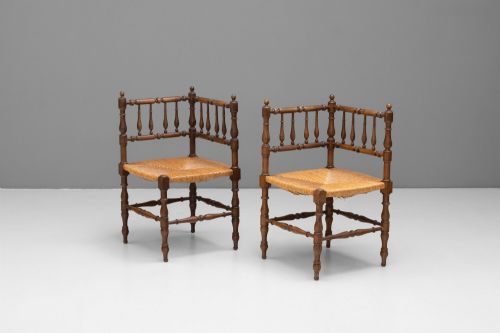
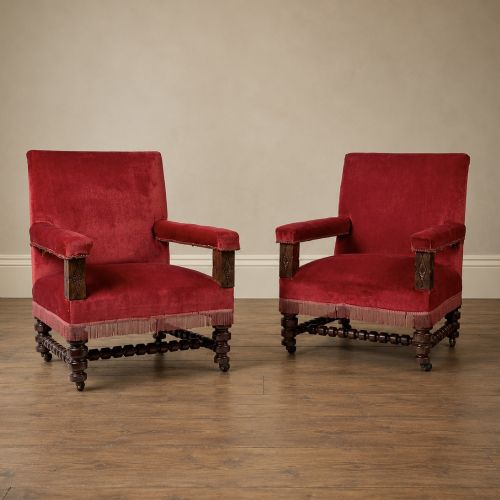


Pair Bobbin Armchairs
These pair bobbin armchairs bring distinctive turned woodwork and tactile upholstery into a room.
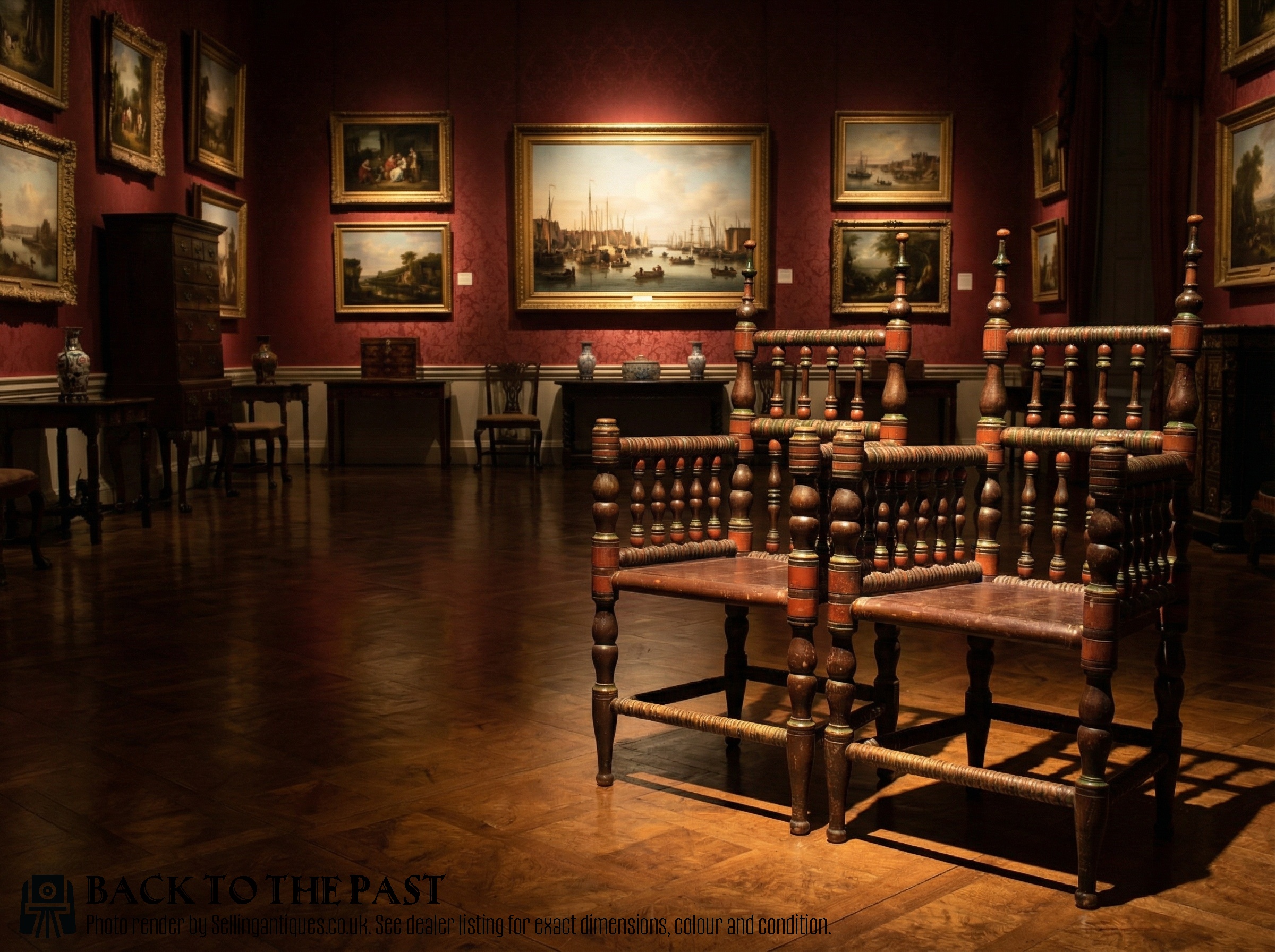
Pair Bobbin Armchairs
When you search for pair bobbin armchairs, you enter a domain of turned woodwork where symmetry and joinery define the seating. These matching sets emerge primarily in Victorian, nineteenth-century, and early twentieth-century contexts, reflecting revivals from Jacobean and Baroque styles alongside Scandinavian folk art.
You meet armchairs alongside corner chairs and open armchairs, often framed in oak, walnut, or mahogany. The defining feature remains the spool or bobbin turning along the uprights, stretchers, and arms.
Upholstery varies from exposed rush seats to velvet, cotton calico, and rattan panels. The surviving pairs bridge rustic country utility and formal revivalism, suiting studies and firesides alike.
How they were made
The frames rely on solid hardwoods like oak, walnut, and mahogany, shaped on a lathe to create the rhythmic spool or bobbin turnings. Joinery typically involves pegged mortise and tenon construction to ensure stability across the arm and leg assemblies.
Upholstered versions incorporate webbing, springs or stuffing covered in fabrics such as velvet, cotton calico, or woven rush. Brass accents occasionally appear on castors or decorative hardware, while ebonising treatments give certain frames a dark, uniform finish.
Listings feature oak, walnut, mahogany, and rush, spanning the Victorian period, the nineteenth century, and the nineteen-twenties.
What varies in quality
Quality rests in the precision and consistency of the lathe work along the bobbin spindles, where crisp profiles distinguish finer examples from simpler vernacular pieces. The choice and handling of timber, such as well-figured walnut or dense oak, dictate the structural integrity of the frame.
Upholstery finish and the preservation of original fabric or supportive webbing influence the overall execution. Matching symmetry across a pair remains crucial, as the best examples maintain identical turning depths and proportions on both chairs.
The Pair Bobbin Armchairs Glossary
- Bobbin turning
- A woodworking technique using a lathe to shape wood into a succession of rounded spool-like segments. It appears frequently on seventeenth-century revival furniture.
- Bergere
- An enclosed upholstered armchair with wooden framing and woven cane or rush panels on the back and sides. This form offers a lighter visual weight in a room.
- Corner chair
- A seating form designed to fit into the corner of a room, featuring a diagonal seat plan and a curved back rail supported by turned posts. They often share the same bobbin turned framing as standard armchairs.
- Ebonisation
- A chemical or staining process applied to timber to imitate costly ebony wood. It creates a deep black finish seen on nineteenth-century revival frames.
- Vernacular
- Furniture made by local craftsmen for everyday use rather than high-style metropolitan workshops. These pieces often utilise regional woods like oak and incorporate traditional regional joins.
Pair Bobbin Armchairs: Frequently Asked Questions
How do I date a bobbin armchair?
Dating relies on timber choice, construction methods, and stylistic cues from the Victorian era back to earlier revival periods. Secondary woods and fastener types provide further clues to the workshop decade.
Earlier nineteenth-century pieces often display hand-turned variations, whereas twentieth-century examples show more mechanical uniformity in the spool turnings.
Are these chairs comfortable for daily use?
Comfort depends on the depth of the seat and the type of upholstery, ranging from firm rush seats to sprung velvet cushions. Many pairs function well as occasional fireside seating.
Adding appropriate lumbar support helps adapt historic armchairs to modern sitting habits without altering the frame.
How do I maintain the turned wooden frames?
Preserving the wood requires simple dusting and occasional application of appropriate furniture wax to nourish the grain. Avoiding direct sunlight and damp conditions prevents timber shrinkage and splitting.
Check the stretcher joints periodically to ensure the bobbin framing remains stable under weight.