
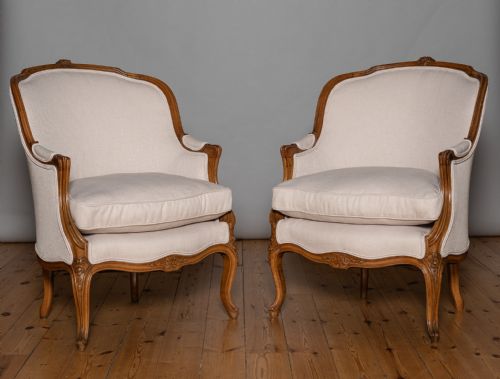


French Style Bergere Pair
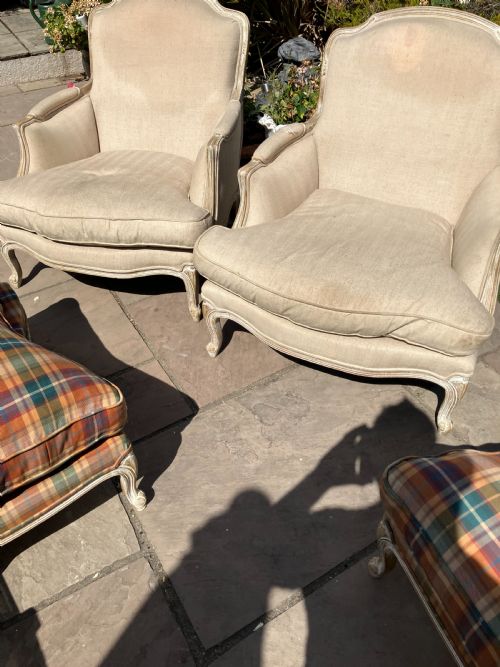
A french style bergere pair offers deep, enclosed seating built around curved wooden frames from the nineteenth and twentieth centuries.
French Style Bergere Pair
A french style bergere pair consists of upholstered armchairs designed with enclosed sides, offering a deep and comfortable seat for a salon, library or drawing room. When searching for a french style bergere pair, buyers most frequently encounter twentieth century revivals alongside nineteenth century examples built in walnut, beech or painted finishes.
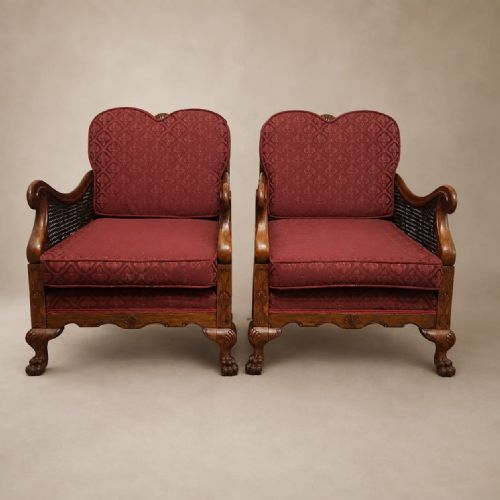
The form typically follows historical Louis XV and Louis XVI models, featuring curved lines, carved woodwork and either cane panels or upholstered sides. These matching armchairs provide a balanced arrangement for interior seating layouts.
Originating from French design traditions, these pairs span periods from the eighteen eighties through to nineteen sixty, including Edwardian interpretations and Art Deco variations. Walnut frames and painted surfaces dominate the available selections.
How they were made
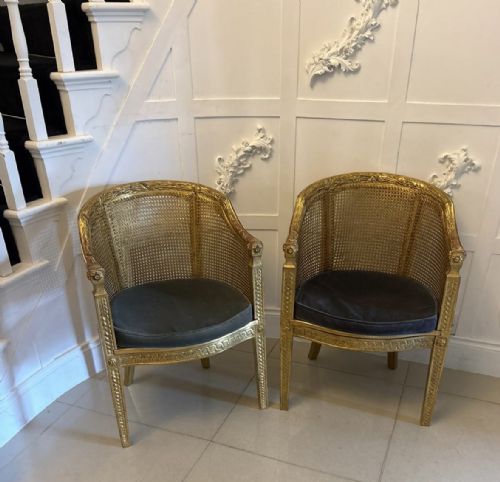
Frames are constructed from solid timbers such as beech and walnut, shaped with carved details reflecting Louis XV and Louis XVI styles. Giltwood, parcel gilt and original paint finishes are applied to the wooden structures.
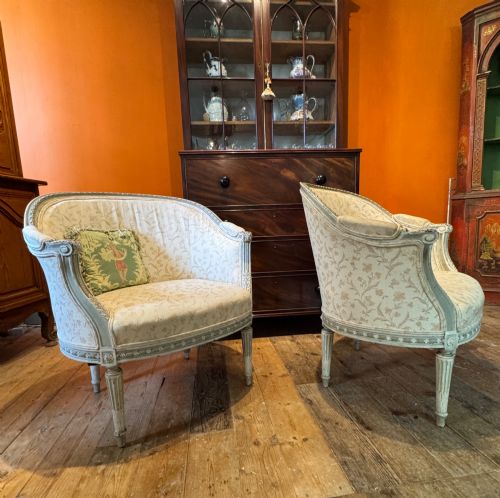
Side panels utilise split cane work woven tightly into the frame, or incorporate upholstered panels covered in velvet, silk, linen and various fabrics. Matching stools sometimes accompany the armchairs to complete the set.
One unexpected pair arrives upholstered in a striking silk parrot design, bringing vibrant tropical birds straight into the French salon.
What varies in quality
The refinement of the carved woodwork and the crispness of the applied gilt or original paint finish separate standard examples from finer pieces. Deep hand carving on walnut and beech frames indicates higher craftsmanship.
The tightness and regularity of the cane work, alongside the integration of traditional upholstery materials like silk and velvet, dictate the overall standard of construction.
The French Style Bergere Pair Glossary
- Bergere
- An enclosed armchair with upholstered or cane sides and a built-in seat cushion. This form provides a deeper and wider seat than a standard salon chair.
- Giltwood
- Timber coated with gold leaf or a gold-coloured finish. This technique highlights the carved ornamentation on the frame.
- Cane
- Plant material woven into open patterns for chair panels. Split cane provides a light and flexible surface for the sides of the seat.
- Louis XV Style
- A design period characterised by asymmetrical curves, cabriole legs and floral carvings. This aesthetic influences many nineteenth and twentieth century armchairs.
- Parcel Gilt
- A decorative method where only specific parts of a painted or wood surface are gilded. This creates contrast against the base colour of the frame.
French Style Bergere Pair: Frequently Asked Questions
What is a bergere armchair?
A bergere is a French-style enclosed armchair featuring solid sides filled with cane or upholstery. It provides a wide, deep seat designed for relaxed sitting.
These chairs often include a loose seat cushion and carved wooden frames reflecting eighteenth-century design revivals.
How do I identify Louis XV and Louis XVI styles?
Louis XV style chairs display sweeping curves, cabriole legs and organic floral carvings. They emphasise asymmetry and flowing lines.
Louis XVI style pieces introduce straight fluted legs, geometric shapes and neoclassical symmetry. Both styles appear frequently in twentieth-century revivals.
Are these chairs original antiques?
The selection includes pieces dating from the nineteenth century through the mid twentieth century. Makers revived historical French designs across different decades.
Materials and construction methods correspond to periods such as the Edwardian era, eighteen eighties and nineteen twenties.
How do I care for cane panels?
Cane panels require gentle dusting and occasional light moisture to prevent the plant material from drying out. Avoid placing them near direct heat sources.
Proper humidity levels help maintain the flexibility and strength of the woven cane over time.