


Swedish Painted Armchairs
These Swedish painted armchairs bring bright Scandinavian folk art and refined Gustavian neoclassical curves straight into a modern room.
Swedish Painted Armchairs
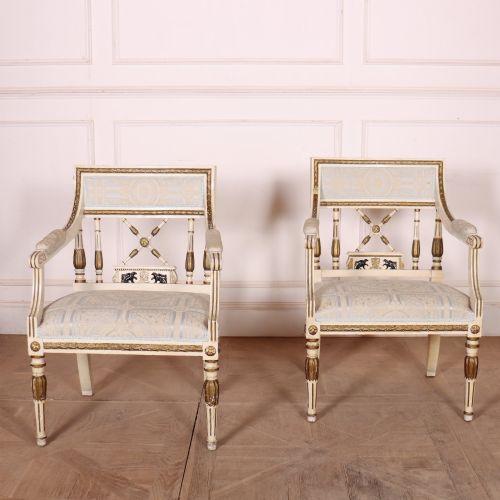
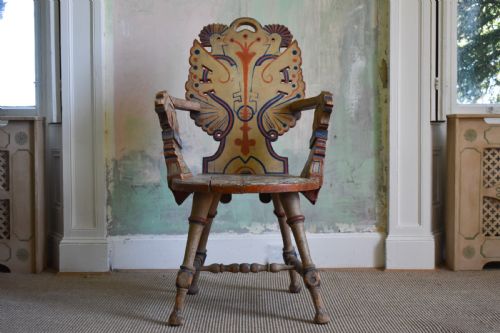
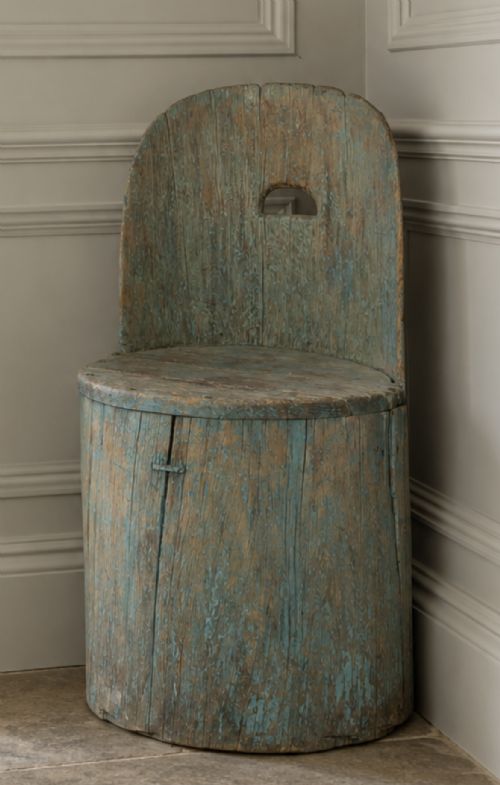
When you search for Swedish painted armchairs, you are looking at seating shaped by Scandinavian country craftsmanship and neoclassical restraint. The examples you meet on this page span the nineteenth century and the early twentieth century, taking forms from rustic dug out chairs to formal Empire and Gustavian styles.
The seating ranges from sturdy country rocking chairs and bobbin country throne armchairs to elegant pairs of turned chairs and childs armchairs. These pieces rely on painted wood surfaces rather than exposed dark timber, reflecting the lighter palettes traditional to northern European interiors.
Construction and surface materials
Cabinetmakers built these frames using local timber, predominantly pine and birch, shaped through turning and hand carpentry. Some pieces feature original paint finishes applied directly to the wood, while others incorporate applied gilding on specific decorative details.
Upholstery completed the seating on the more formal examples, utilising traditional fabrics such as damask upholstery. Simpler country versions dispensed with padding entirely, leaving the turned wooden structure and painted surface exposed.
The listings here feature nineteenth-century and early twentieth-century pieces, spanning pine, birch, giltwood, and fabric-upholstered forms.
Judging the work
The distinction between a standard vernacular piece and a finer seating form lies in the crispness of the turning and the harmony of the proportions. Gustavian and Empire pieces show architectural precision in their carved details, whereas folk art examples derive their character from simpler hand shaping.
The integrity of the painted surface significantly defines the character of each piece. Retaining an early or original paint finish preserves the historical honesty of the chair far better than later repainting, which can obscure the subtle tool marks of the maker.
The Swedish Painted Armchairs Glossary
- Gustavian
- The Swedish neoclassical style inspired by French Louis XVI design during the late eighteenth century. It is characterised by restrained fluting, straight tapered legs and pale painted finishes.
- Empire
- A heavy neoclassical design style popular in the early nineteenth century. It draws on Roman imperial motifs and tends to feature more robust proportions than earlier Gustavian seating.
- Bobbin
- A style of furniture turning where the wood is shaped into a series of rounded spheres resembling a thread bobbin. This decorative technique appears frequently on country seating.
- Damask
- A reversible figured fabric traditionally woven with patterns visible on both sides. It provides formal upholstery for high-end neoclassical armchairs.
Swedish Painted Armchairs: Frequently Asked Questions
What periods do these armchairs come from?
The pieces span the nineteenth century and the early twentieth century, including examples dated around eighteen hundred, eighteen eighty, and nineteen twenty.
They bridge rustic folk traditions and later revivals of earlier neoclassical designs.
How do I care for painted wooden furniture?
Keep the pieces out of direct sunlight to prevent the painted surface from fading or drying out over time. Dust gently with a dry cloth and avoid harsh modern cleaning agents.
Maintaining a stable room temperature helps protect the underlying pine and birch timber.
Are these chairs comfortable for daily use?
Upholstered examples offer traditional padding, while wooden country chairs rely on shaped seats and supportive armrests. Their suitability depends on whether the piece is a formal armchair or a rustic folk seat.
Adding a loose cushion can make firmer wooden seats more comfortable for extended sitting.
What is the difference between folk art and Gustavian styles?
Scandinavian folk art embraces rustic charm, simple turned spindles, and vernacular forms like dug out chairs. Gustavian design adopts formal neoclassical lines, symmetry, and architectural detailing.
Both styles share a preference for pale painted wood rather than polished dark timber.