
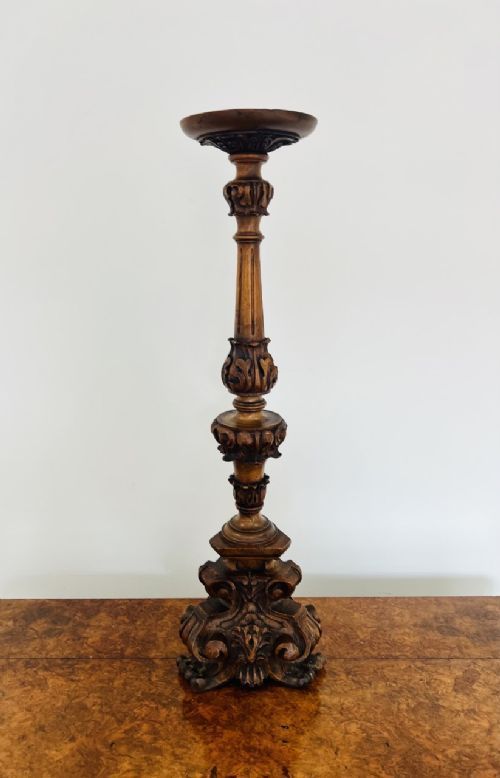


Carved Wooden Pillars
Carved wooden pillars bring architectural weight and rich texture into a room, serving as striking focal points.
Carved Wooden Pillars
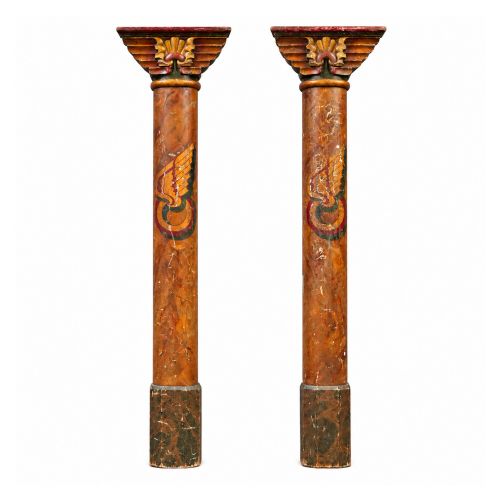
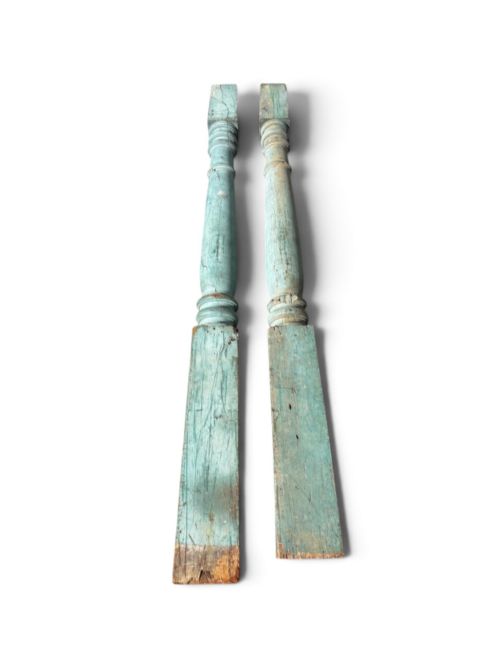
Carved wooden pillars encompass a broad range of architectural salvage, structural fragments, and repurposed supports such as bedposts and carousel columns. When exploring carved wooden pillars, you encounter items spanning from the seventeenth century through to the Edwardian era, reflecting diverse functions from altar-style candlesticks to grand architectural columns.
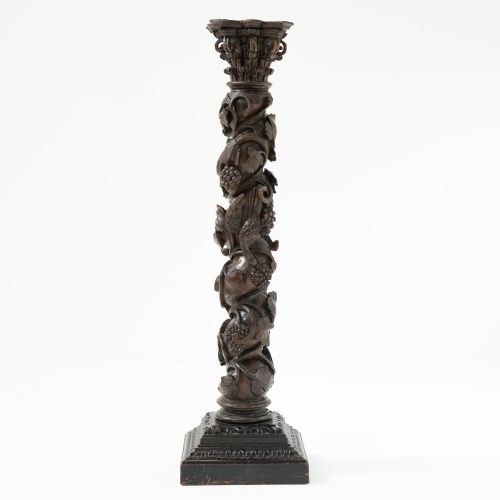
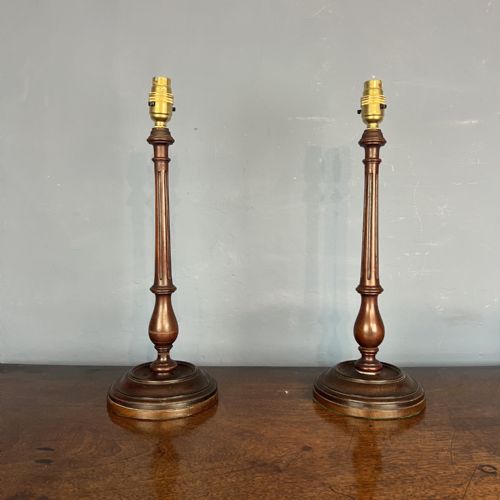
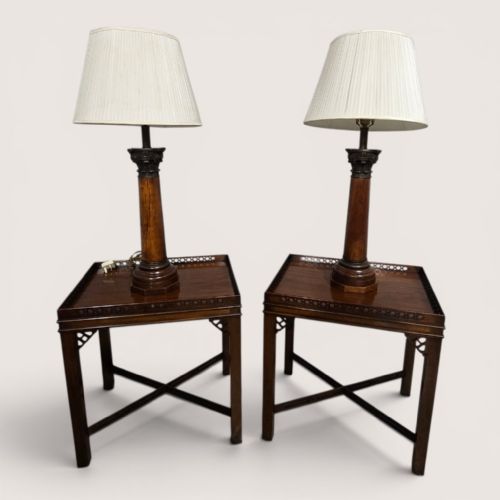
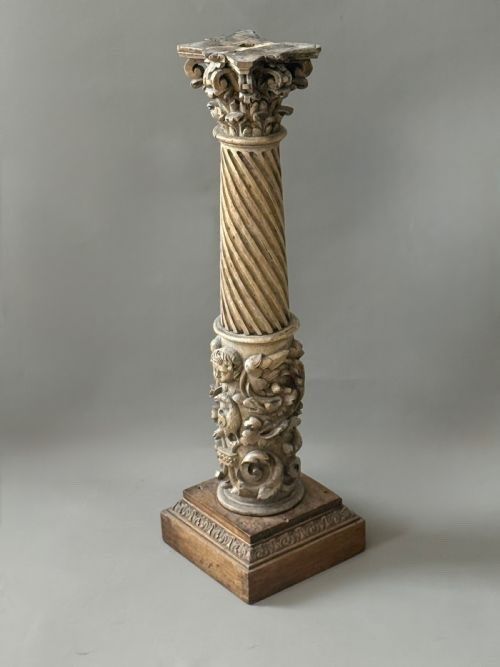
The selections available lean heavily toward pairs, whether matched architectural elements, lamp bases, or converted bed posts. Oak, mahogany, and various hardwoods predominate, often bearing detailed surface work ranging from classical capitals to spiral Solomonic twists.
Origins stretch across English, continental European, and Indian traditions, encompassing styles from Baroque revival and Neoclassical to William IV and 17th Century Jacobean. These pieces function today as table lamps, torcheres, pedestals, or standalone decorative accents within interior spaces.
Materials and construction
Makers utilised solid timbers such as oak, mahogany, walnut, pine, and dense exotic hardwoods, frequently enhancing the carved wooden pillars with paint, gesso, parcel gilt, or silvering. Structural integrity relied on heavy turning lathes and hand-chased chisels to achieve deep relief and complex profiles.
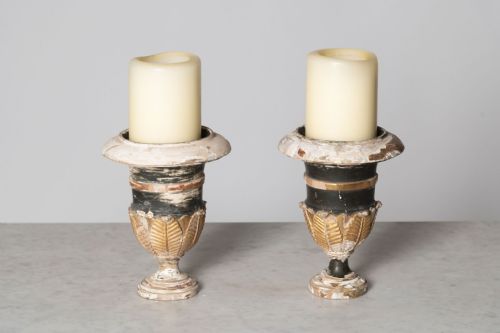
Many items incorporate supplementary media, combining carved wood with brass sconces, stone bases, or iron fittings to support their conversion into candlesticks and lamps. Surface finishes range from bleached and stained wood to layered polychrome and gilt applications that highlight the intricate carving.
Current listings feature carved wooden pillars spanning from the 17th Century to the 1920s, utilising oak, mahogany, walnut, and pine.
Distinctions in quality
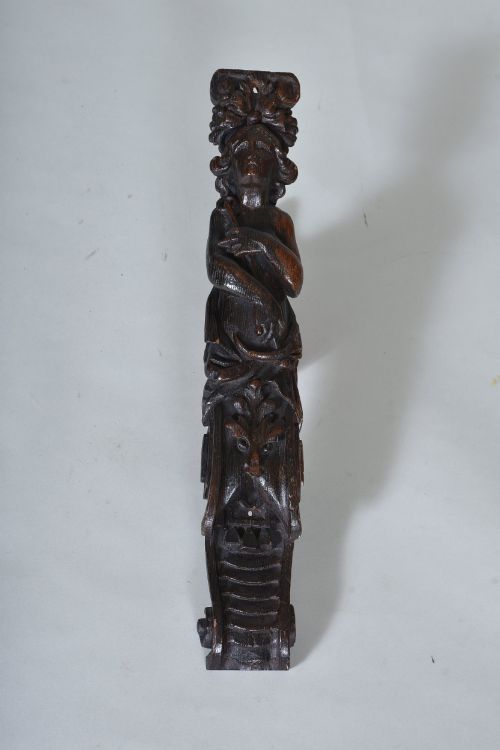
The calibre of carved wooden pillars is defined by the crispness of the hand-carving and the depth of the relief work. Superior examples display confident, fluid execution in details such as Corinthian capitals, foliate scrolls, and figural elements, whereas lesser items show mechanical repetition or softer tool marks.
Proportion and structural harmony also separate standard architectural salvage from exceptional decorative pieces. Items retaining their original surface treatments, whether historic paint, gilding, or patinated polish, carry greater visual cohesion than those stripped or heavily restored.
The Carved Wooden Pillars Glossary
- Solomonic
- A column characterised by a helical twist or spiral shaft, popular in Baroque architecture and furniture design. This form creates dynamic movement and catches light effectively along the timber surface.
- Torchiere
- A tall stand or floor lamp designed to direct light upwards. These pieces often take the form of slender carved pedestals or modified columns.
- Capital
- The uppermost member of a pillar or column, typically decorated with classical orders such as Doric, Ionic, or Corinthian motifs. It provides the visual transition between the vertical shaft and the load above.
- Parcel Gilt
- A decoration technique where portions of an object are partially gilded with gold leaf while other areas reveal the underlying wood or paint. This method accentuates specific carved details.
- Architectural Salvage
- Building elements rescued from demolition or alteration for decorative reuse. These items preserve historical craftsmanship for modern interiors.
Carved Wooden Pillars: Frequently Asked Questions
What were carved wooden pillars originally used for?
Many of these pieces served structural or decorative roles in buildings, supporting porches, galleries, or interior room dividers. Others originated as altar furnishings, grand bedposts, or carousel components before finding new life as decorative objects.
Over time, functional items and architectural fragments were adapted into table lamps, torcheres, and freestanding pedestals. This evolution allowed historic woodwork to be integrated directly into domestic interior schemes.
How do I incorporate tall pillars into a modern room?
Tall carved pillars work exceptionally well as freestanding sculptural statements in corners, framing doorways, or mounted as architectural accents. Paired columns can also serve as the base for custom console tables or display pedestals.
When fitted as lamps or torcheres, they provide ambient vertical lighting that draws the eye upward. Placing them against plain walls allows the carved details and aged timber patination to stand out clearly.
How do I identify the period of a wooden pillar?
Dating relies on examining the timber species, tool marks left by the maker, and the prevailing design style. Seventeenth-century pieces often feature heavy oak with deep, geometric hand-carving, while Regency and William IV items display refined mahogany turning and classical proportions.
Later Victorian and Edwardian examples frequently incorporate eclectic revival styles, machine assistance, or adaptations for modern domestic lighting. Comparing the capital style and surface finish against established design periods helps narrow down the era of manufacture.
Are these pillars supplied as pairs?
A significant proportion of these architectural elements survive and are offered as matched pairs. This symmetry makes them particularly popular for flanking mantelpieces, doorways, or furniture groupings.
Single pillars also appear, usually functioning as standalone torcheres, lamp bases, or singular decorative carvings. Each listing specifies whether the piece is sold individually or as part of a matched set.