


Architectural Mahogany Columns
Architectural mahogany columns bring classical form into a room, offering sturdy presence and rich timber grain.
Architectural Mahogany Columns
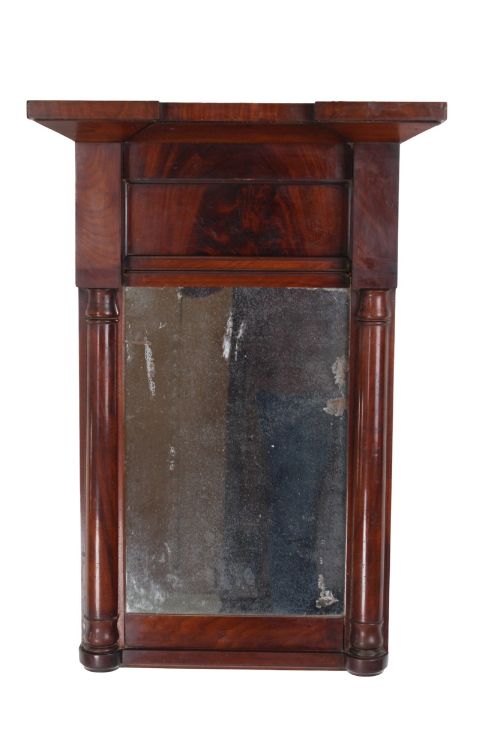
When searching for architectural mahogany columns, you examine timber supports that draw on classical building traditions for domestic use. These pieces appear as half columns, bed posts, pedestals, and structural elements of mirrors or furniture. The versions most commonly met on this page span the nineteenth century, including Regency, William IV, and Victorian periods.
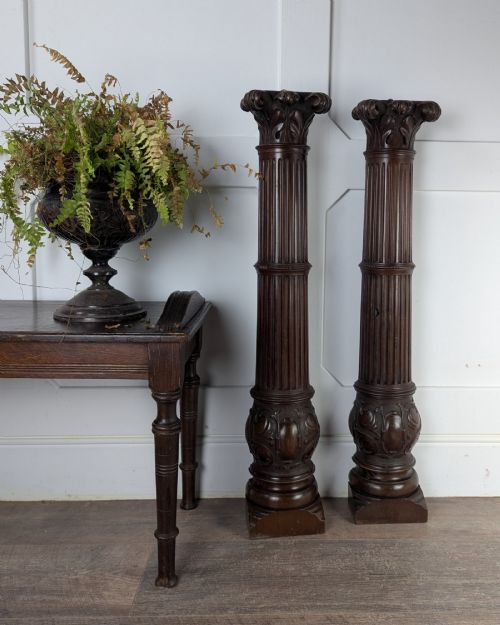
The objects take various forms, from standalone carved wood pedestals and column stands to pairs of reeded Corinthian half columns. Some items adapt the architectural column design into bedside tables, washstands, and portico clocks. They originate primarily from nineteenth-century British and European workshop traditions.
Makers integrated these columns into larger furnishing schemes, such as pier mirrors and grand bedframes. The aesthetic leans heavily on neoclassical inspiration, translating stone temple architecture into polished hardwood. Every piece reflects a period when domestic interiors borrowed directly from Greek and Roman monuments.
Materials and construction methods
Makers utilised solid mahogany and hardwood, sometimes applying flame mahogany veneer over secondary timbers to create striking surface grain. Structural elements often relied on dense timber capable of supporting weight, particularly in pedestals and bed posts. Brass and gilt bronze frequently appear as mounts, capitals, or bases on the finer examples.
Carving defines the surface texture, visible in reeded shafts and classical Corinthian capitals rendered directly into the wood. Woodturners shaped the cylindrical columns on lathes before artisans hand-carved the detailed acanthus leaves and fluting. Joinery techniques varied depending on whether the column served as a structural support, a furniture leg, or a decorative wall attachment.
At least one nineteenth-century pedestal hides a secret compartment behind its classical facade, ready to confound visitors.
Assessing quality in architectural mahogany columns
The depth and crispness of the hand-carving separate standard turned timber from superior examples. Sharp details in the Corinthian capitals and well-defined reeding indicate skilled workmanship rather than mechanical production. The choice of timber also plays a role, with choice flame mahogany veneers displaying complex, animated grain patterns.
Proportion and architectural correctness dictate the visual success of each piece. Better items maintain balanced classical proportions that mirror ancient stone prototypes faithfully, while lesser examples may appear compressed or heavy-handed. The integrity of the wood, the quality of the joints, and the preservation of the original surface finish complete the assessment.
The Architectural Mahogany Columns Glossary
- Mahogany
- A durable tropical hardwood known for its reddish-brown colour and stability. It accepts fine carving and polished finishes exceptionally well.
- Corinthian
- A classical order of architecture recognised by ornate capitals decorated with acanthus leaves. This style appears frequently on the carved capitals of column pedestals.
- Reeded
- Surface decoration consisting of parallel convex moulding strips placed side by side. It provides texture and vertical emphasis to column shafts.
- Portico
- An architectural porch structure featuring a roof supported by columns. In furniture, it describes clocks and tables designed with distinct column supports.
- Neoclassical
- A style reviving classical Roman and Greek forms during the eighteenth and nineteenth centuries. This influence shapes the architectural geometry of these columns.
Architectural Mahogany Columns: Frequently Asked Questions
How were architectural columns used historically?
Historically, these columns served both structural and decorative roles in grand interiors. They framed mirrors, supported bed canopies, or acted as standalone pedestals for displaying sculpture and lamps.
Cabinet makers also incorporated column forms into the design of console tables, washstands, and clocks. This brought monumental classical architecture into domestic living spaces.
How do I care for mahogany columns?
Mahogany requires stable indoor humidity to prevent the timber from splitting or warping. Keep the wood away from direct heat sources and strong sunlight.
Dust the surface regularly with a soft, dry cloth. Occasionally apply a quality beeswax to nourish the timber and maintain its natural lustre.
How do I distinguish Regency columns from Victorian ones?
Regency pieces, dating from the early nineteenth century, generally adhere closely to restrained classical proportions inspired by Greek archaeology. They often feature clean lines and precise, delicate carving.
Victorian items, produced later in the century, tend to be heavier and more exuberant in their decoration. They frequently incorporate Revival styles that mix various historical motifs.
Are these columns solid mahogany?
Construction varies depending on the specific object type and its intended function. Standalone pedestals and bed posts are typically fashioned from solid hardwood or heavy turned timber.
Some larger surfaces utilise flame mahogany veneers applied over stable secondary woods. This technique allowed makers to display dramatic grain patterns without risking the structural movement of solid timber.