


Carved Wooden Coffer Chest
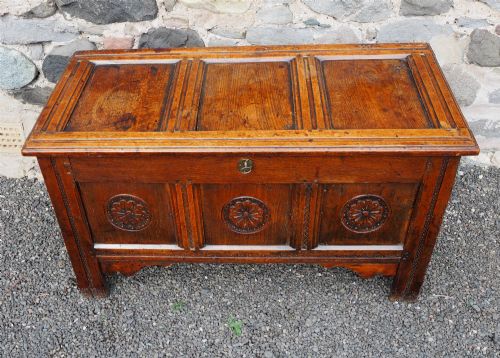
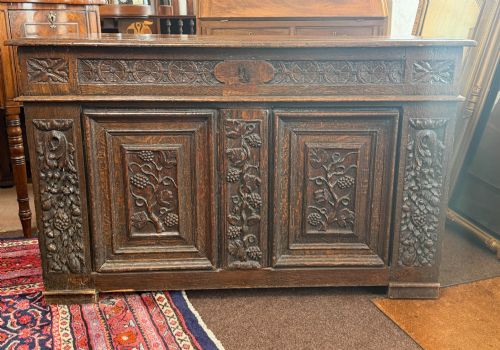
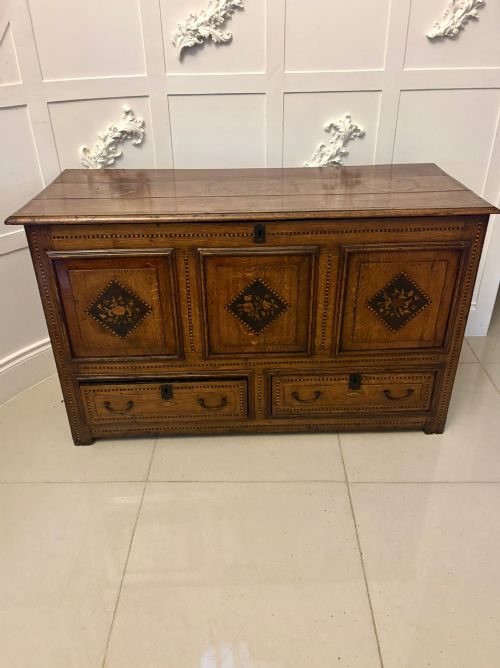
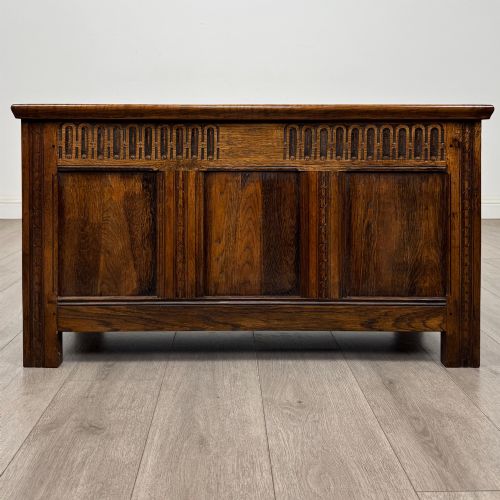
A carved wooden coffer chest provides robust domestic storage rooted in centuries of vernacular carpentry and panel construction.
Carved Wooden Coffer Chest
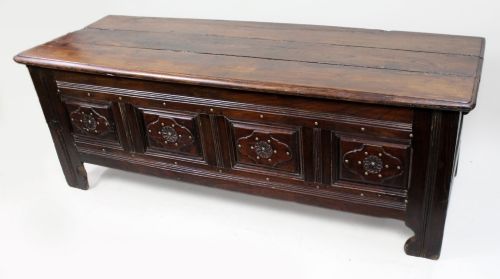
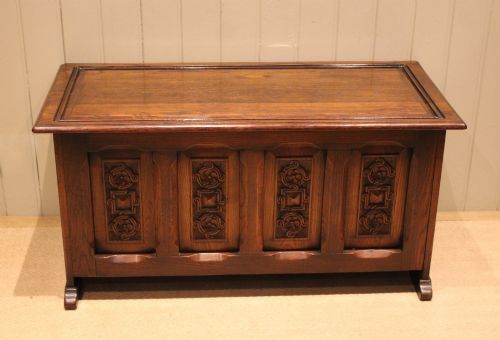
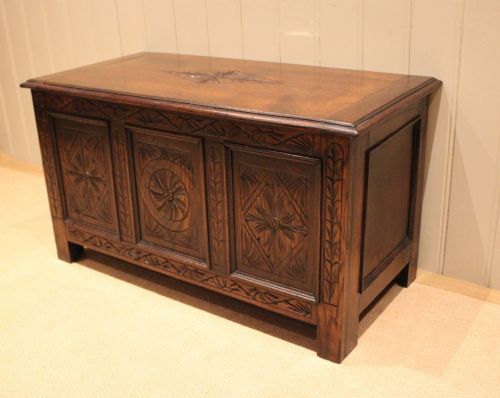
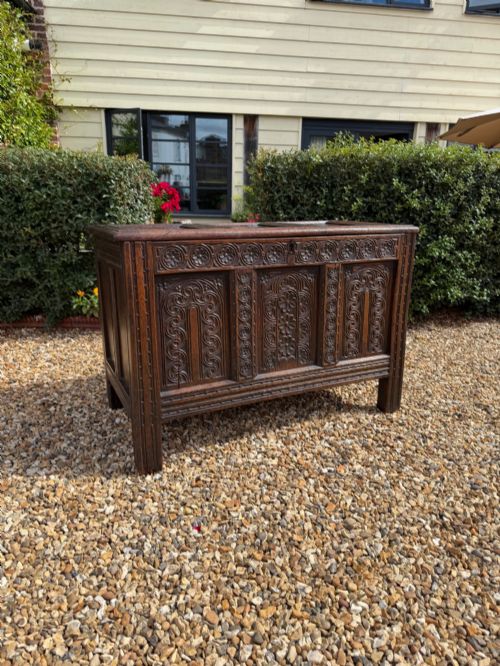
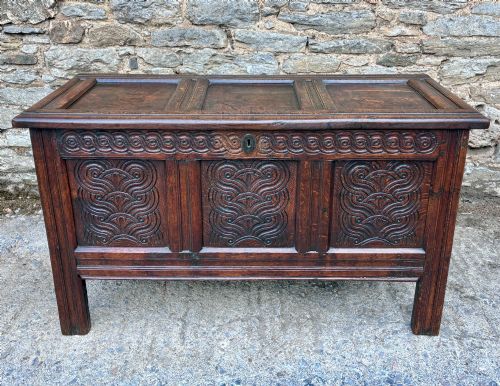
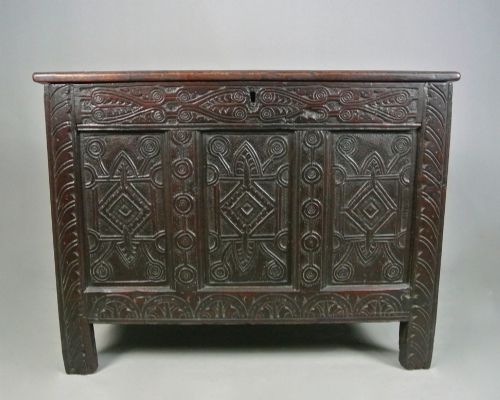
A carved wooden coffer chest represents a primary historical storage vessel utilised for linen, documents and valuables before the widespread adoption of the chest of drawers. Buyers encounter substantial examples originating from domestic workshops across the British Isles and continental Europe.
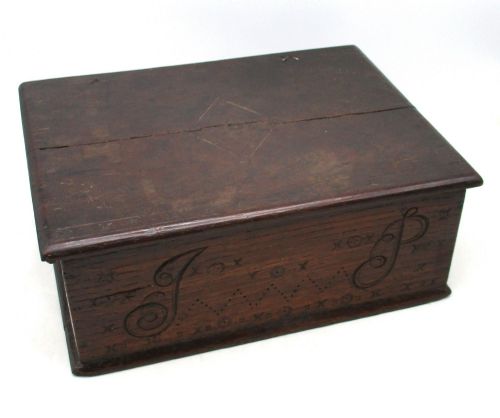
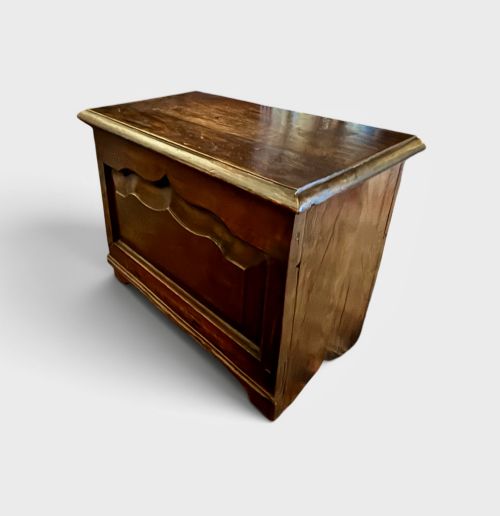
The selection on this page centres predominantly upon heavy timber storage boxes dating from the sixteenth, seventeenth and eighteenth centuries, alongside later revival interpretations. Formats range from monumental dowry receptacles down to small document boxes and mule chests equipped with lower drawers.
Regional variations appear frequently, spanning Welsh, French Provincial, Portuguese Colonial and Italian origins. These pieces demonstrate how utilitarian domestic furniture incorporated decorative carving particular to specific periods like the Jacobean and Gothic eras.
How they were made
Joiners constructed these chests primarily using solid oak, supplemented regionally by elm, walnut, teak, cypress and hardwood. Carpenters employed pegged mortise and tenon joints to frame stiles, rails and fielded panels, accommodating natural timber movement without splitting.
Surface ornament relied upon hand-carved relief work, geometric panels, architectural mouldings and occasional marquetry inlay. Blacksmiths forged iron strap hinges, latches and heavy-duty locks to secure the heavy lids against the body.
Listings feature solid oak, teak, elm, walnut and cypress, alongside decorative marquetry inlay, brass and iron hardware.
What varies in quality
Quality separates objects by the crispness of the hand-carved detail and the integrity of the original timber framing. Superior pieces retain their original boarded lids, floorboards and forged ironwork rather than replacement fixings.
The depth of the carving and the complexity of the stile and rail assembly mark the distinction between standard provincial utility items and workshop masterworks commissioned for prominent households.
The Carved Wooden Coffer Chest Glossary
- Coffer
- A heavy wooden chest traditionally used for storing valuables, linen or documents. These lidded boxes form the foundational ancestor of modern cabinetry.
- Mule chest
- A storage chest featuring one or more drawers built into the base beneath the main compartment. This hybrid form emerged as domestic storage needs evolved during the seventeenth and eighteenth centuries.
- Stile and rail
- A frame construction method where vertical stiles and horizontal rails hold a central floating panel in place. This technique prevents solid timber from cracking as humidity changes.
- Marquetry
- The art of applying decorative veneer pieces onto a solid wood structure to create pictorial or geometric patterns. Elaborate floral and strapwork designs frequently enhance seventeenth-century surfaces.
- Patina
- The surface sheen and mellow colour developed by aged wood through decades of handling, waxing and exposure to light. Original patination indicates an untouched historic finish.
Carved Wooden Coffer Chest: Frequently Asked Questions
How were these chests used historically?
Households utilised these heavy lidded vessels to store valuable textiles, church plate, charters and personal belongings safely away from damp floors. Because domestic architecture lacked fitted closets, families packed their portable wealth inside these secure containers.
Travellers and merchants also loaded them onto carts and ships for long journeys. Over time, specialised internal tills were added to separate smaller coins and documents from the main storage well.
Where should I place a heavy wooden coffer?
These substantial chests anchor large hallway spaces, ground the foot of a bed, or serve as a practical coffee table substitute in a living room. Their flat lids provide a sturdy surface for lamps or display items while concealing bulk storage underneath.
Position them away from direct heat sources and underfloor heating systems to prevent the dry air from shrinking and splitting the old timber panels.
How do I identify seventeenth-century joinery?
Seventeenth-century examples display pegged mortise and tenon joinery where the wooden dowels protrude slightly from the surface. The panels show hand-planed tool marks and the structure relies entirely on pegged frames rather than modern metal screws.
Carving styles on authentic pieces reflect contemporary architectural motifs of the period, utilising strapwork, lunettes and guilloche patterns executed with chisels rather than machine routers.
What is the difference between a coffer and a trunk?
A coffer strictly denotes a heavy panelled wooden box constructed by a joiner using frame-and-panel techniques. A trunk typically refers to a lighter container covered in leather, canvas, or constructed from simpler stave or board methods.
Coffers represent permanent architectural furniture designed to stay within a static domestic interior, whereas trunks were built primarily for transit and travel.