
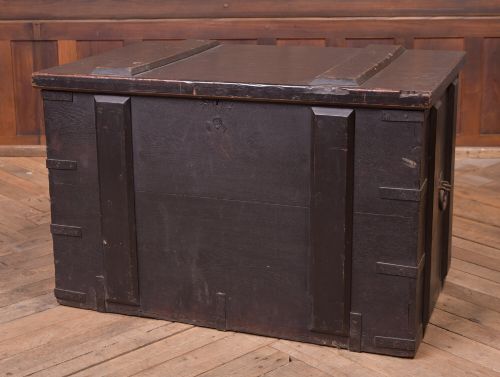


Colonial Teak Coffer
A colonial teak coffer is a robust, travel-ready storage chest built to endure humid climates, offering exceptional durability and rich historical character.
Colonial Teak Coffer
A colonial teak coffer is a substantial storage piece designed for transport and security during the expansion of trade routes. These trunks served merchants, military officers, and administrators who required secure containment for personal valuables and textiles across distant oceans.
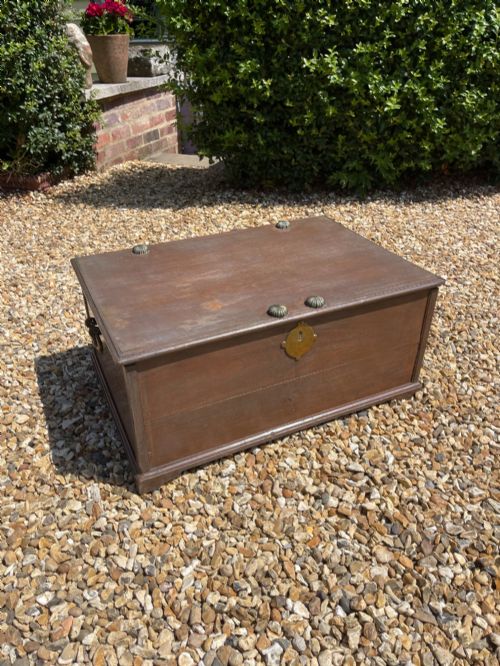
The pieces on this page span several centuries, reaching from the eighteenth century through the Victorian era up to nineteen-twenty. Visitors will frequently encounter Anglo-Indian and Dutch colonial variants, alongside campaign trunks and heavy brass-bound storage chests.
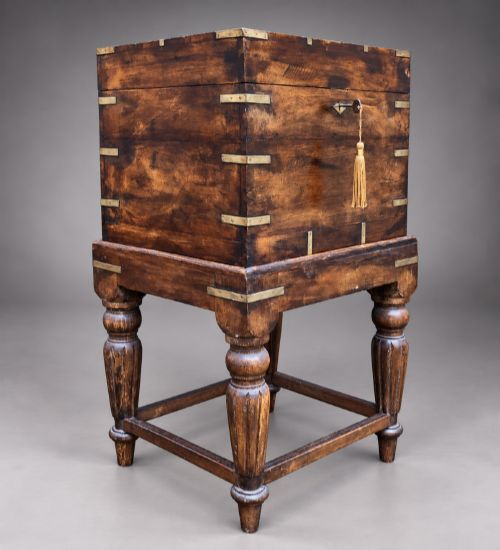
Forms range from simple blanket boxes and heavy iron-bound coffers to elevated cellarettes and chests mounted on bespoke stands. This diversity reflects the wide network of colonial outposts where local craftsmen adapted traditional British and European forms using native timber.
How they were made
Construction relies heavily on dense, oily teak and assorted hardwoods selected for resistance to warping and tropical humidity. Carpenters joined structural timbers securely, anticipating the strains of long sea voyages and frequent relocation.
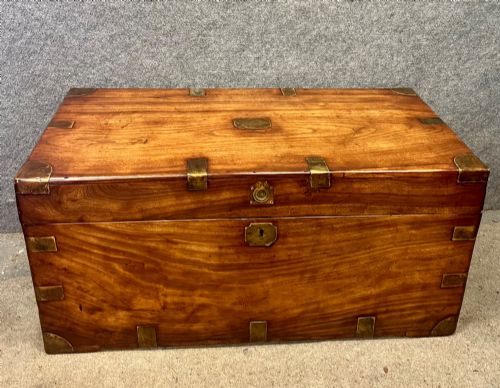
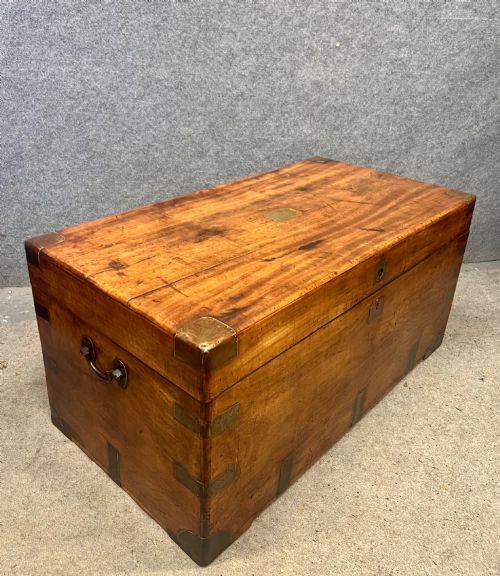
Metalwork played a critical role in reinforcement, utilising heavy brass strapping, decorative studs, and wrought iron mounts. Blacksmiths and founders hammered these protective brackets and corner plates directly onto the timber to safeguard the edges against impact.
Surface finishes vary from the natural oiled grain of solid teak to dark lacquer applications and ripple moulding. Certain specialised variants incorporate contrasting ebony details or intricate brass decoration embedded directly into the lid and sides.
Materials documented across the inventory include solid teak, ebony, brass, iron, and applied lacquer finishes.
What varies in quality
The caliber of a colonial teak coffer depends significantly on the complexity of its metal mounts and the integrity of its joinery. Superior examples display dense, hand-hammered brass work and robust corner bracing that integrates seamlessly with the heavy hardwood body.
Proportion and scale dictate the desirability of the piece, with larger standing coffers and fitted cellarettes commanding particular attention. The presence of original stands, intricate interior compartments, and undamaged locking mechanisms distinguishes finer utilitarian trunks from simpler utility boxes.
The Colonial Teak Coffer Glossary
- Campaign chest
- A portable storage unit built in sections with recessed brass handles for military officers on the move. These modular chests stack securely on top of one another.
- Cellarette
- A specialised container designed to hold bottles of wine or spirits safely during transport. They often feature partitioned interiors tailored to individual glass vessels.
- Coffer
- A heavy, lockable chest traditionally used for storing valuables, documents, or precious textiles. Their deep wells and reinforced lids offered maximum security against theft.
- Ripple moulding
- A decorative, undulating profile carved into the wooden framing of a chest. This technique creates a textured surface that catches the light along the borders.
- Zanzibar chest
- A distinct type of heavily brass-studded storage trunk associated with East African and Indian Ocean trade routes. They frequently feature elaborate brass plate work and hidden interior tills.
Colonial Teak Coffer: Frequently Asked Questions
What is a colonial teak coffer?
A colonial teak coffer is a heavy, durable storage chest constructed overseas during the eras of European trade expansion. They were engineered to protect valuable cargo from moisture, pests, and the rough conditions of maritime travel.
These pieces combine sturdy tropical hardwoods with functional metal hardware. Their designs reflect the specific needs of administrators, merchants, and military personnel stationed far from home.
How were these chests used historically?
Owners utilised these coffers to transport clothing, important documents, currency, and personal valuables across oceans and continents. They functioned as portable wardrobes and strongboxes for individuals living transient lives.
Upon reaching a destination, the trunks often doubled as household furniture, serving as tables, benches, or bedside storage. Their robust construction allowed them to withstand decades of heavy daily use.
How do I style a teak coffer at home?
A teak coffer works effectively as a coffee table in a living room, providing both a stable surface and hidden interior storage. Placing one at the foot of a bed offers a practical place for spare blankets and linens.
Because the timber has a warm, rich tone, these pieces anchor a room visually. They pair well with both traditional interiors and modern minimalist spaces that require a touch of historical warmth.
How can I tell the age of a coffer?
Dating relies on examining the construction methods, the style of the brass hardware, and the specific type of hinges and locks. Eighteenth-century examples often feature hand-forged ironwork and simpler dovetailed construction.
Victorian and later nineteenth-century pieces frequently incorporate standardised brass binding and more elaborate decorative studwork. Comparing the patination of the wood and the wear on the handles also provides clues to the era of manufacture.