
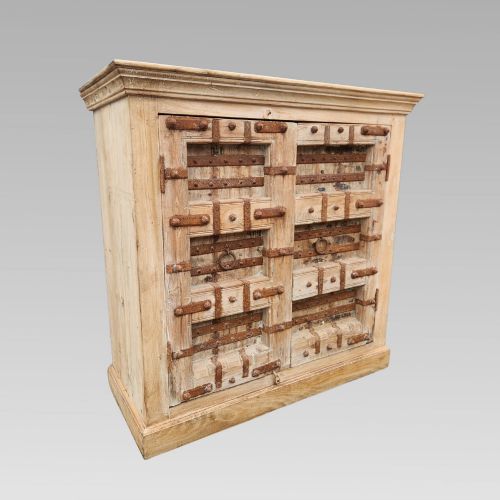


Studded Iron Wooden Chest
A studded iron wooden chest brings heavy metal straps, rivets and dense timber together to secure valuables for travel or storage.
Studded Iron Wooden Chest
When you search for a studded iron wooden chest, you find robust containers built to withstand heavy handling and secure contents with metal bindings. These pieces combine wooden carcasses with iron or brass strapping, corner plates and sturdy fastenings.
You are most likely to meet Victorian and nineteenth-century examples on this page, alongside earlier Georgian, eighteenth-century and seventeenth-century variants. Forms range from blanket boxes and travel trunks to coffers, money boxes and storage cupboards.
Origins span across British, Indian, Swedish, Japanese and Chinese traditions, showing distinct regional woodworking methods. Anglo-Indian, Baroque Revival, George III and Scandinavian Country styles all appear within the selection.
Materials and construction
Constructed primarily from timber such as oak, teak, pine, hardwood and hide-covered wood, these chests rely on strong foundational joinery. Iron, wrought iron and brass provide structural reinforcement through straps, studs and corner brackets.
Metalwork is secured with hand-driven rivets and studs that fasten the iron bands firmly to the wooden body. Leather and hand-painted finishes appear on specific trunks, adding surface texture or colour to the exterior.
Listings feature iron, brass, teak, leather, pine, wrought iron and oak across seventeenth-century to Victorian periods.
Determining quality
Quality rests in the integration of the metalwork with the timber carcass, where hand-forged iron straps and flush-set studs demonstrate superior craftsmanship. The weight and thickness of the timber frame dictate the structural integrity of the piece.
Design sophistication elevates certain examples, particularly where decorative Baroque Revival carving or specific regional joinery defines the exterior. The presence of original working locks, hinges and bound handles distinguishes finer items.
The Studded Iron Wooden Chest Glossary
- Cofer
- A large strong box or chest used for storing valuables, typically bound in metal for extra security.
- Zenibako
- A traditional Japanese merchant money box featuring internal compartments and secure fastenings.
- George III
- A British stylistic period spanning the second half of the eighteenth century and early nineteenth century, known for refined proportions.
- Baroque Revival
- An architectural and decorative style from the nineteenth century that reinterprets exuberant seventeenth-century ornamentation.
- Anglo-Indian
- Describing items made in India during the British period, combining local timber work with British furniture forms.
Studded Iron Wooden Chest: Frequently Asked Questions
What were studded iron wooden chests used for?
These chests served primarily for transporting personal belongings, money and valuable cargo safely across long distances. Their robust construction protected contents from moisture, theft and rough handling during travel.
At home, they functioned as secure storage for blankets, documents and household valuables. Many remained in halls or chambers where their heavy metalwork displayed the owner's status and security.
How do I care for a wooden and iron chest?
Keep the timber clean with a dry cloth and occasionally feed the wood with appropriate wax to prevent drying out. Avoid placing the chest in direct sunlight or near heat sources that might split the boards.
Protect the iron straps and studs from moisture to prevent rust development. A light application of microcrystalline wax can help stabilise the metal surfaces without harming adjacent leather or wood.
How can I tell an older chest from a later one?
Examine the construction methods, nail types and hinges, as hand-forged ironwork and pegged timber joints indicate earlier periods. Machine-cut screws and modern adhesives point towards nineteenth-century or later manufacture.
Consider the wood species and style, such as seventeenth-century leather boxes versus Victorian pine blanket boxes. Wear patterns around handles and feet also reveal the age through natural use over generations.
Where were these chests made?
Origins vary widely across the inventory, including British workshops, Scandinavian maker spaces and Indian regional centres. Chinese and Japanese makers also produced distinct strong boxes and coffers for local commerce.
Trade routes and colonial expansion heavily influenced pieces like Anglo-Indian trunks, which blended local materials with European forms. Each region utilised native timbers such as teak, oak or pine alongside locally forged iron.