
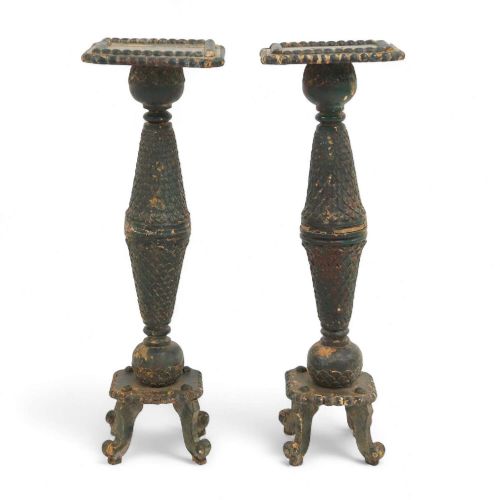
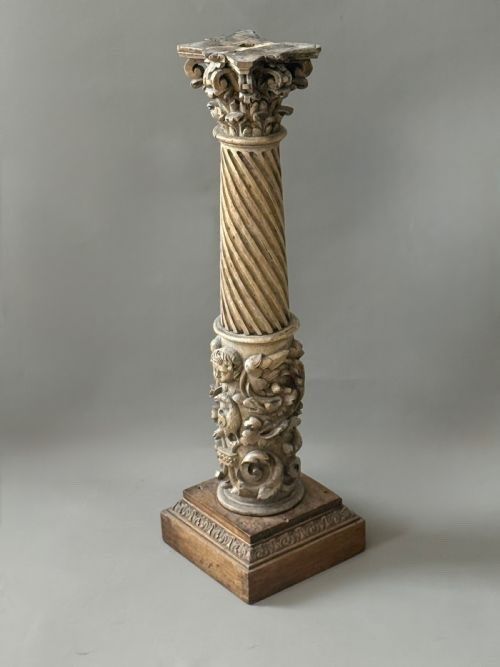
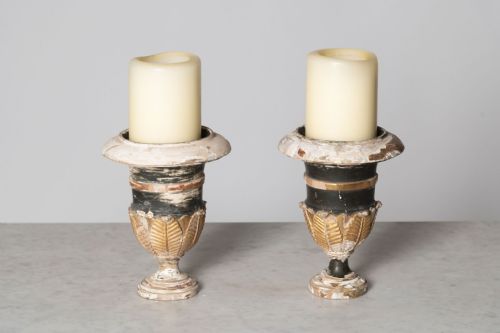
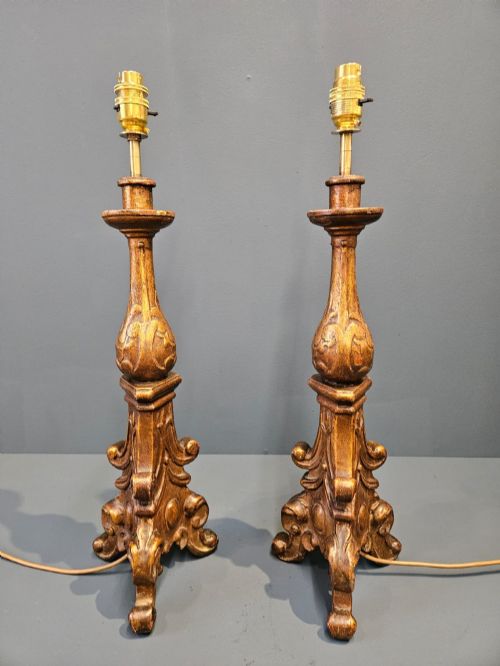
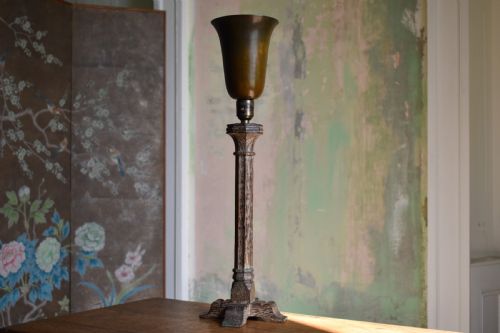
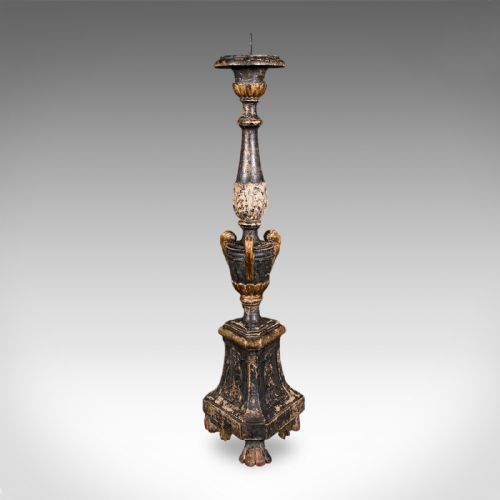
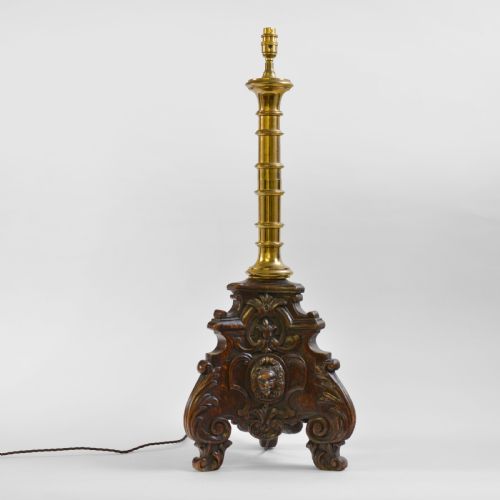


Carved Wooden Candlesticks
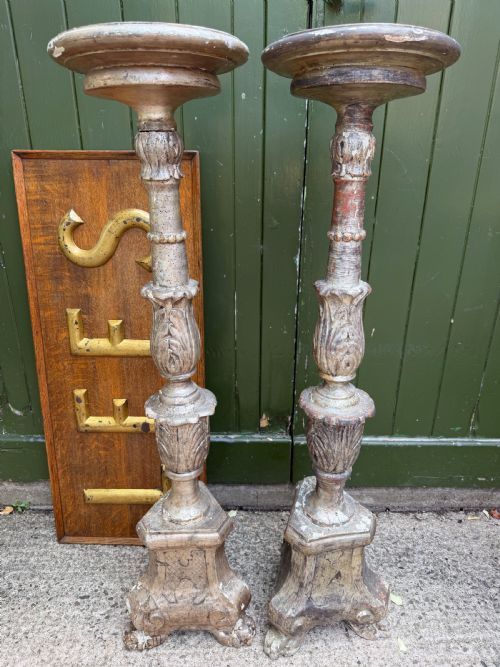
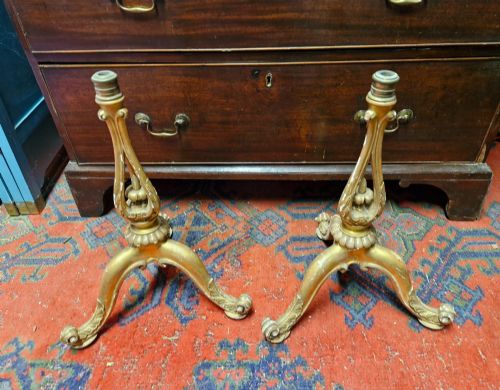
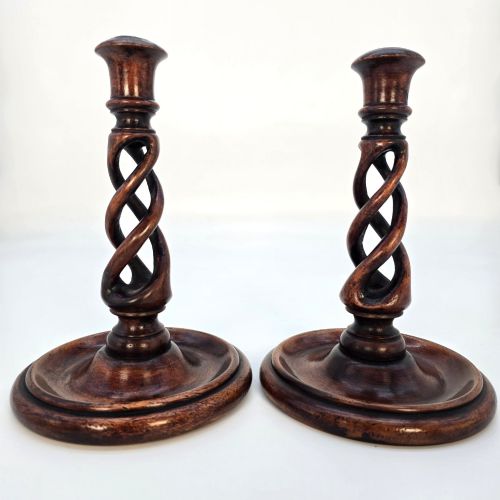
These carved wooden candlesticks bring tactile warmth and centuries of hand-carved detail to a room, ranging from baroque Italian giltwood to barley twist oak.
Carved Wooden Candlesticks
Carved wooden candlesticks encompass functional lighting supports, altar-style candleholders, torcheres, and figural sculptures adapted for candles or lamps across the seventeenth, eighteenth, and nineteenth centuries. You find examples spanning Italian Baroque, French Neoclassical, and English vernacular styles, reflecting the diverse religious and domestic interiors of their origin.
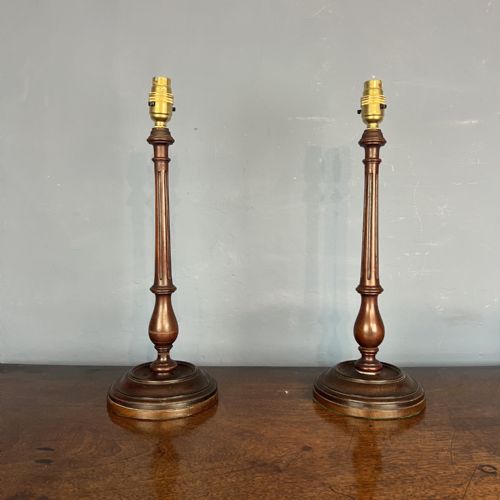
The most common forms on this page include matched pairs of turned timber candlesticks, tall architectural torcheres, and table lamps converted from older candle holders. These pieces frequently show regional European characteristics, from English oak and mahogany to continental fruitwood, pine, and limed timber.
Many survivors carry the marks of their original liturgical or domestic function, including pricket spikes, socket cups, and socle bases. Others demonstrate folk art traditions, incorporating carved figures, animals, or distinctive twisted columns into everyday household objects.
Materials and construction
Wood selection ranges from dense hardwoods such as oak, lignum vitae, and mahogany to softer fruitwoods and pine, shaped by hand carving or turned on a lathe. Craftsmen frequently applied surface treatments including gesso, gold and silver leaf, polychrome paint, or ebonisation to mimic more expensive materials or achieve dramatic light reflection.
Turned elements like barley twists and open spirals required precise lathe work, while figural and baroque pieces relied on skilled hand chisel work to define drapery, foliage, and anatomical details. Brass fittings, prickets, and sockets were often integrated into the wooden bodies to hold candles securely.
Carved Wooden Candlesticks Retail Price Guide 2026
Typical asking prices for carved wooden candlesticks among the pieces listed under this phrase on Sellingantiques today, from the lower quarter to the upper quarter. They describe what is for sale here now, not the wider market.
Listings feature carved wooden candlesticks spanning the seventeenth to the twentieth centuries, utilising oak, fruitwood, mahogany, and gessoed pine.
Distinguishing quality
Quality rests in the crispness of the hand carving and the integrity of the original surface, whether unadorned timber grain or layered gesso and gilding. Pieces with deep, confident chisel marks and well-proportioned turning stand apart from simpler vernacular items.
The survival of original painted, silvered, or gilt surfaces without excessive restoration dictates the visual power of these objects. Proportion and balance, particularly in tall torcheres and pillar forms, separate standard utility pieces from exceptional decorative examples.
The Carved Wooden Candlesticks Glossary
- Torchere
- A tall stand or candlestick designed to elevate a light source. They often feature carved wooden pillars and tripod or socle bases.
- Pricket
- A sharp metal spike set into the centre of a drip pan to hold a candle. This form is common in liturgical and older continental pieces.
- Barley Twist
- A spiral column turned on a lathe to resemble a twist of barley. It became popular in English and continental furniture and woodwork.
- Giltwood
- Timber that has been coated with a thin layer of gold leaf. It creates a reflective surface suited to baroque and neoclassical interiors.
- Treen
- Small handmade wooden household objects. These items display the natural grain and age patination of domestic timbers.
- Socle
- A short plain plinth or pedestal supporting a figure or candlestick. It provides stability and visual weight at the base.
Carved Wooden Candlesticks: Frequently Asked Questions
How do I date an antique candlestick?
Dating relies on combining the timber species, the turning style, and the construction methods visible in the base and socket. Stylistic cues such as baroque curves or neoclassical symmetry also point toward specific centuries.
Secondary evidence like original paint, gesso application, or the wear patterns around the candle cup help confirm the age of the piece.
Were these originally lamps or candlesticks?
Many items began life as hand-held or altar candlesticks, torcheres, or figural candle holders before being adapted later for electrical wiring. Conversions often retain their original wooden bodies and turned columns.
Examing the top socket area reveals whether a pricket or candle cup was removed to accommodate electrical fittings.
How should I care for wooden candle holders?
Keep wooden candle holders away from direct heat sources and strong sunlight to prevent the timber from drying out or splitting. Dust them gently with a dry, soft cloth.
Avoid using liquid polishes on antique surfaces, particularly those with original paint, gesso, or silver leaf, which require minimal intervention.
What is a pricket candlestick?
A pricket candlestick uses an upward-pointing metal spike rather than a hollow socket to secure the candle. This design was standard for large church altars and heavy continental tapers.
Candles used on prickets required a slightly hollowed base to sit firmly upon the spike.
Can I use real candles in antique holders?
Using real candles depends on the diameter of the socket and the stability of the base. Many antique sockets are narrower or wider than modern standard candles.
If lighting candles, ensure the holder stands on a secure, level surface away from drafts, and protect delicate wood and gilt surfaces from dripping wax.