
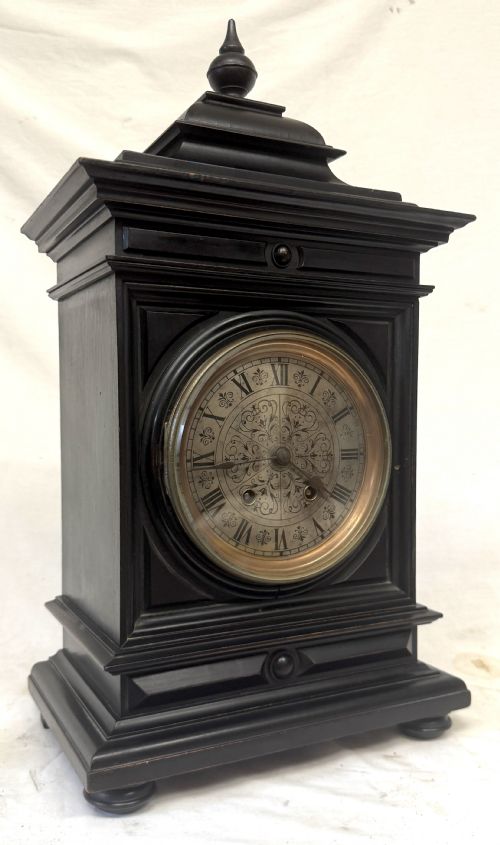
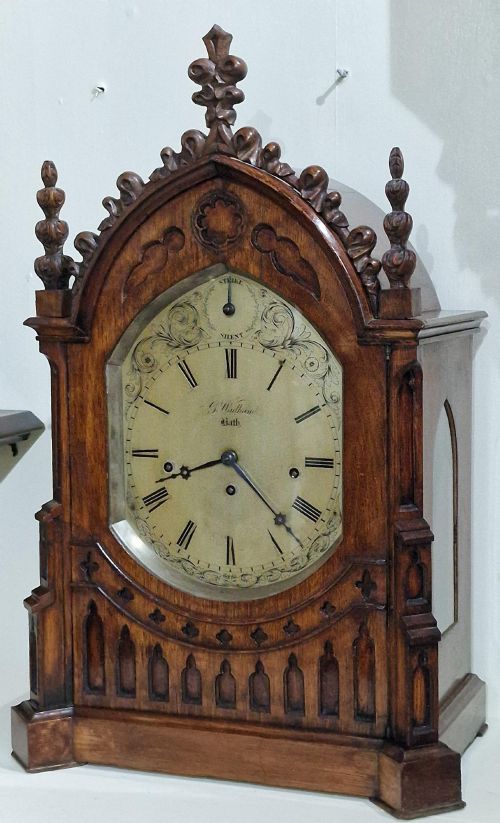
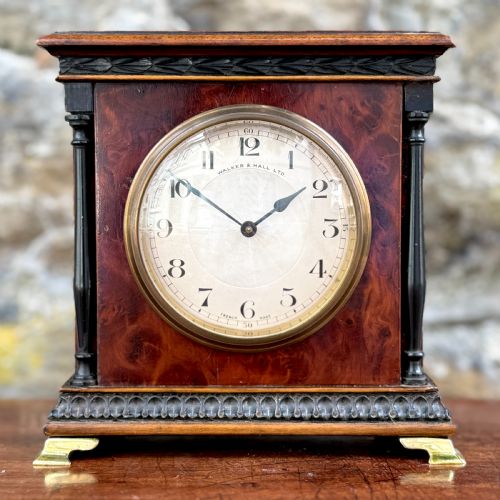
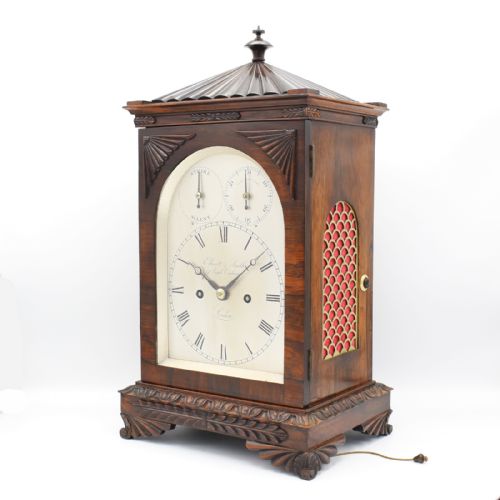
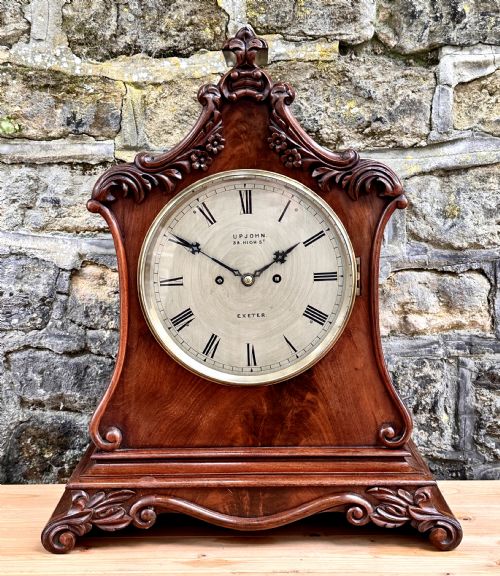
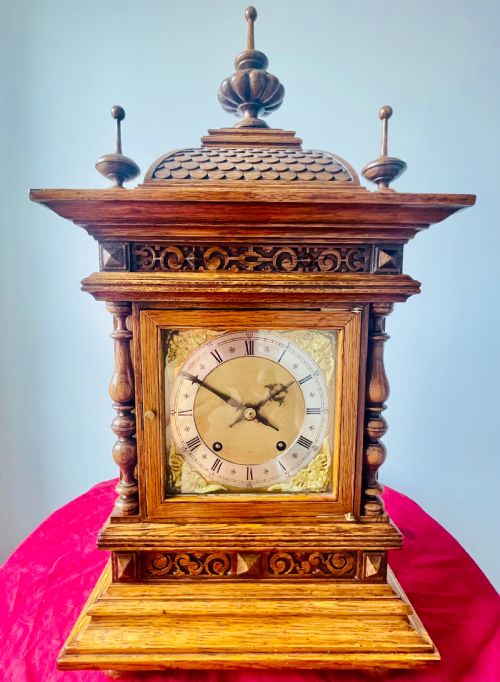
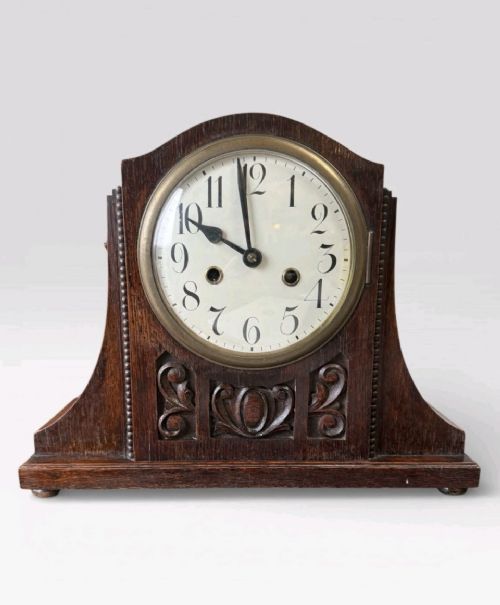


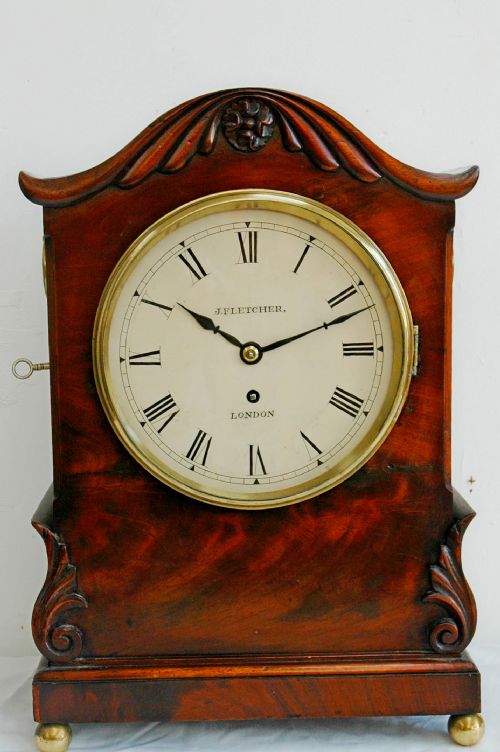


Carved Wooden Bracket Clock
A carved wooden bracket clock brings mechanical precision and rich timber case-work into a room, spanning periods from the Georgian era through to the Art Deco years.
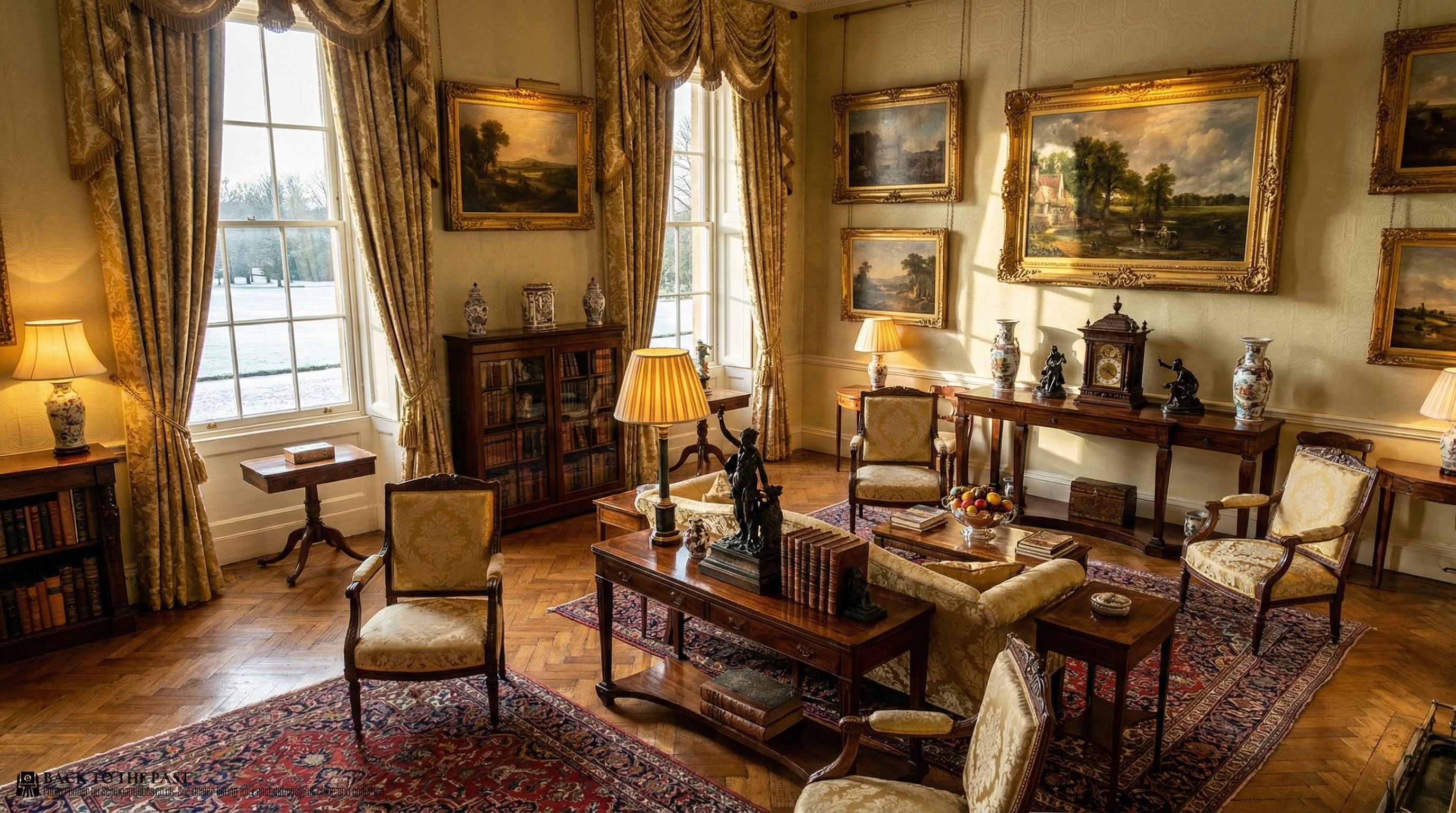
Carved Wooden Bracket Clock
A carved wooden bracket clock is a portable timepiece designed originally for placement on a wall bracket or table surface, appearing here in forms that range from compact library pieces to imposing quarterly striking models. The pieces listed on this page predominantly date from the nineteenth century, including Victorian, Regency, and Georgian iterations alongside later Edwardian and Art Deco examples.
Makers and retailers such as Winterhalder and Hofmeier, Lenzkirch, and London clockmakers like Webster of Cornhill shaped these instruments in various styles including Gothic Revival and French Rococo. Alongside true bracket clocks, the selection includes mantel clocks and wall clocks sharing similar timber construction and dial configurations.
The timber cases encompass rich grains of mahogany, walnut, burr walnut, and oak, often paired with brass bezels, glass viewing panels, and silvered or enamel dials. These timepieces served domestic and library settings, functioning both as precise timekeepers and prominent architectural ornaments.
How they were made
Case-makers utilised dense timbers such as mahogany, oak, and walnut, selecting figured or burr veneers to add visual depth to the polished surfaces. Artisans carved intricate details directly into the wood or applied moulded elements like the characteristic Regency pad top.
Clock movements relied on brass plates and gear trains, frequently driven by fusee mechanisms or triple fusee arrangements to regulate power evenly across single, twin, or triple train setups. Dials were constructed from silvered metal or enamel, protected behind brass-framed glass doors and paired with finely wrought hands.
Carved Wooden Bracket Clock Retail Price Guide 2026
Typical asking prices for carved wooden bracket clock among the pieces listed under this phrase on Sellingantiques today, from the lower quarter to the upper quarter. They describe what is for sale here now, not the wider market.
What varies in quality
The standard of a carved wooden bracket clock rests upon the crispness of the timber carving and the architectural proportion of the case. Richly figured mahogany and burr walnut veneers demonstrate superior material selection by the maker.
Movement complexity separates standard timepieces from high-end examples, particularly those featuring twin or triple fusee mechanisms, musical chimes, or quarter-striking capabilities by notable makers such as Winterhalder and Hofmeier or Lenzkirch. The legibility and fineness of the silvered metal or enamel dials further distinguish the tier of craftsmanship.
George Wadham Bath·Walker and Hall·Ellicott and Smith·Winterhalder and Hofmeier·Webster Cornhill London·Mappin and Webb·Connell of London·Piggin Norwich·Geo Carter Hackney·J Kingerley Manchester·Hampson and Son·Funnell of Brighton·Lenzkirch
The Carved Wooden Bracket Clock Glossary
- Fusee
- A conical pulley used in mechanical clocks to maintain an even pull on the gear train as the mainspring unwinds. This mechanism compensates for the decreasing tension of the spring.
- Pad top
- A raised, domed architectural form on the upper section of a clock case, frequently seen on Regency mahogany pieces. It gives the silhouette a strong profile.
- Silvered metal
- A brass or copper dial face treated with a silver compound to produce a pale, matte finish. Engraved numerals and markings are filled with dark wax for legibility.
- Triple fusee
- A movement incorporating three separate fusee cones to power timekeeping, striking, and chiming trains independently. It is typical of more complex musical bracket clocks.
- Burr walnut
- Timber taken from the gnarled growths of a walnut tree, yielding dense, swirling grain patterns. Cabinet-makers applied it as veneer to highlight luxury surfaces.
Carved Wooden Bracket Clock: Frequently Asked Questions
Where should I place a bracket clock?
These timepieces suit sturdy mantelpieces, desks, or dedicated wall brackets where their timber cases and brass details remain visible. Ensure the surface is level so the pendulum beats evenly.
Keep the clock away from direct heat sources and strong draughts to protect the antique wooden veneer and internal mechanical movement.
How do fusee movements work?
A fusee movement uses a conical pulley connected to the mainspring via a fine chain or cord. As the spring unwinds and loses strength, the chain moves to a wider part of the cone, maintaining consistent force on the gears.
This clever engineering ensures the clock maintains accurate time throughout its running cycle between windings.
What is the difference between a bracket clock and a mantel clock?
Historically, bracket clocks were portable spring-driven timepieces placed on wooden wall brackets to keep them away from damp floors, often featuring carrying handles. Mantel clocks evolved later to sit directly on fireplace ledges.
In modern terminology, the terms frequently overlap, though bracket clocks often retain more complex movements such as fusee setups or striking trains.
How do I date a mahogany bracket clock?
Dating relies on stylistic clues such as the form of the case, dial materials, and the sophistication of the movement. Regency examples often display pad tops and brass inlay, while Victorian models introduce heavier carvings and Gothic or Rococo motifs.
Maker signatures engraved on the backplate or dial provide a direct link to recorded working dates.