

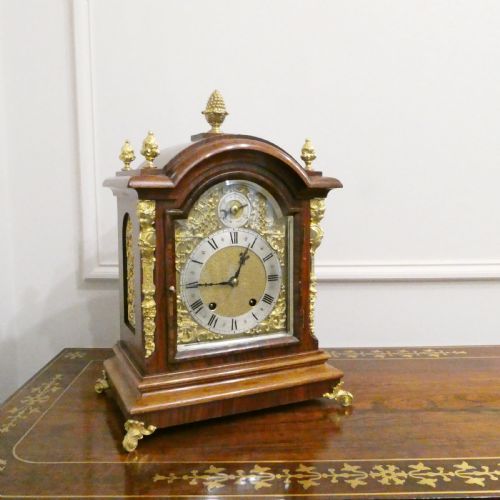


Late Victorian Bracket Clock
These late victorian bracket clock pieces bring domestic timekeeping into sharp focus with rich timber cases and precise mechanical movements.
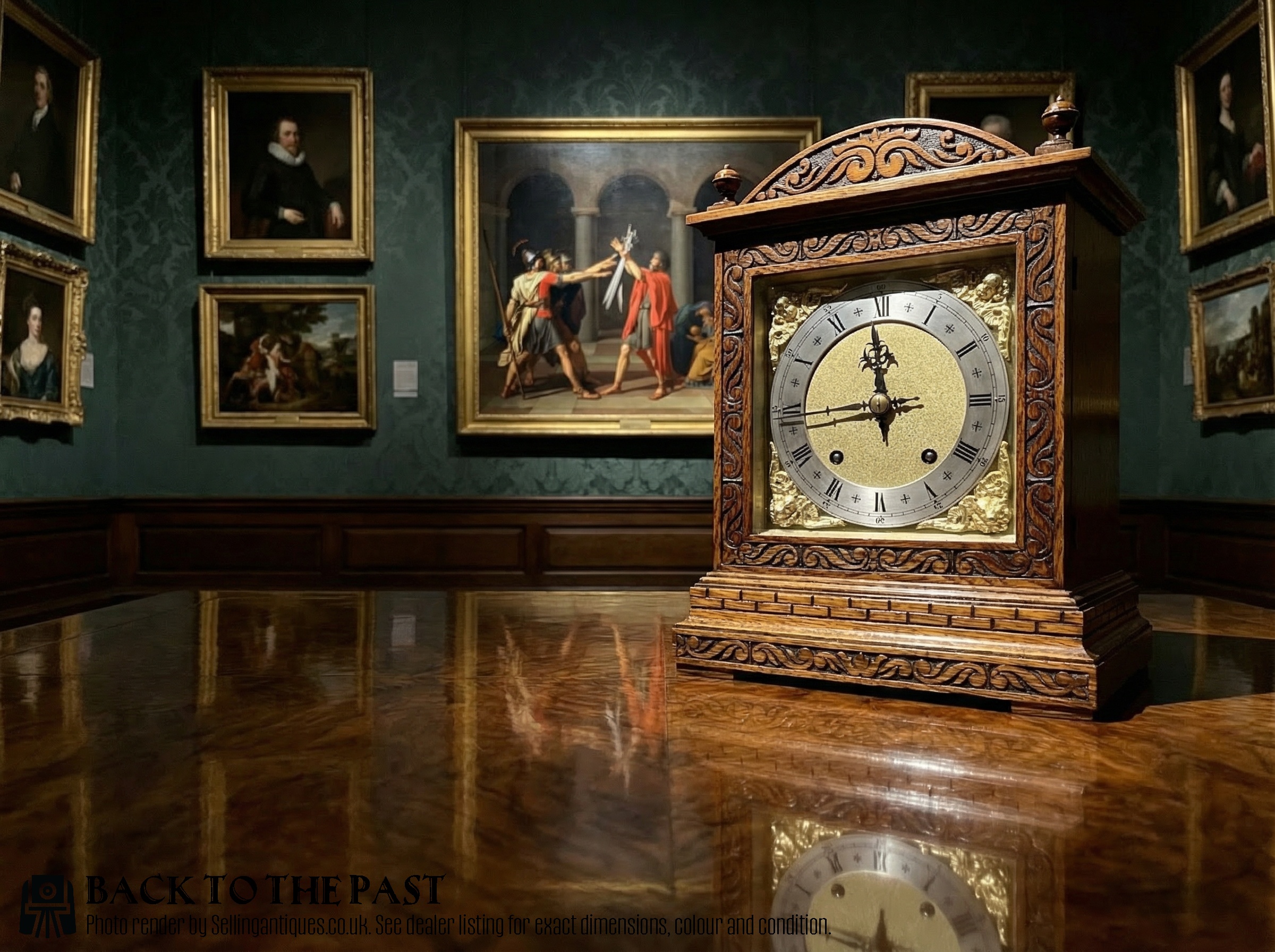
What They Are
A late victorian bracket clock sits comfortably on mantelpieces and shelves, serving as both a functional timepiece and an architectural centrepiece in a room. The pieces found here span the late nineteenth century, predominantly covering the decades around eighteen-eighty to eighteen-ninety.
Most examples take the form of mantel clocks housed in substantial wooden cases, often designed with classical or architectural lines. These objects originate from British and continental workshops, combining robust mechanical movements with carefully polished timber exteriors.
How They Were Made
Cabinet makers utilised dense hardwoods such as mahogany, walnut, oak, and ebonised wood to build the structural cases, frequently highlighting figured grain patterns on the visible surfaces. Glass panels protect the dial faces, while brass and steel components form the intricate internal gear trains and movements.
Dial faces incorporate crisp enamel chapters for legibility, complemented by delicate metal hands. Exterior surfaces receive fine polishing to seal the wood and accentuate the natural colouration of the materials without obscuring the grain.
Retail Price Guide 2026
Typical UK retail prices for late victorian bracket clock, calculated from the Sellingantiques database of over a million retail prices indexed since 2003. This retail price guide relies exclusively on Sellingantiques data; no external sources or auction records are used, so the figures do not describe the wider market.
The documented pieces span the Victorian era, specifically concentrating on the decades around eighteen-eighty and eighteen-ninety.
What Varies in Quality
Superior examples distinguish themselves through the complexity of their internal movements, such as twin fusee or Westminster chiming mechanisms, rather than simple striking configurations. The choice of cabinet timber also dictates quality, with highly figured walnut and rich mahogany sitting above standard ebonised finishes.
The precision of the brass work and the crispness of the enamel dials reveal the skill of the original maker. Finer clocks display harmonious proportions where every architectural detail of the wooden case aligns with the mechanical sophistication within.
Mappin & Webb·Winterhalder & Hofmeier
The Late Victorian Bracket Clock Glossary
- Bracket clock
- A portable mechanical clock originally designed to sit on a wall bracket to aid projection of sound. These later nineteenth century examples usually rest directly on furniture surfaces.
- Fusee
- A conical pulley used in mechanical clocks to maintain an even drive force as the mainspring unwinds. This mechanism improves timekeeping accuracy across the power reserve.
- Ebonised wood
- Timber treated to imitate ebony through staining or finishing techniques. This dark surface creates a sharp contrast against brass bezels and white enamel dials.
- Chiming
- An acoustic function where the clock plays musical notes or quarters on gongs or bells before sounding the hour. Westminster movements are a notable example of this capability.
Frequently Asked Questions
Where should I place a bracket clock?
These clocks suit sturdy surfaces like mantelpieces, sideboards, or dedicated wall shelves where they remain stable and level. Keeping them away from direct sunlight and damp areas helps preserve the timber case and internal steel components.
Ensure the placement allows easy access for winding the movement and setting the hands. A stable foundation also ensures the pendulum or balance wheel maintains an even beat.
What is a twin fusee movement?
A twin fusee movement uses two separate conical pulleys to regulate the power delivered from the mainsprings to the timekeeping and striking trains. This sophisticated arrangement ensures constant torque reaches the escapement.
Clocks featuring this mechanism generally represent a higher grade of horological construction. The constant force translates directly into more reliable daily timekeeping.
How do I identify a late victorian piece?
Late nineteenth-century characteristics appear in the timber selection, case styling, and dial construction typical of the eighteen-eighties and eighteen-nineties. Maker signatures on the dial or movement backplate often provide definitive confirmation of the production era.
Examining the construction methods inside the case helps confirm the period. Hand-cut screws, specific brass casting styles, and traditional joinery all point towards this distinct timeframe.