




French Movement Clock
A french movement clock brings precision horology into domestic spaces, pairing reliable continental mechanics with cabinetwork in mahogany, burr walnut and gilt brass.
Understanding the French Movement Clock
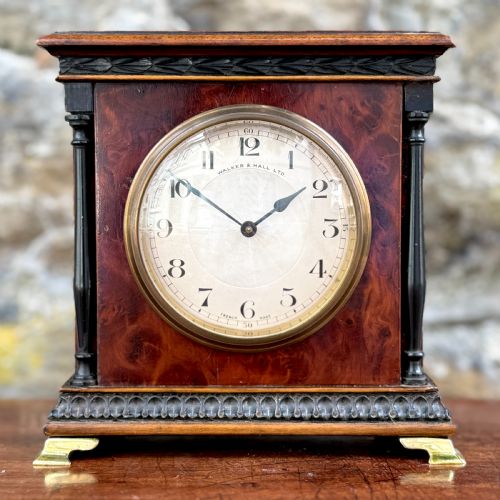
A french movement clock represents a convergence of British casing traditions and continental gear trains, turning up in forms from petite carriage clocks to substantial mantel and longcase pieces. Buyers searching for a french movement clock encounter domestic timekeepers spanning the Victorian and Edwardian eras, alongside early twentieth-century examples.
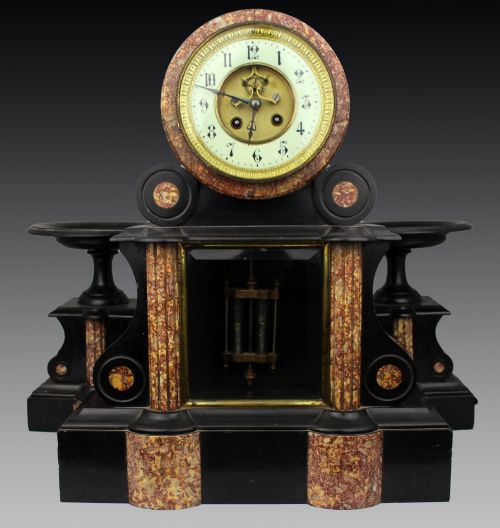
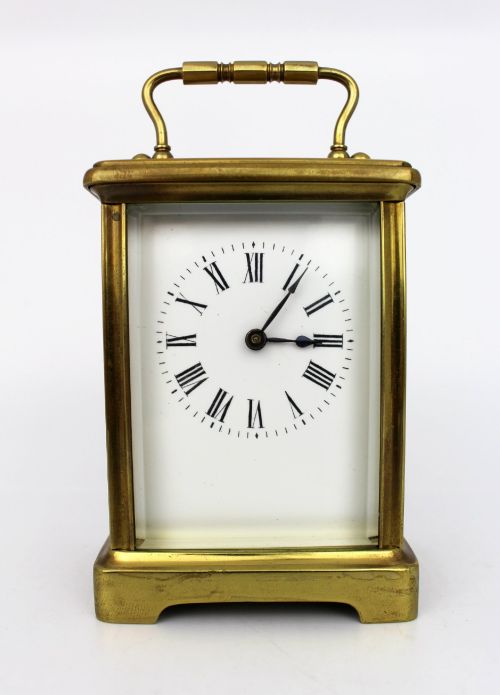
The objects listed range from sturdy oak and mahogany longcase housings to delicate glass-paneled carriage clocks and slate mantel pieces. These horological items serve as both practical timekeepers and decorative centrepieces, reflecting the aesthetic preferences of nineteenth and early twentieth-century interiors through varied dial designs and casework.
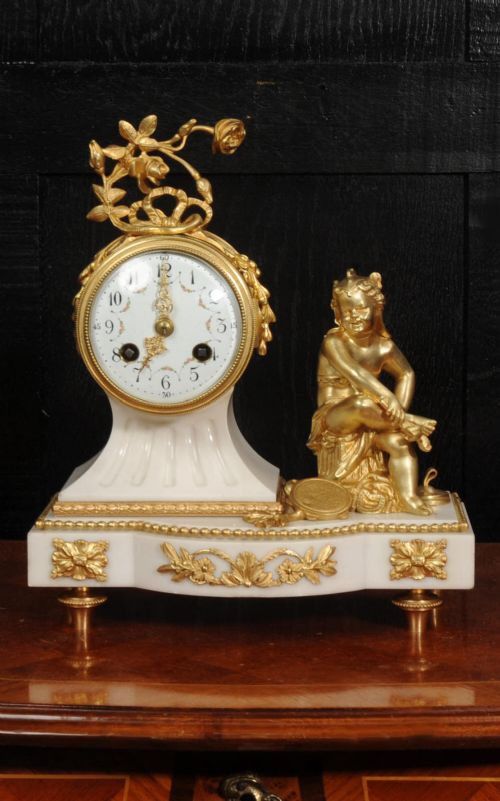
Mantel clocks and carriage clocks dominate the available forms, often featuring visible escapements, enamel dials, and striking mechanisms. Each piece relies on the imported French mechanical heart housed within timber, metal, or stone enclosures fashioned by contemporary makers.
Materials and Construction
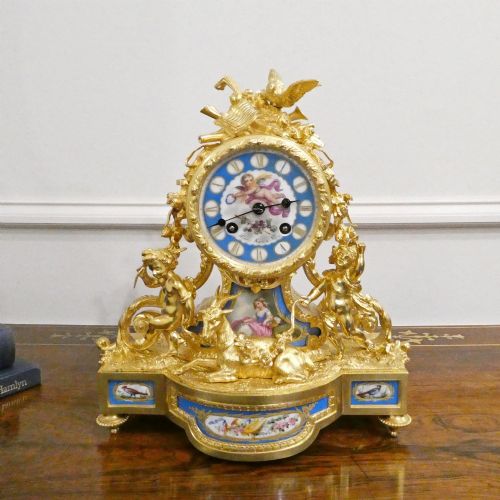
Casework utilises dense hardwoods such as mahogany and burr walnut, alongside ebonised wood, slate, and cast metals like ormolu and gilt brass. Glazed panels protect delicate enamel dials and expose the moving brass gear trains within.
Movements incorporate cut brass plates, steel pivots, and escapements designed for eight-day operation, drum strikes, or repeating carriage functions. Silk suspension threads appear in earlier examples, regulating the pendulum with fine adjustment.
Available forms range from domestic mantel clocks and grand longcase housings to portable carriage clocks.
Distinctions in Quality
Quality rests in the crispness of the cast ormolu mounts, the depth of polish on the mahogany and burr walnut veneers, and the legibility of the hand-painted enamel dials. Superior examples maintain original winding components and clean, unmarked brass plates within the movement.
Heavier stone and metal cases show finer detail in their chased decoration and structural integrity, whilst timber housings display tighter grain matching and careful joinery around glass bezels and rear doors.
Walker and Hall·Charles Frodsham·Holingue Freres·Japy Freres·L'Epee
The French Movement Clock Glossary
- Carriage clock
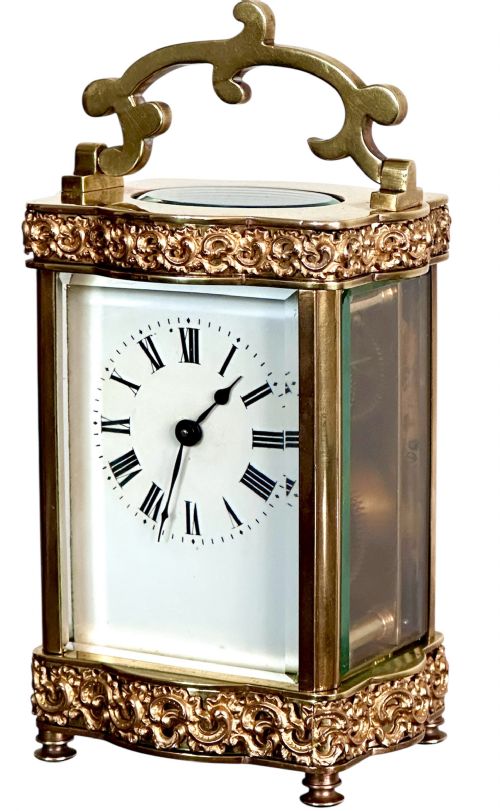
- A portable timekeeper designed for travel, typically featuring a brass frame inset with bevelled glass panels and a folding handle at the top.
- Silk suspension
- A method of hanging a pendulum from a fine ribbon of woven silk rather than a steel spring, common in early nineteenth-century French escapements.
- Ormolu
- Gilded bronze or brass ornamentation applied to clock cases, providing a bright metallic finish that mimics solid gold.
- Garniture
- A set comprising a central clock flanked by matching decorative objects such as urns or vases, intended to sit together on a mantelpiece.
- Escapement
- The internal mechanism that controls the release of power from the gear train to the pendulum or balance wheel, ensuring steady motion.
Frequently Asked Questions
How do I wind a French movement clock?
Insert the appropriate winding key into the dial apertures and turn gently clockwise until you feel resistance. Avoid over-winding to protect the internal mainspring.
Ensure you support the clock case with one hand while operating the key to prevent accidental movement on the mantelpiece.
What is an eight-day movement?
An eight-day movement requires winding approximately once a week to maintain continuous operation. This mechanism uses a longer mainspring barrel or weight drop than daily clocks.
Most carriage and mantel clocks from this tradition utilise this setup for domestic convenience.
How should I clean the brass case?
Dust the exterior regularly with a soft, dry cloth to prevent the accumulation of grime on gilt surfaces and glass panels. Avoid liquid chemical cleaners that strip the original lacquer.
Professional horological maintenance is recommended for cleaning internal gear trains without disturbing delicate escapements.
Why does my clock strike the wrong hour?
Striking mechanisms can become out of step if the hands are moved backward or if the strike sequence is interrupted during transport. Allow the clock to strike out its sequence independently.
Many French rack-striking designs self-correct after a full cycle, or feature a small cord to advance the count lever manually.
Are these clocks suitable for daily use?
These mechanical timepieces function reliably in modern homes when placed on a level surface away from direct sunlight and drafts. Regular servicing keeps the brass pivots and wheels running smoothly.
Treating the winding and setting with care preserves the antique components for future generations.