


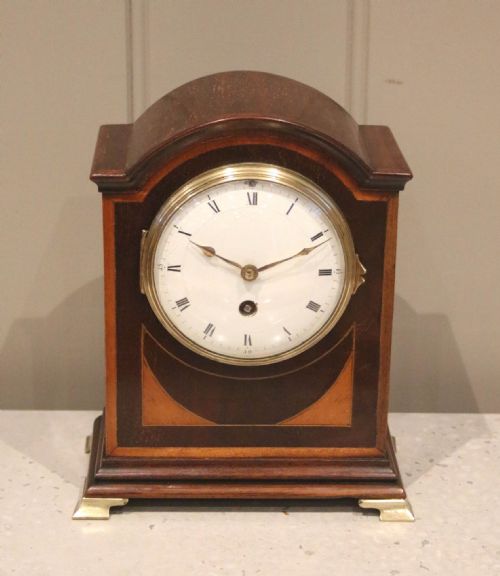


Classic Mantle Clock
These classic mantle clock pieces bring traditional timekeeping into a room, offering the structured form and dependable mechanism that collectors prize.
Classic Mantle Clock
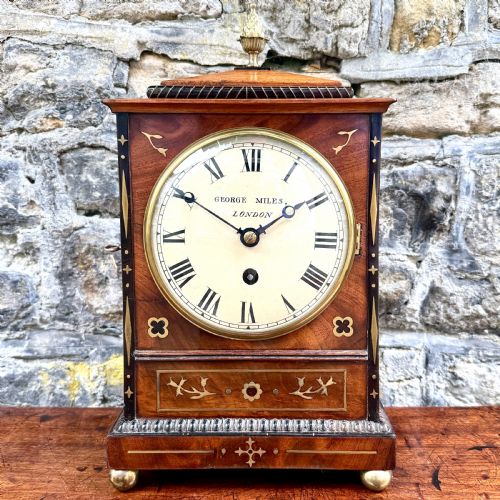
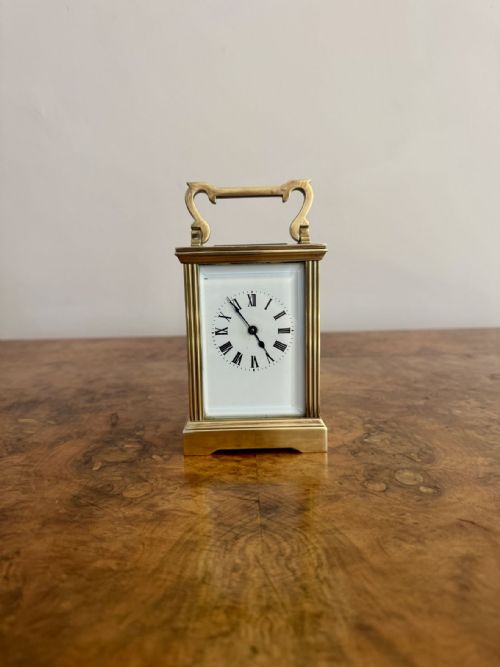
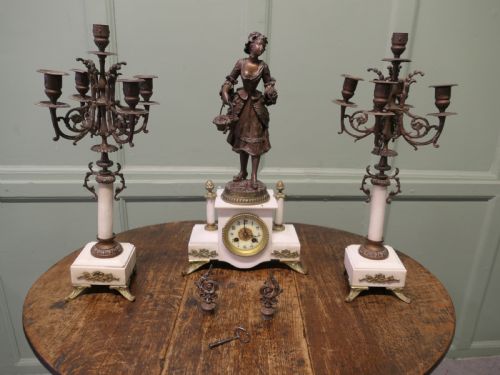
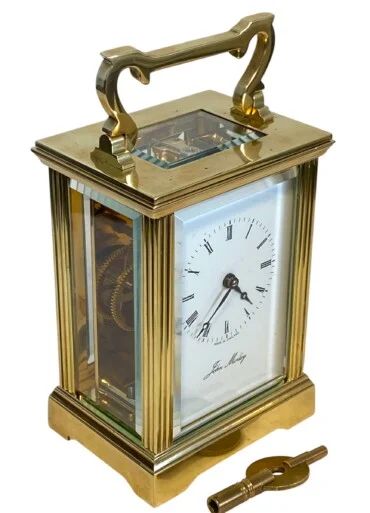
A classic mantle clock sits on a shelf or bracket, taking forms that range from early bracket designs in mahogany to Edwardian brass carriage clocks and French bronze garnitures. When you search for a classic mantle clock, you encounter pieces that span the Georgian, Regency, Victorian, and later twentieth-century periods.
The most common examples on this page are mahogany mantel clocks and brass carriage clocks. These include variations like the English 8-day carriage clock and the mahogany timepiece mantel clock, alongside larger French bronze and brass examples.
Origins vary across English workshops and nineteenth-century French makers, reflecting traditional styling such as Neoclassical Revival, Georgian Revival, and Edwardian design. Each piece serves as a functional timepiece and an architectural object for the interior.
How they were made
Materials span timber, metal, and glass, with mahogany and satinwood inlay forming the structural case work for bracket and mantel clocks. Brass, gilt brass, and bronze provide the framework for carriage clocks and French garniture sets, often paired with enamel dials.
Clockmakers utilised mechanical movements requiring careful gear assembly and escapement fitting, frequently housing 8-day movements within fitted wooden or metal cases. Engraving on brass panels and delicate woodwork inlay complete the physical construction.
Listings feature woods such as mahogany, oak, and satinwood, alongside metals including brass, gilt brass, and bronze.
What varies in quality
Quality rests in the precision of the mechanical movement and the integrity of the cabinet work or metal case. A signed movement by a known maker elevates a piece, as seen in examples by makers like Charles Frodsham.
The refinement of the materials, from finely figured mahogany and satinwood inlay to heavy cast bronze and detailed brass engraving, separates standard production from superior examples. Preservation of original components and dials also dictates the standing of each piece.
John Morley·Charles Frodsham·Holingue Frères
The Classic Mantle Clock Glossary
- Bracket clock
- A portable spring-driven clock originally designed to sit on a wall bracket. They typically feature fine wooden cases in mahogany and incorporate striking movements.
- Carriage clock
- A small, spring-driven timekeeper developed for travel in the nineteenth century. These brass-framed clocks frequently feature glass panels that expose the escapement.
- Garniture set
- A clock accompanied by matching decorative side pieces such as urns or candelabra. They form a coordinated decorative arrangement on a mantelpiece.
- Timepiece
- A clock that tells the time without a striking mechanism. Simpler in internal construction than a striking clock.
- Escapement
- The mechanical linkage that controls the release of power in a clock movement. It ensures the steady progress of the gear train.
Classic Mantle Clock: Frequently Asked Questions
How do I wind a classic mantle clock?
Most mechanical clocks require a key inserted into the dial holes to tension the mainspring. Care must be taken not to overwind the movement.
Consult the specific instructions for your 8-day or time-only mechanism to ensure proper handling of the gear train.
Where should I place a carriage clock?
Carriage clocks suit stable flat surfaces away from direct sunlight and damp conditions. Their brass and glass construction benefits from a secure mantel or shelf.
Avoid high-traffic areas where the clock might be easily knocked or displaced.
What is an 8-day movement?
An 8-day movement runs for approximately eight days on a single winding. This design reduces the frequency of intervention required by the owner.
It is a common feature in both English carriage clocks and mahogany mantel clocks from the nineteenth and twentieth centuries.
How do I identify a Georgian style clock?
Georgian style pieces rely on classical proportions, dark mahogany timbers, and restrained bracket clock silhouettes. They often feature architectural cornices and brass carrying handles.
Compare the casework details against established period forms to confirm the stylistic lineage.