
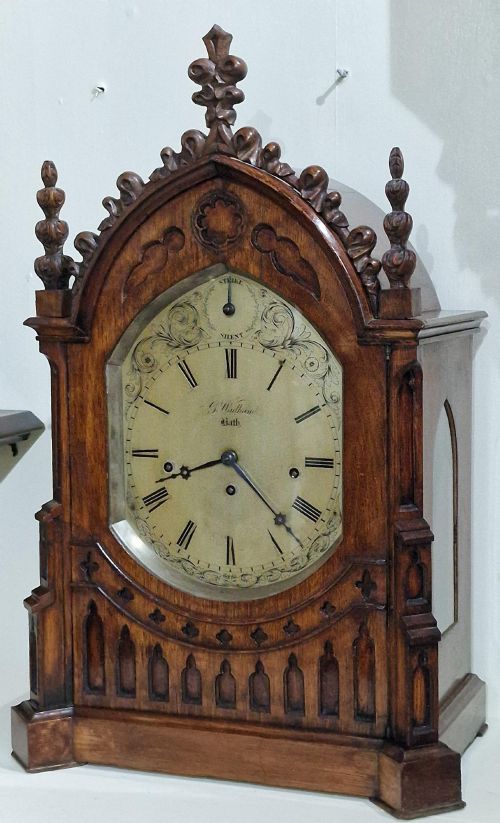
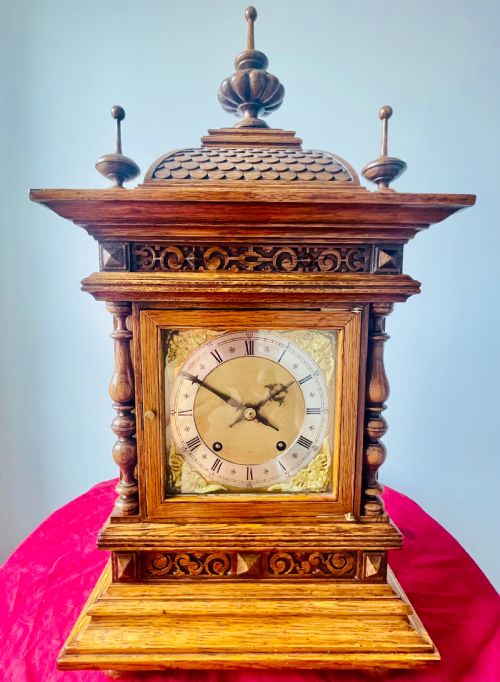
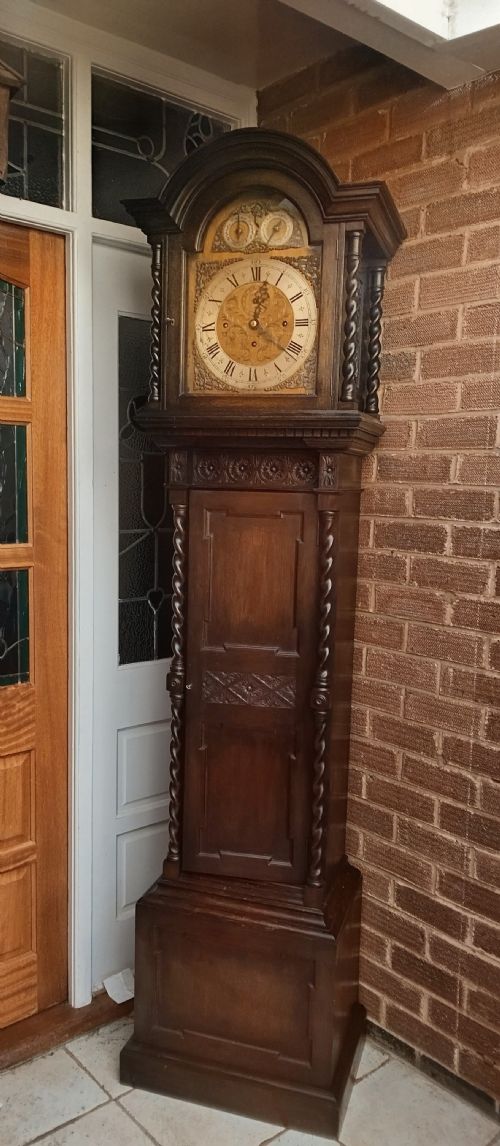


Carved Oak Chiming Clock
A carved oak chiming clock delivers a rich acoustic presence and solid timber warmth to a room, uniting mechanical timekeeping with deep relief carving.

Carved Oak Chiming Clock
A carved oak chiming clock encompasses tall floor-standing longcase pieces and compact shelf-bound bracket or mantel formats. These items emerge from periods spanning the nineteenth and twentieth centuries, including Victorian, Edwardian, and later iterations.
The selections on this page demonstrate a distinct preference for substantial timber housing paired with complex mechanical movements. Buyers encounter towering grandfather and grandmother clocks alongside architectural bracket pieces and boardroom timepieces.
Origin points range from British workshops to German makers such as Winterhalder and Hofmeier. The overriding characteristic remains the combination of figured oak cases featuring carved ornamentation and multi-bell or gong striking apparatus.
Materials and construction methods
Construction relies heavily on solid oak timber selected for its durable grain and receptivity to deep chisel work. Craftsmen shape and join the wood to form sturdy floor cases or portable table housings designed to resonate acoustic chimes.
Movements incorporate brass, steel, and silvered metal components assembled to drive multiple trains for time, strike, and chime melodies. Glass panels protect the dials while allowing visibility of the swinging pendulum and oscillating mechanisms.
Some boardroom clocks carry boards so massive they require two people just to contemplate moving them past the grandfather.
Distinctions in craftsmanship and scale
Quality separates along the complexity of the internal movement and the depth of the timber carving. Superior examples feature multi-train mechanisms playing several tunes or utilising tubular bells alongside crisply articulated foliage and architectural motifs on the oak case.
The architectural harmony between the substantial wooden housing and the calibrated brass or silvered dial dictates the overall execution. Proportion, original movement components, and the crispness of the hand-carved details define the upper tier of these pieces.
George Wadham·Winterhalder & Hofmeier
The Carved Oak Chiming Clock Glossary
- Bracket Clock
- A portable clock originally designed to sit on a wall bracket but later placed on tables or mantelpieces. These often feature elaborate wooden cases and complex striking trains.
- Grandfather Clock
- A tall floor-standing pendulum clock enclosed in a wooden case with a long waist. They are also known as longcase clocks.
- Fusee
- A conical pulley used in clock movements to maintain an even pull on the gear train as the mainspring unwinds. This device improves timekeeping accuracy.
- Triple Fusee
- A movement arrangement with three separate fusees powering the going train, the strike train, and the chime train. This setup permits quarter-chiming and hour-striking melodies.
- Westminster-Chime
- A four-note melody played on quarter-hours by clock chimes. It takes its name from the quarters played by the clock at the Palace of Westminster.
Carved Oak Chiming Clock: Frequently Asked Questions
How do I wind a chiming clock?
Winding requires inserting the appropriate key into the designated winding holes on the dial face and turning gently until resistance meets you. Care must be taken not to overwind the mainsprings.
Different trains control time, strike, and chime functions, meaning each arbor requires periodic attention depending on whether the movement is an eight-day or thirty-hour variety.
Where should I place a longcase clock?
A longcase clock requires a stable, level floor against an interior wall to ensure the pendulum swings evenly. Exterior walls subject the timber case to temperature fluctuations that affect wood stability.
Sufficient clearance around the hood is also necessary to allow easy access for door opening, winding, and routine mechanical adjustments.
Why does my clock chime incorrectly?
Striking and chiming trains can fall out of synchronization if the minute hand is forced backward during setting. The countwheel or rack mechanism relies on a specific sequence to drop levers into place.
Allowing the clock to complete its chiming cycle naturally without manual interference usually corrects minor positional discrepancies over the course of an hour.
How do I identify the period of an oak clock?
Dating relies on stylistic clues within the oak carving, dial materials, and the structural proportions of the case. Victorian and Edwardian pieces often display revival motifs like Gothic or Jacobean carving.
Movement technology also provides clues, as fusee setups and tubular bell additions align with specific manufacturing eras from the nineteenth and early twentieth centuries.