

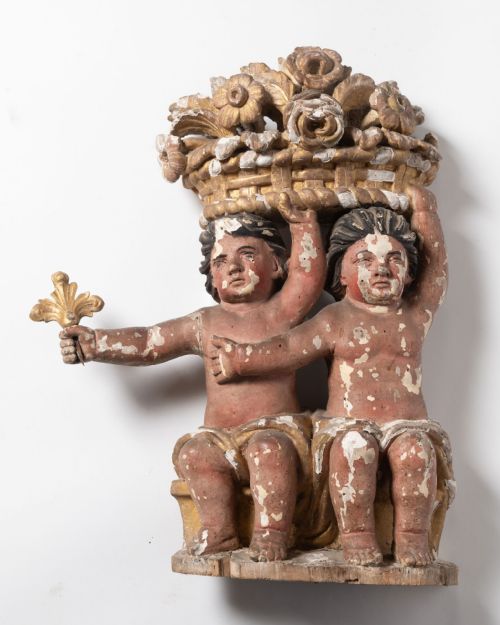


Carved Wooden Angel
A carved wooden angel brings centuries of devotional craft and Baroque theatricality into a room.
Carved Wooden Angel
A carved wooden angel encompasses figures, wall brackets, panels, and wings originating from the sixteenth through the twentieth centuries. Buyers seeking these items encounter Italian and French Baroque expressions alongside English and Continental Gothic or Renaissance examples.
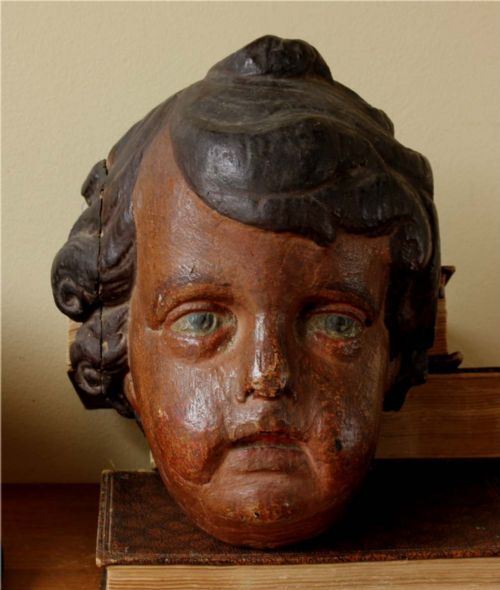
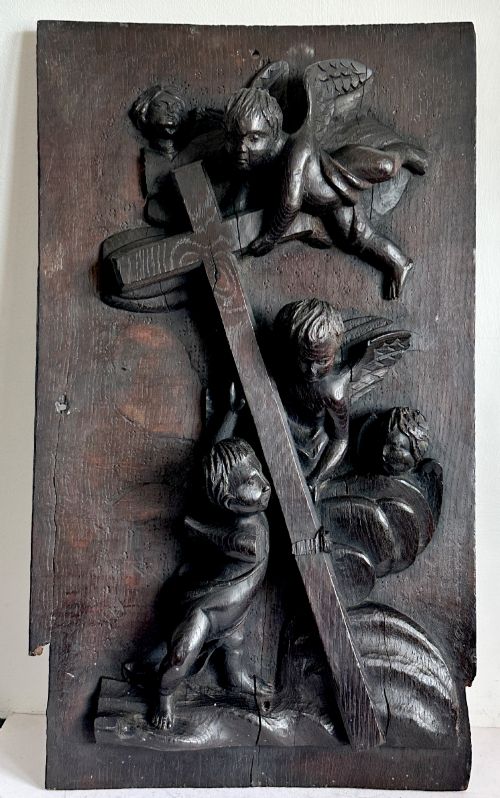
The selection ranges from life-sized church sculptures and architectural fragments to smaller household decorative carvings, putti heads, and candlesticks. Oak, pine, and various softwoods form the foundation of these works, frequently embellished with surface treatments.
How they were made
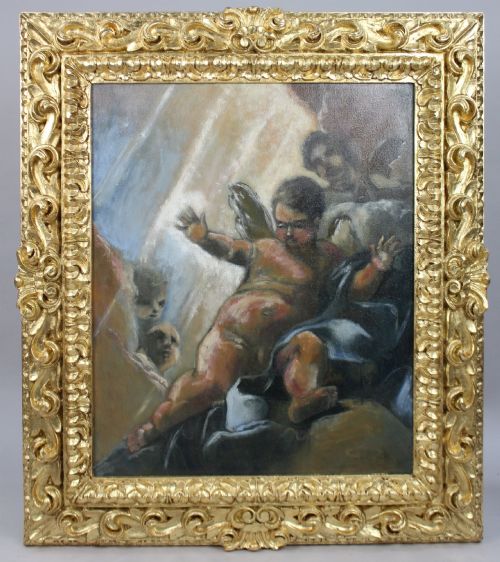
Finishers applied polychrome paint, silvering, or gold leaf directly onto the prepared wood or gesso layers to achieve rich visual depth. Some figures utilise oil paint to render flesh tones and garments on the carved wooden substrate.
Listings feature works spanning the sixteenth through the twentieth centuries, utilising oak, pine, gold leaf, gesso, and polychrome paint.
What varies in quality
The definition and depth of the initial wood carving separate ambitious workshop outputs from simpler production. Master carvers rendered anatomy, wing feathers, and cascading drapery with convincing movement and anatomical proportion.
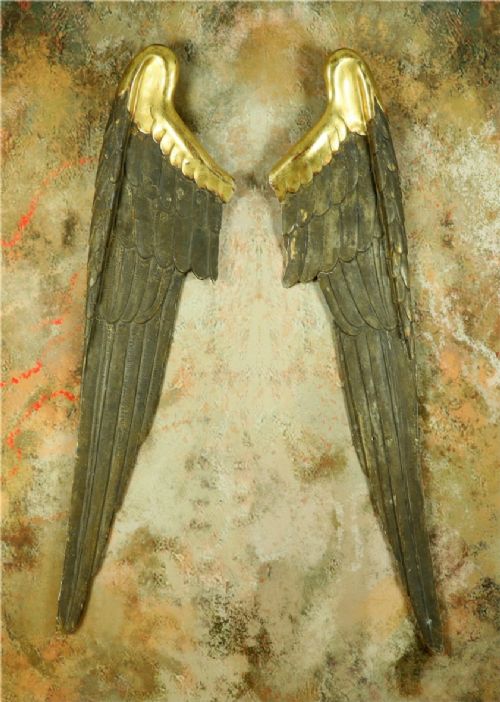
The preservation of original surface treatments, whether polychrome pigment or giltwood, heavily influences the character of a piece. Intact layers of historical paint or gold leaf retain the intended visual drama conceived by the maker.
The Carved Wooden Angel Glossary
- Polychrome paint
- Decoration applied in multiple colours directly to wood or gesso. This technique brings realism and visual warmth to ecclesiastical sculptures.
- Giltwood
- Timber coated with gold leaf over a prepared ground layer. It provides a reflective surface that catches candlelight in architectural settings.
- Putto
- A chubby male child figure often depicted with wings in art. These motifs frequently appear in Baroque church decorations and wall brackets.
- Gesso
- A plaster-like mixture applied to wood surfaces to prepare them for gilding or painting. It allows carvers to achieve crisp details before finishing.
- Wall bracket
- A projecting architectural support designed to hold figures or objects. Many examples feature cherubic carvings beneath a flat display surface.
Carved Wooden Angel: Frequently Asked Questions
How do I date a carved wooden angel?
Dating relies on analysing the tool marks left in the timber, the underlying wood species, and the stylistic traits of the period. Seventeenth and eighteenth-century pieces often display hand-adzed surfaces and traditional joinery methods.
Surface finishes also provide clues, as genuine historical gesso and polychrome paint age with characteristic craquelure and oxidation. Comparing the carving style to established Baroque or Renaissance examples helps narrow down the origin.
Where were these figures originally displayed?
Many of these carvings originated inside European churches, chapels, and private domestic altars as devotional objects. Figures and panels decorated architectural elements, altarpieces, and choir stalls.
Others functioned as decorative wall brackets or architectural fragments within grand domestic interiors. Their transition into modern homes places them on walls, mantelpieces, and display surfaces.
How should I clean a wooden angel?
Maintenance requires gentle dusting with a soft, dry brush to remove particles without disturbing fragile surfaces. Avoid using liquid cleaners, polishes, or damp cloths, especially on pieces with exposed gesso, paint, or gold leaf.
Keeping the object away from direct sunlight and stable humidity levels prevents the wood from drying out and cracking. Professional conservators should handle any structural repairs or deeper cleaning.
What is the difference between an angel and a putto?
Angels serve as spiritual messengers and celestial beings in religious iconography, often depicted with full wings and robes. They appear as archangels or attendants in biblical scenes.
Putti derive from classical mythology as winged infant spirits, though they were adopted into Renaissance and Baroque religious art. They represent playful or decorative elements rather than specific biblical figures.