





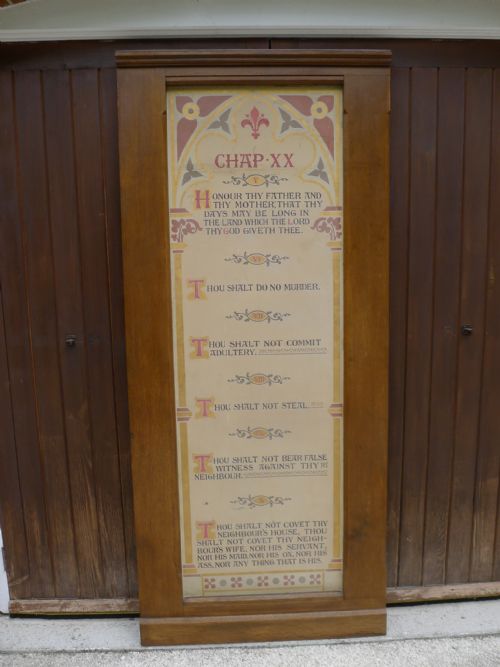

Ecclesiastical Wall Art
Ecclesiastical wall art brings sacred heritage and solemn beauty into domestic spaces through centuries of devotional craftsmanship.
Ecclesiastical Wall Art
Ecclesiastical wall art comprises devotional objects and architectural fragments designed for sacred spaces, surviving from the seventeenth century through the early twentieth century. These pieces include carved wooden panels, framed saints, crosses, and illuminated religious texts.
Materials and Methods
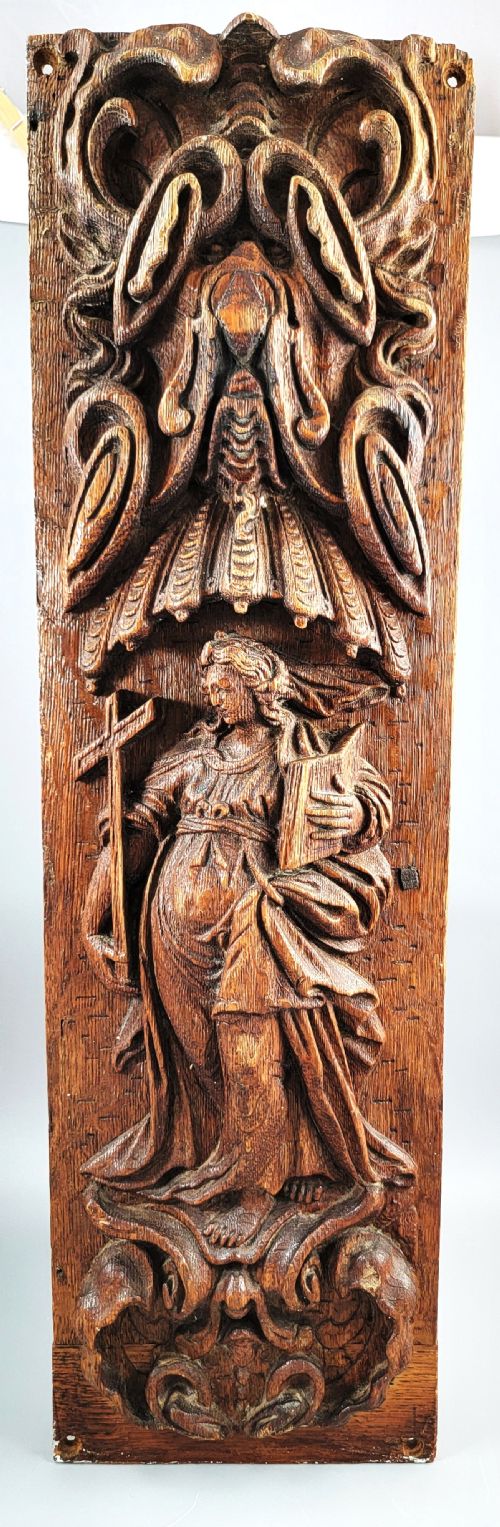
Carvers shaped dense hardwoods like oak, walnut, and pine using traditional chisels and gouges to create deep relief panels and three-dimensional figures. Surfaces often received layers of polychrome paint, gold leaf, or simple wax finishes to highlight the intricate grain and detail.
Framed works incorporate paper, glass, and textiles, utilising lithography and handwritten illumination. Metal components in crosses combine brass with mineral inlays such as lapis lazuli.
Current listings span from seventeenth-century Baroque carved oak panels to early twentieth-century brass crosses and Spanish icons.
Assessing Quality
Quality rests upon the depth and precision of the carving, distinguishing confident sculptural work from simpler folk output. Well-defined facial expressions and crisp drapery folds in wood demonstrate superior hand execution.
The integrity of surface treatments defines the visual impact. Original polychrome paint, untouched gold leaf, and authentic period framing hold greater aesthetic value than later restorations.
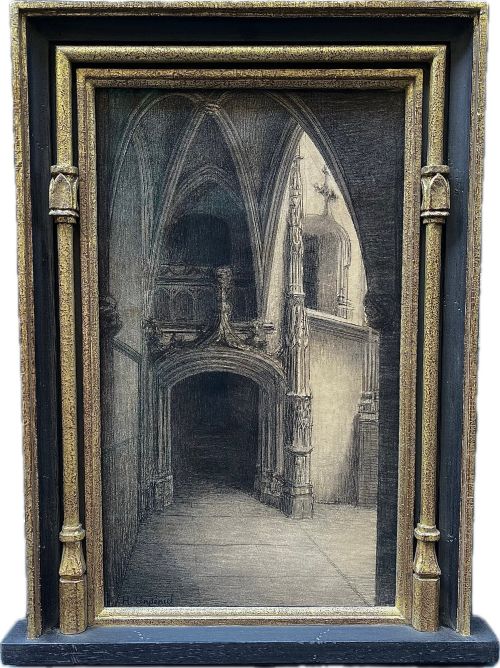
Henri Charles Angéniol
The Ecclesiastical Wall Art Glossary
- Tracery
- Architectural stone or woodwork ornamentation, typically consisting of intersecting ribwork that forms geometric patterns in Gothic designs.
- Polychrome
- The practice of decorating architectural elements, sculpture, or pottery in a variety of bright colours.
- Lithograph
- A print produced by a printing process in which a image is made on a stone or metal plate with a greasy substance.
- Pilaster
- A rectangular support that projects slightly from a wall, resembling a classical column with a base and capital.
- Shadowbox
- A glass-fronted display case that mounts on a wall to house and protect three-dimensional devotional objects.
Ecclesiastical Wall Art: Frequently Asked Questions
What is a tin tabernacle?
A tin tabernacle is a prefabricated corrugated iron church building popular in the nineteenth century for rapidly growing congregations.
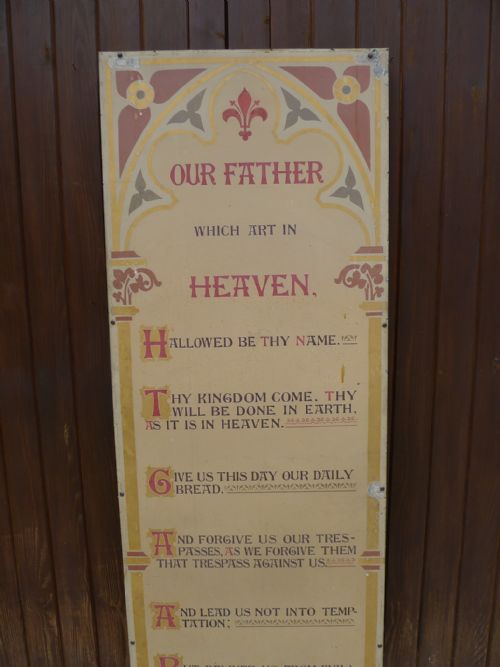
Items sourced from these structures often include illuminated religious texts and practical wall fixtures created for modest chapels.
How do I date carved wood panels?
Dating relies on tool marks, timber species, and stylistic traits associated with specific historical movements like the seventeenth-century Baroque period or nineteenth-century Gothic Revival.
Examining the backboards and joining methods provides further clues regarding the age of the piece.
Where should I hang heavy wooden reliefs?
Heavy carved panels require secure wall fixings anchored directly into structural studs or masonry to support the considerable weight of dense hardwoods like oak and walnut.
Positioning pieces away from direct heat sources prevents the timber from warping or splitting over time.
What is the Oxford Movement?
The Oxford Movement was a nineteenth-century religious revival within the Church of England that emphasised traditional liturgy and rich ecclesiastical art.
Objects associated with this movement reflect a deliberate return to medieval aesthetic standards in church furnishings.