
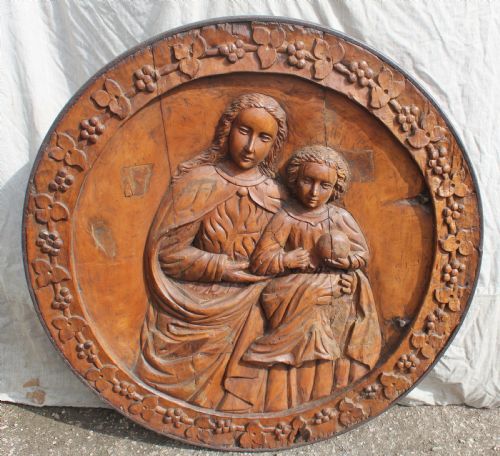


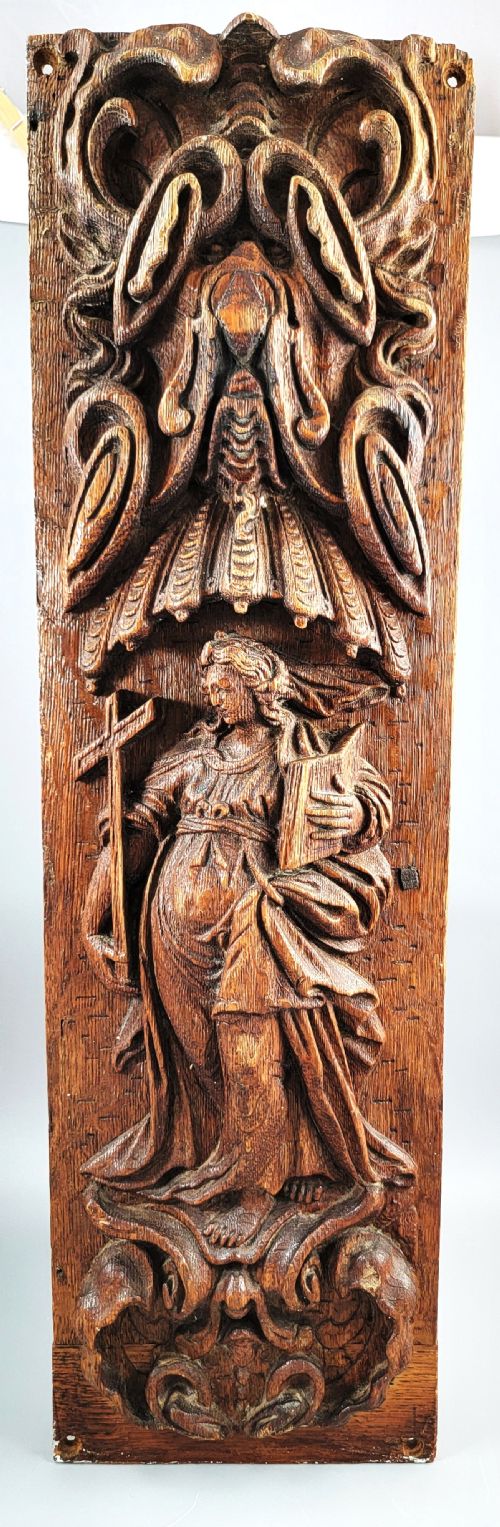
Antique Religious Wall Panel
An antique religious wall panel brings centuries of devotion, carved wood and painted iconographic tradition directly into a room.
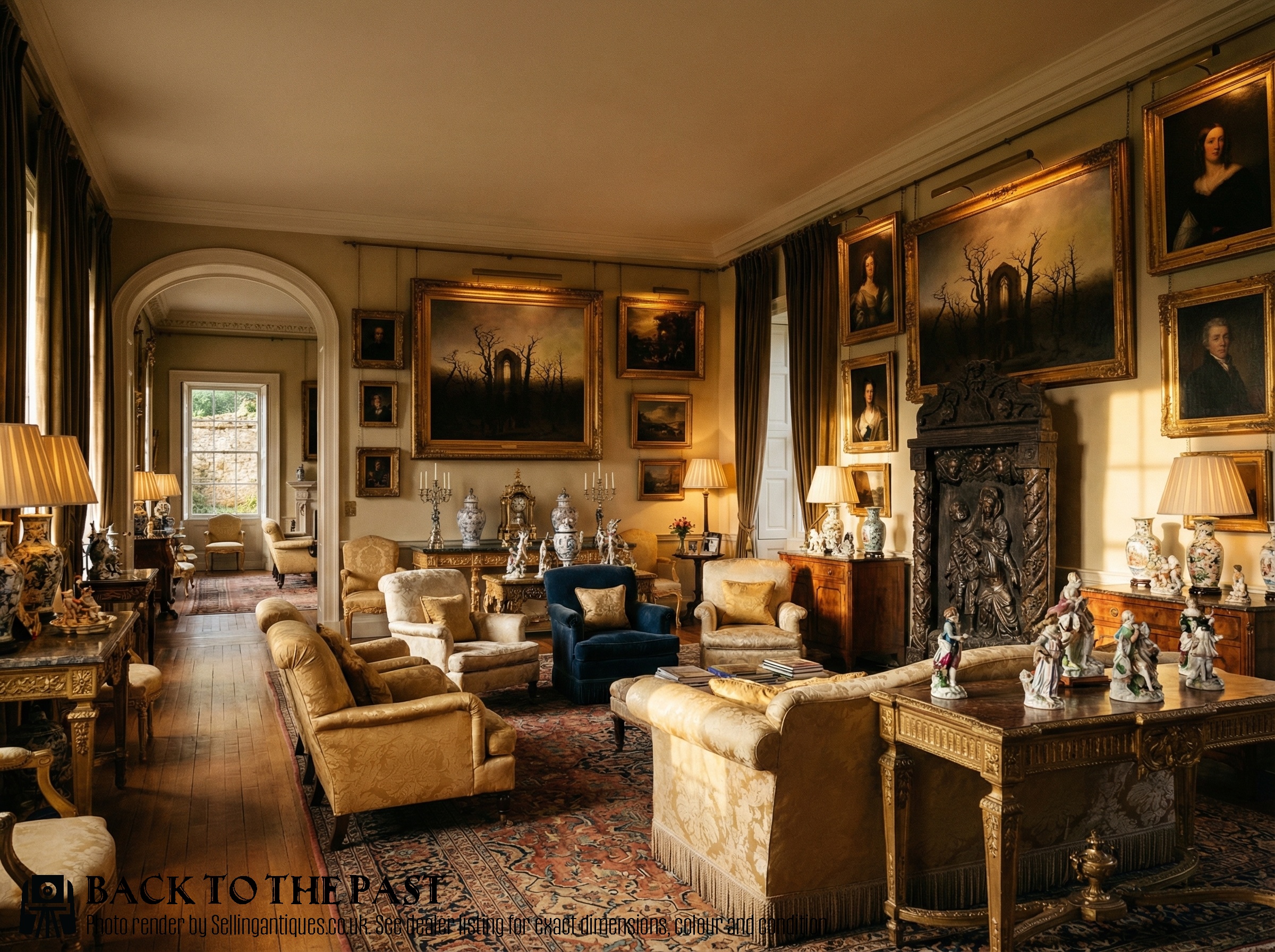
Antique Religious Wall Panel
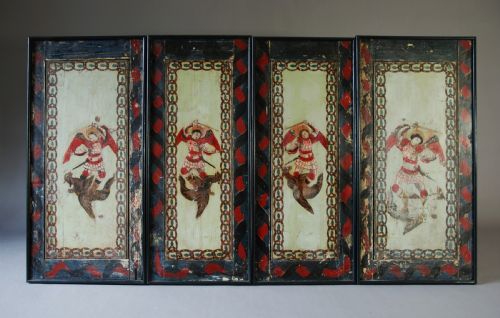
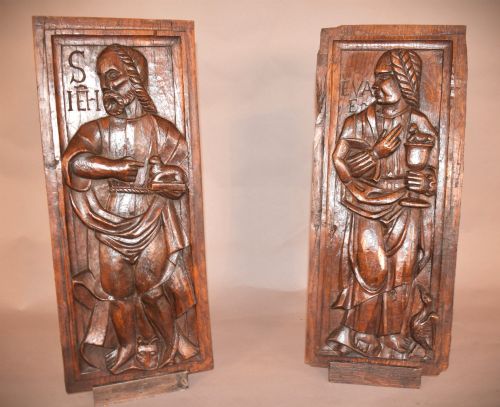
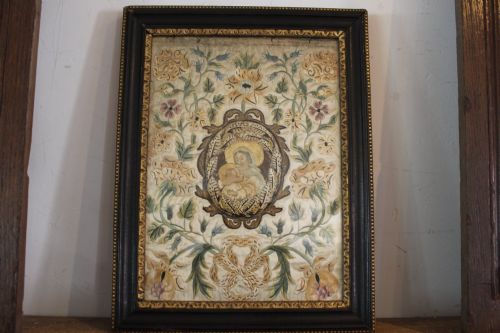
When you search for an antique religious wall panel, you encounter works spanning from the medieval period through to the late nineteenth century, created across Britain, Europe and Russia. These pieces take the form of carved oak and chestnut reliefs, tempera-painted wooden icons, embroidered silk textiles and painted pine architectural fragments.
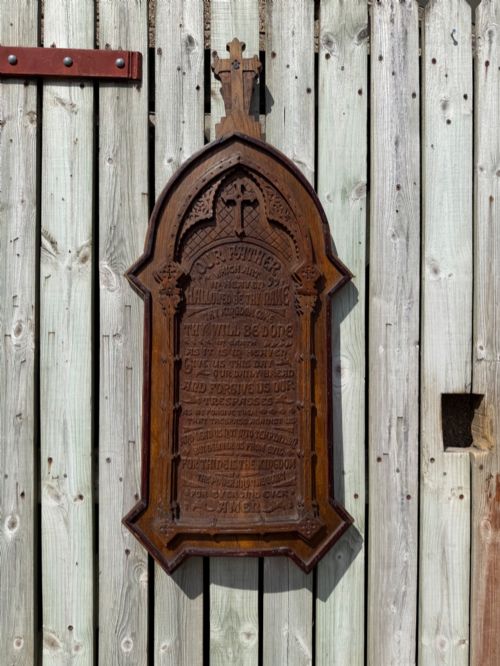
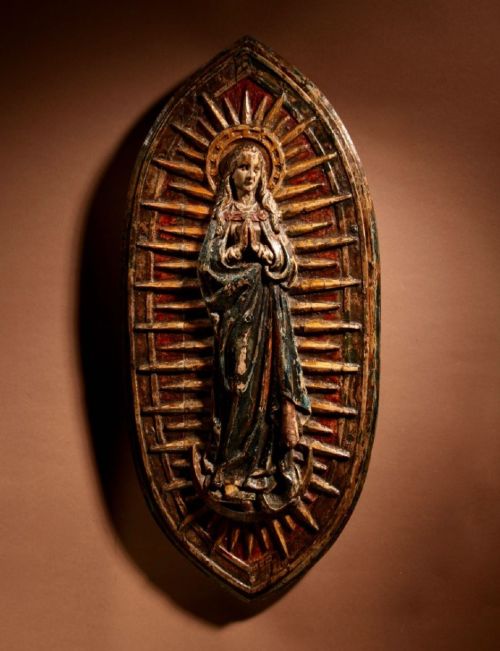
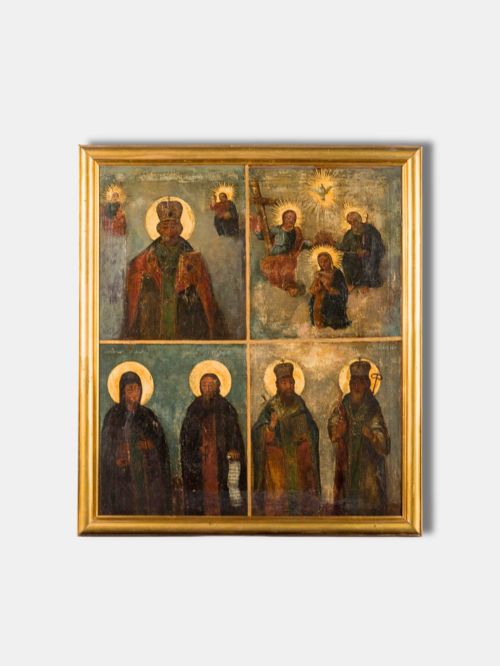
The selection on this page relies heavily on seventeenth-century European woodcarvings and nineteenth-century Russian icons mounted on wood panels. You also find larger ecclesiastical display signs, Italian baroque reliefs and framed mother-of-pearl devotional texts.
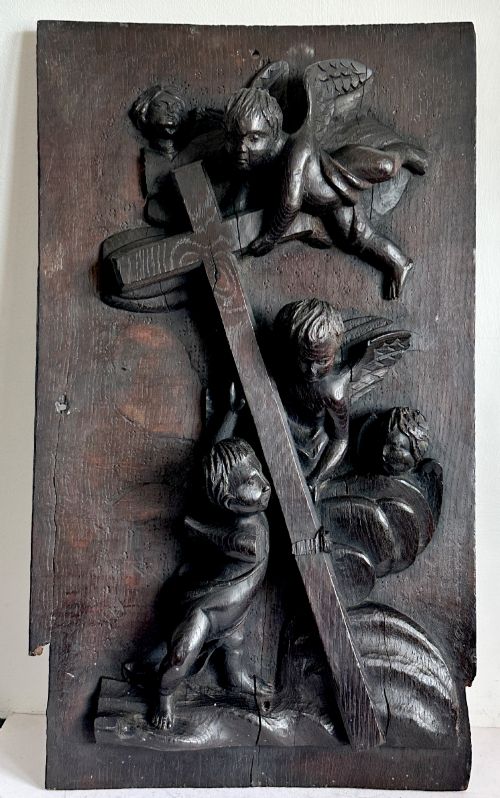
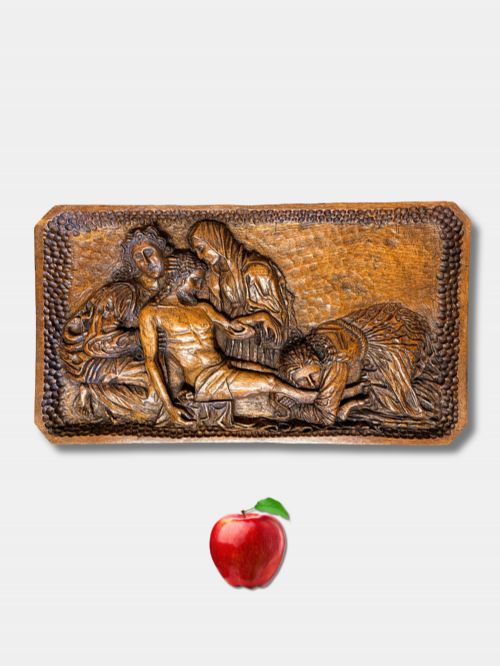
Many of these objects originated as architectural elements from altarpieces, chapels and tin tabernacles before conversion into wall-hanging artworks. Their subjects range from biblical narratives like the Adoration of the Magi and Christ carrying the cross to representations of archangels, saints and allegories of faith.
Materials and construction methods
Wood serves as the primary substrate, with oak, pine, walnut and chestnut shaped through deep relief carving and joinery. Carvers utilised chisels and gouges to render figures such as the praying virgin, cherubs and angels with pronounced three-dimensional depth.
Surface decoration frequently combines tempera, oil paint, gold leaf, gesso and pigment applied directly to wood, canvas or textile. Russian icons and panels often incorporate silver and gilt details over gesso preparations, while other works employ silk embroidery and pyrography.
Antique Religious Wall Panel Retail Price Guide 2026
Typical asking prices for religious wall panel among the pieces listed under this phrase on Sellingantiques today, from the lower quarter to the upper quarter. They describe what is for sale here now, not the wider market.
Listings feature wood as the dominant material, ranging from sixteenth-century carved oak altarpiece fragments to nineteenth-century pine display signs.
Distinguishing quality in devotional panels
The distinction between ordinary and exceptional pieces lies in the precision of the hand carving and the expressiveness rendered in human figures. Master carvers achieved subtle anatomical details in hands, drapery and facial expressions, whereas simpler workshop pieces rely on naive or formulaic execution.
Original surface integrity defines the upper tier of the range, where untouched patination, contemporary gilding and undisturbed layers of tempera remain intact. Lower tiers often show extensive later overpainting, replaced backing boards or degraded pigment layers that obscure the original hand.
The Antique Religious Wall Panel Glossary
- Tempera
- A permanent, fast-drying painting medium consisting of coloured pigment mixed with a water-binder agent, commonly egg yolk. It produces a matte surface frequently seen on early icons.
- Gesso
- A paint mixture consisting of a neutral binder mixed with chalk, gypsum or pigment. It functions as a prepared foundation layer on wood panels before the application of gold leaf or paint.
- Icon
- A religious work of art from Eastern Christianity, usually depicting Jesus, Mary, saints or angels. These panels are traditionally painted on wood according to strict canonical designs.
- Relief
- A wall-mounting sculptural technique where the figures project from a flat background. High relief elements emerge significantly from the plane, creating strong shadow play.
- Gilt
- Covered thinly with gold leaf or gold paint. This technique highlights divine figures and halos on wooden panels and canvas works.
Antique Religious Wall Panel: Frequently Asked Questions
How do I care for an antique wood panel?
Keep wooden panels away from direct heat sources, radiators, and rapid humidity fluctuations to prevent the wood from splitting or warping. Maintain a stable indoor environment to protect delicate gesso and tempera layers.
Dust the surface gently with a dry, soft brush and avoid using water, chemical cleaners, or polishes on historic paint and gold leaf.
How can I tell a Russian icon from a European panel?
Russian icons typically feature specific iconography such as Christ Pantocrator or St George, painted in tempera on prepared wooden boards with raised borders called kovcheg. They frequently employ extensive gold and silver leaf ground detailing.
European wall panels are more commonly carved from oak, walnut, or chestnut in high or low relief, depicting Western biblical narratives, saints, and allegorical figures.
What is a tin tabernacle?
A tin tabernacle is a prefabricated corrugated iron church building popular in Britain during the nineteenth century to accommodate growing congregations. They housed illuminated religious texts and wall plaques.
Panels salvaged from these structures often display painted scripture or devotional verses framed in wood for interior display.