
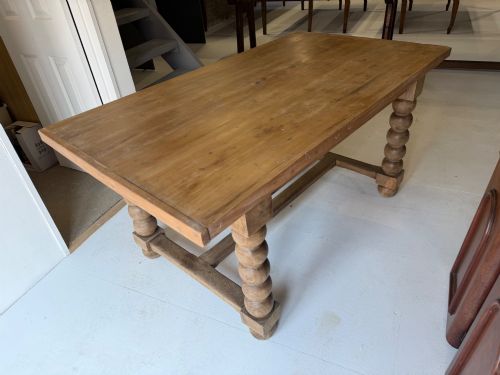
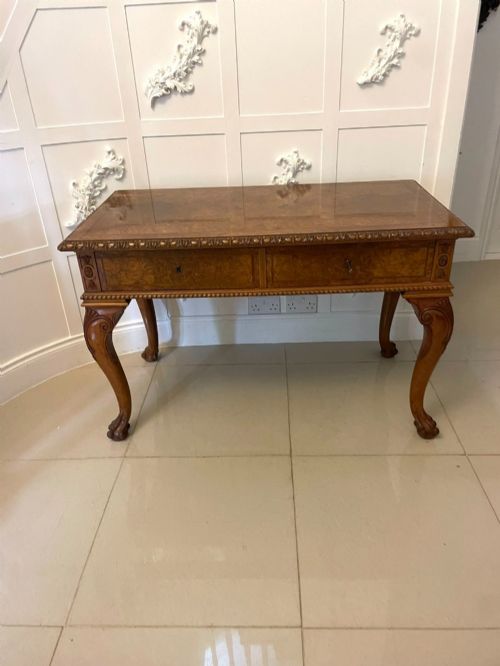

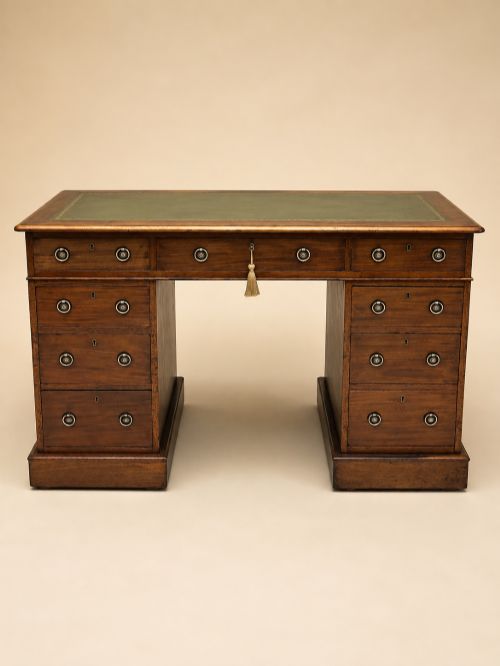
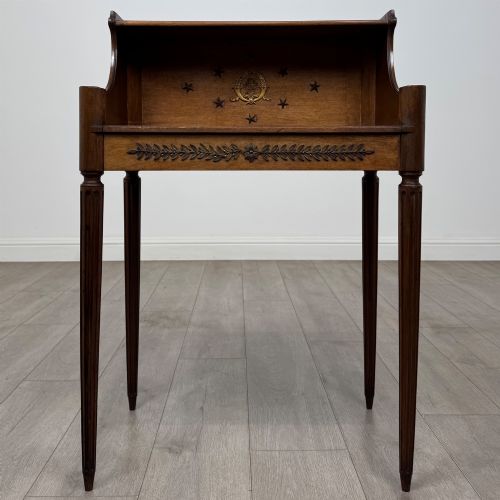
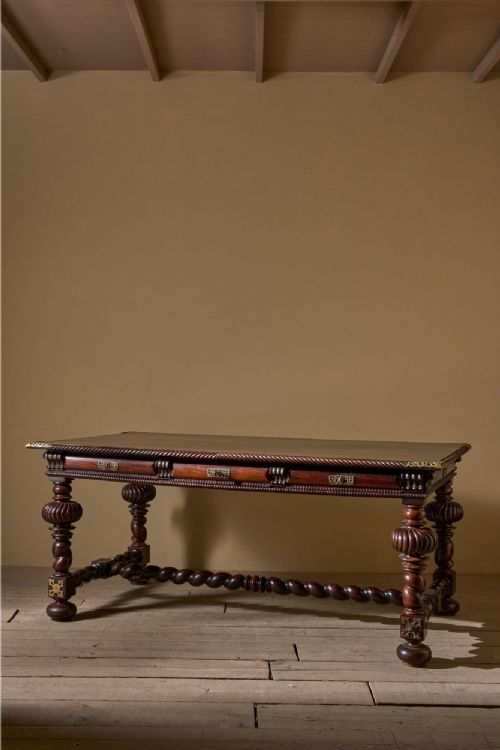
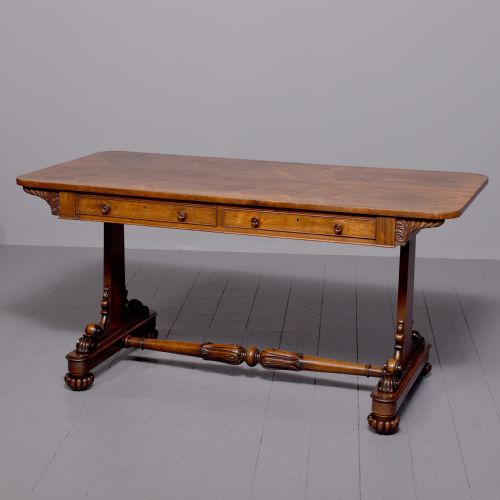
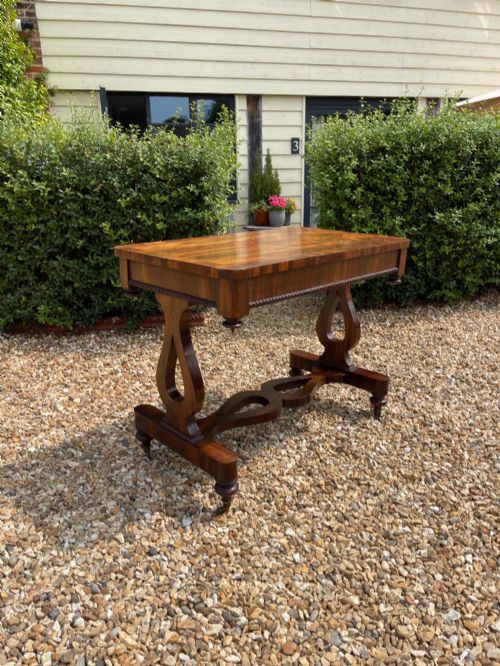
Carved Wood Writing Table
A carved wood writing table brings substance and rich timber grain to a room, serving as a functional surface defined by period craftsmanship.
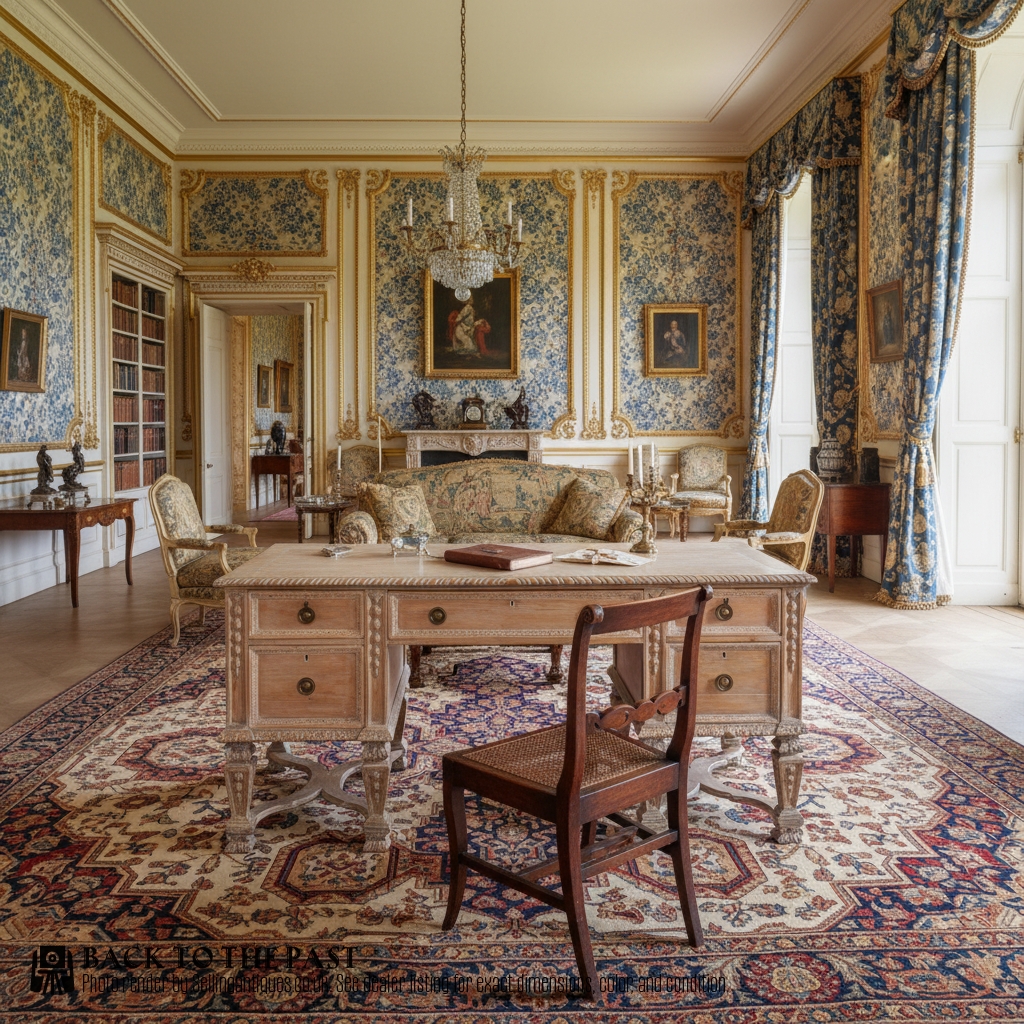
Carved Wood Writing Table
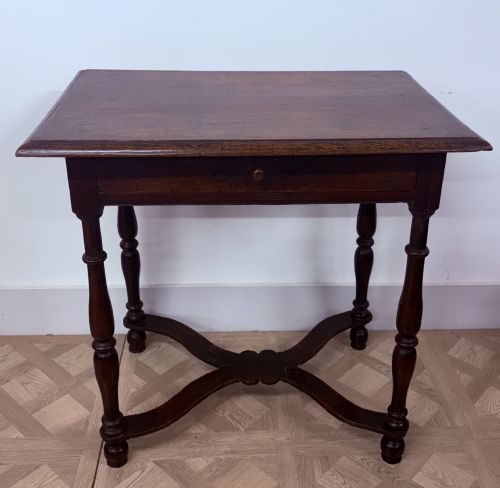
A carved wood writing table meets the eye as a dedicated surface for correspondence and administrative work, drawing on centuries of cabinet-making traditions. The pieces gathered here span from the seventeenth century through the Edwardian era, incorporating styles from plain oak utilities to ornate revival forms.
Buyers will most frequently encounter Victorian and Edwardian examples in mahogany, oak, and walnut, often outfitted with drawers or leather-lined writing surfaces. Alongside standard desks, the selection includes related forms such as library tables, console tables, and pedestal desks originating from British, French, and Asian workshops.
How they were made
Timbers selected for these tables include dense hardwoods like mahogany, oak, walnut, and rosewood, chosen for both structural durability and decorative grain figure. Burr walnut and flame mahogany veneers appear on finer surfaces, applied over sturdy secondary woods to create complex patterns.
Joinery techniques rely on traditional mortise and tenon construction, dovetails for drawer boxes, and hand-carved detailing executed directly into the solid timber frame. Brass hardware, leather inserts, and porcelain plaques complete the construction, reflecting the specific design standards of each period.
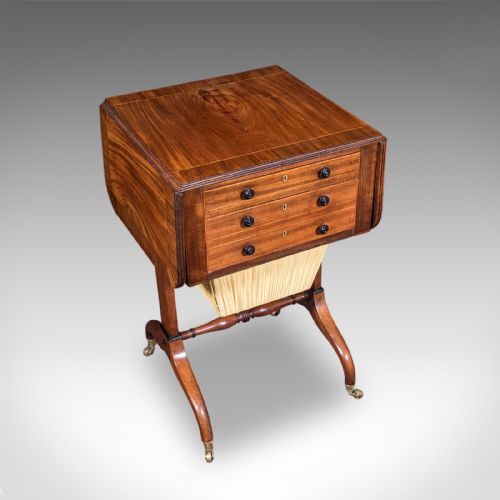
One unexpected hybrid combines sewing, writing, and drop leaves in a single Regency table.
What varies in quality
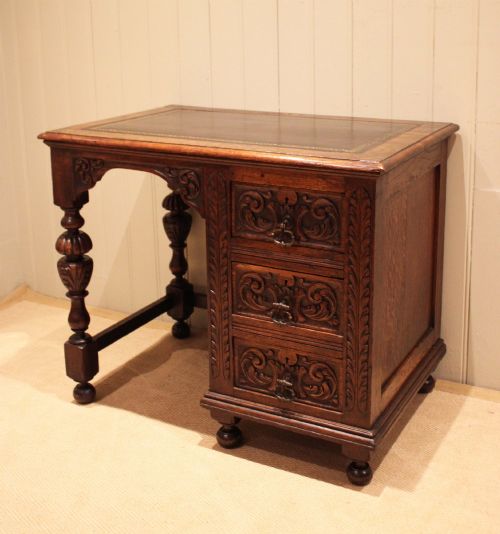
Quality rests upon the selection of timber and the precision of the hand-carving integrated into the frame. Superior examples demonstrate crisp, deep relief work in the wood, whereas lesser items rely on shallow stamping or mechanical routing.
The integrity of the construction, the choice of secondary timbers, and the preservation of original hardware and leather inserts dictate the standing of a piece. Consistency in the timber grain and the absence of clumsy repairs separate ordinary utility desks from exceptional cabinet-maker productions.
Edwards & Roberts·Gillows·James Mein of Kelso·Mein of Kelso
The Carved Wood Writing Table Glossary
- Pedestal desk
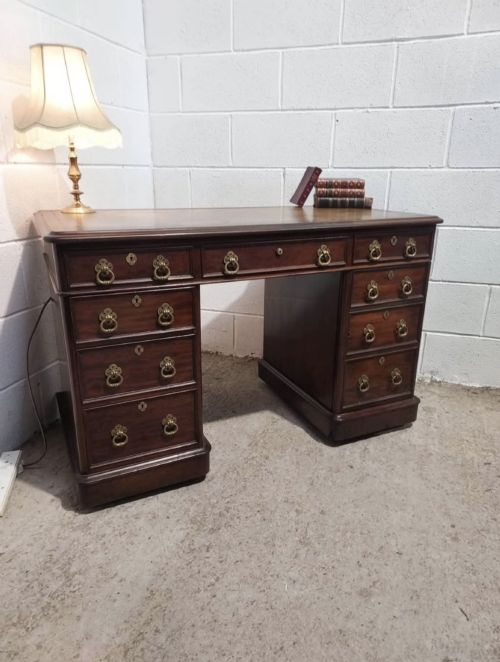
- A heavy writing desk supported by two banks of drawers or cupboards flanking a central kneehole. This form provides substantial storage beneath the primary writing surface.
- Partners desk
- A large double-sided desk designed so two people can work opposite each other simultaneously. These pieces typically feature banks of drawers and cupboards on both sides.
- Bonheur du jour
- A light lady's writing desk featuring a small set of drawers and shelves on top of the main writing surface. The French term translates to daylight pleasure.
- Library table
- A freestanding table designed to sit in the centre of a room rather than against a wall, finished on all sides with accessible drawers. They frequently feature carved legs and spacious timber tops.
- Padauk
- A dense, heavy tropical hardwood prized for its deep reddish-brown colour and durability. It takes a fine carved finish and appears on select overseas export pieces.
Carved Wood Writing Table: Frequently Asked Questions
How do I care for a leather writing surface?
Maintain the leather insert by gently cleaning it with a damp cloth and applying a neutral leather balm to keep the material supple. Avoid using strong chemical solvents or excessive water which can stain the surrounding timber.
Keep the table away from direct sunlight and heat sources to prevent the leather from cracking and the wood from shrinking or warping over time.
Are these tables suitable for daily computer work?
Many antique writing tables provide adequate surface area for modern laptops and daily administration, provided the height aligns comfortably with your seating. Consider the kneehole clearance and drawer placement underneath before committing to daily workspace use.
Protect the timber top and leather insert with a matching desk mat if you plan to use heavy equipment or writing implements that might scratch the antique finish.
How can I tell a Victorian desk from an Edwardian one?
Victorian pieces tend to feature heavier proportions, darker woods like rosewood and mahogany, and robust carving styles such as Gothic or Jacobean revivals. The construction is solid and designed for formal interiors.
Edwardian tables often display lighter timbers, serpentine fronts, and simpler, more restrained decorative motifs influenced by neoclassical and Sheraton revivals.