
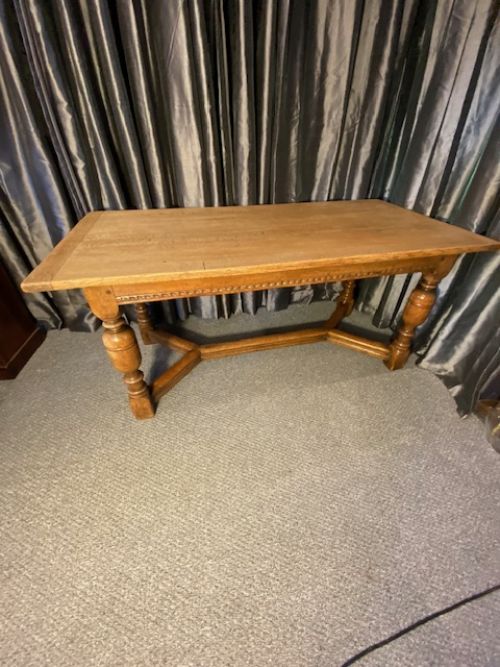

H Stretcher Writing Table
An h stretcher writing table brings solid architectural framing and a dedicated writing surface together, offering both robust stability and period character.
H Stretcher Writing Table
An h stretcher writing table links sturdy side legs with a central cross member, creating a durable foundation designed for sustained daily use. This specific brace configuration provides extra rigidity, making these pieces well suited as writing surfaces or library desks.
The selections available span multiple eras, with Georgian, Victorian, and nineteenth-century examples appearing frequently alongside earlier oak and walnut pieces. Forms range from compact side desks to substantial library tables featuring leather inserts.
Origins vary across English workshops, French provincial makers, and Spanish sources, employing regional timbers like oak, walnut, and mahogany. Buyers encounter both utilitarian library tables and finely figured parlor pieces.
Materials and construction
Cabinet makers utilised dense hardwoods including mahogany, oak, walnut, and burr walnut, selecting figured grains for top surfaces and sturdy straight-grained timber for structural frames. Leather inserts, often dyed black or brown, provided a smooth writing plane inset into the timber top.
Joinery relied on traditional mortise and tenon connections, securing the horizontal stretcher firmly between the legs to prevent lateral sway. Brass fittings, occasional marquetry inlay, and carved details finished the construction.
Several tables were rescued from public school libraries and Spanish farmhouses, bearing the quiet marks of generations of restless students.
Distinctions in quality
Quality rests upon the selection of timber veneers and the precision of the joinery linking the stretcher to the legs. Superior examples display carefully matched burr walnut or figured mahogany, whereas simpler utility tables utilise plain oak or deal.
The integrity of the structural frame dictates longevity, with tight joints and minimal timber movement distinguishing master workshop pieces from standard commercial production.
Johnstone & Jeanes·Gillows·Edwards & Roberts·W J Mansell
The H Stretcher Writing Table Glossary
- H stretcher
- A horizontal wooden brace shaped like the letter H that connects the four legs of a table to increase stability. This reinforcement prevents the legs from wobbling under heavy weight or frequent use.
- Lowboy
- A small eighteenth-century dressing table or side table featuring drawers beneath the work surface. These domestic pieces often sit on slender legs braced by stretchers.
- Sofa table
- A rectangular writing or occasional table traditionally placed in front of a sofa, often featuring drop leaves and a sturdy stretcher base. They frequently incorporate twin drawers and fine mahogany figuring.
- Marquetry
- Decorative patterns formed by fitting together thin veneers of wood, ivory, or shell onto a solid core. This technique ornaments the top surfaces of formal centre tables.
H Stretcher Writing Table: Frequently Asked Questions
What is an h stretcher writing table?
An h stretcher writing table is a desk featuring a characteristic horizontal wooden brace shaped like the letter H connecting the legs. This architectural addition provides superior structural rigidity.
Such tables served primarily as functional workspaces in libraries, studies, and drawing rooms. The evidence shows them built across the eighteenth and nineteenth centuries in various timbers.
How do I date an antique table?
Dating relies on examining the timber species, construction techniques, hardware, and stylistic markers present in the piece. Early examples often feature heavy oak frames and hand-cut joinery.
Later Victorian and Edwardian pieces incorporate machine-cut elements, distinct veneer patterns, and specific brass casting methods. Comparing the form against documented workshop styles helps narrow the period.
Where should I place it?
These tables function well as freestanding desks in home offices, studies, or living rooms where the finished back and stretcher can be seen. Their sturdy construction also suits placement in hallways as side consoles.
Placing them away from direct sunlight and heat sources preserves the antique timber and leather writing surfaces. Adequate clearance around the H stretcher allows comfortable seating.
Are these tables suitable for daily work?
Most antique writing tables offer sturdy platforms capable of supporting modern writing materials and laptops. The solid hardwood construction and braced frames ensure lasting durability for regular use.
Care should be taken to protect antique leather surfaces with blotters or desk pads. Maintaining stable indoor humidity prevents timber shrinkage and veneer cracking.