


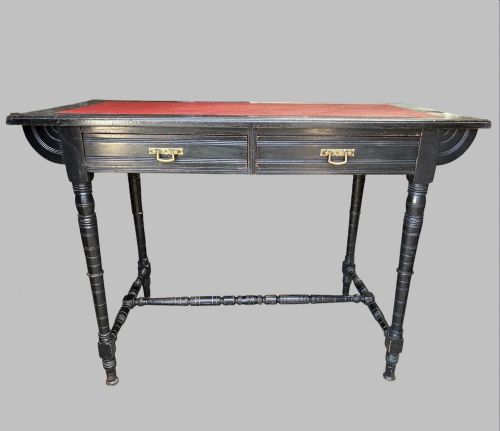
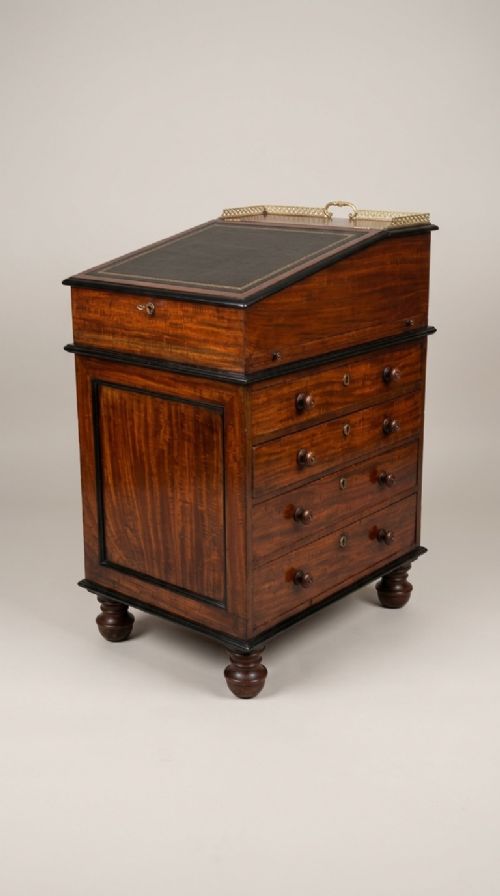

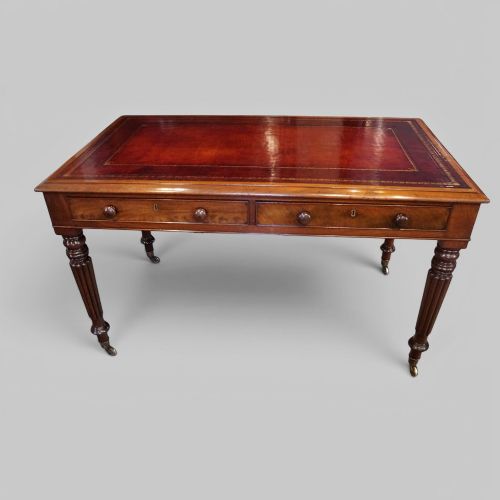
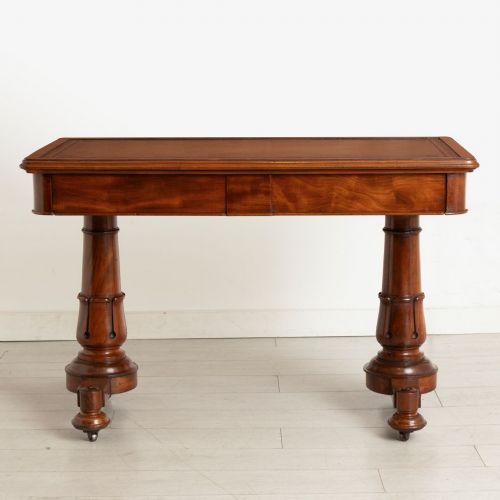
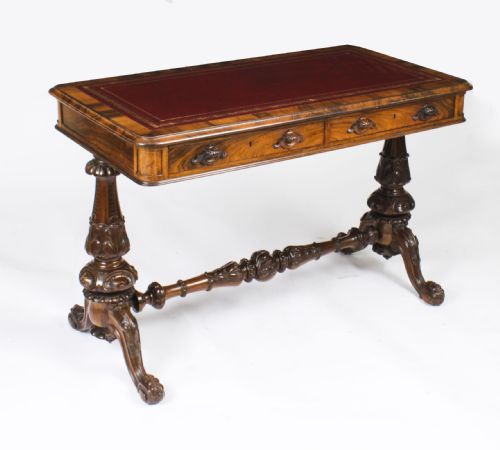
Leather Top Side Desk
These leather top side desks bring tactile writing surfaces and classic timber frames into a room, offering practical workspace built with traditional craftsmanship.
Leather Top Side Desk
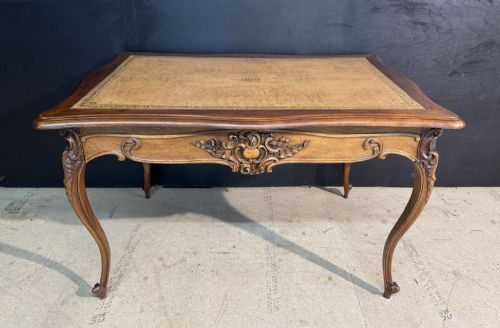
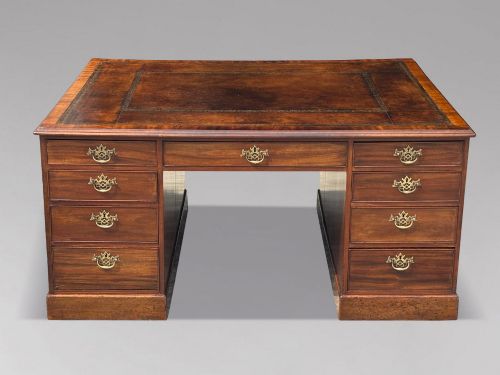
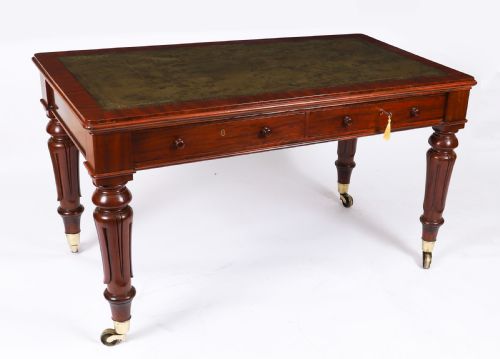
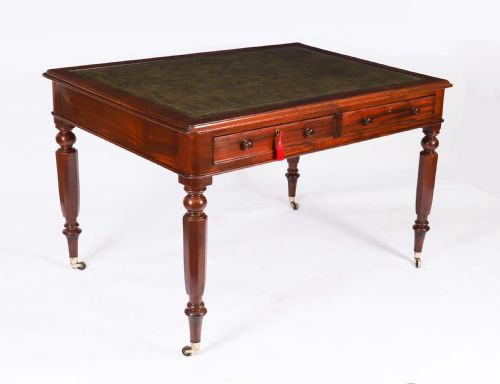
When you search for a leather top side desk, you encounter a variety of writing tables, library tables, and partner desks designed for functional daily use. The pieces span the Georgian, Regency, William IV, Victorian, and Edwardian periods, demonstrating how working surfaces evolved across centuries.
You are most likely to meet Victorian mahogany examples on this page, alongside earlier Georgian and Regency formats constructed from rosewood, oak, and walnut. These formats range from compact ladies writing desks to large pedestal partners tables intended for central room placement.
How they were made
Cabinet makers utilised dense hardwoods such as mahogany, burr walnut, and rosewood for the structural frames, often incorporating satinwood or ebonised details. Timber was selected for figure and grain, then joined using traditional cabinet-making methods to ensure rigid stability.
Writing surfaces were inset with panels of leather, frequently bordered with blind or gilt tooling. Brass hardware, including drop handles and drawer locks, completed the construction alongside turned or carved table legs.
Listings feature woods including mahogany, burr walnut, rosewood, oak, and satinwood across Victorian, Georgian, and Regency periods.
What varies in quality
Quality rests upon the selection of timber veneers and the crispness of any carved or inlaid decoration. Desks featuring figured flame mahogany or burr walnut display superior material choices compared to simpler domestic equivalents.
Proportion and structural integrity distinguish finer examples from standard production pieces. The integration of secondary timbers, drawer linings, and the execution of the leather writing surface reflect the skill of the original workshop.
Maple and Co·Charles Andrea Nosotti·Gillows·Edwards and Roberts·James Mein of Kelso
The Leather Top Side Desk Glossary
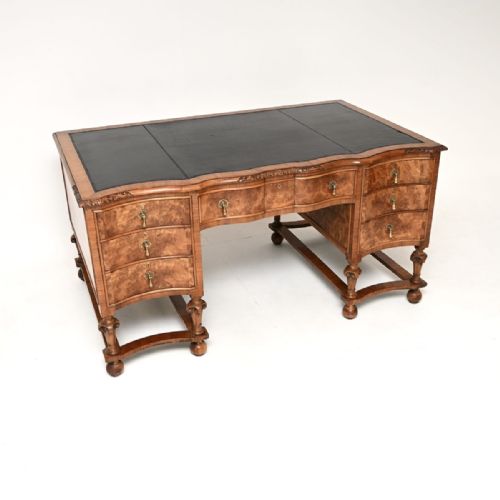
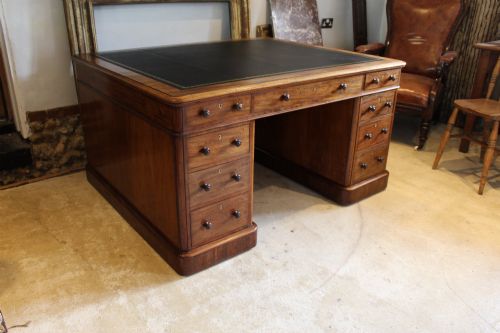
- Partners desk
- A large double-sided desk designed so two people can work opposite each other. These typically feature drawers and cupboards on both faces.
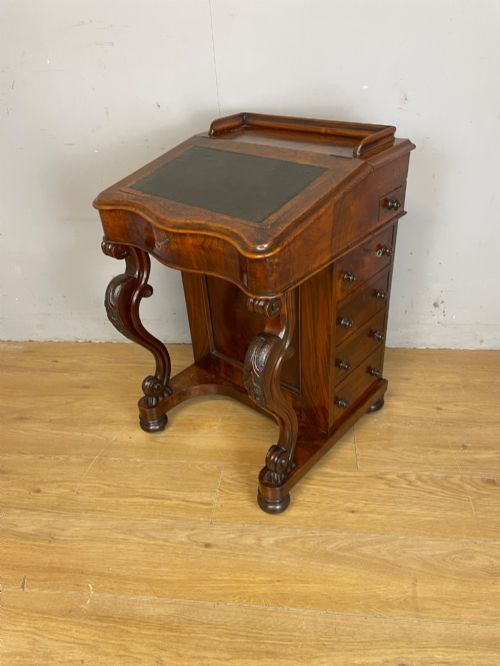
- Davenport desk
- A compact compact writing desk with a sloping leather-inset lid above a set of side drawers. They originated in the early nineteenth century.
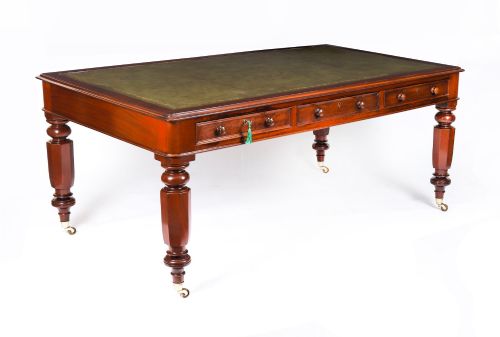
- Library table
- A freestanding table used for reading and writing, finished on all sides so it could sit in the centre of a room. They often incorporate frieze drawers.
- Cross banding
- A decorative border of veneer laid perpendicular to the grain of the main surface. This technique frames the top of the desk.
- Frieze
- The central horizontal band of woodwork directly beneath the top of a table or desk. It frequently houses one or more drawers.
Leather Top Side Desk: Frequently Asked Questions
What is a partners desk?
A partners desk is a large pedestal table designed with drawers and workspace on both sides. This layout allowed two people to work face to face in a library or study.
These pieces usually date from the nineteenth century and use heavy timbers like mahogany or oak.
How do I identify a Davenport desk?
A Davenport desk is a small, compact writing desk featuring a sloping leather-inset lid. A bank of drawers is typically positioned down one side.
They appear frequently in Victorian and William IV variants made from rosewood or walnut.
Where should I place a library table?
Library tables are finished on all four sides so they look correct in the centre of a room rather than pushed against a wall. They function well as large writing tables or central display surfaces.
Ensure you measure the floor space around the table to allow comfortable chair movement.
How do I care for a leather desk top?
Leather writing surfaces benefit from light dusting and occasional treatment with suitable leather balms to maintain flexibility. Avoid using harsh chemical cleaners that can strip the original tooling.
Keep the leather away from direct sunlight to prevent fading and drying over time.