

Carved Wood Writing Desk
A carved wood writing desk offers both a practical writing surface and substantial period presence for the home.
Carved Wood Writing Desk
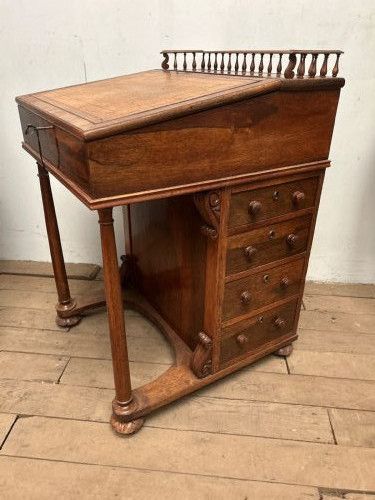
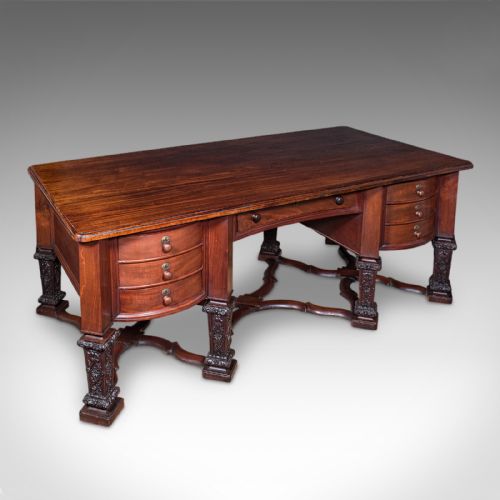
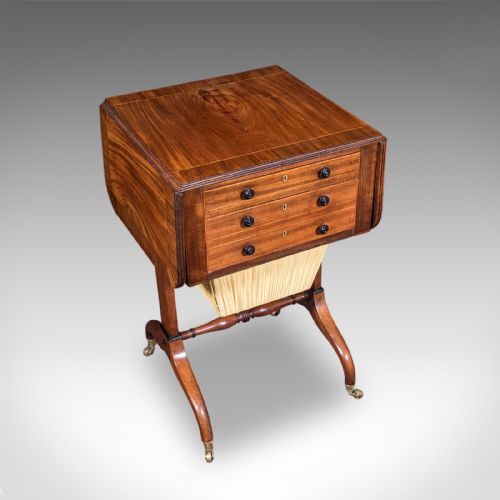
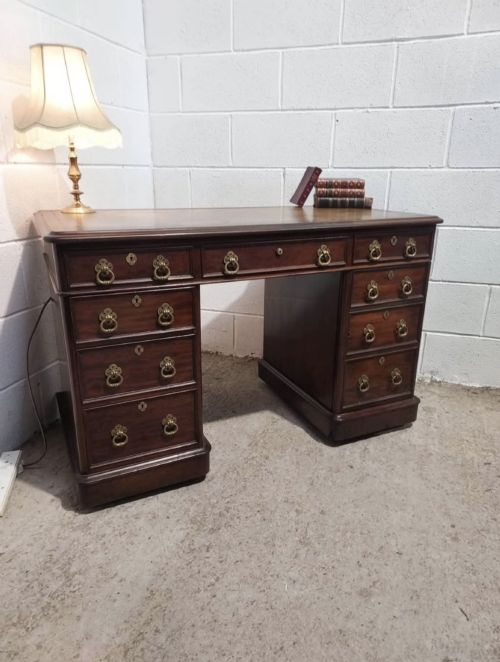
When searching for a carved wood writing desk, buyers encounter forms ranging from compact Victorian davenports and Edwardian bureaus to large mahogany partners desks and pedestal tables. These pieces originate across the nineteenth and early twentieth centuries, reflecting diverse domestic and institutional uses.
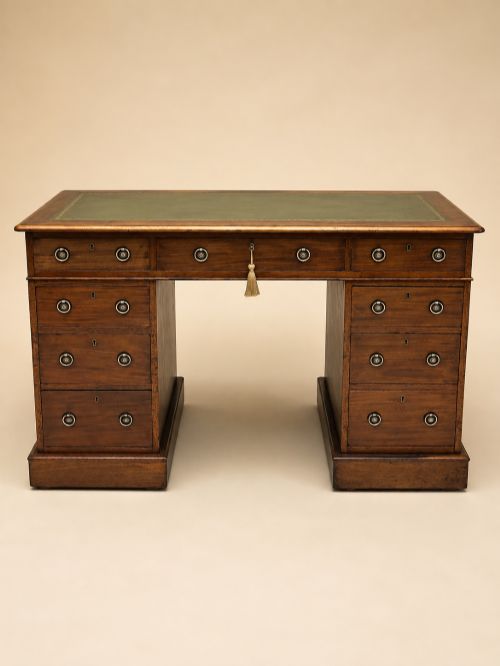
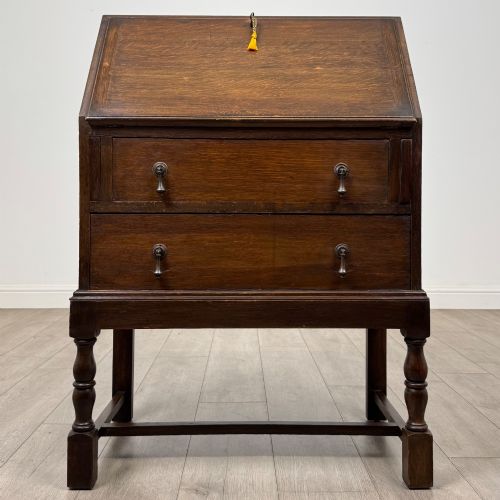
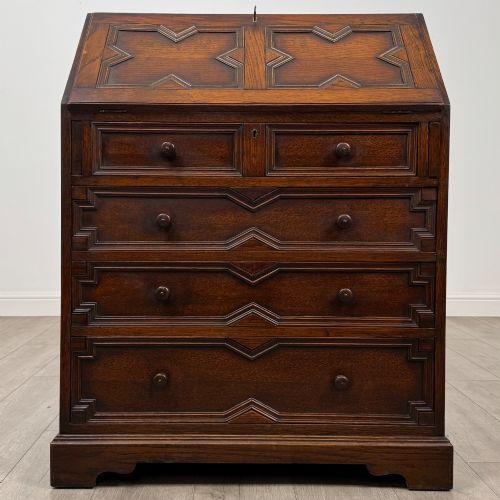
The version most commonly met on this page is the oak or mahogany desk dating from the Victorian or Edwardian eras, frequently featuring carved ornamentation, drawers, and inset leather writing surfaces.
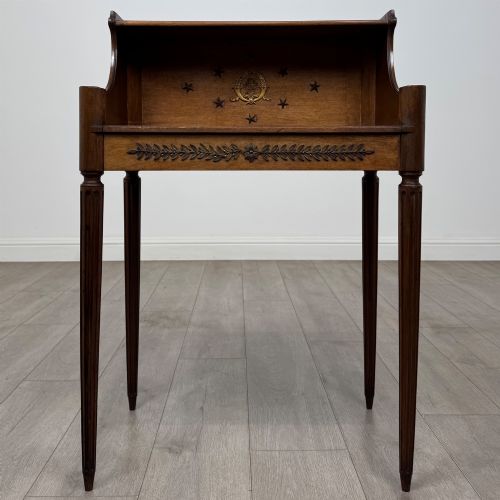
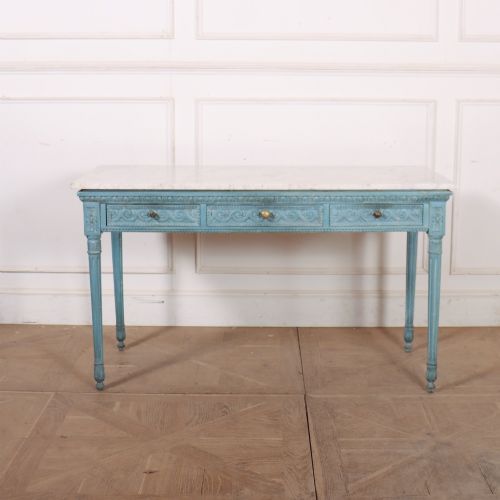
Regional and stylistic variations include French provincial writing tables, Jacobean revival oak pieces, and occasional exotic hardwood variants such as padouk and rosewood.
Materials and construction methods
Joiners and cabinetmakers relied primarily on solid timbers such as oak, mahogany, walnut, and rosewood, often enhanced with flame mahogany veneers or burr walnut panels.
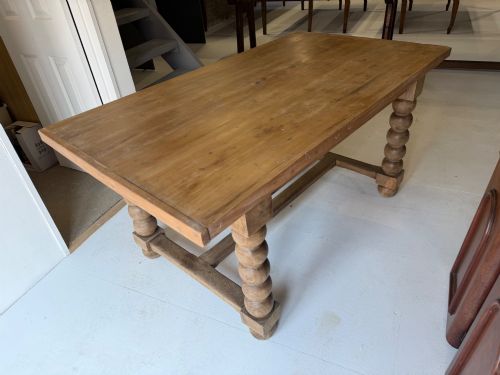
Carving was executed by hand directly into the dense timbers, complemented by turned elements like bobbin legs, brass hardware, and fitted leather skivers on the writing surfaces.
Several desks share cabinet space with an intricately carved Black Forest owl inkwell peering out from the nineteenth century.
Distinctions in construction and design
The upper tier of these pieces is distinguished by depth of hand-carving, timber selection with strong figuring like flame mahogany or burr walnut, and robust internal drawer construction with dovetailed joints.
Simpler workshop output relies on flatter surface decoration, secondary timbers of lesser density, and simpler turned legs without the sculptural detail found on pieces bearing maker attributions.
Edwards & Roberts·James Mein of Kelso·Gillows
The Carved Wood Writing Desk Glossary
- Bureau
- A sloping front desk enclosing fitted small drawers and pigeonholes above further long drawers. This form appears frequently in oak and mahogany across the Edwardian and Georgian periods.
- Davenport
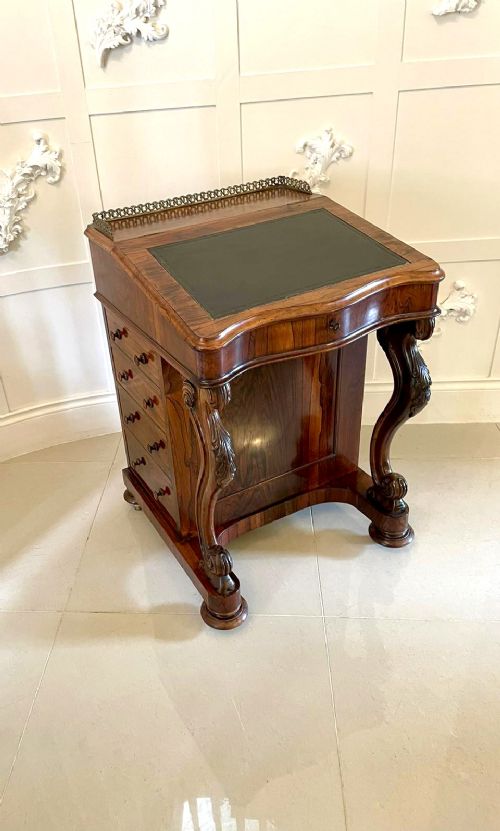
- A compact small writing desk featuring a sloping top and drawers opening to one side. These desks often incorporate rosewood or walnut timbers with delicate brass fittings.
- Partners desk
- A large double-sided pedestal desk designed for two people to work opposite one another. These substantial tables usually feature extensive drawer banks and leather writing inserts.
- Library table
- A large freestanding table utilised for reading and writing, finished on all sides. These tables often stand on carved legs, such as lions paw feet.
- Skiver
- The inset panel of leather or hide fitted to the top of a writing surface. These are often tooled with gilt borders.
Carved Wood Writing Desk: Frequently Asked Questions
Can I use a partners desk in a small room?
Partners desks are exceptionally large and finished on all four sides, meaning they require generous floor space to function as freestanding centrepieces.
Placing one against a wall negates its dual-sided purpose and overwhelms compact interior layouts.
What is the difference between a bureau and a writing table?
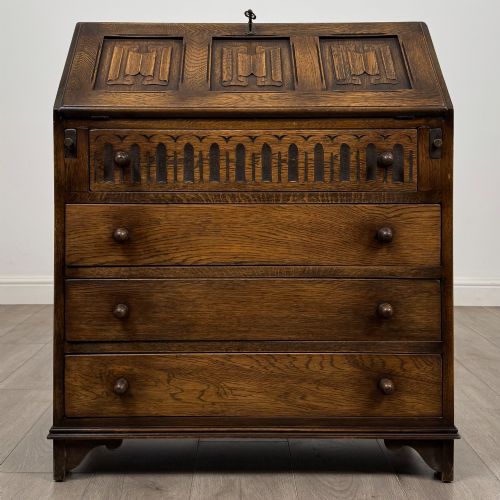
A bureau incorporates a sloping hinged lid that folds down to reveal an inner compartment of pigeonholes and small drawers. It conceals paperwork when closed.
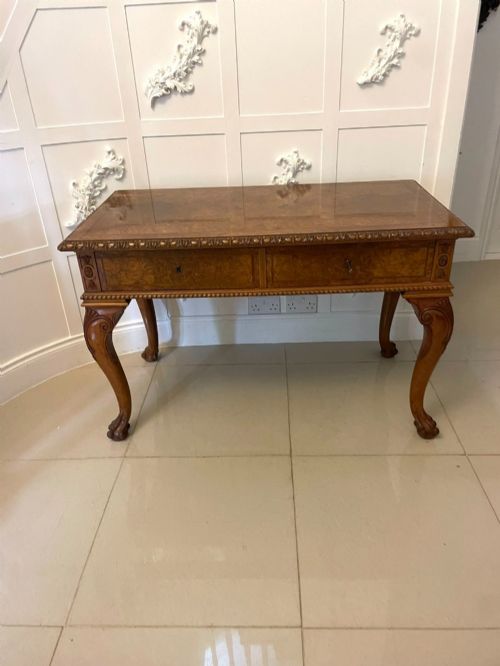
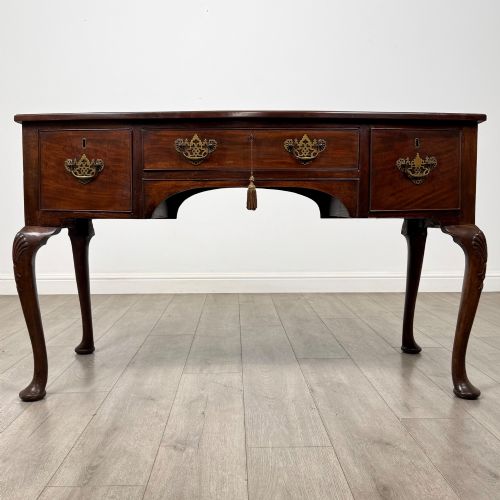
A writing table provides an open, flat surface for working, sometimes with a single frieze drawer beneath.
How do I date an antique wooden desk?
Examine the secondary timbers inside the drawers, the style of the hardware, and the hand-cut dovetail joints. Machine-sawn timber and Phillips screws generally indicate late nineteenth or twentieth-century manufacture.
Stylistic cues such as heavy carved linenfold panels point to Edwardian revivalism, while clean Regency lines suggest earlier nineteenth-century origins.