


Carved Padauk Furniture
Carved padauk furniture brings dense, heavy timber and deep sculptural relief into a room, originating mostly from nineteenth-century colonial workshops.
Carved Padauk Furniture
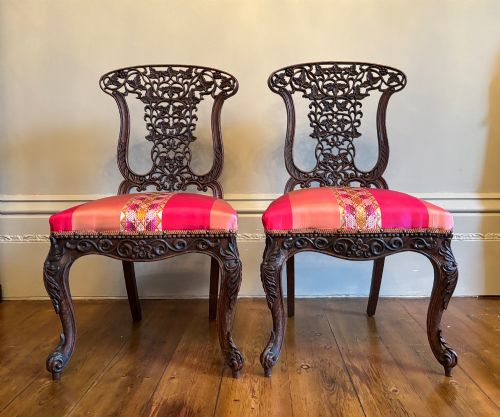
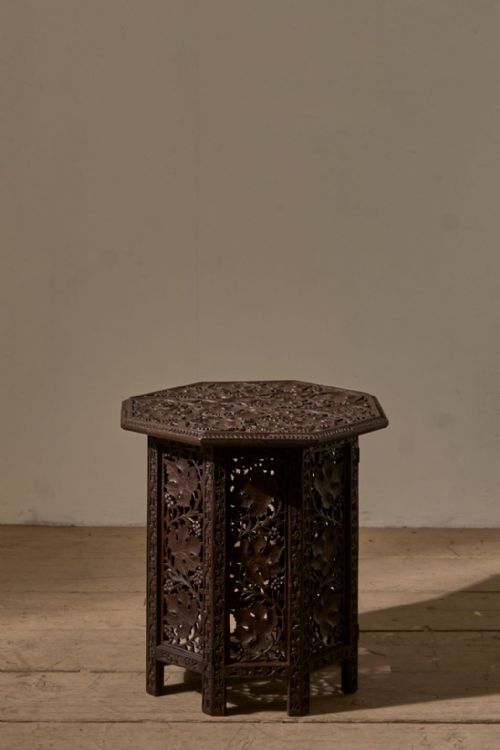
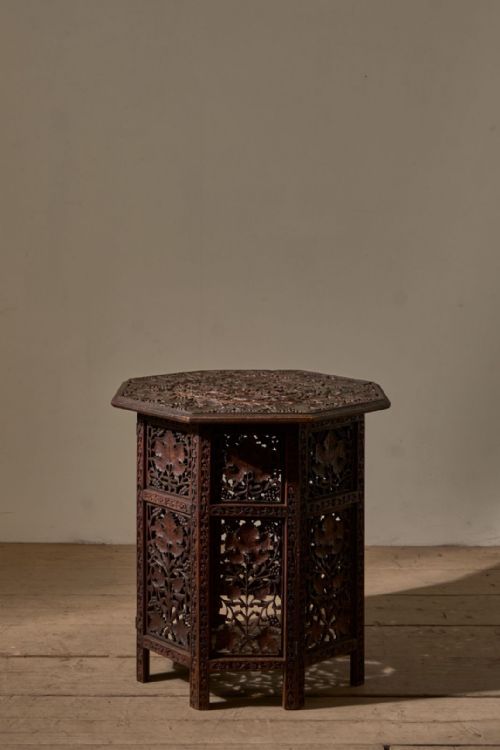
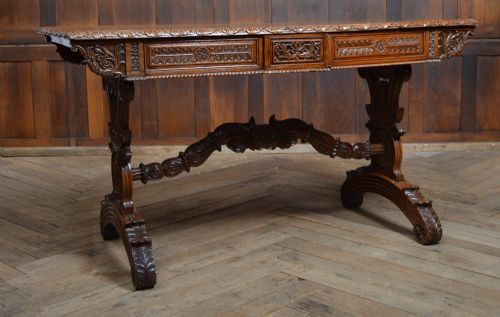
When searching for carved padauk furniture, collectors encounter dense tropical timber objects shaped by nineteenth-century colonial and export makers. The selection centres on Anglo-Indian and Burmese forms, spanning tables, chairs, desks, and large sideboards.
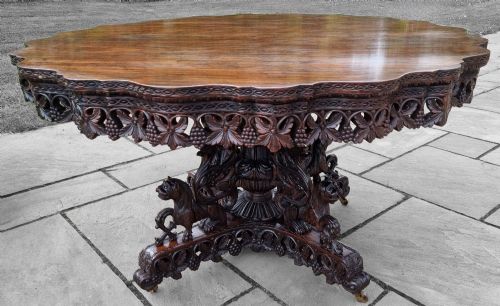
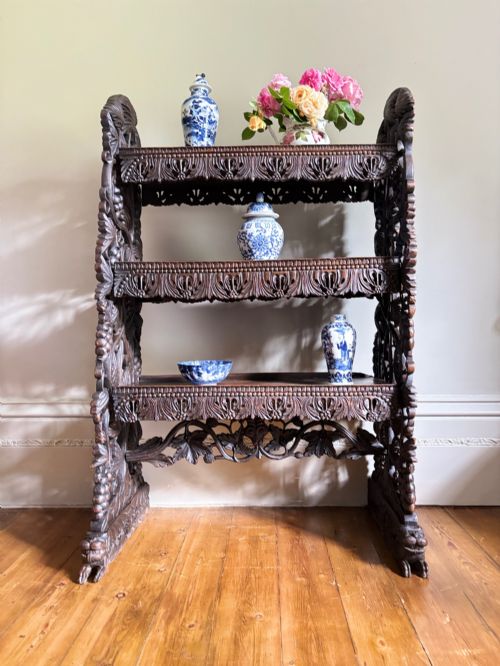
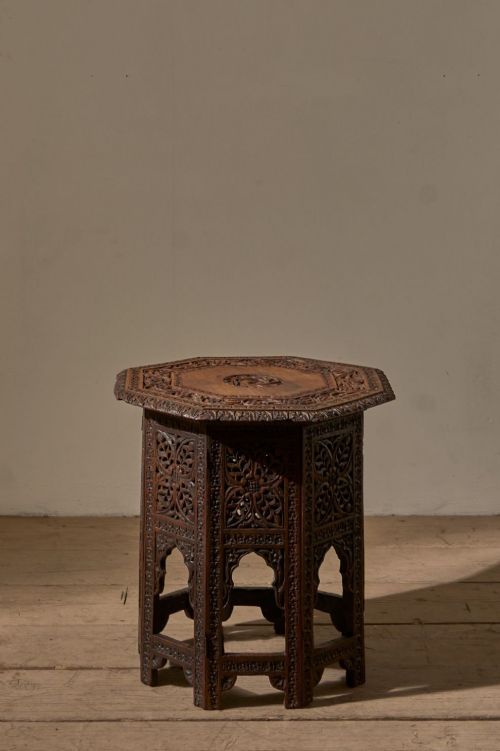
The dominant pieces on this page are side tables, sideboards, and library desks dating from the Victorian era around 1850 to 1900. These items frequently display intricate floral or dragon motifs carved deep into the dark reddish-brown wood.
Originating across India, Burma, and China for export to British homes, these items combine native hardwoods with European furniture shapes. Buyers find everything from small occasional tables to substantial partners desks and multi-tiered buffets.
What varies in quality
The depth and crispness of the chisel work dictate the upper tier of quality, distinguishing sharp relief carving from softer, shallower execution. Superior examples retain anatomical precision in figures and clean symmetry in repetitive leaf or scroll borders.
Timber selection and colour consistency across large surfaces separate standard export pieces from exceptional commissions. Master workshops utilised dense, well-figured padauk with minimal sapwood, maintaining a uniform dark tone that deepens with age.
Structural integrity of heavily carved elements, such as pedestals and legs, determines long-term stability in daily use. Finer items integrate the carving seamlessly into the load-bearing frame without compromising the joinery.
The Carved Padauk Furniture Glossary
- Padauk
- A dense, heavy tropical hardwood native to Asia and Africa, known for its rich reddish-brown colour and exceptional durability. It darkens significantly upon exposure to light.
- Anglo-Indian
- A style of furniture produced in India during the British colonial period, combining traditional European forms with intricate local carving traditions. These pieces often feature dense foliage and animal motifs.
- Partners desk
- A large double-sided desk designed for two people to work opposite one another, featuring drawers and cupboards on both faces. They frequently incorporate elaborate panel carving.
- Davenport
- A compact writing desk featuring a sloped, hinged writing surface above a pedestal of drawers. In colonial variants, the frame is often heavily carved from dense hardwoods.
- Breakfront
- A piece of furniture, such as a sideboard or cabinet, where the central section projects forward from the flanking outer sections. This architectural arrangement creates shadow and depth.
Carved Padauk Furniture: Frequently Asked Questions
What is padauk wood?
Padauk is a heavy, durable tropical hardwood that ranges in colour from vibrant red to deep reddish-brown. It takes fine detail exceptionally well, making it the preferred medium for heavily carved colonial furniture.
Over time, exposure to light causes the timber to oxidise and darken towards a rich, warm brown. Its natural density provides the stability required for deep sculptural relief work.
Where was this furniture made?
Most pieces originate from workshops in India, Burma, and China, produced during the nineteenth century for the British colonial market. Local craftsmen blended indigenous carving techniques with standard European furniture forms.
This fusion created distinct regional styles, including Anglo-Indian and Anglo-Burmese, tailored to the tastes of expatriates and export buyers. The resulting items were shipped back to homes in Britain.
How do I care for padauk furniture?
Maintain the wood by keeping it away from direct sunlight and sudden temperature shifts, which can stress the dense timber. Regular dusting with a soft, dry cloth preserves the hand-polished surface.
Avoid silicone-based polishes, as they build up and dull the natural grain over time. Occasional application of appropriate wax nourishes the dense hardwood without sealing it.