


Carved Wood Walking Stick
A carved wood walking stick combines daily utility with sculptural hand-carving, showing animal forms, regional traditions, and concealed blades.
Carved Wood Walking Stick
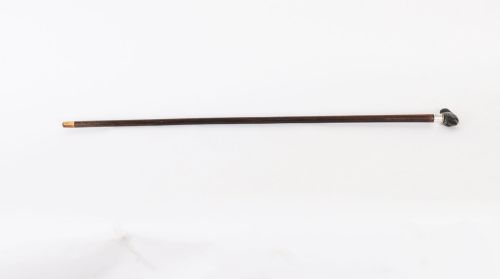
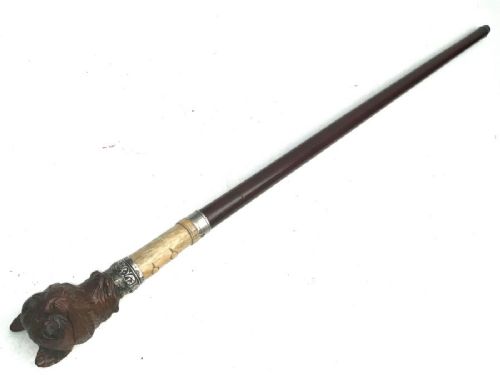
A carved wood walking stick functions as both a supportive prop and a decorative accessory, originating from periods spanning the nineteenth century through the early twentieth century. These items appear in various regional styles, including Black Forest carvings, folk art, and Japanese traditional work.
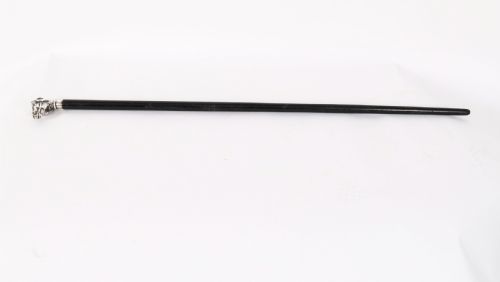
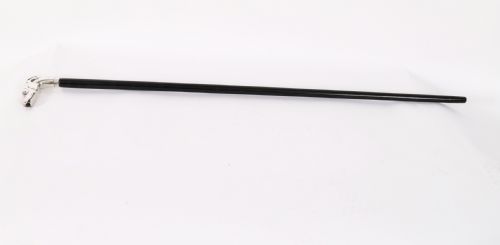
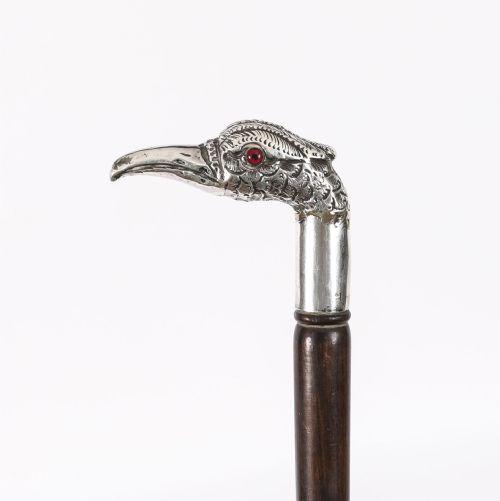
The most common examples on this page are nineteenth century pieces featuring carved animal head handles, folk art motifs, or concealed steel blades. Makers utilised traditional hardwoods, fruitwood, and malacca alongside mounts of silver and brass.
How they were made
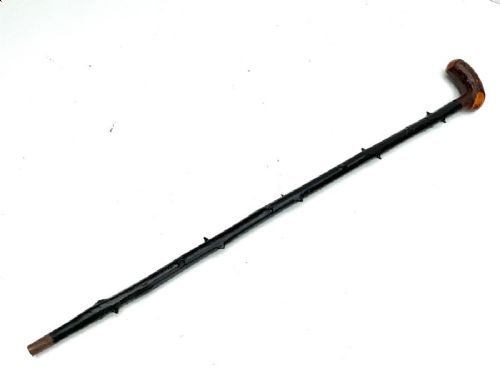
Makers shaped these shafts from natural timbers, hardwood, malacca, and thorn wood, often retaining the root end for handles or steaming straight sections into form. Carvers worked directly into boxwood, fruitwood, and walnut to create detailed animal heads and human figures.
Metal components such as Toledo steel blades, silver collars, brass ferrules, and metal mechanisms were integrated into the wooden shafts to produce novelty items, gadget sticks, and military walking canes.
Listings feature nineteen-century timber shafts paired with silver mounts, brass hardware, and steel blades.
What varies in quality
Quality rests upon the depth and precision of the carving, distinguishing simple turned wood from fully articulated animal subjects or detailed folk art figures. The integration of the handle into the shaft determines structural integrity, while silver mounts and hallmarked collars elevate the piece.
The condition of the timber, the retention of original patination, and the working order of internal mechanisms like snuff boxes or concealed blades separate standard utility pieces from masterwork examples.
Brigg·Kashi Japanese Masters·Henry Borlase Stevens
The Carved Wood Walking Stick Glossary
- Knobkerrie
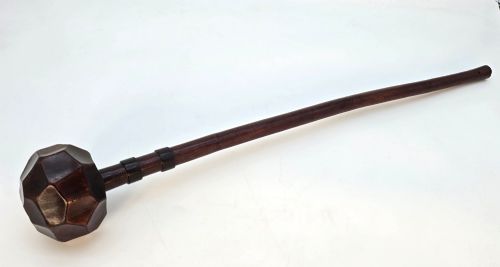
- A traditional African wooden club featuring a heavy rounded head on a slender shaft, used historically for throwing or defence. These are typically carved from dense hardwood.
- Malacca
- A slender, durable rattan cane originating from Southeast Asia, known for its distinct scale markings and flexibility. It served as a favoured material for gentleman walking sticks.
- Bergere
- A woven cane panel used in furniture and stick stand construction, offering a breathable mesh texture. It frequently appears alongside turned wood in larger hallway accessories.
- Ferrule
- The protective metal cap fitted to the bottom of a walking stick to prevent wear on the wood. It absorbs impact during regular use.
- Bokken
- A traditional Japanese wooden sword used for training, shaped from dense timber. These reflect specific martial traditions distinct from European walking canes.
Carved Wood Walking Stick: Frequently Asked Questions
How do I identify a sword stick?
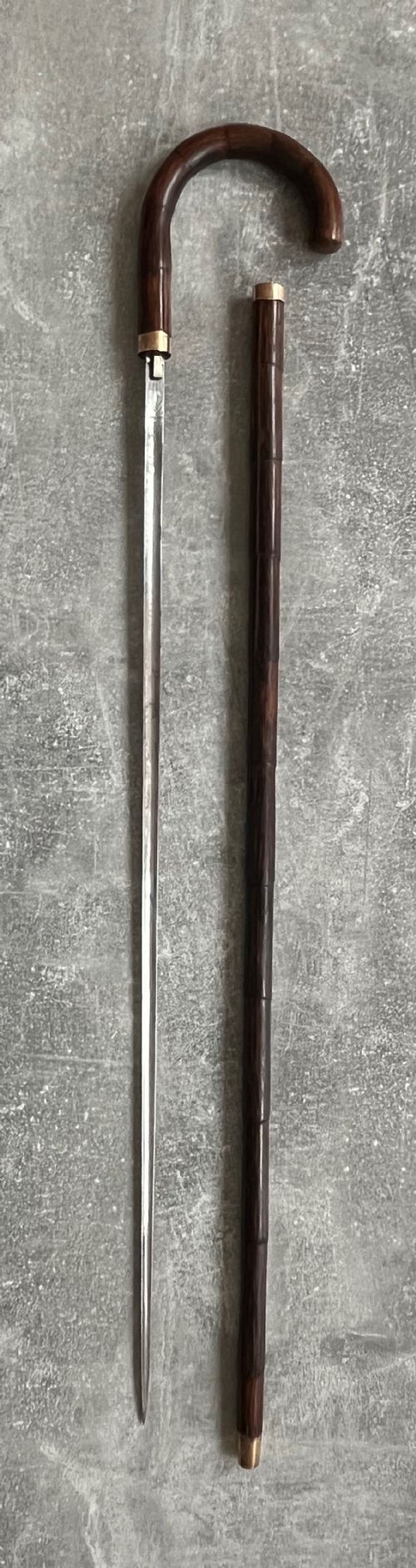
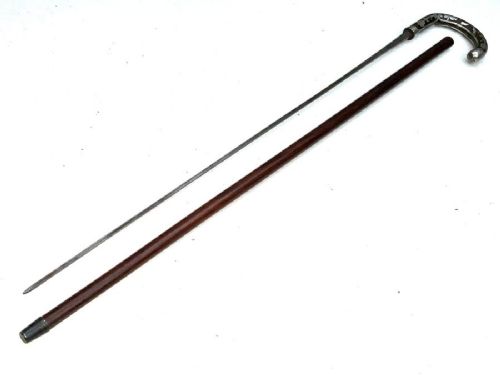
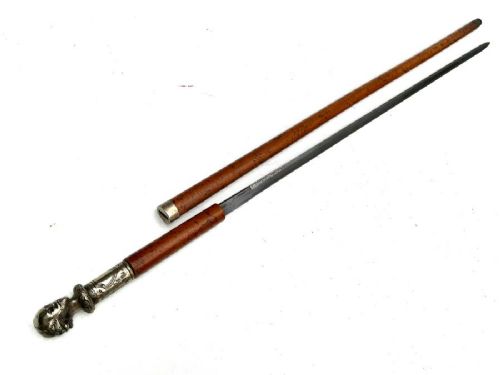
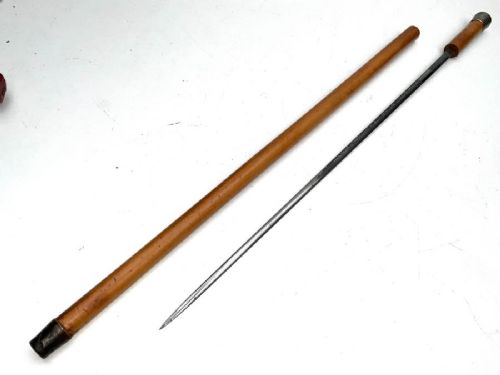
A sword stick conceals a steel blade inside the wooden shaft, typically released by a hidden catch or a screw mechanism near the collar. These pieces often feature military or civilian provenance from the nineteenth century.
Examine the join where the handle meets the shaft to spot the seam of a concealed blade. Most authentic examples retain their original metal ferrules and balanced weight distribution.
What is a Black Forest walking stick?
Black Forest walking sticks originate from the woodworking traditions of central Europe, featuring highly detailed carvings of animals such as bears, dogs, and birds. Artisans utilised local timbers to model realistic fur textures and expressive faces.
These pieces often display deep brown patination and meticulous hand-tooling. The handles frequently depict realistic wildlife heads attached to sturdy hardwood shafts.
How are folk art walking sticks different?
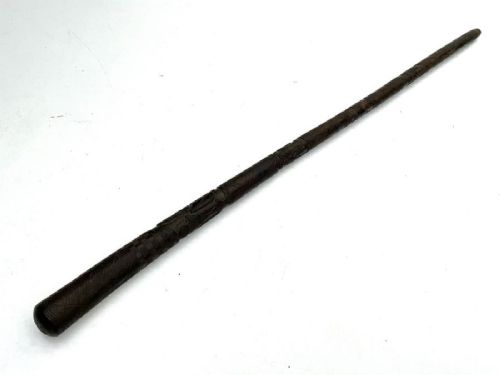
Folk art walking sticks are unique, hand-carved items made by independent makers rather than commercial workshops. They display idiosyncratic designs, including carved human figures, geometric scratch patterns, and whimsical motifs.
Materials range from local fruitwood and thorn to boxwood and holly. Their charm lies in their individuality and the distinct regional character imparted by the maker.
How do I care for antique wood canes?
Antique wood canes require stable indoor humidity and protection from direct sunlight to prevent the timber from drying out or splitting. Gentle dusting preserves the surface patination without stripping the historic finish.
Avoid harsh chemical polishes and check the lower ferrule periodically. If the stick includes silver mounts, use a soft cloth to clean the metal without touching the surrounding wood.