

Carved Wood Torchere
A carved wood torchere brings height and theatrical presence to a room, holding light or sculpture aloft with sculptural flair.
What a carved wood torchere is
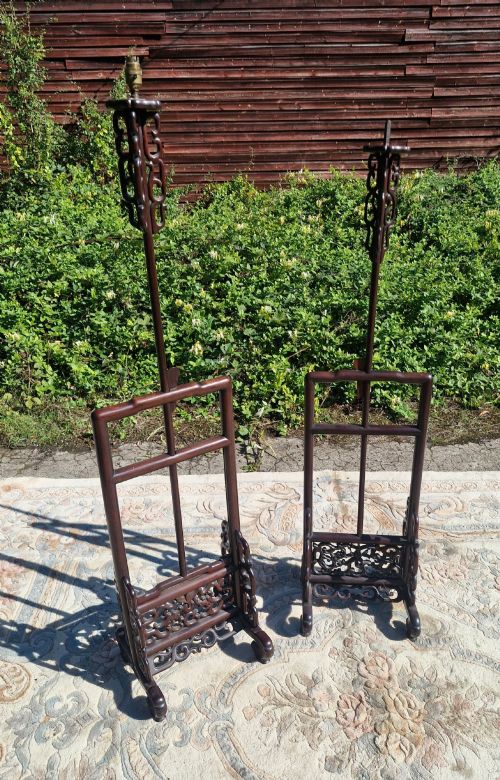
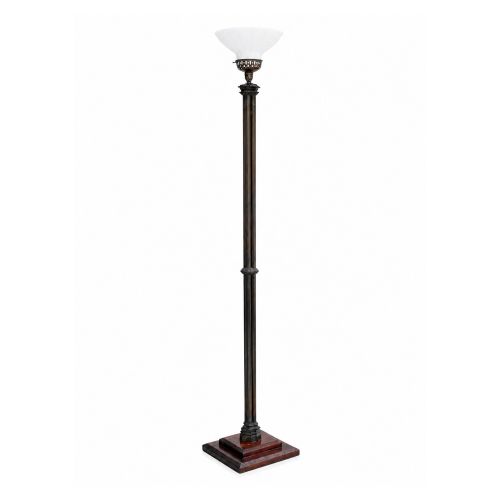
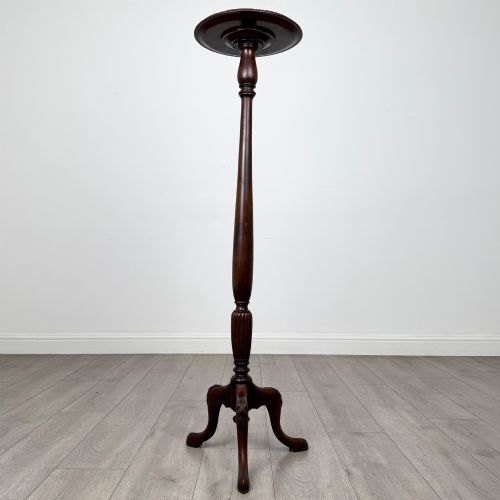
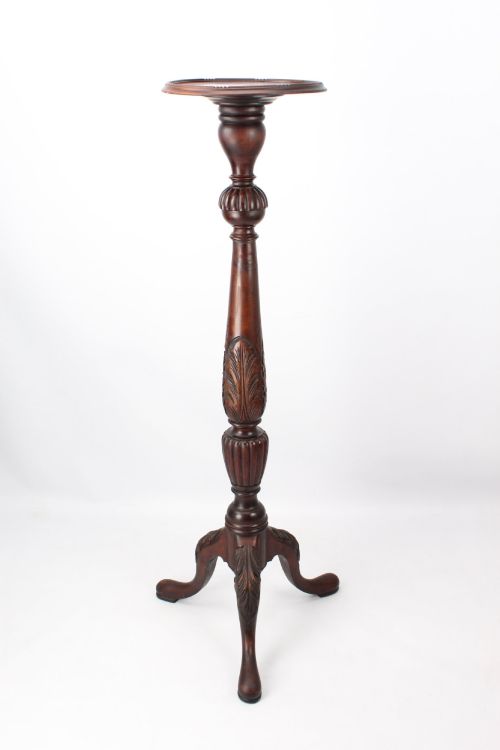
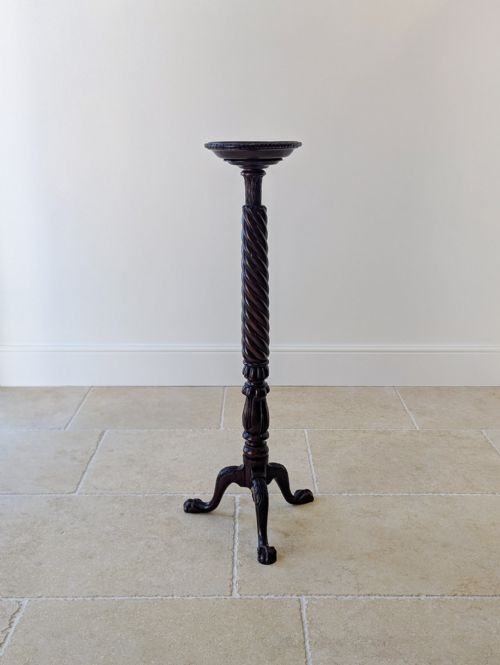
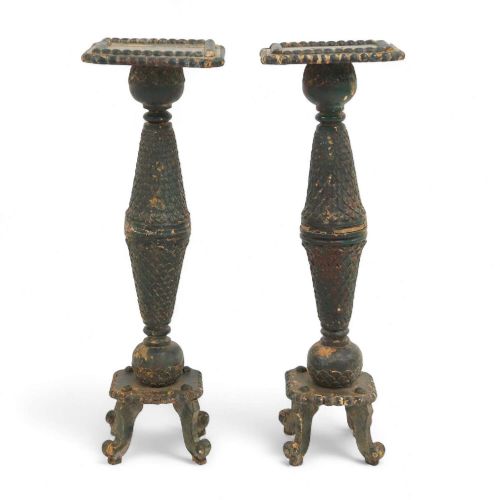
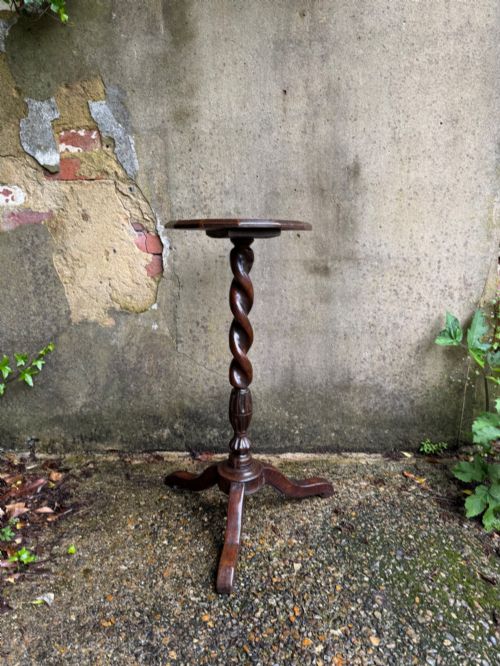
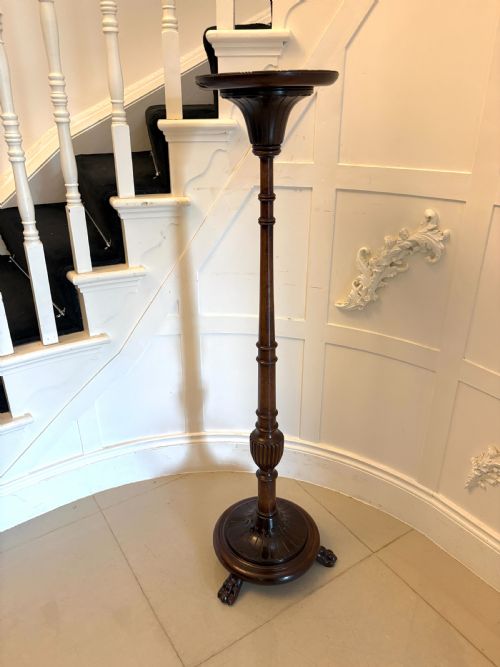
A carved wood torchere takes the form of a tall, slender stand designed to elevate a lamp, candle or decorative object above the floor. These pieces span the eighteenth and nineteenth centuries, taking inspiration from Neoclassical, Baroque and Victorian design vocabularies.
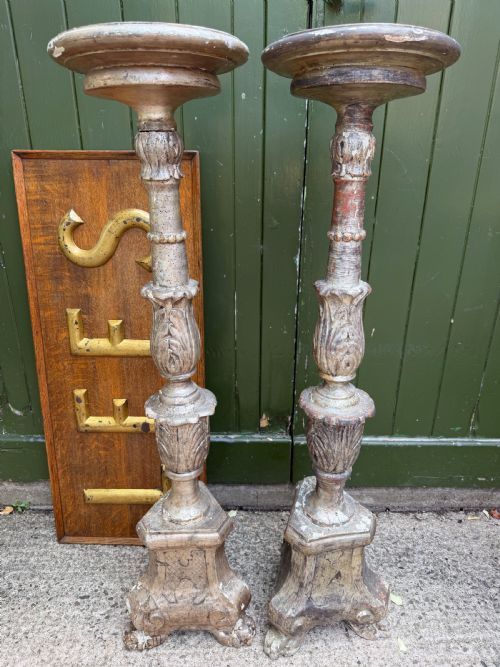
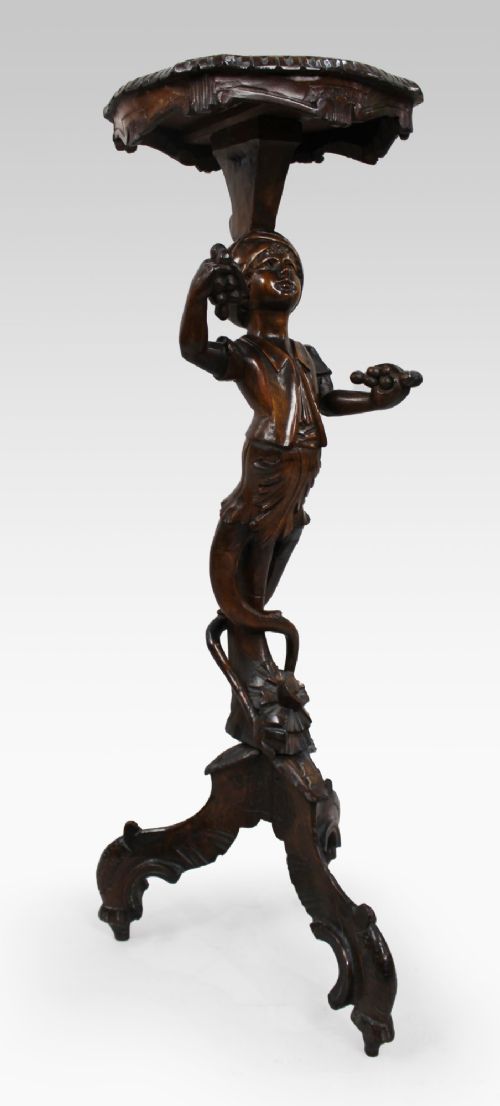
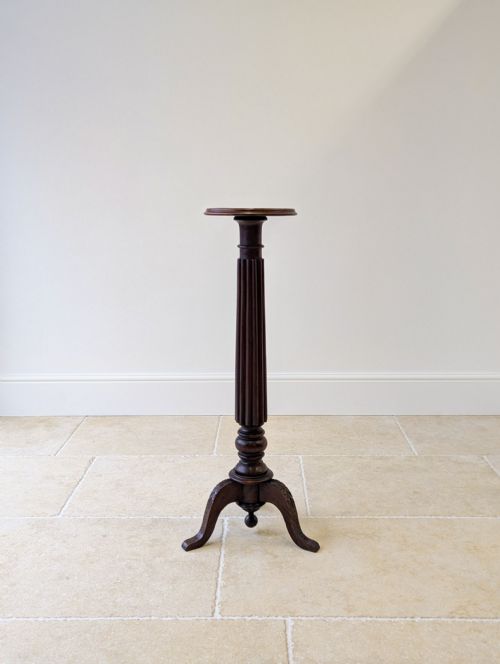
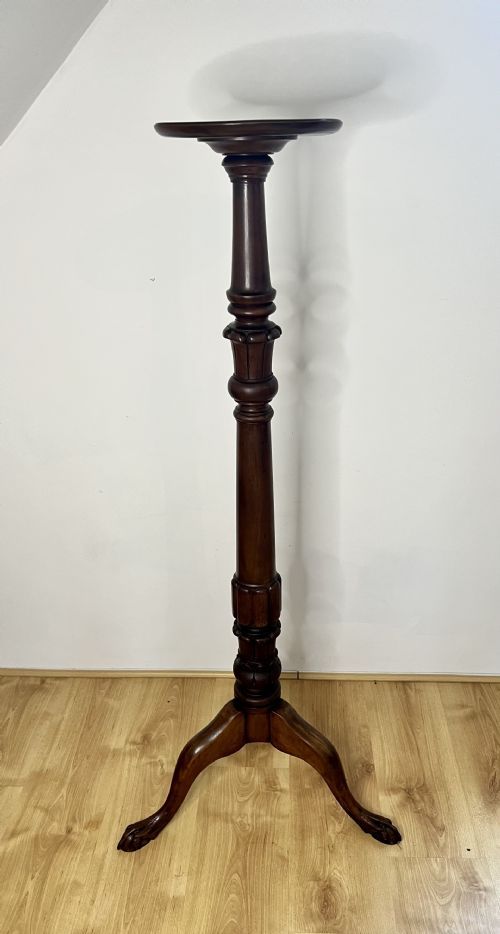
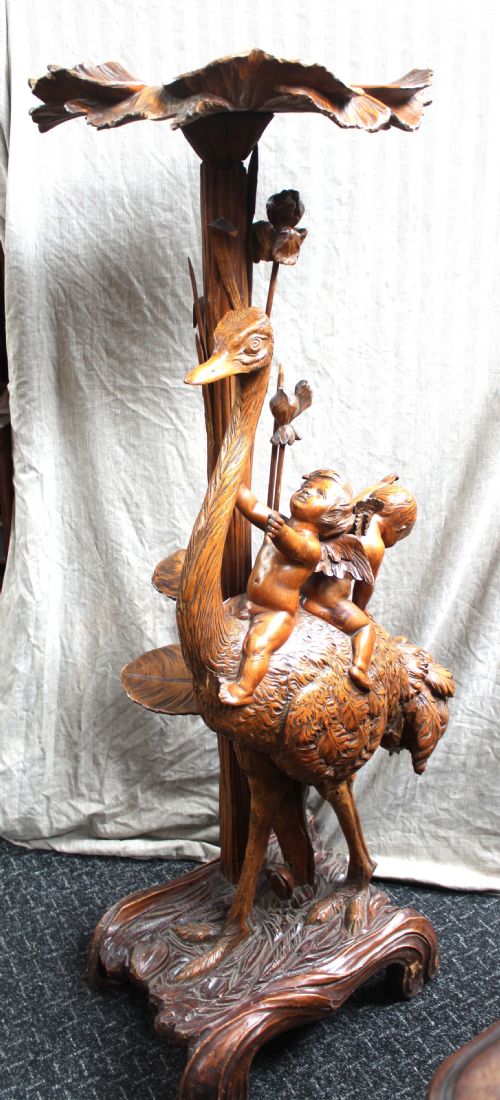
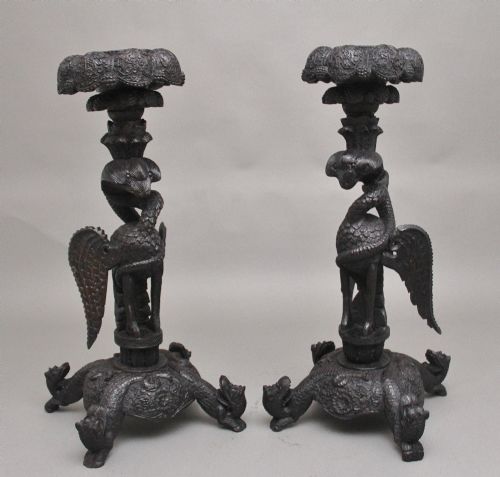
The selection ranges from architectural triform pedestals in solid mahogany to elaborate figural stands carved in the Venetian taste. Collectors frequently encounter pieces depicting winged griffins, satyrs, putti and young women, alongside painted and gilded Blackamoor figures.
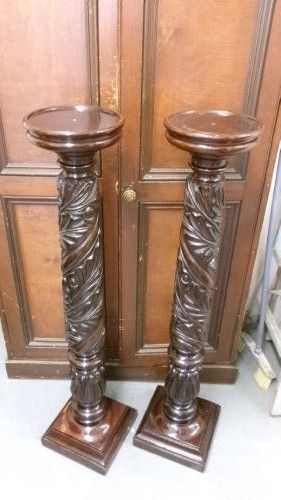
Forms overlap with pedestals, plinths and plant stands, yet the defining characteristic remains the raised circular or shaped top supported by a carved wooden shaft. Whether standing as a single column or paired as candelabras, they serve as focal points in period interiors.
How they were made
Makers utilised dense timbers such as mahogany and oak to construct the core structures, allowing deep relief carving without compromising the slender vertical line. Turnery and joinery formed the structural bases before skilled artisans applied hand chisels to shape acanthus leaves, figures and architectural mouldings.
Surface decoration frequently involved layers of gesso applied over the wood, which was then gilded with gold leaf or painted in polychrome finishes. French polish, oil paints and gold leaf were worked by hand to create rich patinas that responded to candlelight and daylight in domestic settings.
Retail Price Guide 2026
Typical UK retail prices for carved wood torchere, calculated from the Sellingantiques database of over a million retail prices indexed since 2003. This retail price guide relies exclusively on Sellingantiques data; no external sources or auction records are used, so the figures do not describe the wider market.
The archive records Venetian, French and Italian pieces spanning the eighteenth and nineteenth centuries.
What varies in quality
The distinction between standard production and exceptional work lies in the depth and animation of the carving. Finely rendered facial expressions, sharply undercut drapery and balanced proportions separate ambitious figural stands from stiffer, massed-produced decorative items.
The integrity of the underlying gesso and gilt surface defines the preservation state. Original polychrome and gold leaf retaining subtle wear demonstrate greater authenticity than heavily restored or later repainted surfaces.
The Carved Wood Torchere Glossary
- Torchere
- A tall stand historically used to hold a candle or torch, evolving into a display pedestal for lamps and sculptures. The form emphasises verticality and decorative carving.
- Gesso
- A plaster-like mixture applied to wood surfaces as a smooth base for gilding and painting. It allows intricate relief details to be modelled before the application of gold leaf.
- Triform
- A base or pedestal featuring three sides or three supporting legs, common in eighteenth-century designs. This geometry provides stability for tall, slender columns.
- Giltwood
- Timber coated with gold leaf or gold paint over a prepared ground. It reflects light effectively in candlelit interiors.
Frequently Asked Questions
What is a torchere used for?
Originally built to hold a candle or lamp for interior illumination, a torchere functioned as a movable light source in large rooms. Today, they serve primarily as display stands for sculptures, plants or table lamps.
Their elevated platforms draw the eye upward and add architectural interest to corners or empty wall spaces.
How do I date a carved wood torchere?
Dating relies on examining the timber species, carving style and surface preparation techniques such as gesso and paint layers. Eighteenth-century pieces often show simpler Neoclassical restraint, whereas nineteenth-century examples lean toward elaborate Venetian Baroque revivals and figural compositions.
Tool marks and the type of fixings used in the construction offer further clues to the period of manufacture.
Where should I place a torchere?
These tall stands suit corners, entrance halls or flanking fireplaces where their vertical silhouette commands attention without blocking circulation. They require a stable floor surface to ensure tall or top-heavy figural designs remain secure.
Pairing them with appropriate lighting or sculpture enhances their original decorative purpose.
Are painted and gilded torcheres fragile?
Surfaces finished with gesso, gold leaf and polychrome paint require gentle dusting with a soft, dry cloth rather than liquid cleaners. The underlying carved wood is sturdy, but the decorative surface layers can chip or flake if subjected to knocks or excessive humidity.
Stable indoor conditions help preserve the original paint and gilt patinas over time.