


Carved Wood Tier Stand
When you choose a carved wood tier stand, you bring home multi-level display furniture that organises objects with vertical elegance.
Carved Wood Tier Stand
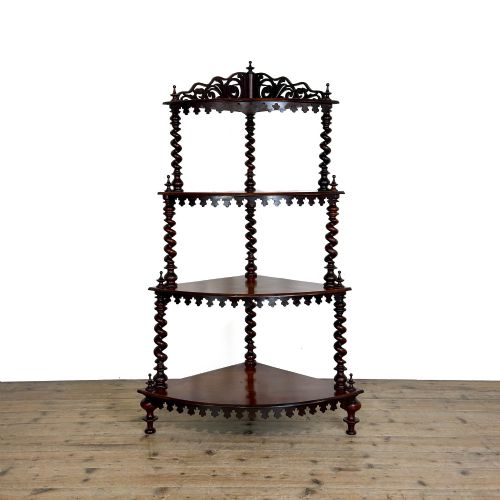
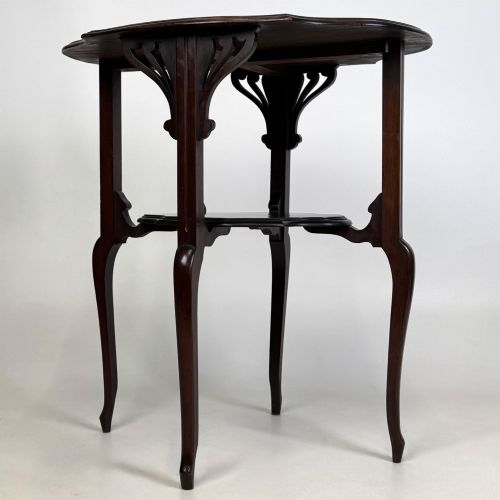
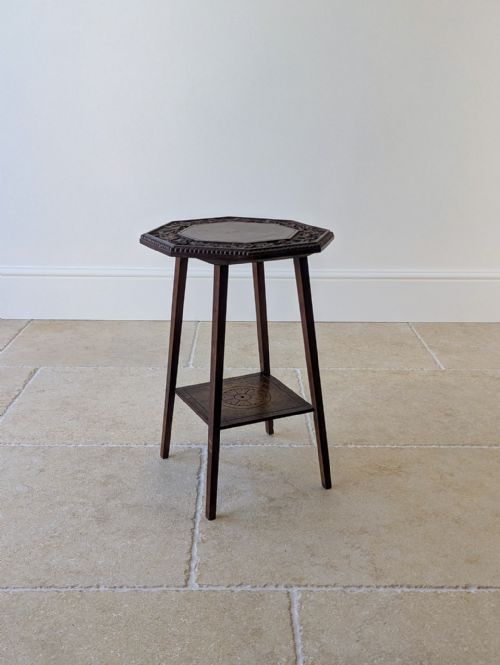
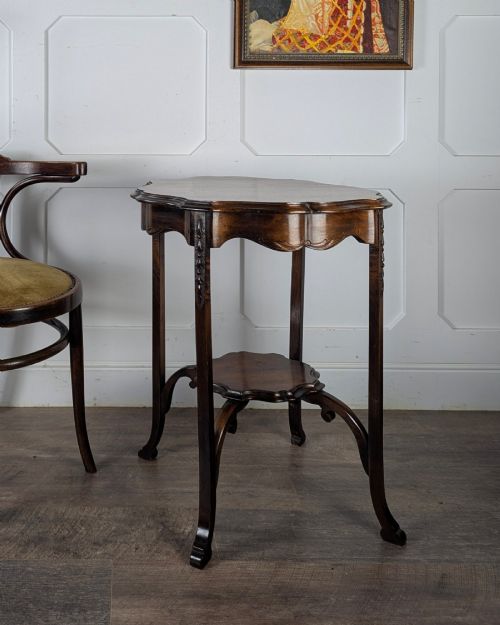
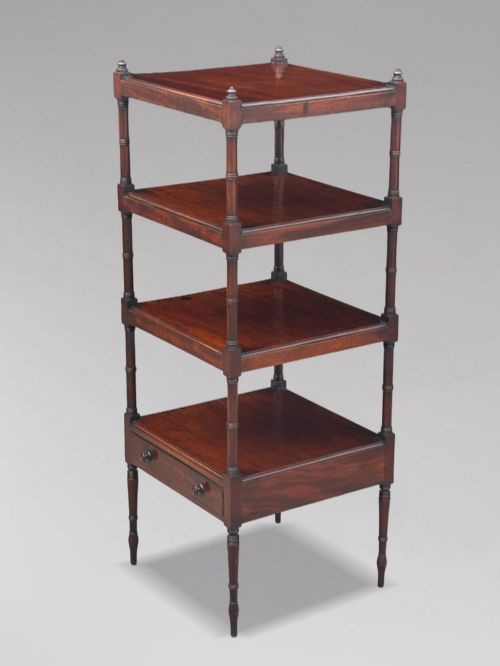
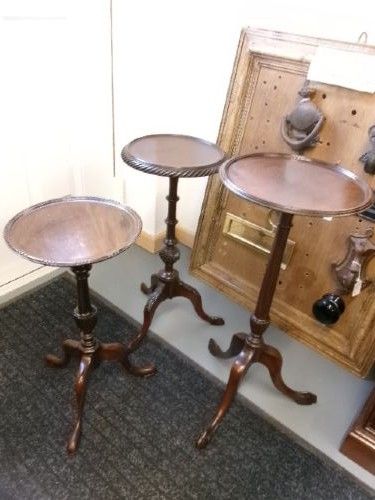
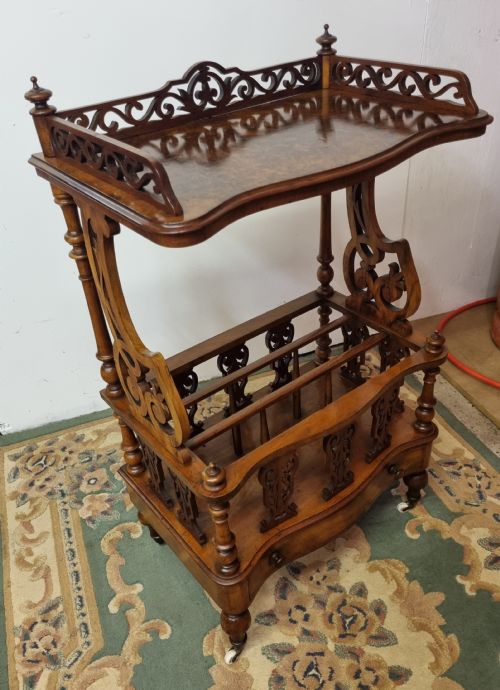
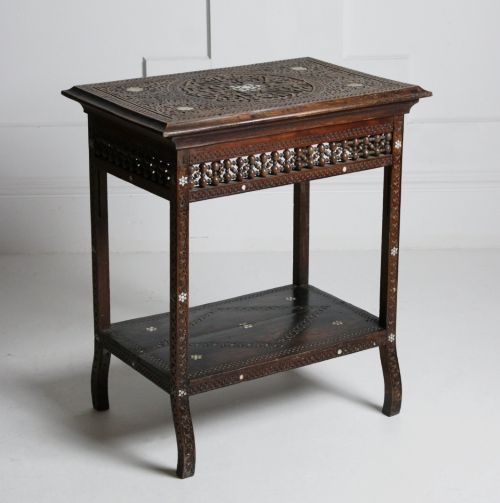
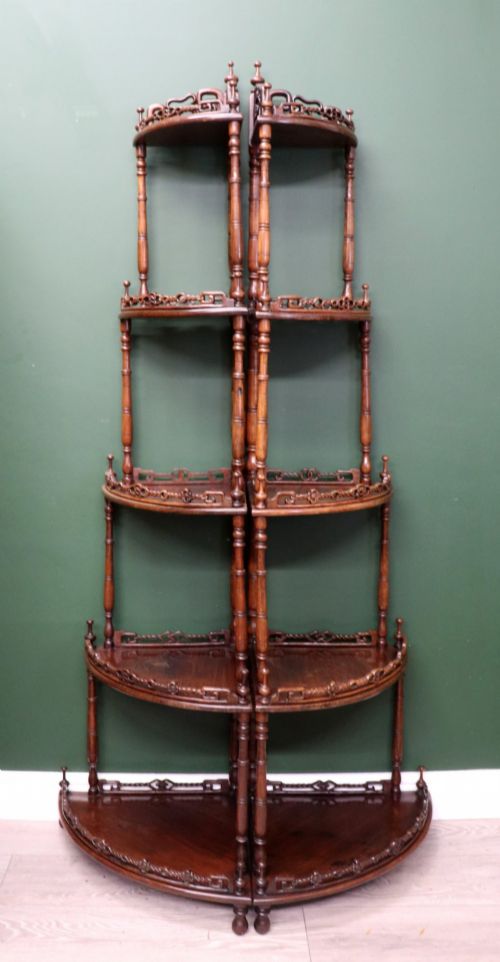
A carved wood tier stand serves as a versatile display surface, appearing frequently as multi-level whatnots, side tables, and plant stands across the nineteenth and early twentieth centuries. These pieces provide graduated shelving supported by turned or carved uprights, designed to hold books, ceramics, and decorative objects in domestic interiors.
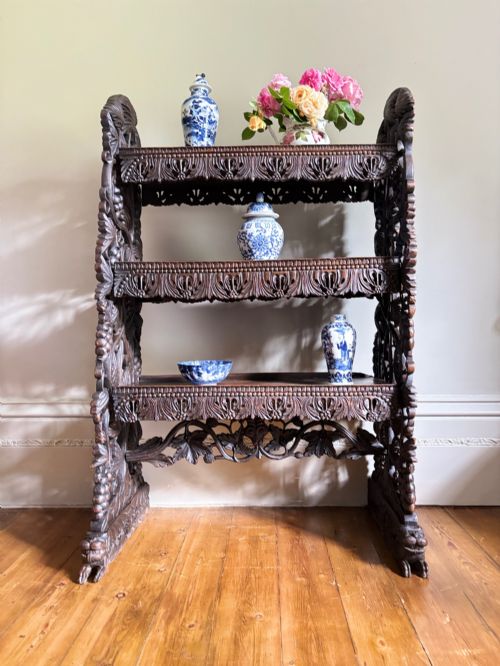
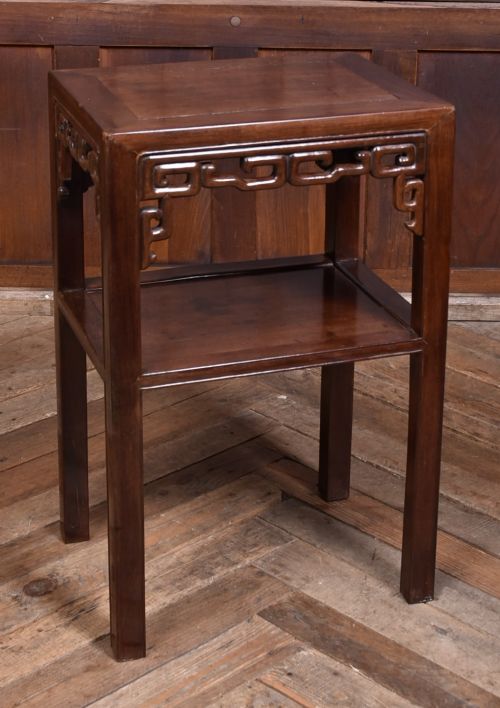
The selection on this page leans heavily toward Victorian and Edwardian examples, alongside regional variations including Chinese Qing Dynasty hardwood stands and Anglo-Indian designs. Buyers encounter corner configurations, freestanding rectangular tables, and revolving or tiered shelving units that reflect the Victorian taste for layered display.
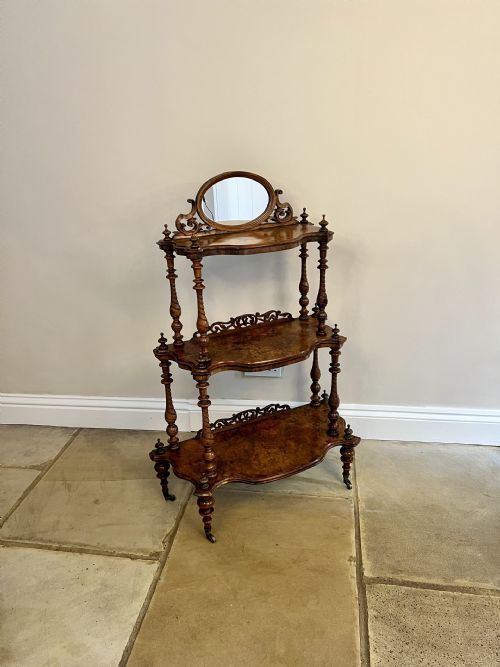
Forms range from compact corner whatnots to substantial rosewood and burr walnut display furniture with multiple tiers. The underlying purpose remains functional display, utilising vertical space efficiently while showcasing the natural grain of the timber.
Materials and construction
Cabinetmakers utilised dense timbers such as mahogany, walnut, rosewood, and exotic hardwoods to support multiple tiers without sagging. Burr walnut veneers provided decorative figure on prominent surfaces, while solid hardwoods handled structural weight.
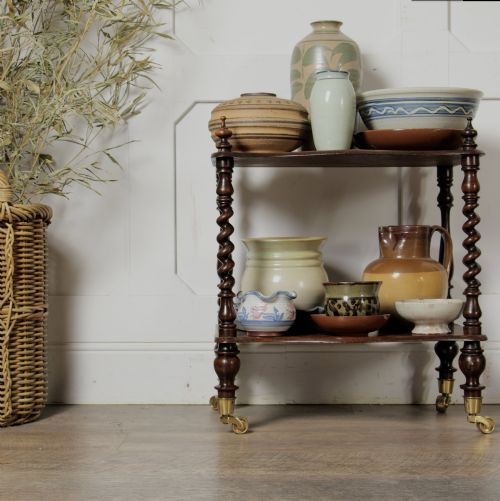
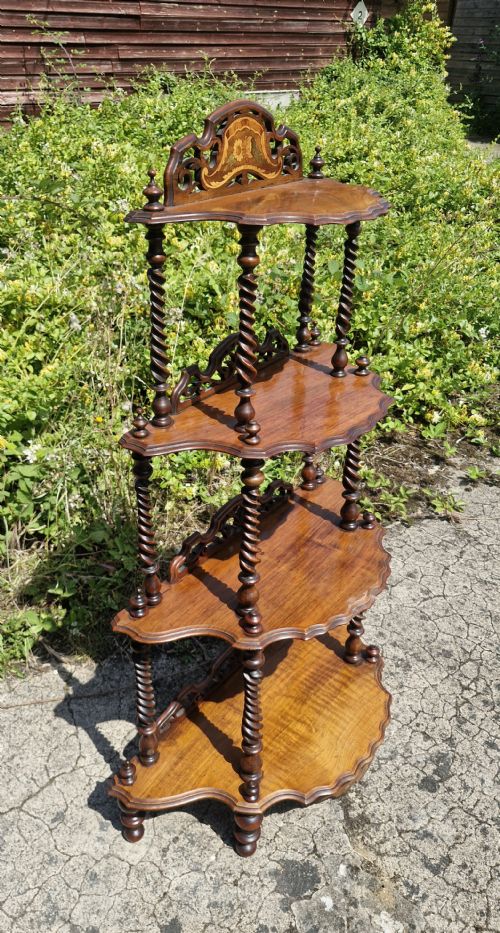
Turned barley twist supports, fretwork panels, and hand-carved details define the ornamentation of these tiers. Brass castors and fittings frequently complete pieces intended for mobility within a reception room.
Listings feature mahogany, walnut, rosewood, and burr walnut across Victorian, Edwardian, and nineteenth-century periods.
Evaluating quality in tier stands
The calibre of a carved wood tier stand rests upon the depth and crispness of its hand-carving and the selection of timber veneers. Superior examples exhibit tightly figured burr walnut or rich rosewood with uniform grain matching across the shelves.
Structural integrity through the uprights and joints dictates longevity, as multiple tiers place sustained pressure on lower supports. Finer pieces demonstrate robust joinery and careful attention to secondary timbers used in hidden areas.
Liberty's·Liberty of London·Gabriel Viardot
The Carved Wood Tier Stand Glossary
- Whatnot
- A piece of furniture consisting of several open shelves for displaying small objects. They became popular in the Victorian period and appear in corner or freestanding formats.
- Étagère
- A set of open shelves for displaying ornaments, essentially synonymous with a whatnot or multi-tiered stand. The term originates from French cabinet-making vocabulary.
- Jardiniere stand
- A specialised low table or tier stand designed to hold a plant container or flower bowl. These often feature inset marble tops to resist moisture from watering.
- Barley twist
- A type of turning shaped like a spiral helix, commonly found on the upright supports of Victorian stands. It adds strong vertical movement to the piece.
- Canterbury
- A low multi-tiered stand originally intended for holding sheet music, books or portfolios. It frequently incorporates slatted divisions on the lower tier.
Carved Wood Tier Stand: Frequently Asked Questions
What is a whatnot stand?
A whatnot is a piece of multi-tiered shelving designed to display ornaments, books, and curiosities in nineteenth-century interiors. It combines vertical storage with decorative turned or carved supports.
These stands were placed in reception rooms and corners to maximise display space without dominating the floor plan.
How do I use a tier stand today?
Tier stands function effectively as lamp tables, bedside surfaces, or plant displays in modern rooms. The multiple levels accommodate books, ceramics, and trailing plants.
Corner versions make use of unused room angles while providing accessible surface area at different heights.
How do I distinguish Victorian from Edwardian stands?
Victorian stands typically feature darker timbers, heavier carving, burr walnut veneers, and elaborate elements like barley twist columns. They prioritise rich texture and dense ornamentation.
Edwardian pieces often display lighter mahogany tones, simpler fretwork, and cleaner lines reflecting a shift towards airier domestic spaces.
What are marble top stands used for?
Marble top tiers were built to hold potted plants and water jugs without damaging the wood underneath. The stone surface provided a cool, wipeable platform for indoor flora.
These sturdy tops often appear on Chinese hardwood jardiniere stands and heavier plant tables.