





Victorian Fretwork Display Table
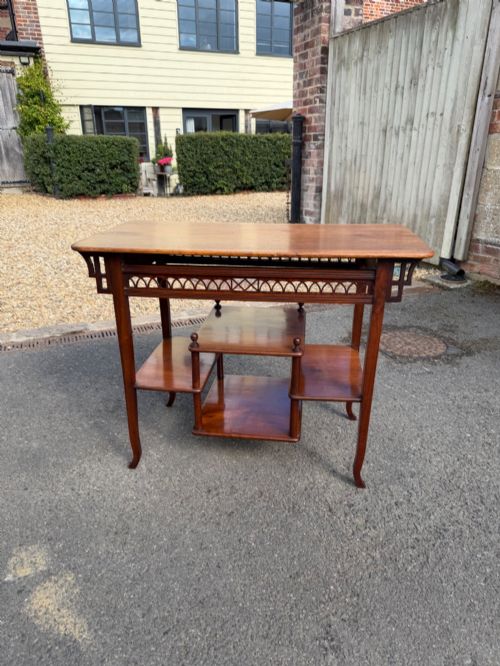
These Victorian fretwork display table pieces are decorative surface furniture designed to showcase treasured objects in the home.
Victorian Fretwork Display Table
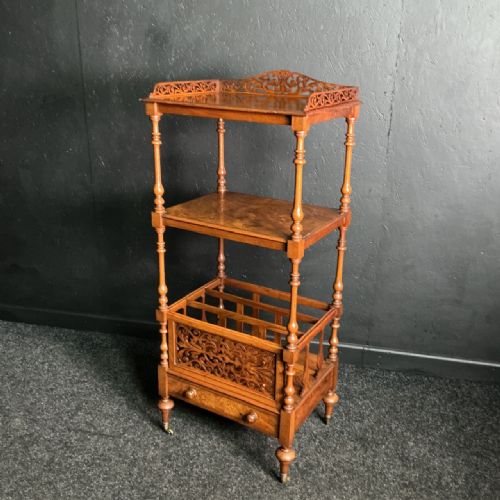
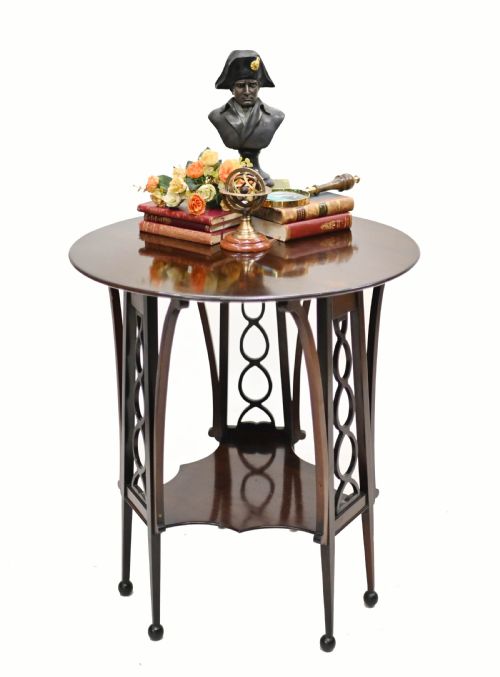
When you search for a victorian fretwork display table, you are looking at items designed for exhibition and storage in the nineteenth century and adjacent decades. The selection here leans heavily towards burr walnut whatnots, demi-lune display console whatnot tables, and occasional tables.
The forms span multiple related categories including plant stands, side tables, buffets, and canterbury whatnots. These versatile pieces appeared in drawing rooms and parlours to hold books, plants, and small collectables on open or tiered shelves.
How they were made
Cabinet makers utilised choice hardwoods such as mahogany, rosewood, and burr walnut to construct these stands and tables. Burr walnut veneer provided striking decorative grain patterns across the main surfaces of the tables and whatnots.
Additional detail came from brass fittings, glass panels, and applied fabric where appropriate for display or bijouterie functions. Carved wooden elements added texture and structure to stands dating from the Victorian period through to the early twentieth century.
Victorian Fretwork Display Table Retail Price Guide 2026
Typical asking prices for victorian fretwork display table among the pieces listed under this phrase on Sellingantiques today, from the lower quarter to the upper quarter. They describe what is for sale here now, not the wider market.
Current listings feature burr walnut, mahogany, rosewood, and hardwood across Victorian, Edwardian, and Arts and Crafts styles.
What varies in quality
The choice of timber underpins the overall standard of the piece, with figured burr walnut and rich mahogany sitting at the upper end of the scale. Grain selection and the smoothness of the timber preparation dictate visual appeal.
Fine quality shows in the crispness of any carved decoration and the precision of the joinery across tiered shelves and demi-lune consoles. Simpler occasional tables and plant stands offer practical utility with more straightforward construction.
The Victorian Fretwork Display Table Glossary
- Whatnot
- A set of open shelves used for displaying ornaments and books. These tier-based items are typical of the Victorian interior.
- Demir-lune
- A half-moon shape used for console tables and small display surfaces. This silhouette fits neatly against a drawing room wall.
- Bijouterie table
- A glass-topped table designed specifically for displaying small trinkets and jewellery. It keeps delicate items visible yet protected.
- Burr walnut
- Timber taken from the wart or burl of a walnut tree, showing intricate swirling grain patterns. Cabinet makers prized this wood for high-status furniture facades.
Victorian Fretwork Display Table: Frequently Asked Questions
What is a whatnot table?
A whatnot is a tiered piece of furniture with multiple open shelves designed for displaying ornaments, books, and small decorative objects in Victorian sitting rooms.
These pieces allowed households to exhibit their prized possessions and everyday curiosities in a single, orderly structure.
Where should I place a display table?
These tables suit drawing rooms, hallways, and living spaces where their surfaces can hold plants, small sculptures, or framed photographs.
Demi-lune console versions work particularly well placed flat against a wall, while freestanding tables can anchor the centre of a room.
Can these tables hold heavy objects?
Most of these tables are built for lighter display items such as small porcelain figures, books, plants, and decorative trinkets.
Heavier loads might strain tiered shelves or delicate glass-topped bijouterie surfaces, so keeping the weight moderate preserves the structure.