
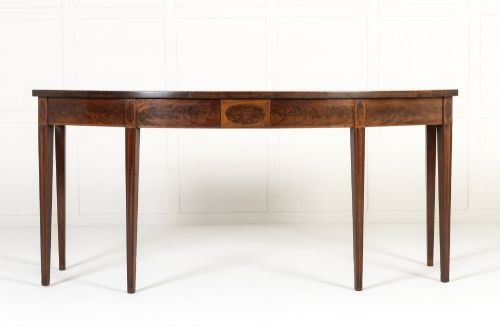
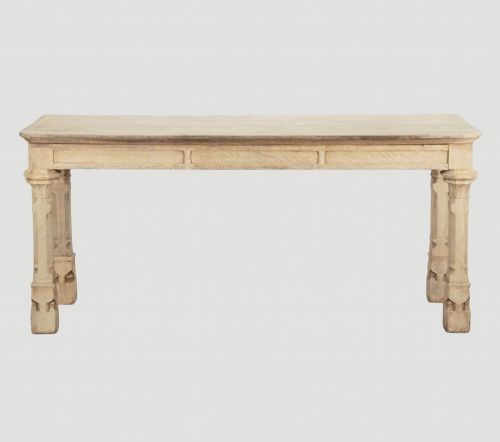
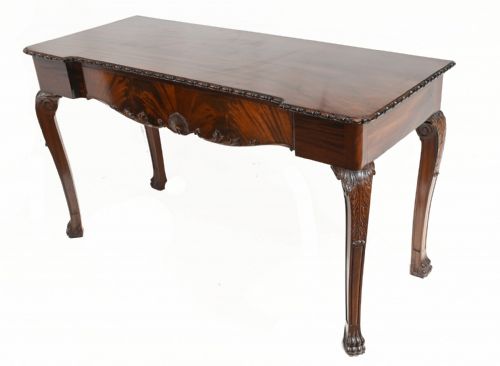
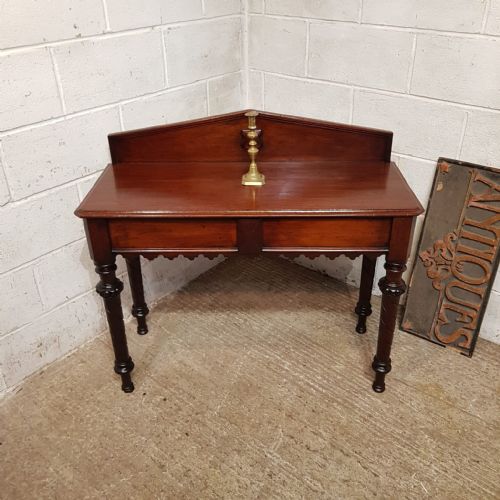


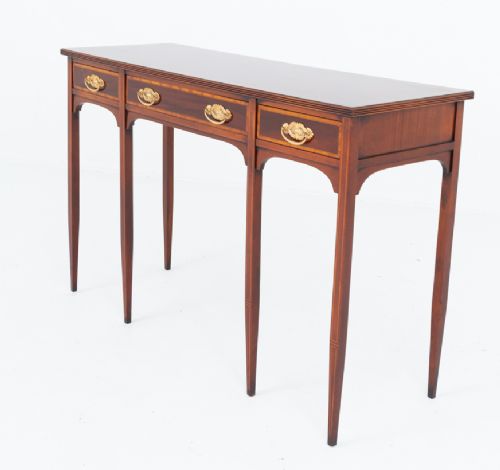
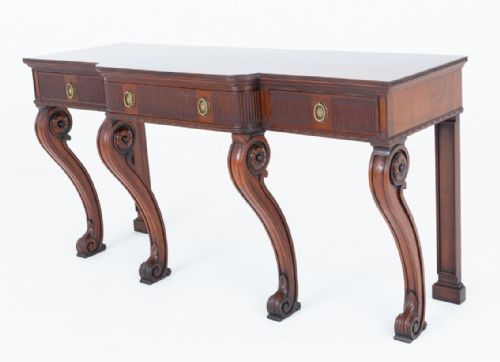


Carved Wood Serving Table
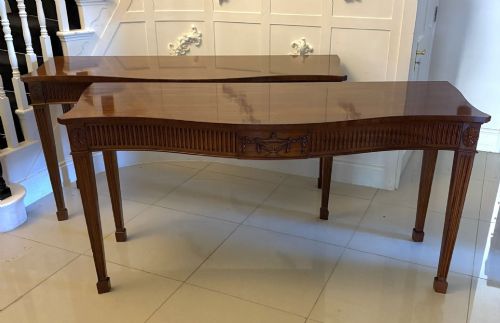
A carved wood serving table brings substantial presence to a dining room, offering deep timber grain and classical carving.
Carved Wood Serving Table
A carved wood serving table provides a dedicated surface for food and drink during formal meals, taking various forms across the periods. When searching for a carved wood serving table, buyers encounter formats ranging from grand Georgian console tables to robust Victorian buffets and refined Regency designs.
The pieces appearing here span centuries from the seventeenth through to the twentieth, reflecting stylistic shifts from Neoclassical restraint to heavier revival forms. Mahogany remains the dominant timber, often accompanied by oak, walnut, and cherrywood.
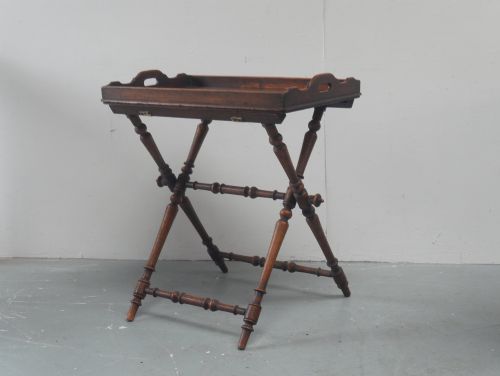
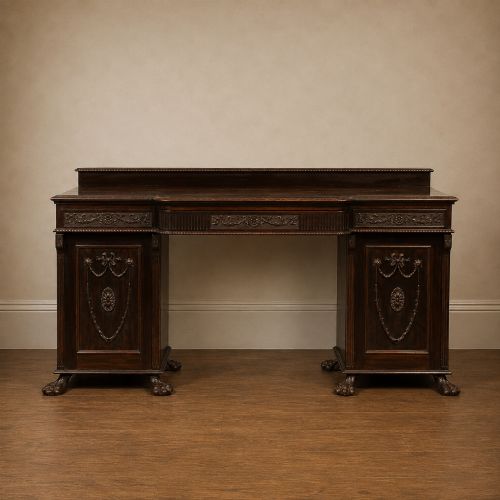
Makers and workshops across England, Ireland, and Scotland produced these items, sometimes incorporating brass fittings or satinwood inlay. The selection includes related forms like dumbwaiters, sideboards, and tray tables alongside the primary serving tables.
Distinguishing quality in craftsmanship
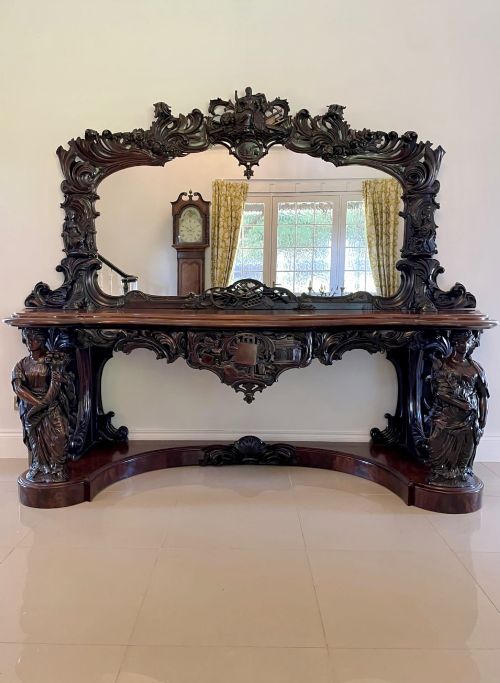
The depth and crispness of the hand carving separate standard production from exhibition pieces. Sharply defined acanthus leaves or figural work indicate superior artisan skill compared to soft, shallow moulding.
Timber selection dictates overall visual weight and stability, with dense figured mahogany and well-matched veneers commanding attention. Construction integrity, seen in the solidity of joints and original brass hardware, underpins enduring worth.
Listings feature woods including mahogany, oak, walnut, and cherrywood, spanning periods from the 17th century to the 1920s.
Gillows of Lancaster and London·Mack Williams and Gibton·Whytock and Reid
The Carved Wood Serving Table Glossary
- Console table
- A table designed to be fixed against a wall, frequently supported by ornamental brackets or legs. These often feature elaborate carving along the apron to suit formal reception rooms.
- Dumb waiter
- A tiered piece of freestanding furniture used for holding dishes and glassware without the need for servants at hand. They typically feature rotating or fixed circular shelves on a central column.
- Breakfront
- A piece of furniture where the central section projects forward from the flanking wings. This architectural arrangement creates dynamic shadow and depth on large sideboards.
- Flame mahogany veneer
- A thin slice of wood cut from where a branch joins the main trunk, displaying a distinctive flickering flame pattern. Cabinetmakers applied this to drawer fronts and tabletops for visual impact.
- Chippendale manner
- A stylistic grouping following the design vocabulary of Thomas Chippendale, characterised by rococo curves and Gothic or Chinese fretwork influences. Pieces in this manner show spirited carving and balanced proportions.
Carved Wood Serving Table: Frequently Asked Questions
Where should a serving table be placed?
These pieces traditionally stand against a dining room wall, functioning as a sideboard for dishes or serving platters during meals.
They also work effectively in wide hallways or drawing rooms as console tables beneath a mirror.
How do I care for antique mahogany?
Keep wooden surfaces away from direct sunlight and heat sources to prevent the timber and veneer from drying out or splitting.
Apply natural beeswax periodically and buff gently with a soft cloth to maintain the lustre without building up heavy chemical residues.
What is a dumb waiter used for?
Dumb waiters held extra plates, cutlery, and wine bottles within reach of the dining table during intimate meals.
The tiered shelves allowed hosts to manage courses independently.
How do I identify Regency pieces?
Regency items typically display clean architectural lines inspired by classical Greek and Roman forms, often featuring brass inlay or paw feet.
Dark timbers like mahogany dominate, sometimes paired with rosewood or gilt bronze mounts.