
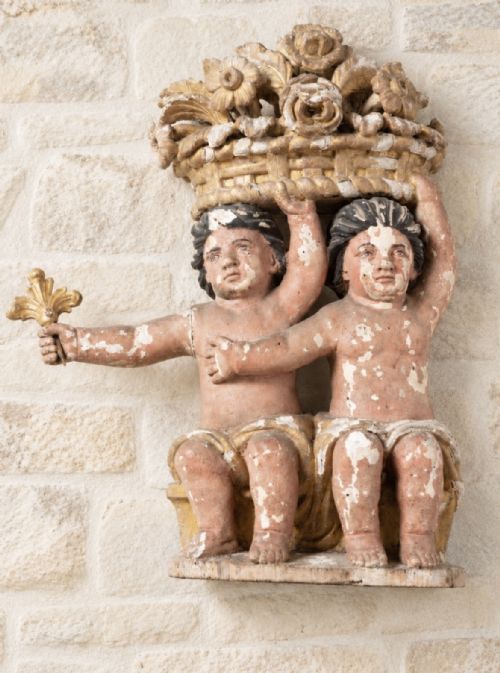


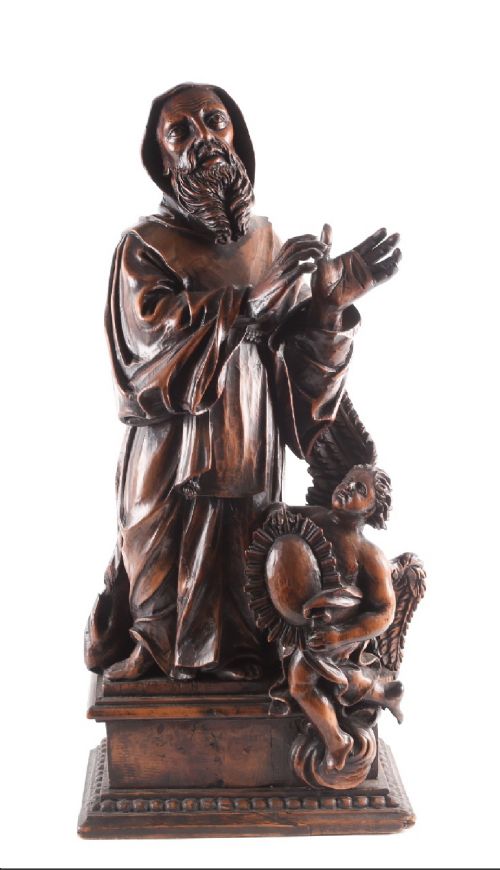


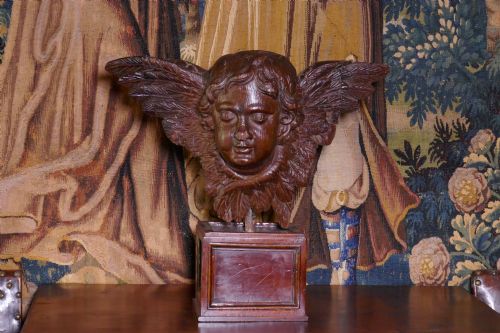
Carved Wood Putti Figures
Carved wood putti figures bring spirited Baroque drama into a room, capturing the lively sculptural tradition of winged infant figures.
Carved Wood Putti Figures
When you search for carved wood putti figures, you encounter sculptural works that span from the seventeenth century through the nineteenth century, including Italian Renaissance Revival and Baroque styles. These pieces take various forms, ranging from single cherubic terms and wall sculptures to pairs of angels and architectural salvage.
The versions you meet most frequently on this page belong to the nineteenth century, often created in Italian Baroque or Victorian Neo-Renaissance styles. They appear as standalone statues on stands, architectural decorations, or figures resting upon carved clouds.
How they were made
Surface finishes complete the construction, incorporating gesso, gold leaf, polychrome paint, and polychrome silvering. These layered treatments enhance the sculptural depth and provide the characteristic gilded or painted appearance seen across different periods.
One signed piece proves that even heavenly cherubs occasionally carry a maker's mark.
What varies in quality
The distinction between tiers of carved wood putti figures lies in the depth and vitality of the hand carving itself. Superior examples display confident anatomy, expressive movement, and intricate detailing in hair and drapery that separate them from stiffer interpretations.
The preservation and application of surface decoration also define quality, particularly the integration of gesso and gold leaf or polychrome paint. Finer pieces retain harmonious remnants of their original polychromy or gilding without heavy modern intervention.
The Carved Wood Putti Figures Glossary
- Putto
- A figure of a small winged infant, frequently found in Renaissance and Baroque art. These figures often represent cherubs or cupids within decorative schemes.
- Gesso
- A plaster-like mixture applied to wood surfaces to prepare them for gilding or painting. It provides a smooth base for gold leaf application.
- Polychrome
- The practice of decorating architectural elements or sculptures in multiple colours. This technique brings a lifelike vibrancy to carved wooden figures.
- Term
- A pillar or pedestal tapering downwards, supporting a bust or figure at the top. In sculpture, it integrates architectural support with figurative design.
Carved Wood Putti Figures: Frequently Asked Questions
How old are these putti figures?
The pieces span from the seventeenth century through the nineteenth century. Most examples found here originate in the nineteenth century, with earlier seventeenth and eighteenth-century items appearing less frequently.
Stylistic traits such as Baroque flourishes and revival aesthetics help contextualise their period of origin alongside material analysis.
Where were carved putti originally placed?
These figures often served as architectural decorations, altar elements, or wall sculptures within churches and grand homes. They were integrated into larger decorative schemes, altarpieces, or furniture.
Pairs of angels typically flanked religious shrines or adorned architectural salvage from Italian and French interiors.
What woods are commonly used?
Carvers utilised materials like lime wood, oak, walnut, and various hardwoods. Lime wood was particularly favoured for its fine grain and ease of intricate hand carving.
Hardwoods provided structural stability for architectural decorations and larger sculptural stands.
How do I care for wooden putti?
Maintain a stable indoor environment away from direct sunlight and extreme humidity fluctuations to protect the wood and surface decoration. Dust gently with a dry, soft cloth.
Avoid applying liquid cleaners or polishes, especially on surfaces finished with gold leaf, gesso, or polychrome paint.