


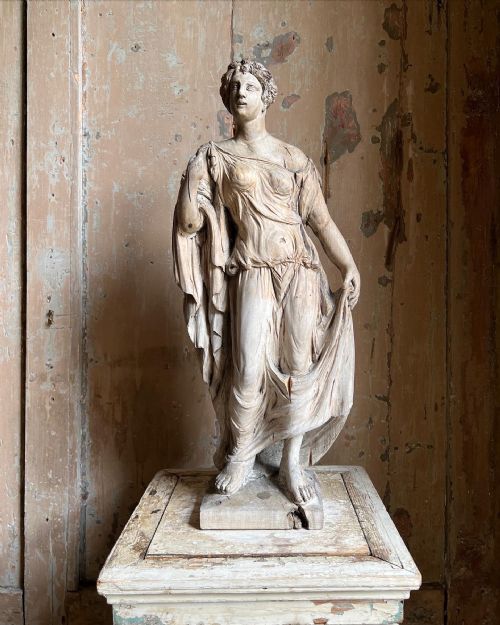

Carved Limewood Figures
These carved limewood figures bring centuries of master craftsmanship into a room, offering tactile warmth and remarkable detail.
Carved Limewood Figures
Carved limewood figures encompass a rich variety of sculptural forms, spanning religious saints and putti to Black Forest wildlife, folk art fawns, and domestic match holders. The pieces originate from periods ranging across the sixteenth, seventeenth, and eighteenth centuries, alongside later nineteenth and early twentieth-century expressions.
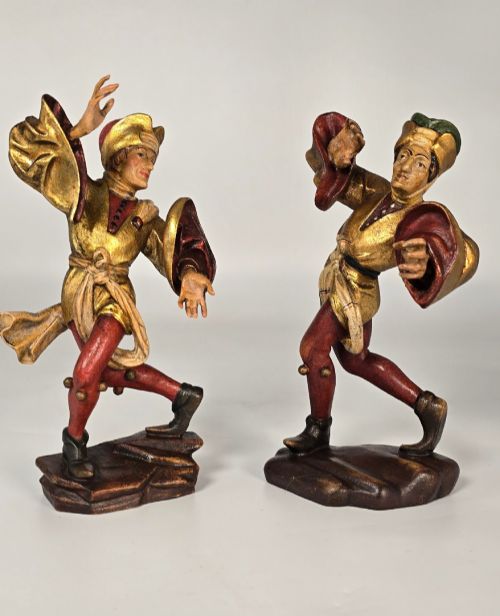
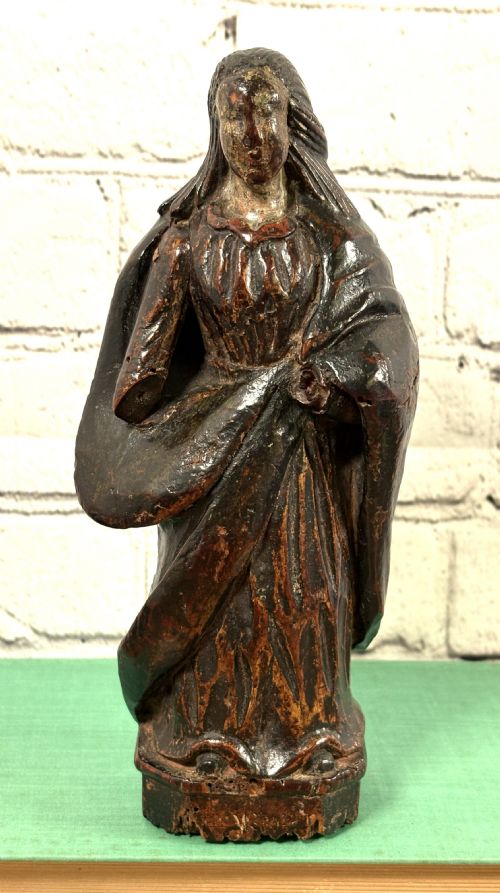
Buyers frequently encounter Black Forest styles and regional European works, particularly Swiss dancing figures, German baroque saints, and Italian Renaissance revival pieces. These sculptures range from small-scale match strikers and animal figures to larger Continental depictions of historical or religious subjects.
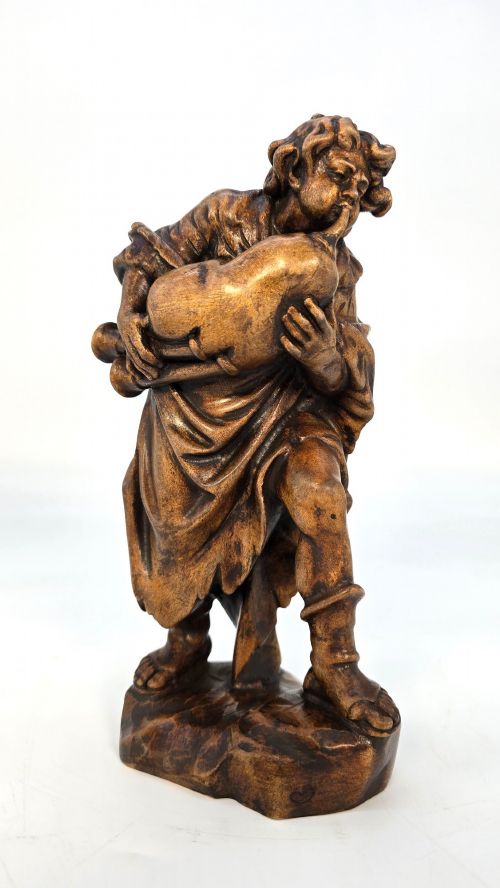
The selection reflects both devout devotional art and secular folk tradition, capturing human figures, musicians, and fauna with distinctive regional character. Each sculpture relies on the specific working properties of lime and linden wood to achieve its form.
How They Were Made
Craftsmen carved these pieces directly from limewood, also known as lindenwood, which offers a fine, even grain suitable for intricate, deep-relief carving. The softness of the timber allowed artisans to render delicate facial expressions, flowing drapery, and fine anatomical details without splitting.
Certain surfaces received additional finishing through paint, polychrome, or parcel gilding, highlighting specific elements of the costume or anatomy. Gold leaf was applied to enhance devotional figures, while other works retained the natural pale tone of the finished lime wood.
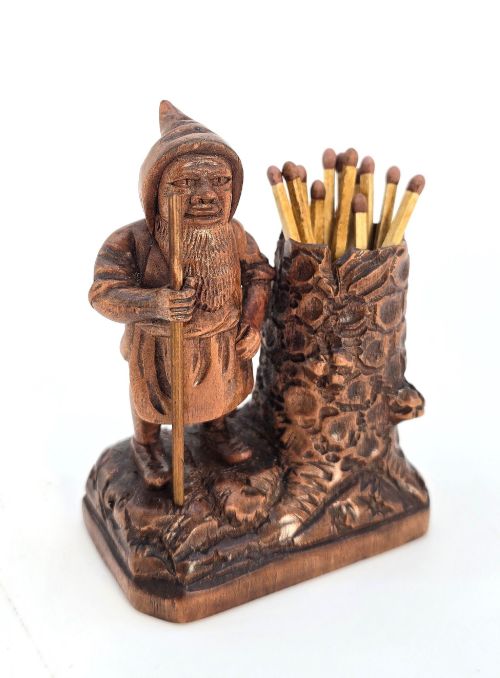
A gnome match striker dated 1916 stands ready to ignite a visitor's curiosity.
What Varies in Quality
The distinction between standard and exceptional pieces lies in the anatomical precision and the fluidity of the carving. Master carvers achieved depth and movement in drapery and musculature that lesser hands rendered stiffly.
Hans Müller
The Carved Limewood Figures Glossary
- Limewood
- A close-grained timber native to Europe, prized by sculptors for its minimal grain pattern and uniform density. It allows tools to cut cleanly in any direction.
- Polychrome
- The practice of decorating sculptural surfaces in multiple colours. This finish is frequently found on religious figures from earlier centuries.
- Parcel Gilt
- A technique where only specific portions of a carved surface receive an application of gold leaf. It creates contrast against the exposed wood or painted areas.
- Putto
- The representation of a small, naked child, often winged, appearing in Renaissance and Baroque art. These figures often symbolize divine presence or earthly love.
Carved Limewood Figures: Frequently Asked Questions
How do I care for limewood figures?
Keep these sculptures away from direct sunlight and sudden temperature shifts to prevent the wood from drying out or splitting. Dust gently with a dry, soft brush rather than using liquid polishes.
Maintaining a stable indoor humidity level preserves both the timber and any historic surface treatments like paint or gold leaf.
Where were these figures made?
The pieces originate from workshops across Europe, with strong representation from Germany, Switzerland, Italy, and France. Regional styles often dictate the subject matter, from Swiss folk animals to German baroque religious icons.
Carvers utilised local timber stocks, choosing lime for its predictable working qualities across different European forest regions.
What is Black Forest carving?
Black Forest carving refers to a distinct regional style originating in central Europe during the nineteenth and early twentieth centuries. These works frequently depict wildlife, domestic animals, and folkloric human figures in highly detailed, naturalistic poses.
The style became particularly well known for combining decorative appeal with practical domestic functions like match holders and stands.
How can I tell the period?
Dating relies on stylistic markers, tool marks left on the reverse or interior, and the presence of historic finishes such as early polychrome or original gilding. Renaissance and Baroque pieces display different drapery conventions compared to later nineteenth-century folk art.
Examining the ageing of the timber and the specific carving techniques provides further context for the date of origin.