


Swiss Carved Wooden Figures
Swiss carved wooden figures bring rustic charm and animal character into interiors through detailed nineteenth and twentieth-century artistry.
Swiss Carved Wooden Figures
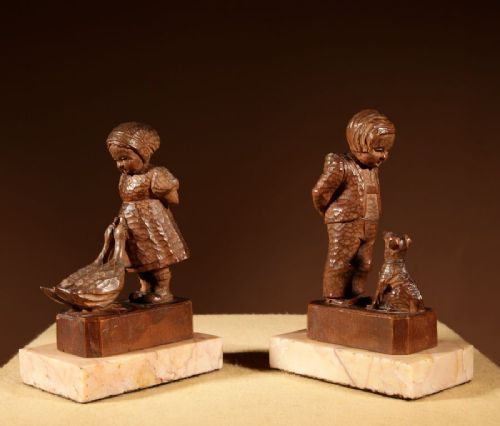
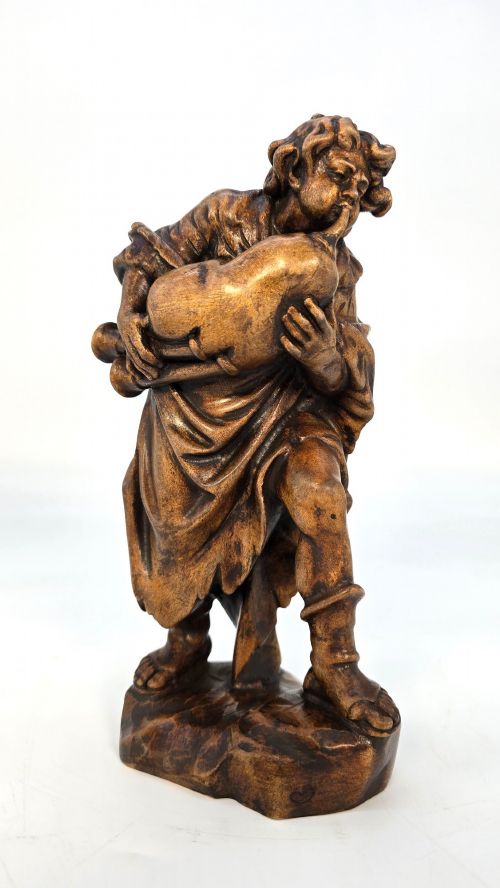
When you search for swiss carved wooden figures, you encounter sculptural works and functional objects originating primarily from the nineteenth and early twentieth centuries. These pieces span the Victorian, Edwardian, and later periods, capturing alpine fauna, human peasants, and folkloric characters.
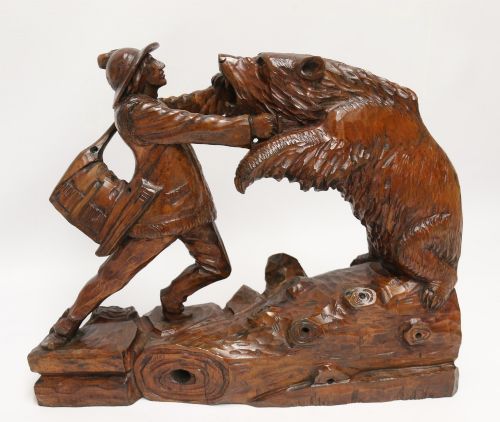
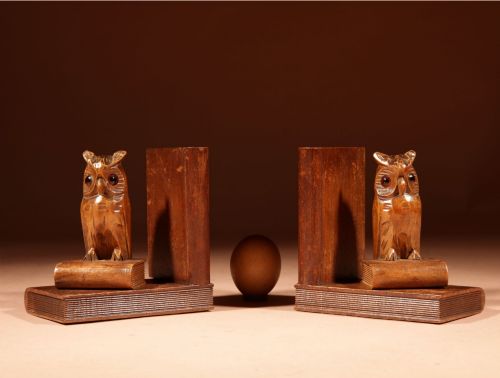
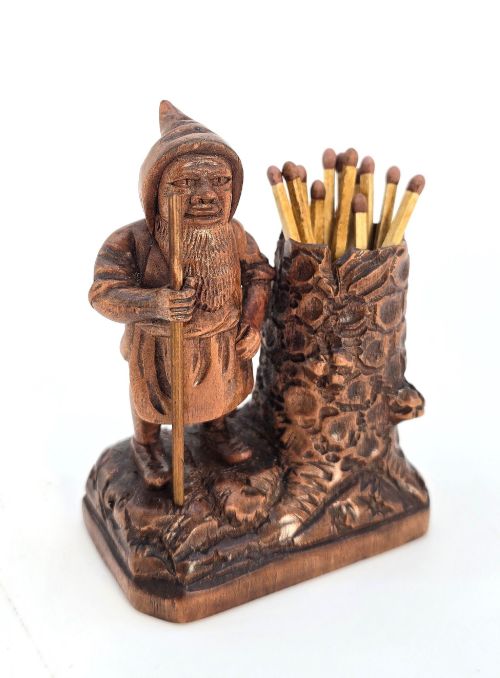
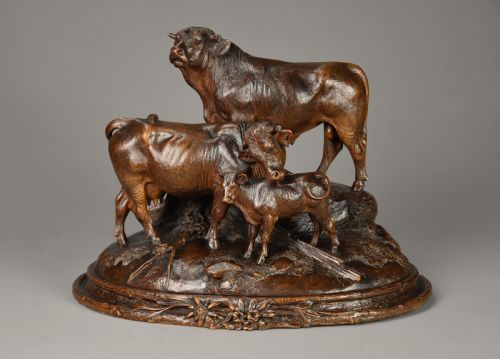
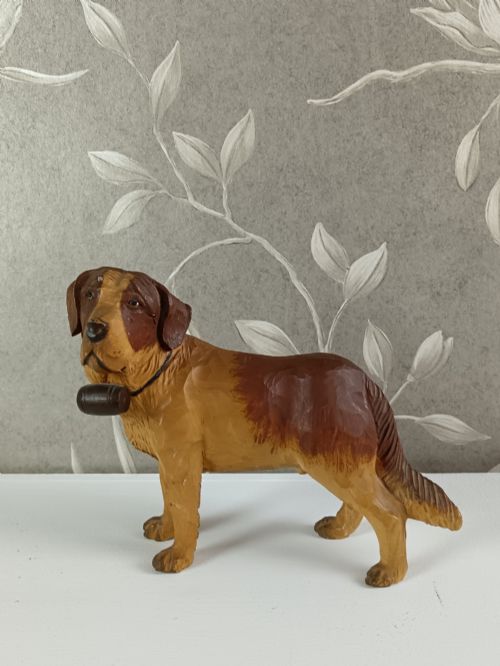
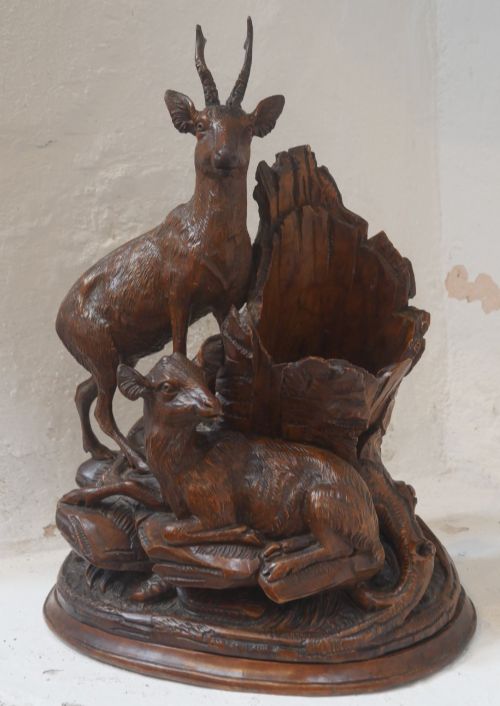
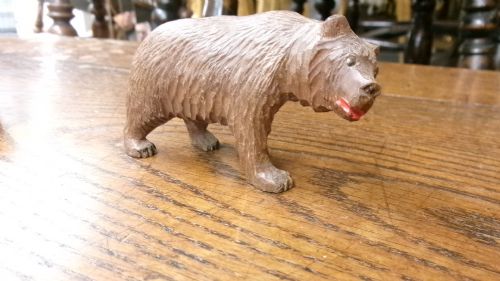
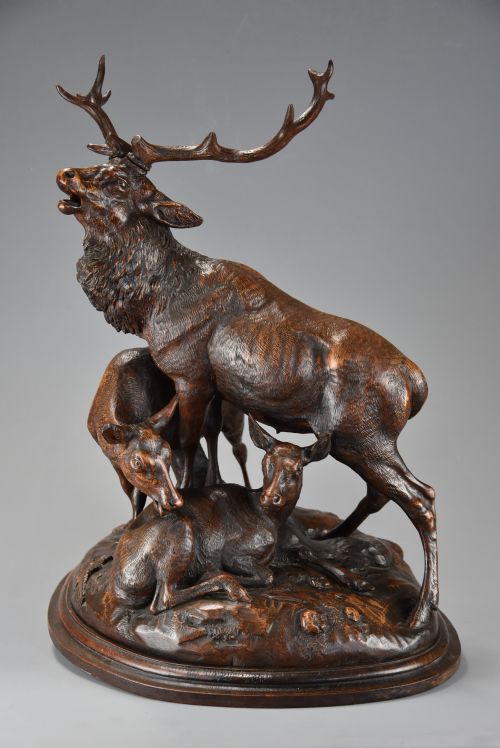
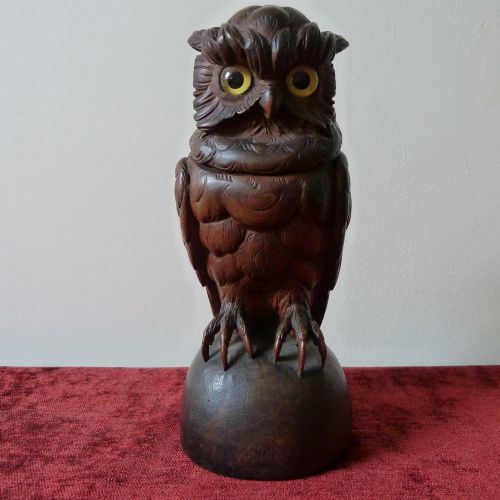
The most common forms on this page include bears, owls, dogs like the Saint Bernard, cattle groups, ibex, and chamois. Many pieces double as functional items such as bookends, inkwells, nutcrackers, match holders, and condiment figures.
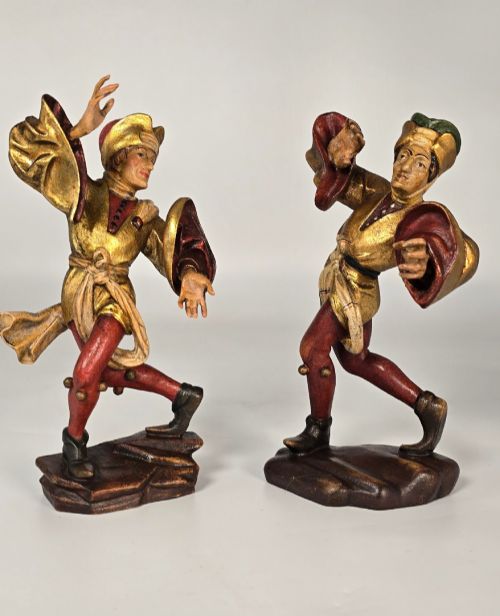
Makers and styles frequently intersect with Black Forest and Alpine folk art traditions. Pieces range from small miniature figurines to large animal groups and historical figures like William Tell and the Pied Piper.
Judging quality
Quality rests upon the naturalism and depth of the carving, where master carvers achieved expressive poses, accurate anatomical proportions, and intricate rendering of textures like animal pelts.
Signatures, stamps, or documentary attribution to known workshops elevate a piece, distinguishing standard output from exceptional sculptural artistry.
Bears take on human habits here, balancing inkwells, guarding condiments, and standing upright with eager glass eyes.
J HUGGLER
The Swiss Carved Wooden Figures Glossary
- Black Forest
- A style of wood carving originating from the mountainous regions of central Europe, famous for lifelike animals and rustic furnishings. The tradition flourished throughout the nineteenth century.
- Limewood
- A soft, pale timber favoured by carvers for its fine, even grain and lack of prominent knots. It permits intricate chisel work without splintering.
- Inkwell
- A small desk accessory designed to hold liquid ink, frequently incorporated into figural animal carvings. These desk sets often feature hinged lids and glass inserts.
- Nutcracker
- A mechanical tool designed to break open nutshells, often fashioned here into human or animal figures with leverage mechanisms. Walnut and oak were common choices for durability.
- Folk art
- Artistic work created within a traditional culture by self-taught or regional craftsmen, prioritising expressive character over academic polish. These pieces reflect local heritage and daily alpine life.
Swiss Carved Wooden Figures: Frequently Asked Questions
What animals appear most often?
Bears dominate the selection, appearing singly, in groups, or performing human tasks like holding inkwells and bookends. Other frequent subjects include owls, St Bernard rescue dogs, cows, bulls, goats, ibex, and chamois.
Animals are rendered with varying degrees of realism, from playful novelty poses to anatomically detailed studies of alpine wildlife.
How were these items used?
Many carvings served practical household functions while doubling as decorative sculptures. Common utility forms include bookends on library shelves, desk inkstands for correspondence, and nutcrackers placed on dining tables.
Smaller pieces functioned as match strikers, condiment containers, or simply miniature ornaments displayed on mantelpieces and cabinets.
How do I date a carving?
Dating relies on stylistic clues, timber choice, and occasional stamped signatures or registration marks. Most extant pieces date from the nineteenth century up to the early twentieth century.
Patina, wear patterns, and the presence of original glass eyes or metal hardware also help establish the approximate period of manufacture.
Are these pieces signed?
Most examples remain unsigned, as they were produced by regional workshops and cottage industries rather than individual master sculptors. However, notable pieces occasionally bear maker stamps or artist signatures such as J Huggler.
Unsigned works are still attributed to specific regional traditions based on carving technique, choice of limewood or walnut, and subject matter.