



Baroque Wooden Cherubs
Baroque wooden cherubs bring expressive continental drama to interiors through dynamic carved forms originating across the seventeenth and eighteenth centuries.
Baroque Wooden Cherubs
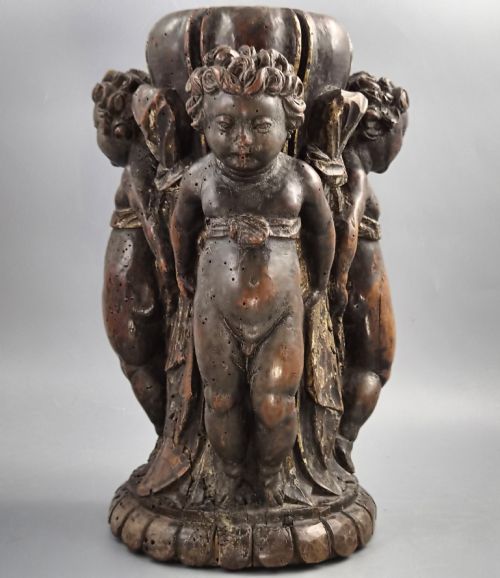
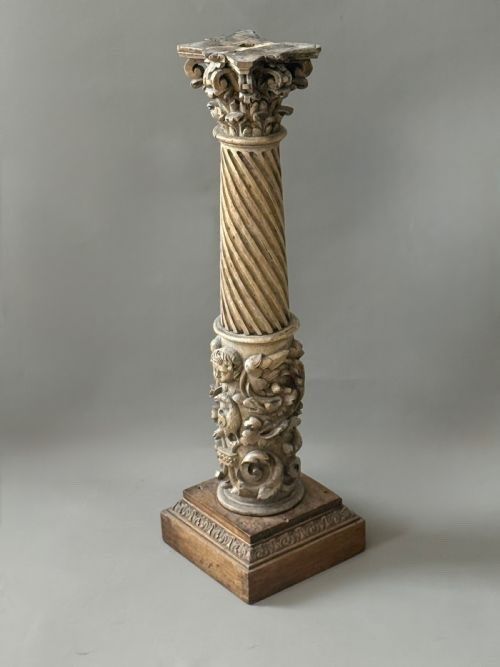
When you search for baroque wooden cherubs, you encounter sculptural figures and architectural elements originating primarily from seventeenth and eighteenth century continental workshops. These pieces appear as wall brackets, candelsticks, lamp bases, and individual putti statues rather than flat decorative objects.
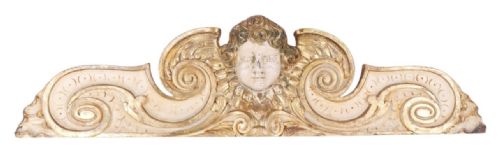
The selections on this page lean heavily towards Italian and French examples executed in oak, walnut, and lime wood. Many of these carved figures originally formed part of larger church altarpieces, overdoors, or architectural panels before entering the decorative market.
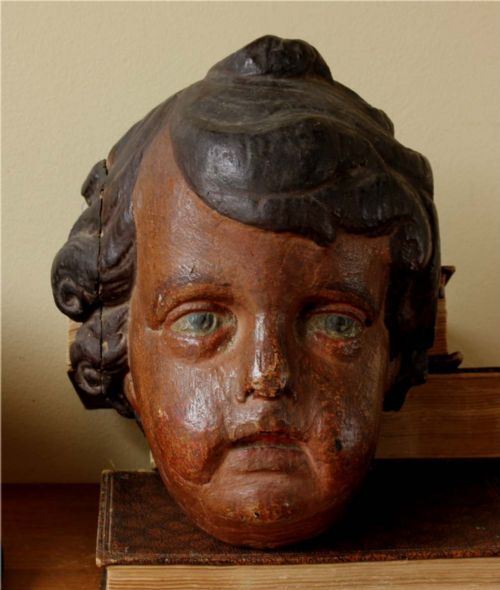
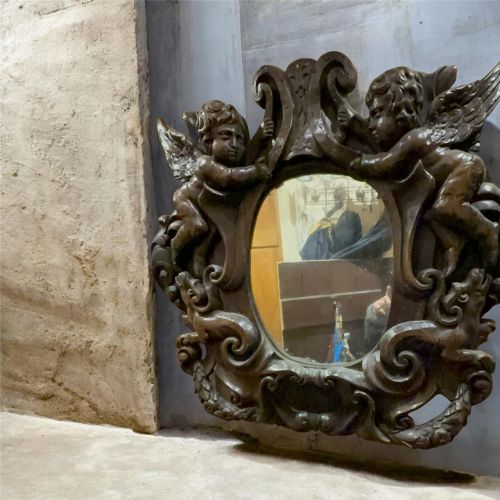
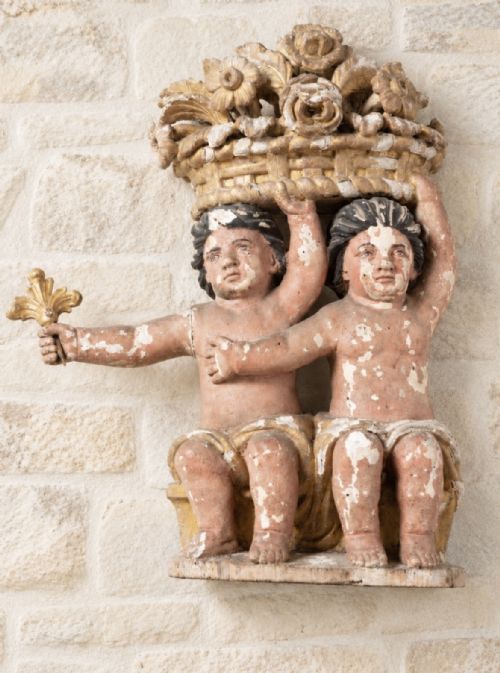
Buyers find both single devotional figures and matched pairs depicting winged cherubs or putti. The forms range from simple carved wooden heads mounted on panels to monumental architectural supports and torchiere bases.
How baroque wooden cherubs were made
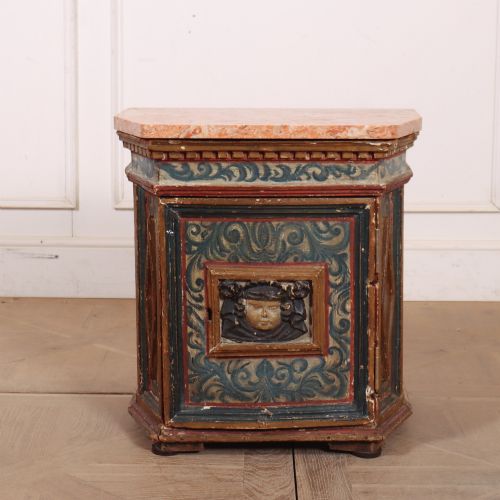
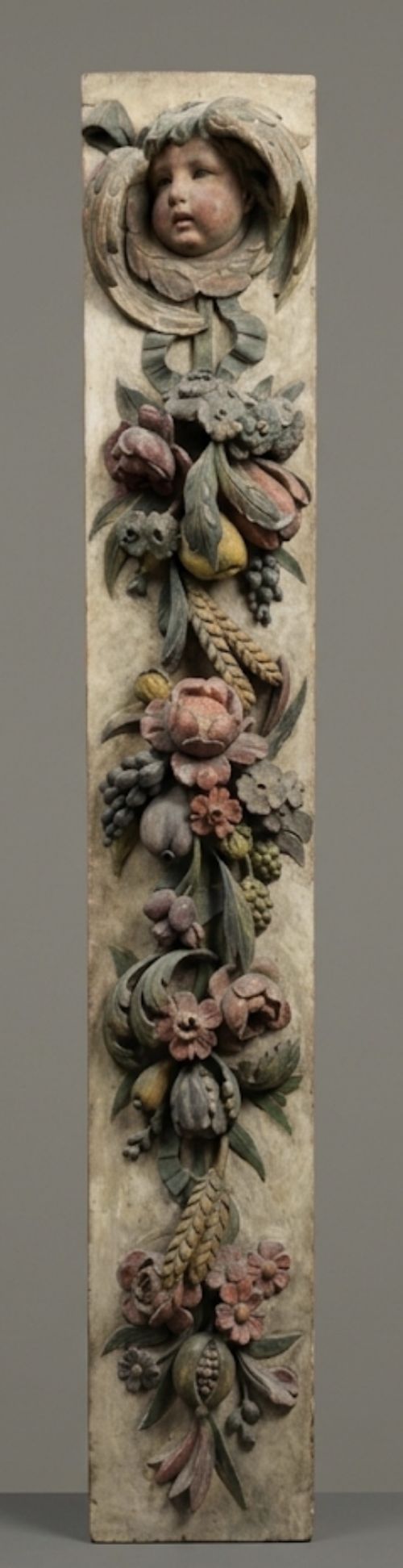
Many surfaces received a preparation layer of gesso before being finished with gold leaf, silver, or polychrome paint. This layered technique created the rich surface textures seen on Continental Baroque and revival pieces.
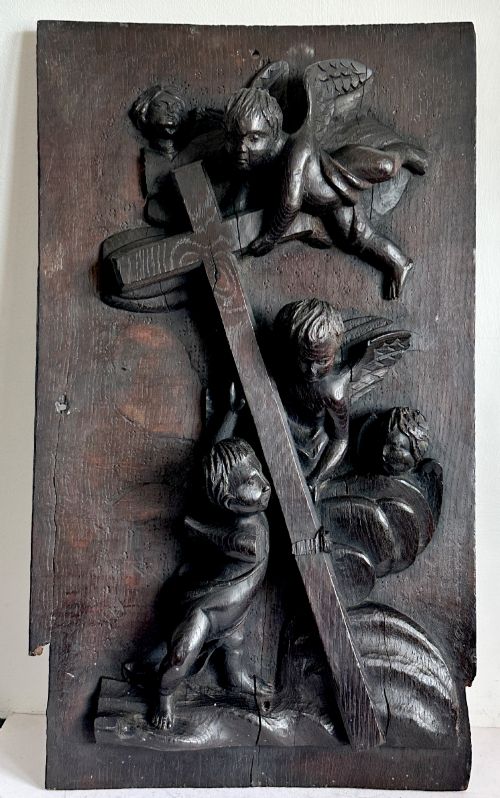
Several cherubs appear caught mid-prayer or mid-flight, frozen in wood since the seventeenth century.
What varies in quality
The distinction between ordinary and exceptional carving lies in the anatomical fluidity of the wood and the depth of the relief. Master carvers captured musculature, feather detail, and emotional expression with a vitality that lesser workshop hands missed.
Surface preservation significantly dictates desirability among collectors. Original polychrome paint or early gilding retained beneath later centuries of wear separates untouched survivals from heavily restored or stripped examples.
Master Carver Edward Pearce
The Baroque Wooden Cherubs Glossary
- Putto
- A plump, often winged male infant figure frequently depicted in classical and baroque art. These figures appear widely across Italian and French wood carvings.
- Gesso
- A plaster-like mixture applied to wood surfaces as a smooth base for gilding or paint. This material holds crisp carved details under metal leaf.
- Polychrome
- Decorated in multiple colours using paint applied directly to wood or gesso surfaces. This finish defines many eighteenth century Continental figures.
- Torchiere
- A tall ornamental stand or candlestick designed to hold a light source. Surviving bases often incorporate carved human or cherubic figures.
- Pricket
- A sharp metal spike on a candlestick designed to secure a wax candle. These fittings appear on seventeenth and eighteenth century altar pieces.
Baroque Wooden Cherubs: Frequently Asked Questions
Where did baroque wooden cherubs originate?
Most surviving pieces stem from seventeenth and eighteenth century workshops across Italy, France, and Germany. Many originated as components of ecclesiastical architecture or devotional furnishings.
Craftsmen in regions such as Venice and Florence produced dynamic carved figures that later inspired nineteenth century revival pieces.
How do I hang a wall bracket safely?
Wall brackets and architectural fragments require secure fixings anchored directly into structural wall studs or masonry. The heavy solid wood construction demands appropriate weight-bearing brackets.
Professional installation ensures that protruding carved elements remain stable and protected from accidental knocks.
How do I distinguish oak from walnut pieces?
Oak displays a pronounced open grain with distinct medullary rays, often seen in seventeenth century panels and architectural salvage. Walnut offers a finer, tighter grain with darker tonal variations.
Continental carvers selected these hardwoods based on local availability and the level of intricate detail required for the sculpture.
What is the difference between original and revival pieces?
Seventeenth and eighteenth century pieces display period tool marks, timber shrinkage, and historic wear beneath the finish. Nineteenth century revival items often mirror these baroque styles with cleaner machine assistance.
Examining the underside, peg construction, and surface oxidation helps clarify the precise age of the carved wood.