

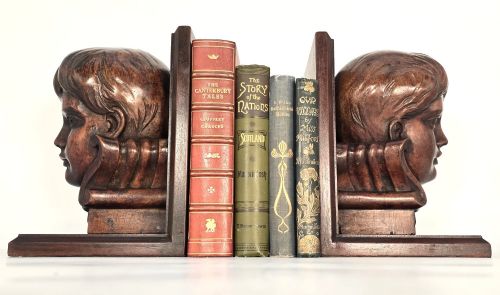


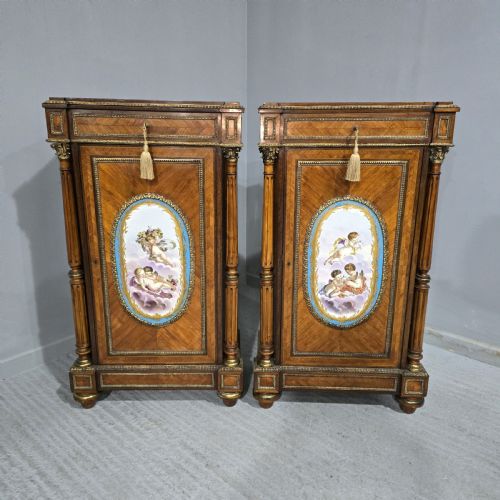


Pair of Wooden Cherubs
A pair of wooden cherubs brings sculptural warmth to a room, shifting between devotional quiet and exuberant Baroque movement.
Pair of Wooden Cherubs
A pair of wooden cherubs encompasses carved figures from the seventeenth, eighteenth, and nineteenth centuries, taking forms such as wall brackets, bookends, candlesticks, and architectural panels. The pieces reflect distinct regional characteristics, notably from Italian and French workshops, moving from devotional altar figures to decorative architectural ornaments.
Buyers encountering this search phrase find both full figural putti and isolated cherub heads, often shown kneeling on clouds or mounted on giltwood brackets. The materials shift from bare oak and limewood to richly decorated polychrome paint, silvering, and gold leaf applied over gesso.
The aesthetic vocabulary spans Baroque, Italian Baroque Revival, Louis XVI, and Victorian Gothic Revival styles. These pairings demonstrate how carvers balanced symmetrical arrangements for flanking altars, libraries, and grand interiors.
Materials and construction
Carvers shaped these figures from timbers such as mahogany, oak, limewood, and general carved wood, relying on hand chisels to define wings, curls, and drapery. The underlying structure often received a preparation of gesso before receiving finishes.
Surface decoration defined the final appearance, utilising gold leaf, silvering, and polychrome paint. These finishes interacted directly with the carved grain underneath, creating depth on surfaces like clouds and wings.
Some winged infants spend centuries perched on clouds without ever learning to fly.
Evaluating the carving
The distinction between standard workshop output and superior carving rests in the anatomical articulation of the putti and the confidence of the tool marks. Finer examples display deep undercut details in the hair, feathers, and billowing clouds rather than flat, summary planes.
The integrity of the original surface finish, whether aged polychrome or applied gold leaf, dictates the visual harmony of the pair. Pieces retaining their early layers of paint or gilding possess a depth that overpainting or stripping obscures.
The Pair of Wooden Cherubs Glossary
- Putti
- Plural of putto, referring to plump, often winged male infants common in classical and religious art. These figures appear frequently in Baroque sculpture and architectural decoration.
- Giltwood
- Timber that has been coated with gold leaf or gold dust over a prepared ground. This finish was favoured in Baroque and Louis XVI interior schemes.
- Polychrome
- The practice of decorating architectural elements and sculptures in multiple colours. It appears on numerous early wood figures to heighten realism.
- Gesso
- A plaster-like mixture applied to wood surfaces as a smooth base for gilding or painting. Traditional preparations consisted of chalk or gypsum mixed with animal glue.
- Wall Bracket
- A projecting architectural support fixed to a wall to hold objects or figures. Several listed pieces combine these brackets with carved cherubic forms.
Pair of Wooden Cherubs: Frequently Asked Questions
How were these figures originally used?
Many of these wooden cherubs served an ecclesiastical function, flanking altars or supporting religious paraphernalia like candlesticks in churches and private chapels.
Others formed part of domestic decorative schemes, integrated into library bookends, wall brackets, or furniture panels to project classical taste.
How do I care for wooden cherubs?
Keep carved wooden figures away from direct sunlight and sudden temperature shifts to prevent the timber from splitting. Stable indoor humidity protects both the underlying wood and delicate surface layers.
Dust the carvings gently with a soft, dry brush rather than liquid cleaners. Moisture can damage aged polychrome paint, gesso, and gold leaf finishes.
How do I distinguish seventeenth-century pieces?
Seventeenth-century figures typically display denser timbers like oak or limewood with deep, vigorous tool work characteristic of Baroque and French carving traditions.
Examining the reverse and mounting points often reveals older peg construction and tool marks distinct from later nineteenth-century revival methods.
Why are some figures mounted on clouds?
Carvers placed putti on carved cloud formations to signify their heavenly nature and celestial realm in religious art. This convention lifted the figures visually from terrestrial spaces.
Cloud bases also provided a stable structural platform for kneeling or reclining wooden sculptures intended for wall brackets or altarpieces.