
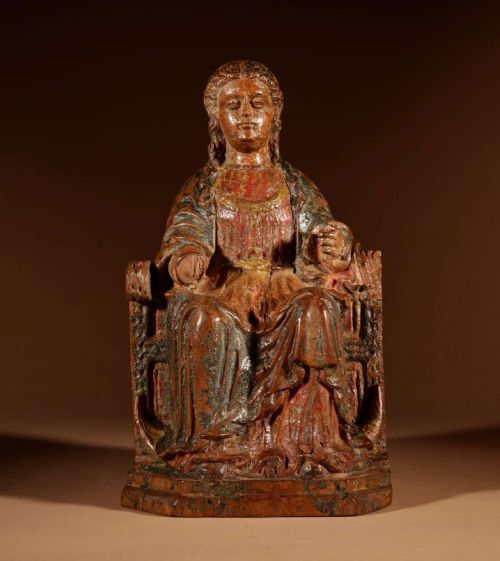
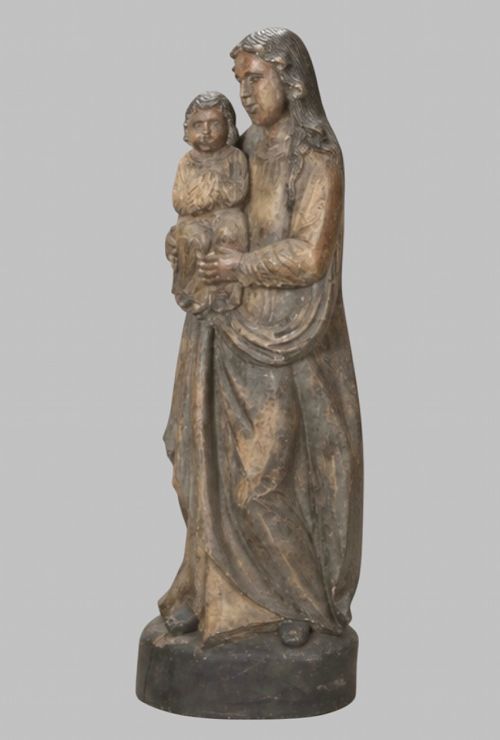
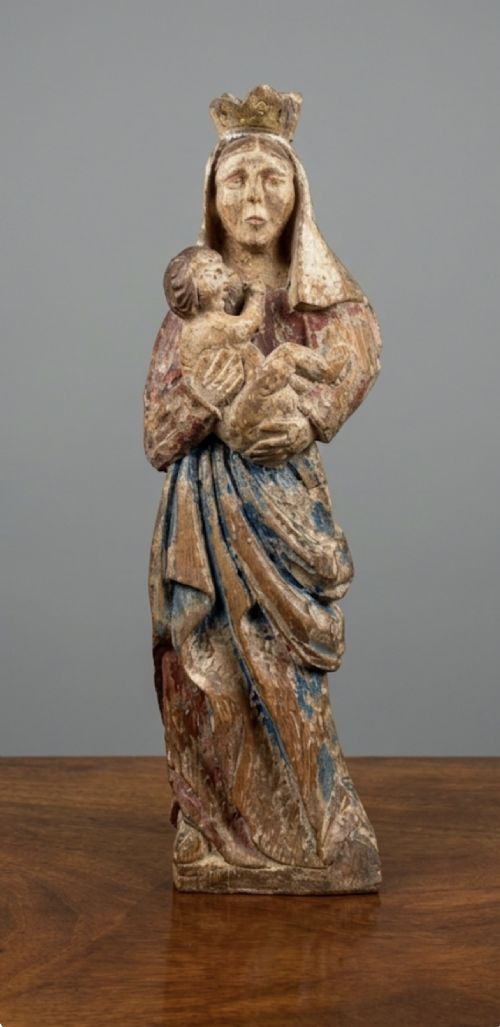


Carved Wood Madonna Figure
A carved wood madonna figure brings centuries of devotional devotion and sculptural craft straight into a room, capturing Mary and the Christ child in solid timber.
Carved Wood Madonna Figure
A carved wood madonna figure encompasses devotional sculptures spanning from pre-sixteenth century examples up to nineteen-hundred and the nineteenth century. These objects typically take the form of freestanding religious statues, wall sculptures, and seated figures on thrones.
The most common subjects appearing here show Mary either alone as the Lady of Sorrow or the Virgin of the Annunciation, or holding the Christ child. Stylistic origins range across Gothic, Renaissance, Baroque, Spanish colonial, and folk art traditions.
Pieces frequently emerge from continental European workshops, utilising dense timbers shaped by hands that understood religious iconography. Buyers encounter everything from medieval oak pietas to later folk carvings.
How these sculptures were constructed
Carvers utilised native timbers such as oak, walnut, lime wood, applewood, and general hardwood, selecting dense woods that accepted sharp chisels. Sculptors worked trunks and blocks directly, leaving tool marks that reveal the hand of the maker.
Many surfaces received layers of gesso, gold leaf, paint, and polychrome finishes to bring realistic colour and luminescence to the drapery and flesh. Over centuries, these surface treatments developed natural wear and craquelure.
Listings feature oak, walnut, lime wood, and applewood, spanning periods from pre-sixteenth century Gothic work to nineteen-hundred.
What separates individual examples
Quality rests upon the anatomical confidence of the carving, particularly in the fall of the drapery and the expressions upon the faces of Mary and the child. Master carvers achieved depth and emotion in wood, while lesser pieces remain stiff and formulaic.
The survival of original surface treatments, whether polychrome pigment or gold leaf, dictates the visual power of a piece. Stripped wood alters the original artistic intent compared to figures retaining their historic paint layers.
The Carved Wood Madonna Figure Glossary
- Polychrome
- Painted in several colours. This surface treatment was applied over gesso to give devotional sculptures a lifelike appearance.
- Gesso
- A plaster mixture used as a base for paint or gold leaf. It creates a smooth white ground on wooden sculptures.
- Pieta
- A subject depicting Mary cradling the dead Christ. This specific iconography appears in medieval and Gothic wood sculptures.
- Santos
- A religious figure or icon. These carved wooden statues originate largely from Spanish colonial or European traditions.
- Giltwood
- Wood decorated with gold leaf. This technique imparted a sacred, luminous quality to religious figures.
Carved Wood Madonna Figure: Frequently Asked Questions
How do I date a wooden madonna?
Dating relies on stylistic clues like Gothic drapery folds or Baroque movement, combined with wood analysis and the wear of gesso layers.
Examining tool marks and the natural ageing of oak, walnut, or lime wood helps confirm the period.
Where were these figures displayed?
Original locations included domestic household shrines, private chapels, and monastic spaces for personal contemplation.
Today, collectors place them on mantels, brackets, or mount them directly onto walls as sculptural focal points.
How should I care for antique wood?
Keep wooden sculptures away from direct heat sources and dramatic humidity fluctuations to prevent cracking.
Dust gently with a dry, soft brush and avoid applying modern polishes or oils to historic surfaces.