
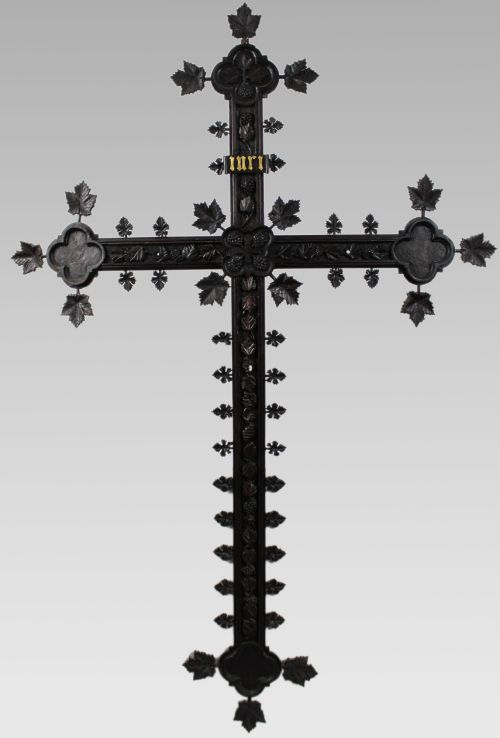


19th Century Devotional Carving
These 19th century devotional carving examples bring tangible spiritual focus and historic craftsmanship into a room.
19th Century Devotional Carving
A 19th century devotional carving encompasses a range of religious items intended for private or communal worship, from wall sculptures and statues to specialised prayer furniture. Buyers browsing this selection most frequently encounter prayer desks and chairs, alongside statues and figures depicting sacred subjects.
The objects stem from various regional traditions and styles, including Gothic Revival, Spanish Colonial, and Central European folk art. Pieces range from Black Forest crosses and French walnut prie-dieu chairs to South East Asian stone statues and South German folk art calvaries in bottles.
Originating across Europe and beyond, these items reflect the distinct religious practices and local aesthetic preferences of their makers. Whether acquiring a processional figure or a framed devotional piece, collectors engage with tangible expressions of nineteenth-century piety.
Materials and Construction
Carved wood forms the foundation of most pieces, utilising timbers such as oak, walnut, rosewood, and ebonised wood. Artisans shaped these materials using traditional hand-carving techniques to produce detailed figures, crosses, and furniture frames.
Secondary materials enhance the visual and tactile qualities of the carvings, including brass, gesso, glass, gold leaf, and stone. Upholstered elements frequently incorporate textiles such as green velvet to complete prayer chairs and desks.
One exceptional listing imprisons an entire calvary scene inside a glass bottle.
Assessing Quality and Execution
Material selection and structural integrity define the caliber of devotional furniture such as prie-dieu chairs and prayer desks. Solid construction in woods like walnut or rosewood, combined with preserved original textiles and gilt metal accents, elevates a piece.
The 19th Century Devotional Carving Glossary
- Prie-Dieu
- A prayer desk or low chair designed specifically for kneeling during private devotion. These typically feature an inclined shelf for books and a padded ledge.
- Santos
- A carved figure representing a saint or sacred personage, commonly found in Spanish, Portuguese, and Italian traditions. These figures often served in processions or domestic shrines.
- Gothic Revival
- An architectural and decorative style drawing inspiration from medieval forms, prevalent during the Victorian era. It is characterised by pointed arches and rich ornamentation.
- Folk Art
- Artistic work created within a traditional culture by self-taught or untrained artisans. These pieces prioritize functional or spiritual expression over academic rules.
- Black Forest
- A regional style of wood carving originating from the German mountain region. It is noted for naturalistic animal and botanical motifs.
19th Century Devotional Carving: Frequently Asked Questions
What is a prie-dieu?
A prie-dieu is a specialised piece of devotional furniture built for kneeling while praying. It typically combines a low kneeling platform with an upper shelf or rest for prayer books.
Victorian examples often utilise woods like walnut or oak and feature upholstered elements in textiles such as velvet.
What defines Gothic Revival devotional items?
Gothic Revival devotional items draw heavily upon medieval architectural motifs, becoming particularly popular during the Victorian period. They frequently incorporate pointed arches, tracery, and robust oak construction.
Furniture and wall carvings from this movement aimed to evoke the solemnity of medieval ecclesiastical spaces.
Where did folk art carvings originate?
Folk art carvings emerged from distinct regional communities across Europe, including South Germany, Austria, and the Black Forest. These items reflect local spiritual traditions and domestic crafting techniques.
Examples range from intricate crosses to unusual miniature scenes housed inside glass bottles.