






Religious Folk Art Sculpture
These religious folk art sculpture pieces offer carved wooden devotion and rustic piety that bring centuries of hand-crafted spiritual heritage straight into your home.
Religious Folk Art Sculpture
You are most likely to meet wooden statues and processional figures originating from European traditions, alongside distinct regional interpretations from Italy and Germany. These objects range from modest vernacular carvings to expressive devotional icons bearing the marks of active ritual use.
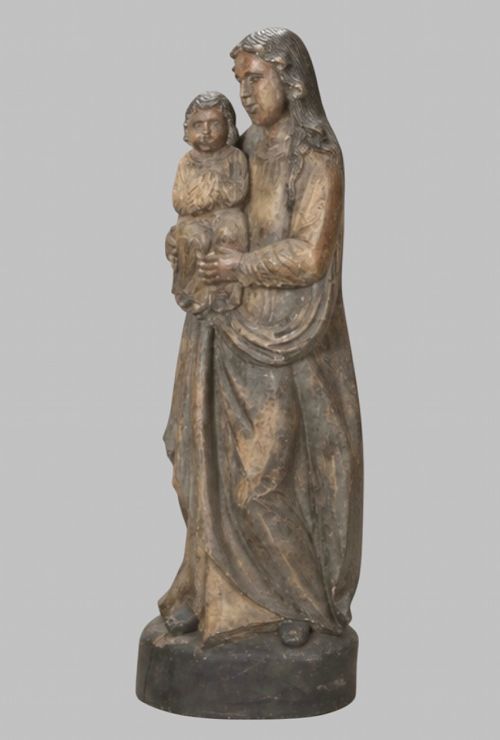
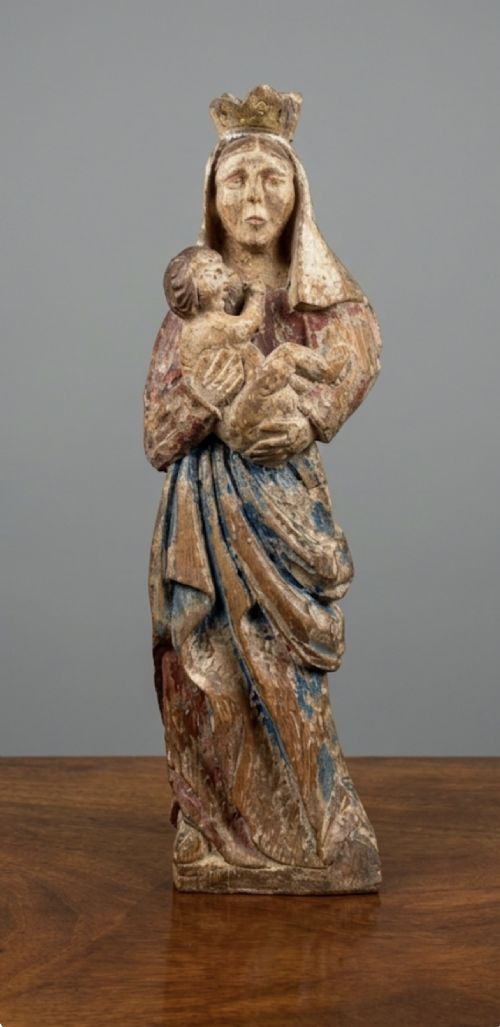
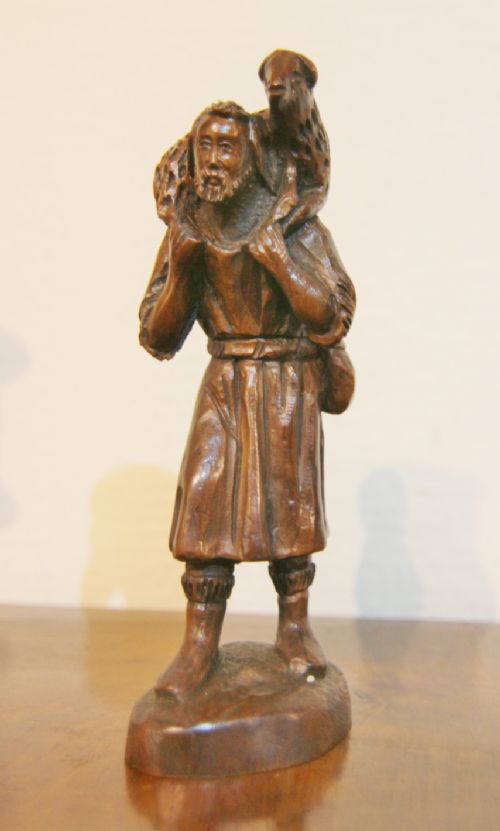
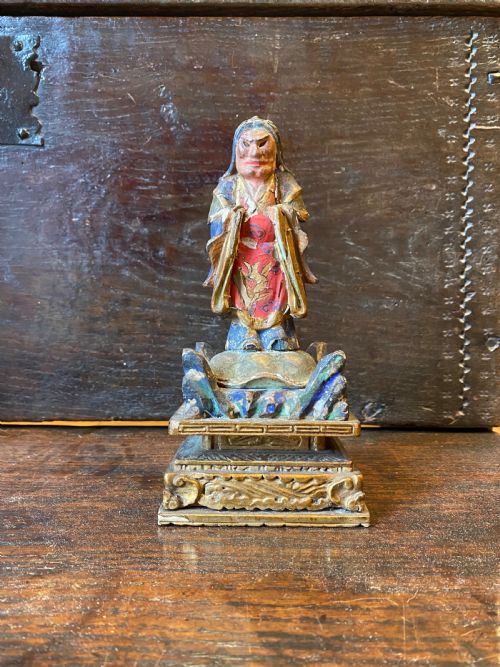
The selection encompasses standing saints, mother and child groups, and processional figures carved from solid timber. Each object reflects the specific religious devotion and vernacular aesthetic of its period, from seventeenth-century devotional carvings to twentieth-century folk expressions.
How they were made
Many surfaces display remnants of gold leaf and decorative gilding applied over the prepared ground. The finishing layers relied on traditional oil or distemper paints that have aged to reveal the underlying wood beneath.
Listings feature carved wood materials spanning the seventeenth, eighteenth, and nineteenth centuries alongside early twentieth-century examples.
What varies in quality
The distinction between ordinary and exceptional work lies in the expressive power of the carving and the vitality of the surface decoration. Master carvers captured movement in drapery and anatomical conviction within the limitations of regional timber.
The survival of original polychrome pigment and gold leaf elevates the visual impact of a piece. Traces of historical wear and distressed surfaces demonstrate age, while the integrity of the underlying woodwork determines the overall solidity of the sculpture.
Franz Keller
The Religious Folk Art Sculpture Glossary
- Polychrome
- Painted in several colours. This surface treatment was applied over gesso to give devotional figures a lifelike appearance.
- Gesso
- A plaster mixture used as a base for paint and gold leaf on wooden sculptures. It provides a smooth ground for decorative pigments.
- Santos
- A carved figure representing a saint or divine personage. These sculptures often played a central role in religious processions and domestic shrines.
- Folk art
- Artistic work produced from an indigenous culture or peasant society. These pieces are characterised by a naive or utilitarian style distinct from formal academic traditions.
- Gold leaf
- Gold beaten into extremely thin sheets used for gilding. It highlights specific garments or nimbi on devotional carvings.
Religious Folk Art Sculpture: Frequently Asked Questions
How were these figures used?
Devotional sculptures served as focal points for private prayer, domestic contemplation, and community religious processions. People turned to these carved figures to seek protection, intercession, and spiritual comfort.
Over time, many pieces transitioned from active liturgical service into secular collections and decorative displays.
How do I live with carved wooden figures?
Place wooden sculptures away from direct heat sources and sudden humidity changes to protect the aged timber and delicate paint layers. Allow them space on a mantel, shelf, or dedicated bracket where their rustic forms can be appreciated up close.
Pairing these sculptures with simple interiors lets the warmth of the polychrome pigment and carved wood stand out.
How do I tell different periods apart?
Earlier pieces from the seventeenth and eighteenth centuries often display heavier tool marks, deeper drapery folds, and dense hardwoods associated with ecclesiastical workshops. Later nineteenth-century and early twentieth-century examples embrace folk art simplicity and distinct regional carving habits.
Examining the wear patterns on the gesso and paint layers offers further clues to an object's age.