
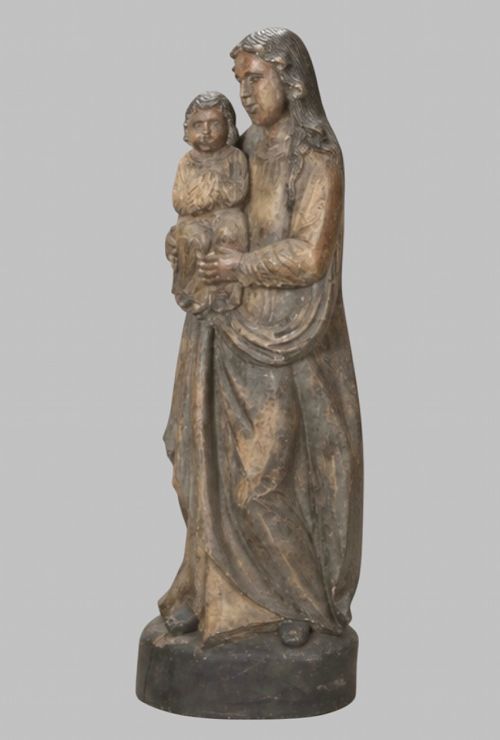
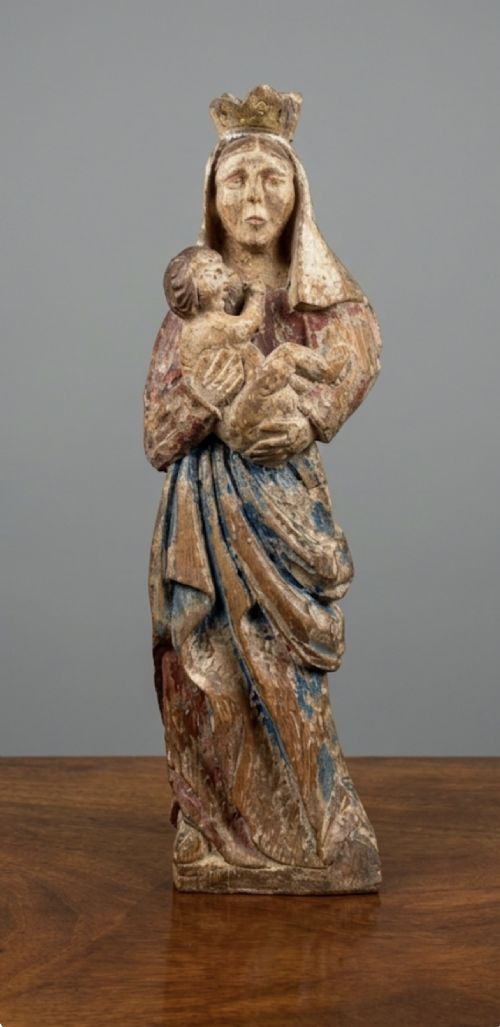


Antique Virgin Mary Statue
An antique virgin mary statue brings centuries of devotion, carved timber, and gilded presence directly into a room.
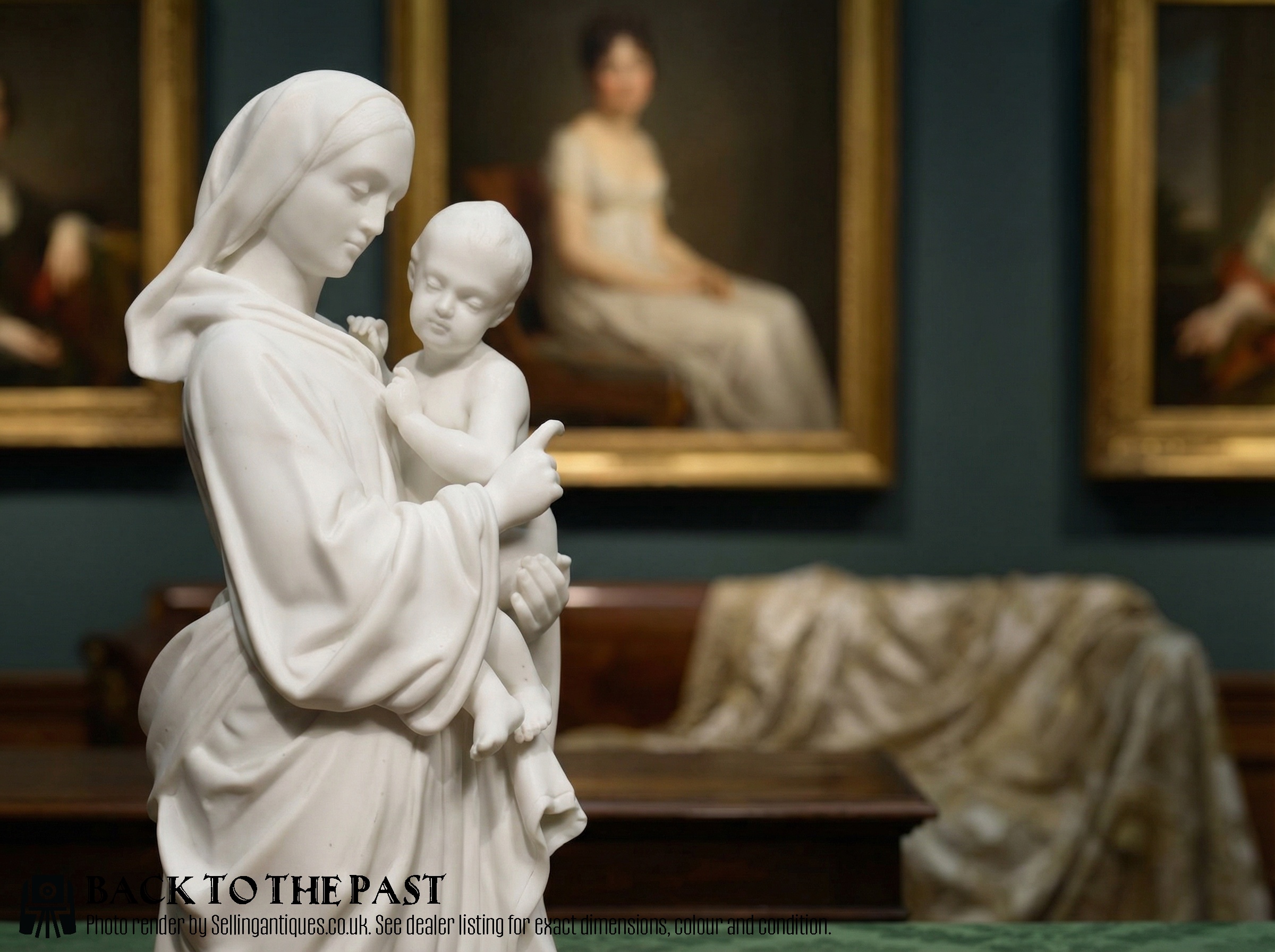
Antique Virgin Mary Statue
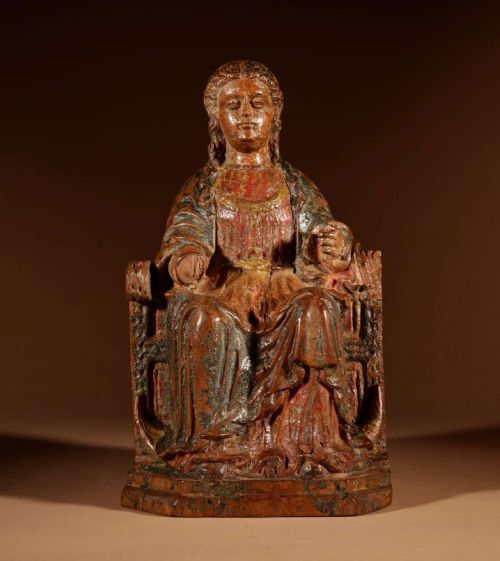
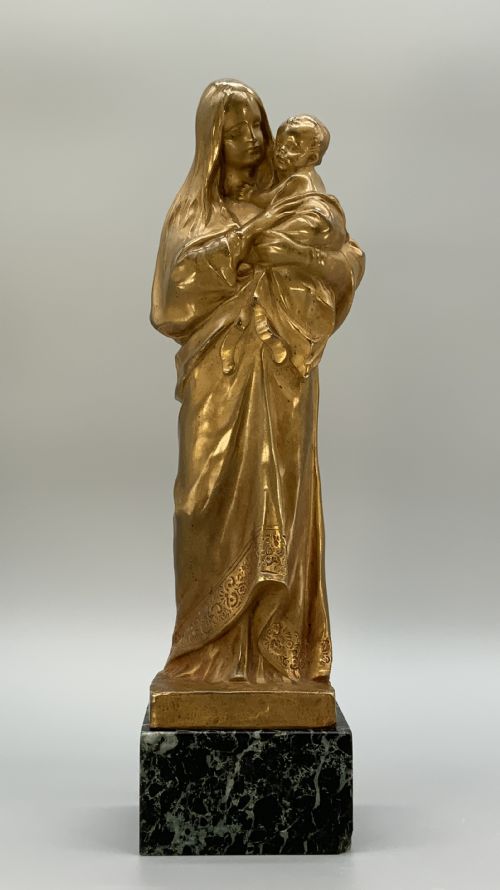
An antique virgin mary statue encompasses devotional figures spanning from pre-sixteenth century medieval works to twentieth-century terracotta pieces. Buyers encounter various representations including the Madonna and child, the Pieta, and the grieving mother.
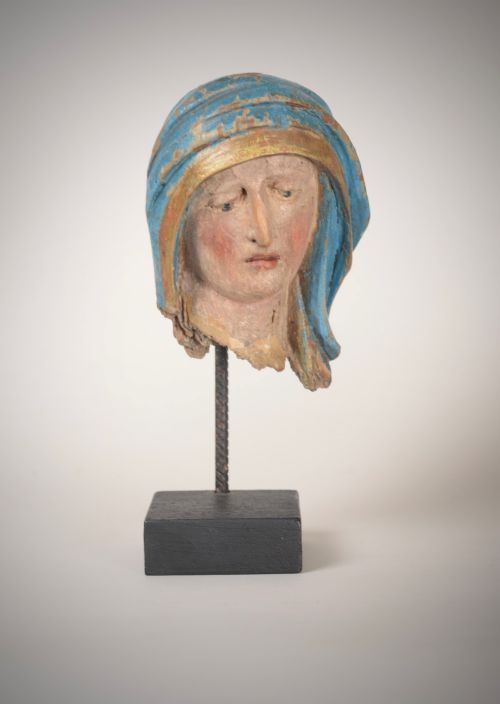
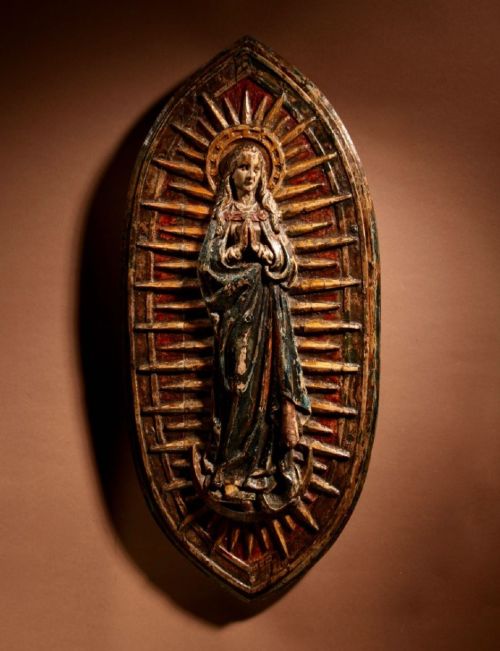
The material forms on this page range from walnut and oak altar panels to gilt bronze and parianware. Most frequently, a buyer meets carved wood examples finished with paint, gesso, or gold leaf.
Origins stretch across European traditions, notably encompassing Spanish Baroque creations, South German and Low Countries oak carvings, and Austrian gilt bronze pieces.
Materials and construction methods
Sculptors primarily worked in timber such as oak, walnut, applewood, and unspecified hardwoods, shaping solid blocks into complex devotional subjects. These carved wooden surfaces frequently received preparatory layers of gesso before painters applied polychrome pigments and gold leaf.
Later periods introduced alternative mediums including terracotta, gilt bronze, and parianware, allowing for moulded detail and cast metallic forms. Artisans combined carpentry, sculptural carving, gilding, and painting to achieve finished devotional works.
Antique Virgin Mary Statue Retail Price Guide 2026
Typical asking prices for virgin mary statue among the pieces listed under this phrase on Sellingantiques today, from the lower quarter to the upper quarter. They describe what is for sale here now, not the wider market.
The listings span from pre-sixteenth century medieval fragments up to nineteen-twenties terracotta, recording materials from oak and walnut to gilt bronze and parianware.
Factors influencing quality
The caliber of an antique virgin mary statue depends upon the crispness of the carver's chisel work in drapery folds and facial expressions. Master carvers imparted natural movement and emotional gravity to timber, whereas lesser works remain rigid and flat.
Survival of original surface treatments marks the difference between compromised pieces and superior examples. Retained layers of early polychrome paint, gesso, and gold leaf elevate a sculpture above stripped or heavily repainted surfaces.
Hans Müller·George Kemper
The Antique Virgin Mary Statue Glossary
- Polychrome
- Painted in several colours. This term describes wooden sculptures decorated with pigments over gesso.
- Gesso
- A plaster mixture used as a smooth base for paint or gold leaf. Artisans applied it to wood before gilding or colouring.
- Pieta
- A subject depicting the Virgin Mary holding the dead body of Christ. This iconic form appears in Spanish and Northern European carving.
- Parianware
- A fine-grained porcelain resembling marble, developed in the nineteenth century. Figures in this material imitate classical statuary.
- Putti
- Representations of small winged infants, often accompanying religious figures in later sculpture. They add a theatrical element to Baroque and nineteenth-century pieces.
Antique Virgin Mary Statue: Frequently Asked Questions
How do I date a wooden statue?
Dating relies on the tool marks left by the carver, the style of the drapery, and the species of timber used. Early pieces often show adze or gouge marks characteristic of medieval workshop practices.
Secondary evidence comes from the ground layers beneath the paint, such as gesso composition and the ageing of underlying wood fibres.
What is a globe de marie?
A globe de marie is a nineteenth-century French display case featuring a glass dome over a mirrored base. These enclosures protected sentimental or religious objects, including small statues and bridal mementoes.
The mirrors inside reflected light onto the central figure, enhancing its visual presence within the domestic interior.
How should I care for polychrome wood?
Polychrome wooden sculptures require stable environmental conditions away from direct sunlight and sudden humidity shifts. Excessive dryness causes timber to split and paint layers to flake.
Dusting should be performed gently with a soft, dry brush without applying liquid cleaners or polishes to the fragile pigment.
What distinguishes Gothic from Baroque statues?
Gothic statues emphasise linear drapery, solemn expressions, and flat or restrained postures typical of medieval devotion. The forms remain closely tied to architectural settings like altarpieces.
Baroque and Spanish Baroque examples introduce dramatic movement, swirling garments, and intense emotional expression, reflecting counter-reformation theatricality.