
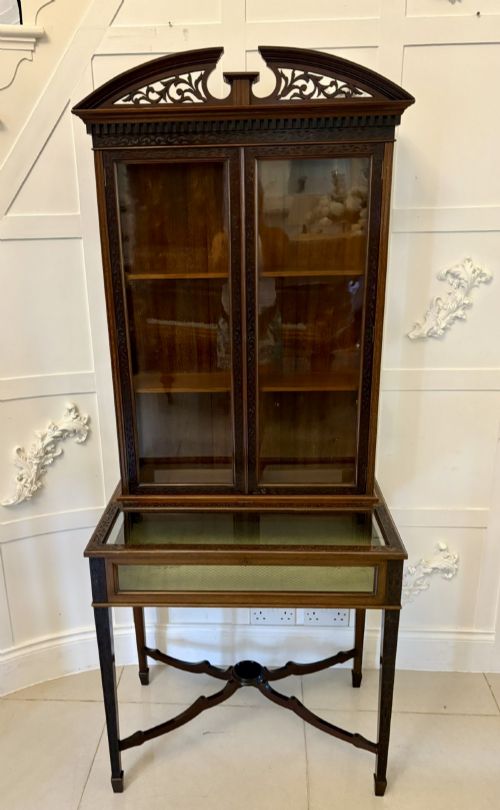
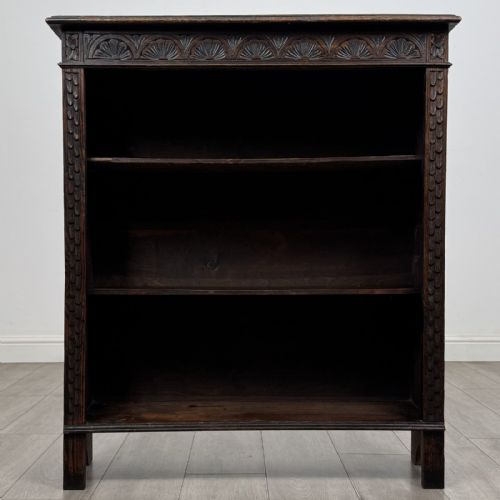
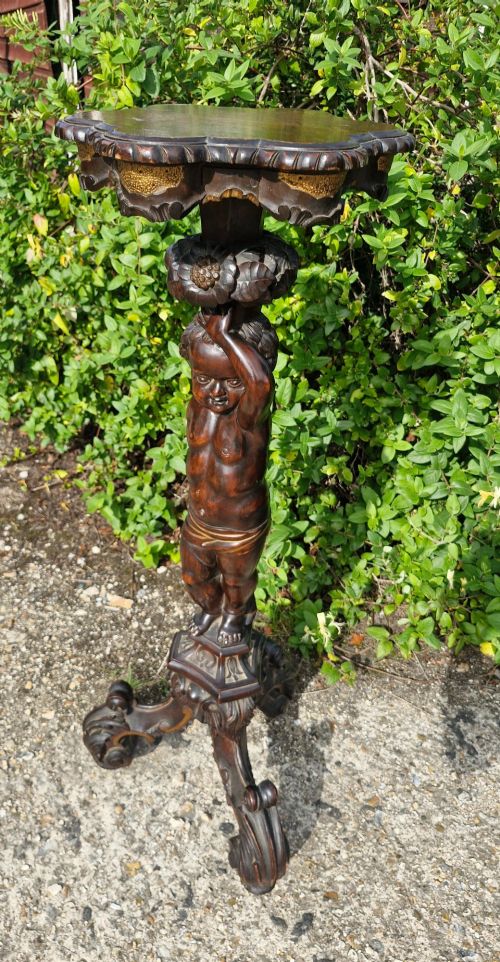
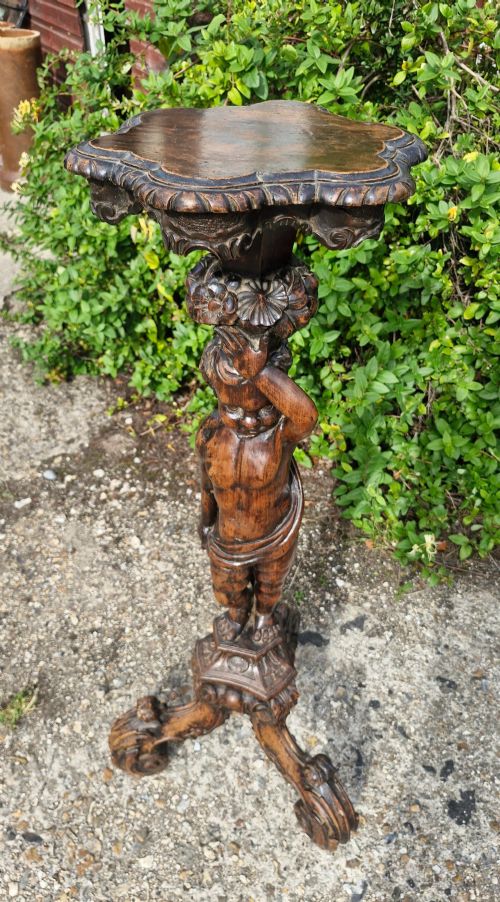
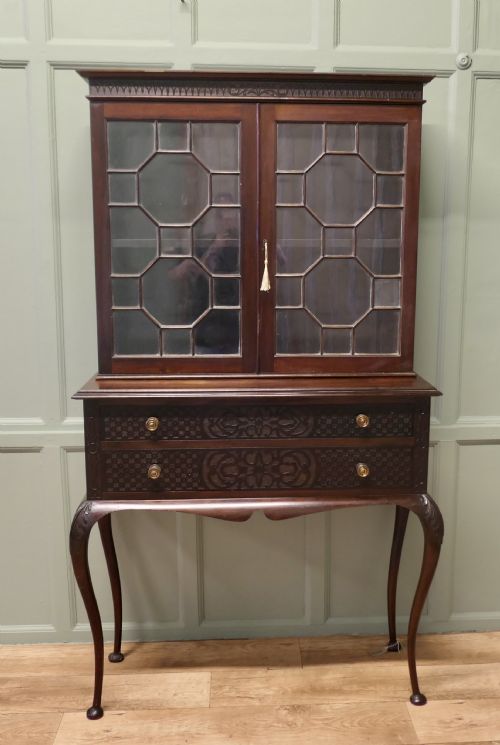
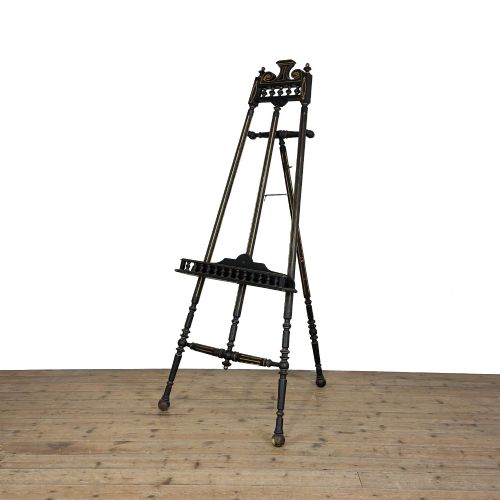
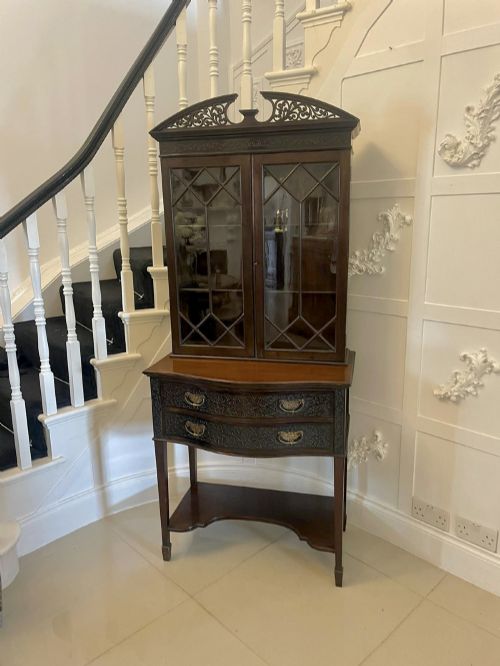
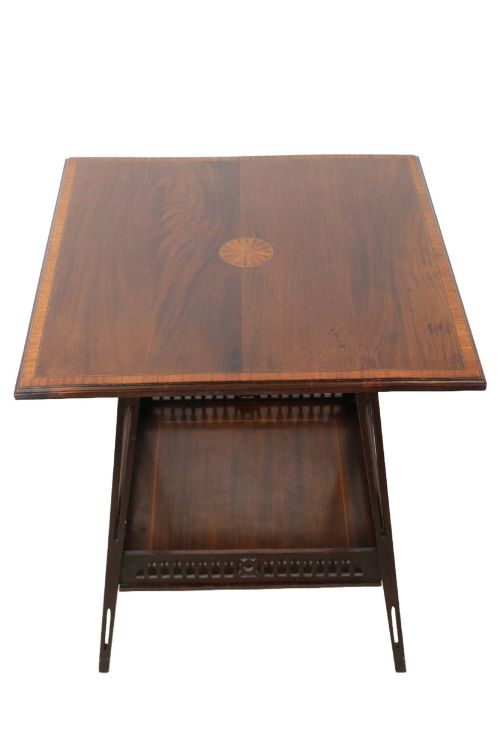
Carved Wood Display Stand
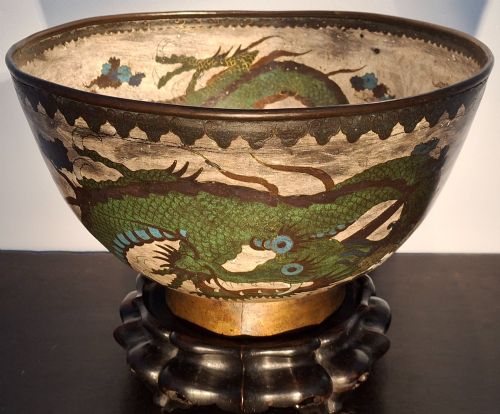
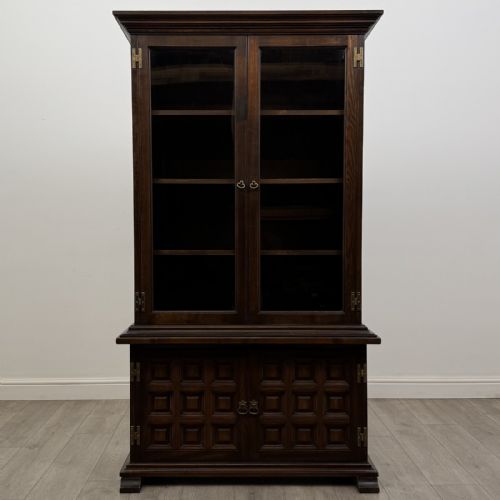
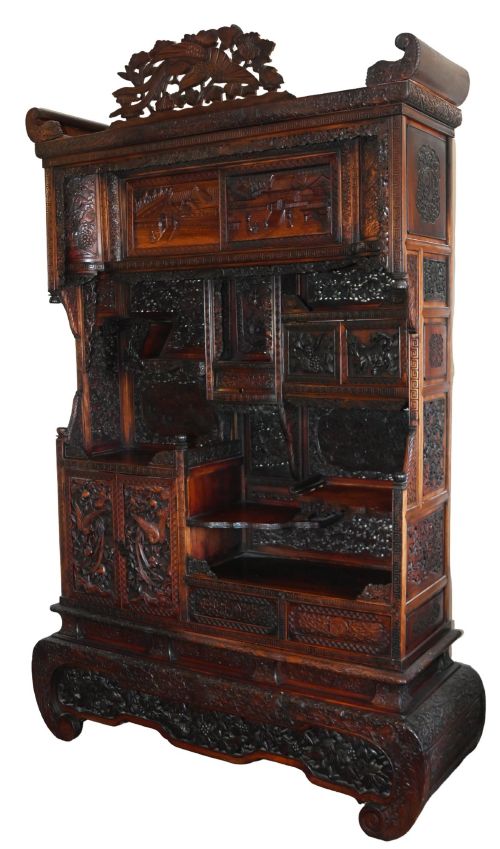
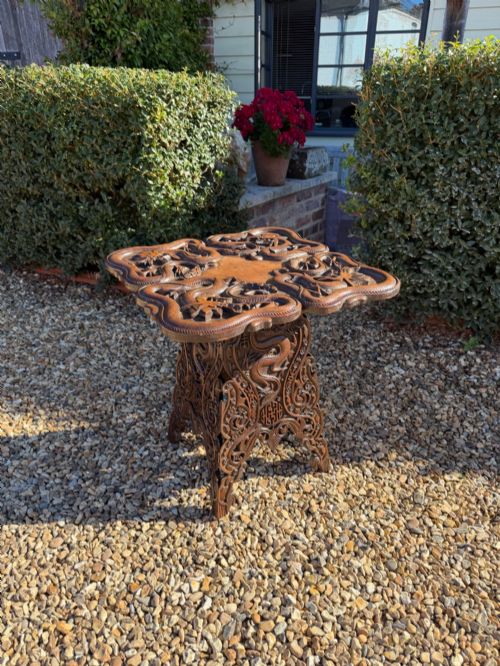
A carved wood display stand holds objects for viewing, emerging in styles from Victorian mahogany to Qing Dynasty hardwood.
Carved Wood Display Stand
A carved wood display stand serves to elevate and frame items such as ceramics, plants, and textiles. When searching this phrase, a buyer encounters forms ranging from torcheres and pedestals to whatnots, etageres, and small cabinets on stands.
The pieces originating from the nineteenth century predominate on this page, spanning Victorian, Edwardian, and Qing Dynasty eras. Materials vary from mahogany and walnut to padauk, teak, and rosewood, often incorporating marble, glass, or brass details.
Regional variations span Chinese traditional designs, Anglo-Indian craftsmanship, Italian Renaissance revival work, and French column pedestals. Buyers find freestanding floor pieces, corner units, and rotating stands designed for domestic display.
How they were made
Makers utilised solid timbers such as mahogany, oak, walnut, and dense oriental hardwoods for structural integrity and deep carving. Joints were traditionally tenoned and pinned, accommodating the weight of marble tops and heavy glazed cabinetry.
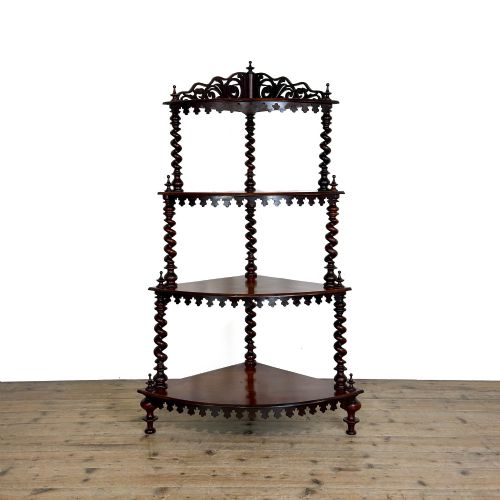
Carving techniques ranged from sharp hand-chiselled foliage to elaborate openwork panels and barley twist turnings. Ebonised finishes, brass mounts, and inlaid borders were applied to enhance the visual depth of the timber.
What varies in quality
The standard of carving defines the distinction between ordinary production and exceptional work, visible in the crispness of undercut foliage and symmetrical execution. Timber selection also dictates grade, with burr walnut and figured mahogany commanding greater visual presence than plain utility woods.
Structural refinement separates superior examples, evident in the tight fit of corner joints, the stability of heavy marble or glass inserts, and the integration of secondary woods. Maker attribution, through stamps or labels, further distinguishes workshop output from vernacular pieces.
Trevor Page & Co·Gabriel Viardot·Liberty of London·Edwards & Roberts
The Carved Wood Display Stand Glossary
- Torchere
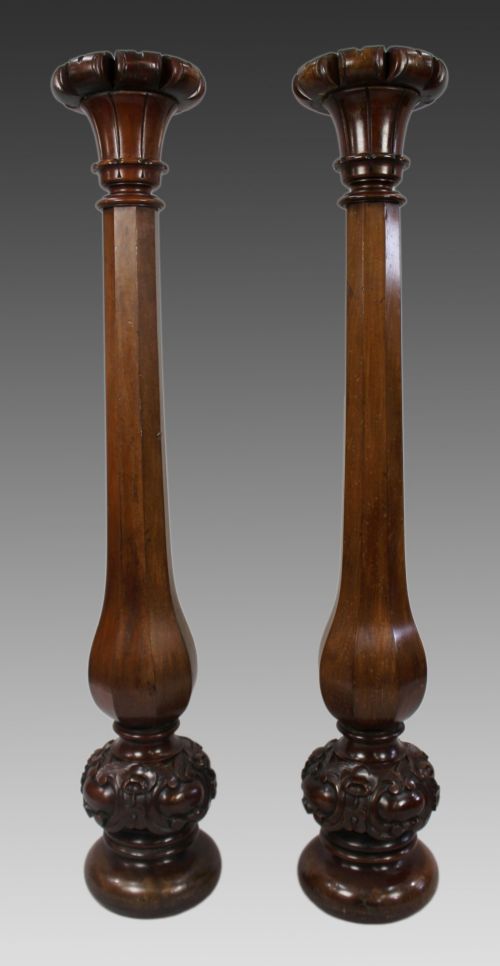
- A tall, slender stand designed to hold a candle or a small decorative object. These pieces frequently feature barley twist shafts or fluted columns.
- Whatnot
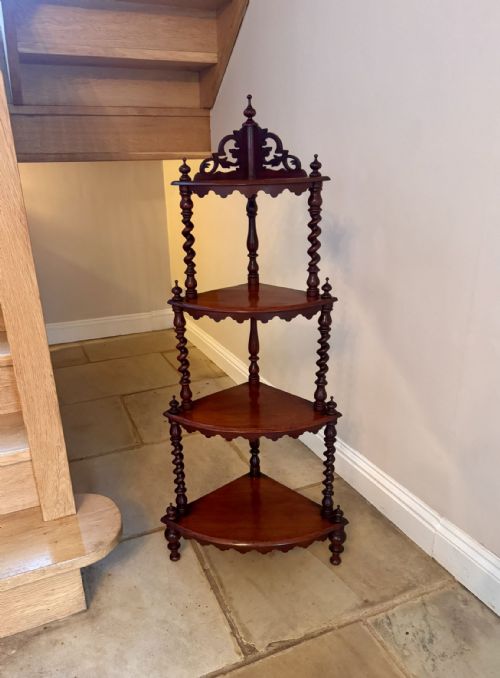
- An open set of freestanding shelves used for displaying ornaments and books. They appear in corner and rectangular configurations across the Victorian period.
- Étagère
- A piece of furniture consisting of a set of open shelves for displaying small objects. French and English makers produced these in rosewood and walnut.
- Padauk
- A heavy, durable tropical hardwood with a reddish hue used in Anglo-Indian and nineteenth-century cabinetmaking. It accepts intricate carving without splintering.
- Astragal
- A moulding profile used to hold glass panes within cabinet doors. These delicate wooden bars divide glazed display areas into geometric patterns.
Carved Wood Display Stand: Frequently Asked Questions
What is a torchere used for?
A torchere functions as an elevated platform for lamps, vases, or plants within a room. Their slender proportions allow them to occupy tight corners or flank larger pieces of furniture.
Historical examples from the nineteenth century utilise sturdy timber bases to support the weight of heavy display items safely.
What is the difference between a pedestal and a plant stand?
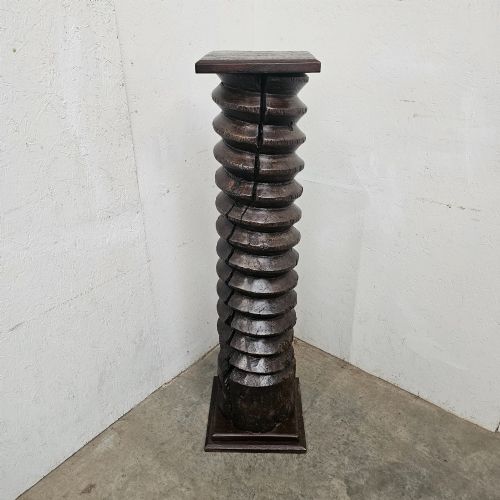
A pedestal typically presents a formal architectural column design intended for sculptural works or urns. Plant stands generally offer lighter frames with timber or marble tops built for regular watering.
Both forms utilise hardwoods like mahogany and oak, but pedestals frequently incorporate classical revival motifs.
Are Chinese hardwood stands heavy?
Chinese hardwood stands utilise dense materials like Qing Dynasty rosewood or export hardwoods that provide substantial weight. This heaviness ensures stability for rotating mechanisms or asymmetrical display tiers.
The natural density of the wood allows for intricate, deep-relief hand carving without compromising structural integrity.