


Renaissance Revival Stand
These renaissance revival stand pieces bring architectural presence and classical ornament into a room through heavy carving and rich timber.
Renaissance Revival Stand
A renaissance revival stand encompasses pedestals, cabinets on stands, hall stands, and torchere columns drawing on historical motifs from Italy, Flanders, and Holland. The examples seen here range from nineteenth-century Victorian interpretations to later twentieth-century walnut and oak forms.
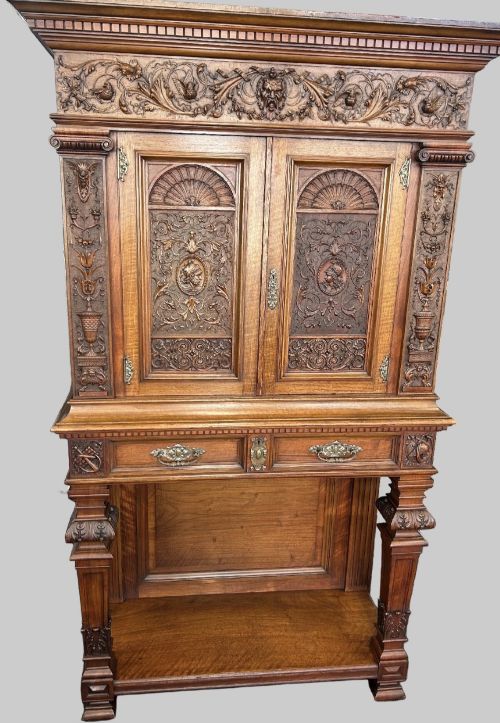
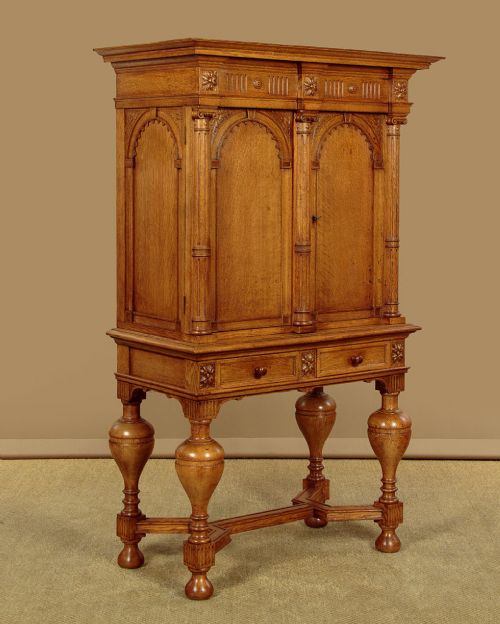
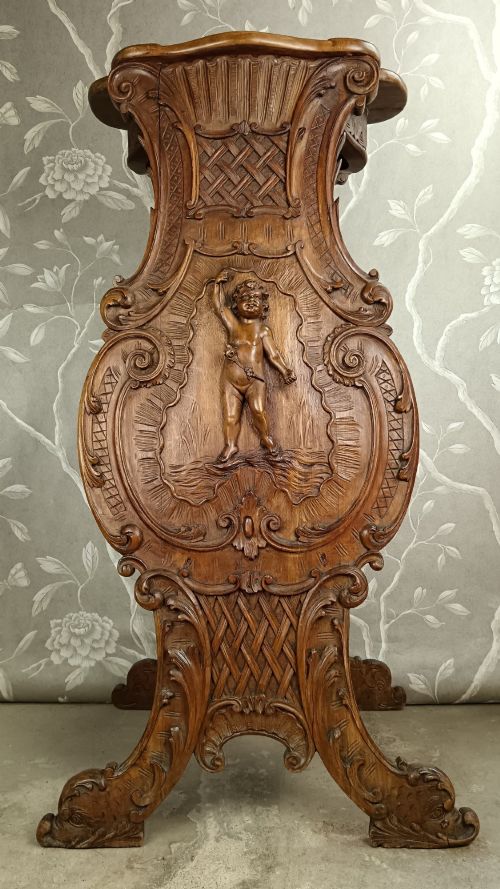
Buyers encounter distinct regional interpretations within these listings, notably Italian carved walnut pedestals alongside Flemish and Dutch oak cabinets on stands featuring lion masks and figural details. These forms function practically as display surfaces or storage while serving as strong decorative focal points.
The aesthetic draws heavily on sixteenth-century vocabulary translated through nineteenth-century cabinet-making, incorporating caryatids, columns, and heavily carved panels. Most pieces on this page utilise dark hardwoods designed to anchor a traditional interior.
Materials and construction
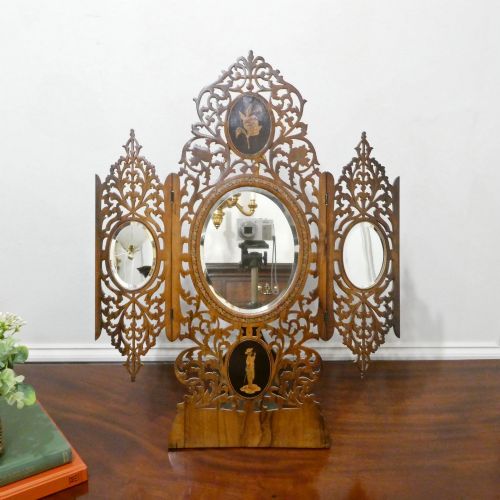
Timbers such as oak, walnut, and amboyna form the structural core of these items, shaped through deep hand-carving and joinery techniques typical of the nineteenth century. Cabinet-makers utilised contrasting woods like ebony alongside applied mouldings and marquetry inlay to build up complex surface relief.
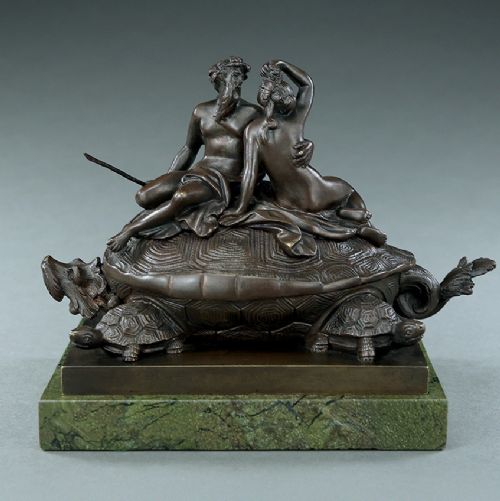
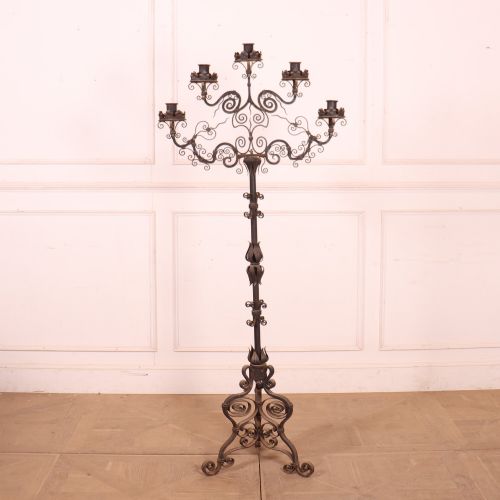
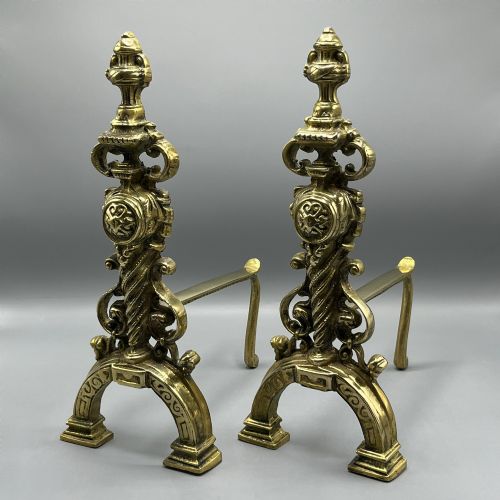
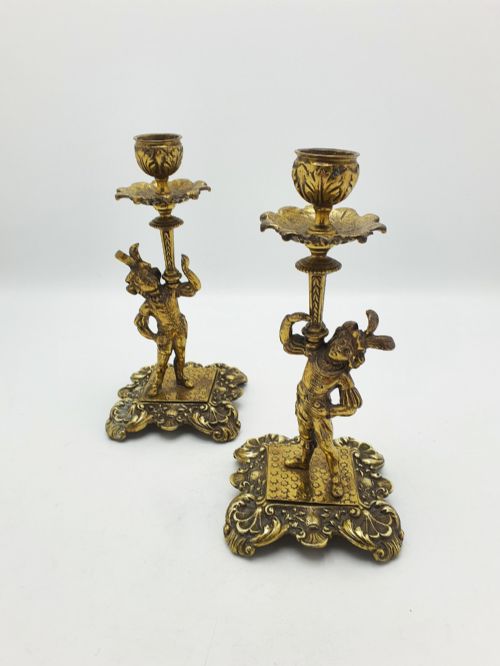
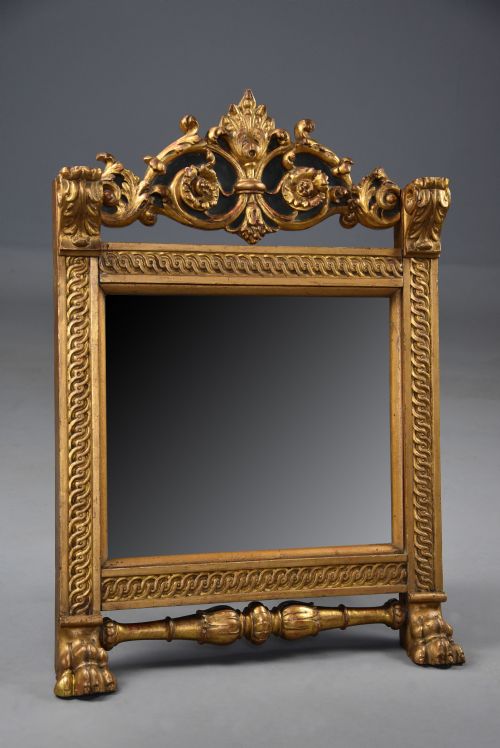
Metal elements including brass, bronze, and spelter appear frequently as structural mounts, figural bases, or decorative hardware. Gilding and giltwood treatments highlight specific carved details on mirrors, torchere pedestals, and standard lamps.
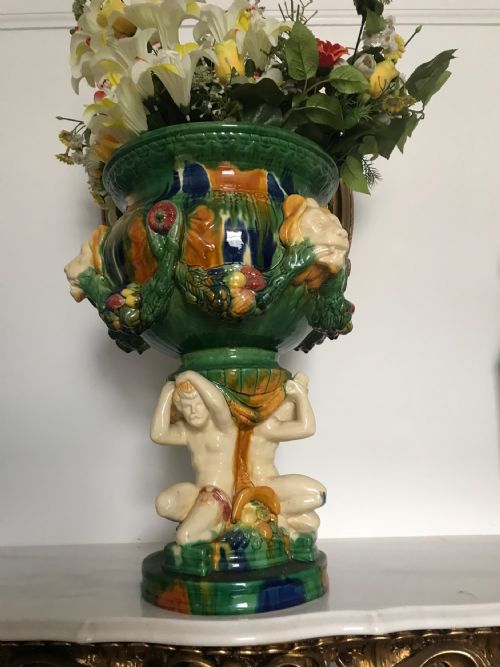
Ceramic components such as majolica earthenware introduce colour and glazed surface texture, often integrated into figural base stands or planters. These varied media combine to create objects with significant physical weight and layered ornamentation.
Object types range from tall torchere pedestals and hall stands to multi-part cabinets and small easel table mirrors.
Quality variations
The depth, sharpness, and undercut precision of the hand-carving distinguish standard production from exceptional pieces. Superior examples exhibit crisply articulated figures, such as caryatids or lion masks, with well-defined musculature and drapery.
The selection and figure of the timber dictate the visual richness of the object, with dense walnut and figured oak providing superior grain patterns. Integrated brass mounts and structural joinery reflect the maker's hand, where solid construction supports heavy upper sections without wobble or distortion.
Barbedienne
The Renaissance Revival Stand Glossary
- Caryatid
- A carved architectural figure acting as a supporting column in place of a pilaster. These figures often appear supporting the corners of pedestals and cabinets.
- Torchere
- A tall ornamental stand designed to hold a light or display a vase and sculpture. Examples on this page include bronze and carved wooden formats.
- Majolica
- Tin-glazed earthenware decorated with brightly coloured metal oxide paints. These ceramic bodies frequently serve as vases and planters mounted on figural bases.
- Giltwood
- Wood that has been coated with a thin layer of gold leaf or gold paint. This technique accentuates carved mirrors, standard lamps, and decorative frames.
- Sgabello
- An Italian Renaissance wooden chair with a box-like base or solid supports instead of legs. Archive records show these associated with torchere and plant stand forms.
Renaissance Revival Stand: Frequently Asked Questions
What rooms suit a renaissance revival stand?
These pieces require space and substantial ceiling height to balance their architectural proportions and heavy carving. They anchor hallways, studies, and principal reception rooms effectively.
Smaller items like table mirrors or candlesticks integrate easily onto sideboards or mantelpieces. Larger pedestals and cabinets demand an open perimeter where their sculptural silhouettes remain visible from multiple angles.
How do I care for carved wood?
Maintain stable humidity levels to prevent timber from splitting or warping over decades. Dust intricate carvings regularly with a soft brush to keep recesses clean.
Apply a microcrystalline wax sparingly every few years to nourish the timber surface without building up thick residues. Avoid placing these items near direct heat sources or strong sunlight.
How do I date a nineteenth-century stand?
Examine the construction methods, tool marks on hidden surfaces, and the consistency of the timber grain. Nineteenth-century interpretations often mix revival styles freely, combining Italian and Flemish motifs.
Compare the patina and wear patterns around high-touch areas like handles or pedestal edges. Cast bronze and brass components also provide clues through their casting methods and patination.
Were cabinets on stands modular?
Many sixteenth- and seventeenth-century forms separated the upper cabinet from the lower support structure for ease of transport. Nineteenth-century revival pieces frequently retained this two-part construction method.
This division allowed makers to combine storage compartments with elevated display platforms. When placing or moving these items, assessing each section independently ensures safe handling.