
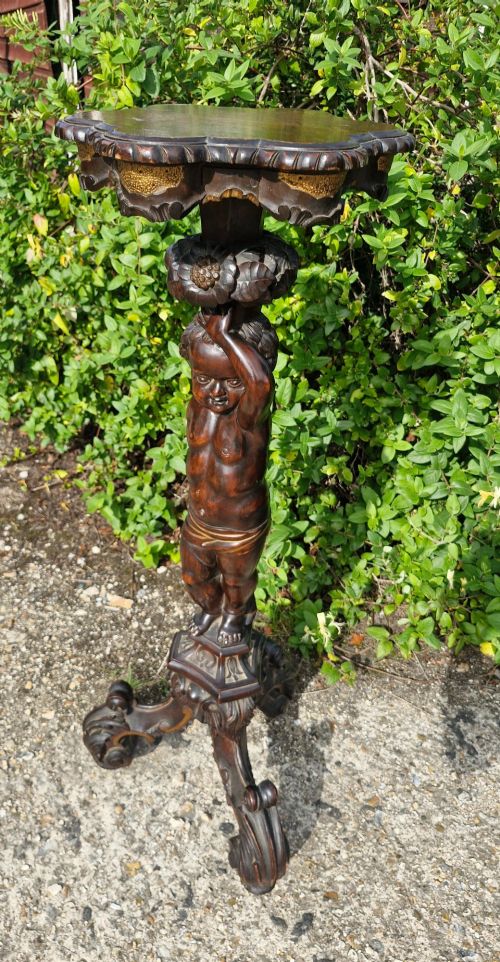
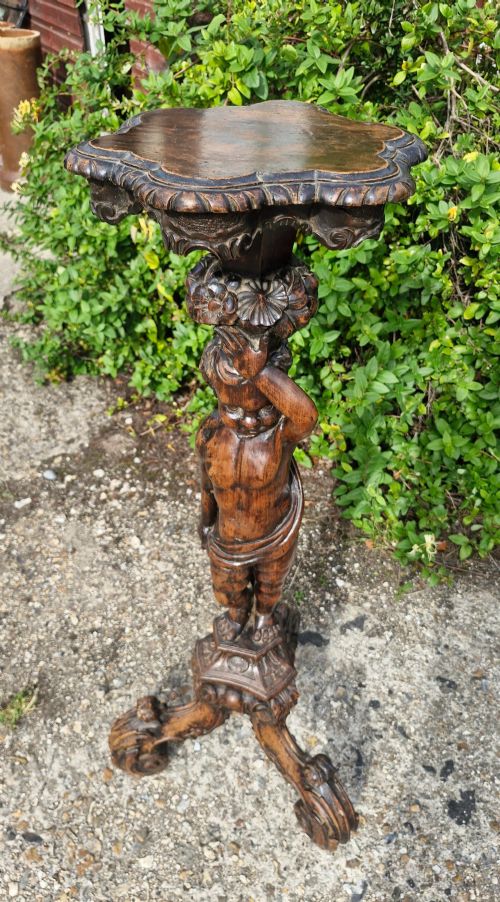
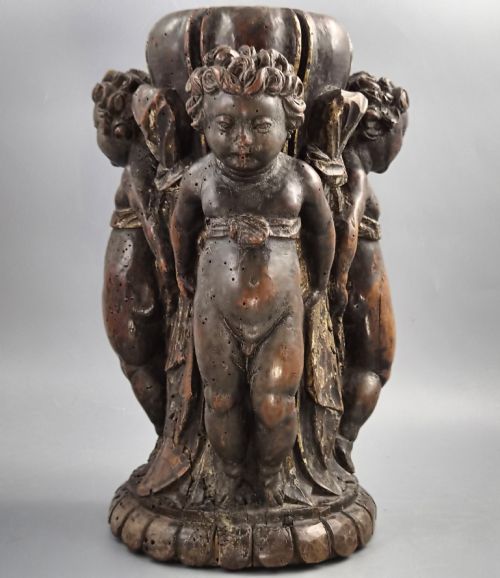
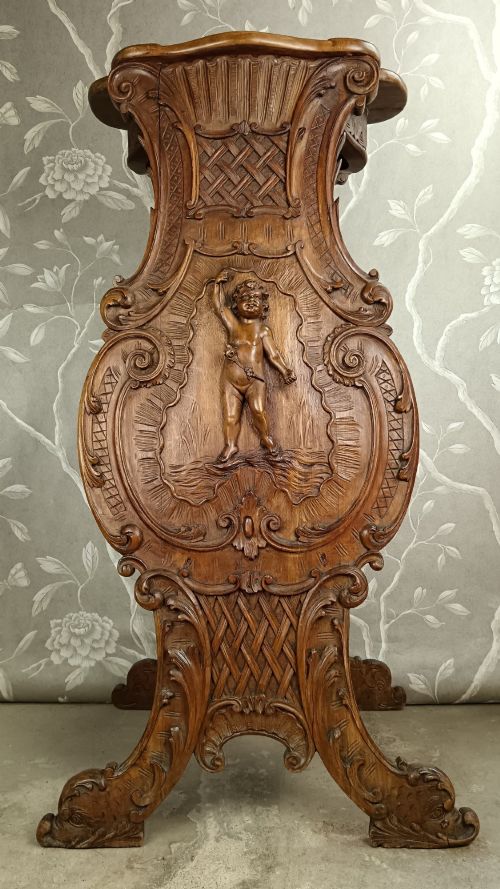


Carved Cherub Pedestal
A carved cherub pedestal brings theatrical continental drama and sculptural presence into a room, supporting art or standing alone.
Carved Cherub Pedestal
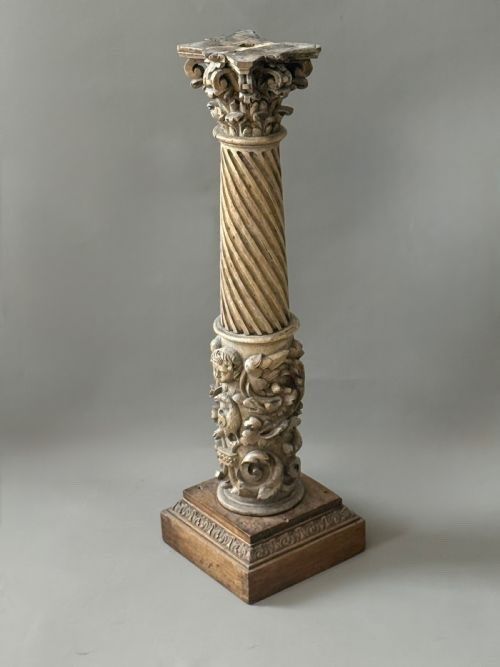
A carved cherub pedestal draws on Italian Baroque and Renaissance traditions, translating monumental church or palazzo furnishings into domestic stands and torcheres. The search phrase covers figural supports where winged putti or children animate walnut, lime wood, or painted wooden pillars.
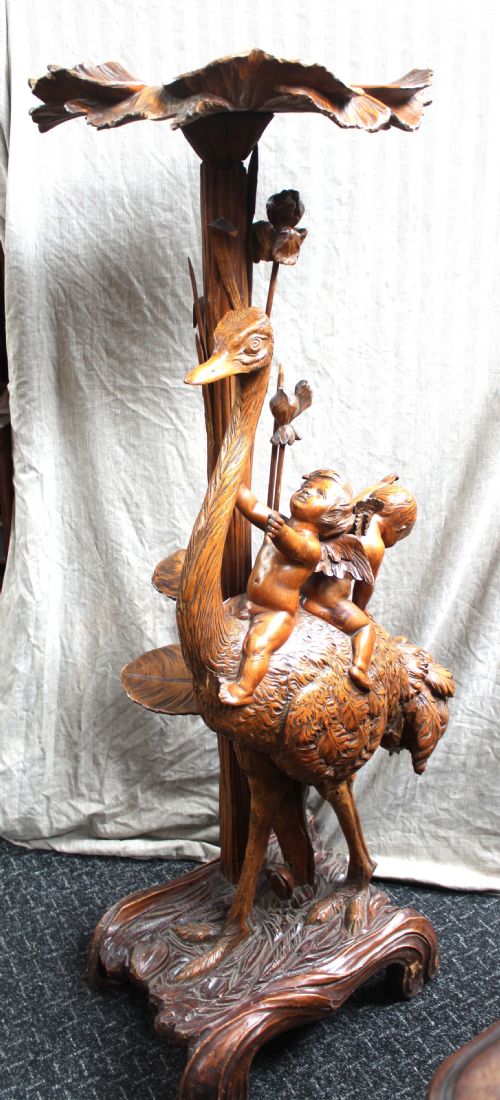
Buyers most frequently encounter nineteenth-century revival interpretations alongside seventeenth-century works, often taking the form of torchiere bases or sculptural stands. These pieces range from towering architectural pillars to smaller table ornaments, frequently integrating figures of putti holding aloft the column top.
The objects cross paths with related continental forms such as lamp bases, architectural fragments, and centrepieces involving child figures. While some function purely as display surfaces for urns or sculptures, others double as independent figural groupings or architectural lighting supports.
How they were made
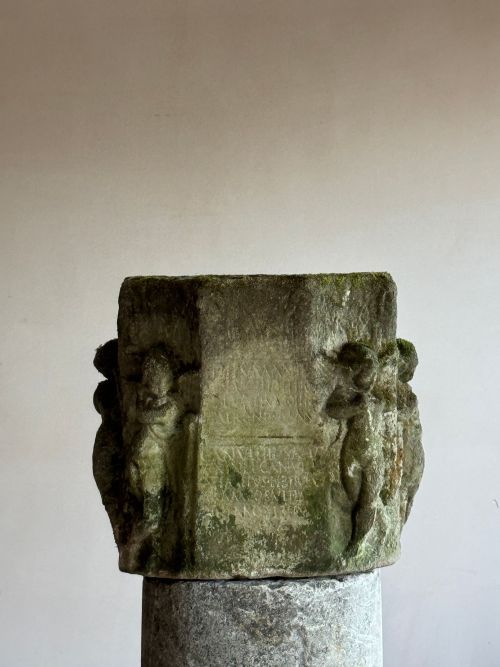
Alternative materials enter the record through cast or reconstituted stone and porcelain, shifting the medium from carved joinery to moulded composition. These mineral-based works capture the same grand tour aesthetic through different technical means, utilising durable stone for architectural garden or interior use.
Listings in this category span walnut, lime wood, cast stone, and porcelain across seventeenth, eighteenth, and nineteenth-century periods.
What varies in quality
The vitality and depth of the carving dictate the visual success of the piece, distinguishing lively, anatomically convincing putti from stiff or formulaic workshop output. Master carvers imparted distinct personality and movement to the limbs and faces of the cherubs.
Integration between the figural support and the structural column marks another tier of distinction, where masterworks blend anatomy and architecture seamlessly. Lesser examples treat the figures as mere applied ornaments rather than the core structural narrative of the stand.
The Carved Cherub Pedestal Glossary
- Putto
- A plump, often winged male child figure frequently seen in Renaissance and Baroque art. These figures add narrative movement to architectural pedestals.
- Torchiere
- A tall stand designed to carry a light source or candle. In carved wood, the shaft often takes the form of twisted columns wrapped with figures.
- Gesso
- A plaster-like mixture applied to wood as a base for paint or gilding. It creates a smooth surface that holds crisp carved detail.
- Grand Tour
- A cultural journey of Europe undertaken by wealthy young men in the eighteenth and nineteenth centuries. It generated a market for portable classical sculpture and architectural models.
Carved Cherub Pedestal: Frequently Asked Questions
What were carved cherub pedestals used for?
These pieces served primarily as elevated stands for lighting, important urns, or display sculptures within grand domestic interiors. Their ornate figural carving was designed to catch the eye and project status.
Over time, collectors adapted them as standalone decorative objects or plant stands. Their robust wooden or stone construction easily supports heavy ornamental items.
How do I style a pedestal at home?
Place a pedestal where its carved figures can be viewed from multiple angles, avoiding cramped corners. A strong focal point in a hallway or living room works best.
Keep the item displayed on top proportional to the column head. Overcrowding the top platform obscures the craftsmanship of the putti below.
How do I tell seventeenth-century pieces from nineteenth-century revivals?
Seventeenth-century originals show deep patination and tool marks consistent with period hand-working methods. The timber density and construction joints reveal age.
Nineteenth-century revival pieces often mimic earlier Baroque or Renaissance styles with great technical skill. Examining the timber shrinkage and surface wear helps clarify the date.
Are these pieces always made of wood?
While carved walnut and lime wood dominate the selection, other materials appear across the category. Cast stone and porcelain also form part of this sculptural tradition.
Each material dictates a different weight and presence in the room. Wood offers warm organic tones, whereas stone provides a heavier architectural gravity.