


Italian Walnut Column
An italian walnut column is a carved architectural support or display stand that brings striking vertical presence and rich timber grain to a room.
Italian Walnut Column
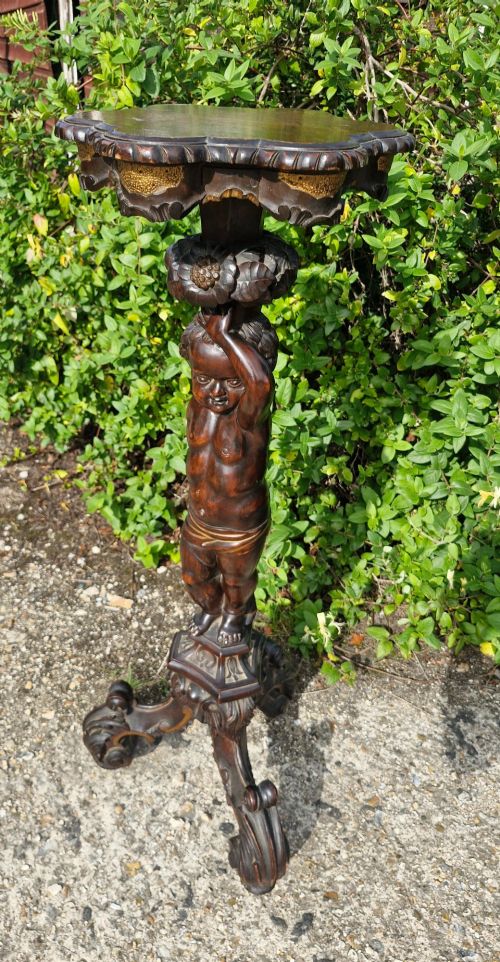
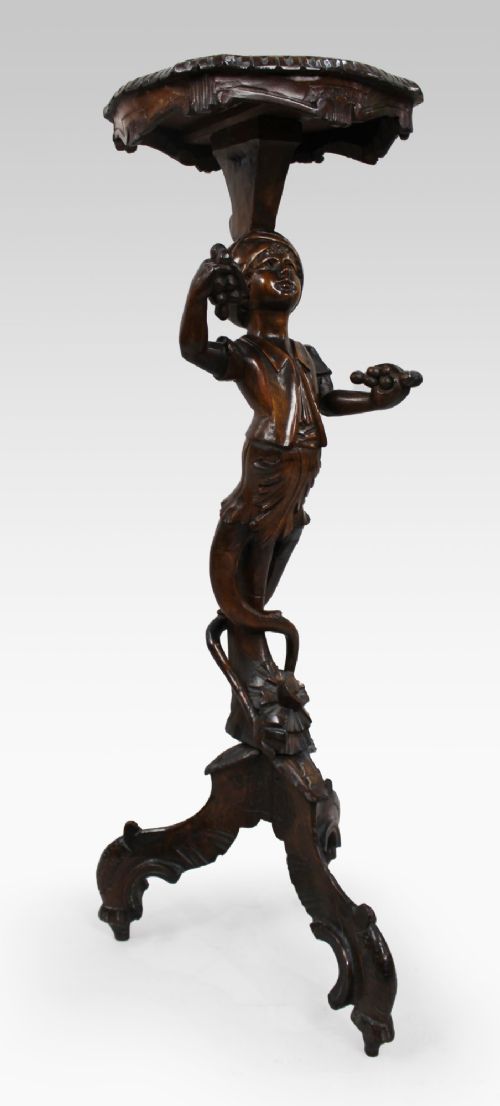
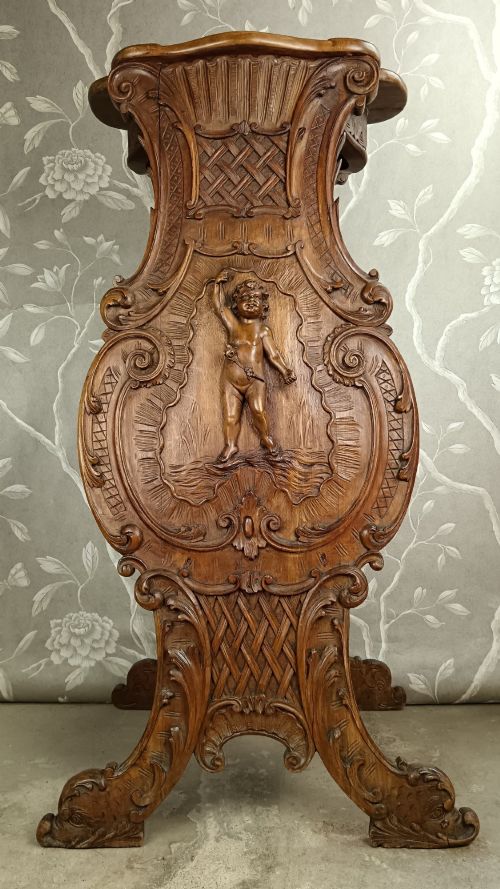
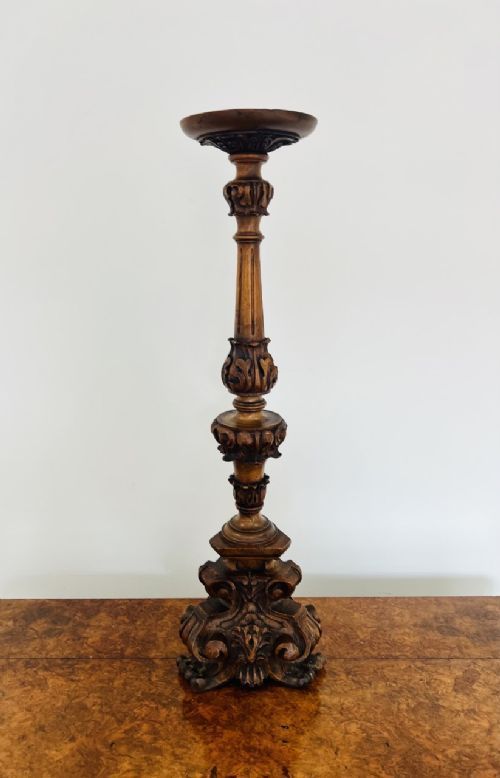
When you search for an italian walnut column, you encounter pedestals, torchiere bases, and stands dating from the seventeenth century through the Victorian era. These pieces serve primarily to elevate sculpture, urns, or lamps within a classical interior.
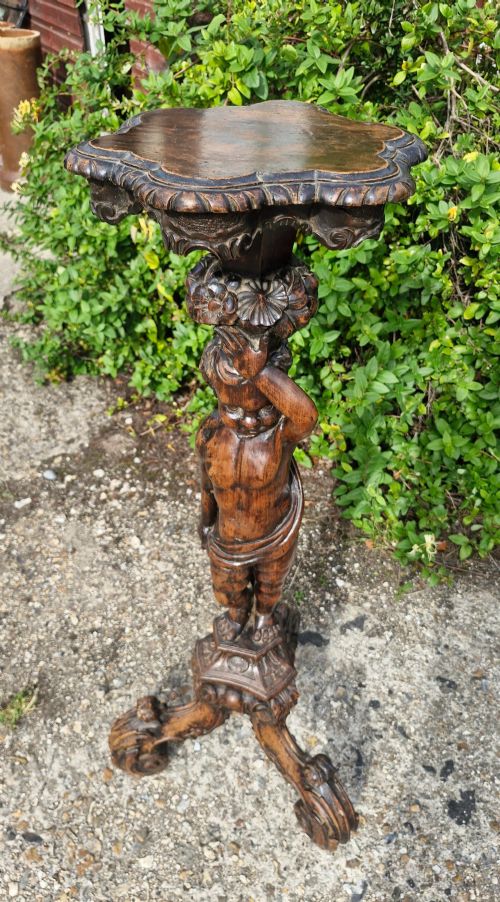
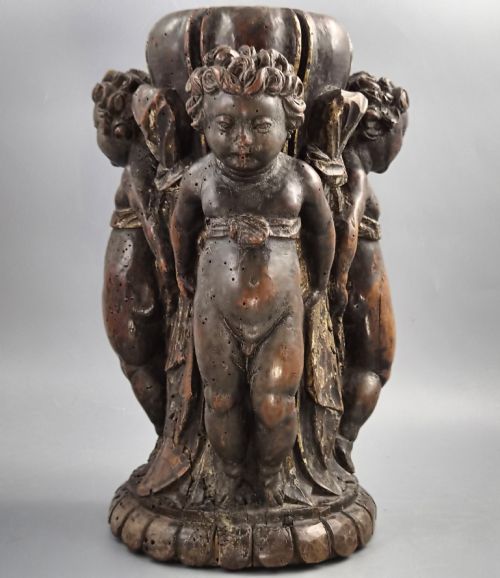
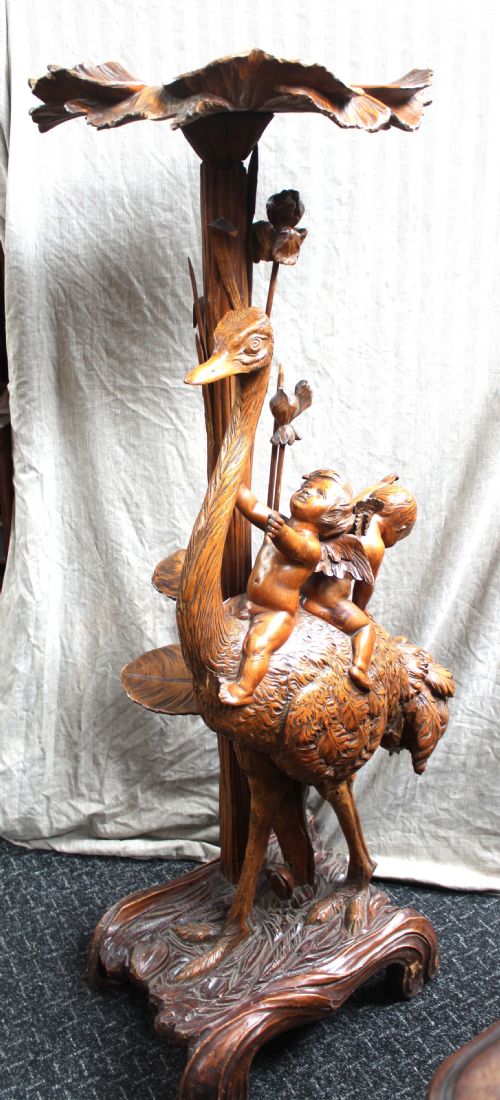
The versions most commonly met on this page range from nineteenth-century revival stands to seventeenth-century baroque carvings. They appear in forms such as carved figural pedestals, architectural fragments, and tall torchiere bases.
Makers and craftsmen utilised dense native timbers to construct supports that carry significant weight while displaying intricate surface ornament. The regional origins span Venetian workshops and broader Italian centres of cabinetmaking.
How they were made
Carvers shaped these supports from solid walnut and fruitwood, often applying deep relief carving to depict figures, putti, and foliage. The natural grain of the timber provides the primary visual texture across the shaft and capital.
Some examples incorporate contrasting materials such as marble inserts, iron elements, or giltwood details to accent the architectural profile. Secondary supports occasionally utilise simpler timbers beneath the primary walnut exterior.
Listings feature walnut, marble, iron, and giltwood across periods spanning the seventeenth century to the Victorian era.
What varies in quality
Depth and precision of the carved detail separate standard production from exceptional artistry. Figures rendered with anatomical nuance and crisp drapery indicate superior workshop output.
Integrity of the timber and the retention of original surface patination dictate the desirability of a piece. Older surfaces untouched by modern stripping retain the subtle tonal variations accumulated over centuries.
The Italian Walnut Column Glossary
- Torchiere
- A tall stand or torch-holder originally designed to carry a light source. In this context, it refers to slender column-like pedestals with decorative bases.
- Putto
- A figure of a small chubby male child, frequently winged, common in Renaissance and Baroque decorative art. These figures often support the main column shaft.
- Giltwood
- Wood that has been treated with gold leaf or a gold-coloured metallic finish. It highlights specific architectural details on the column.
- Revival
- A stylistic movement where makers deliberately draw inspiration from earlier historical periods such as the Baroque or Renaissance. These pieces reinterpret historic forms for later Victorian interiors.
Italian Walnut Column: Frequently Asked Questions
What were italian walnut columns used for?
These pieces served as elevated display stands for sculptures, urns, and decorative lighting within grand interiors. Their primary function was to draw the eye upward and showcase valued objects of art.
In domestic settings, they occupied corners or focal points in reception rooms, adding architectural weight and classical proportion to the space.
How do I clean an antique walnut column?
Dust the carved surfaces regularly with a soft, dry cloth to prevent particulate buildup in the recesses of the relief work. Avoid using modern silicone polishes that can degrade the historic finish.
Apply a traditional microcrystalline wax sparingly if the timber appears dry, buffing gently to maintain the natural sheen of the wood.
Where should I place a column in a modern room?
Position the stand in an empty corner, beside a fireplace, or against a plain wall where its vertical lines can create a strong focal point. Ensure the surrounding floor is stable to support heavy carved bases safely.
Display a single sculpture, a ceramic vessel, or a trailing plant on top to complete the traditional arrangement without cluttering the silhouette.
How can I tell the age of a carved walnut stand?
Examine the tool marks left by the carver, as hand-chiselled surfaces differ significantly from later machine-tooled reproductions. The oxidation of the walnut and the depth of the patina provide clues to the age of the timber.
Construction joints and the presence of period-appropriate secondary woods help confirm whether a piece belongs to the seventeenth, eighteenth, or nineteenth century.