


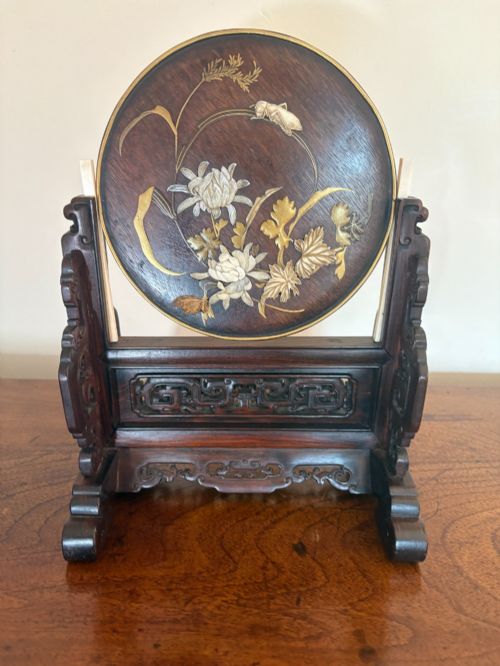
Carved Wood Desk
A carved wood desk brings together practical workspace and tactile craftsmanship, ranging from pedestal forms to bureau variants found across the nineteenth and twentieth centuries.
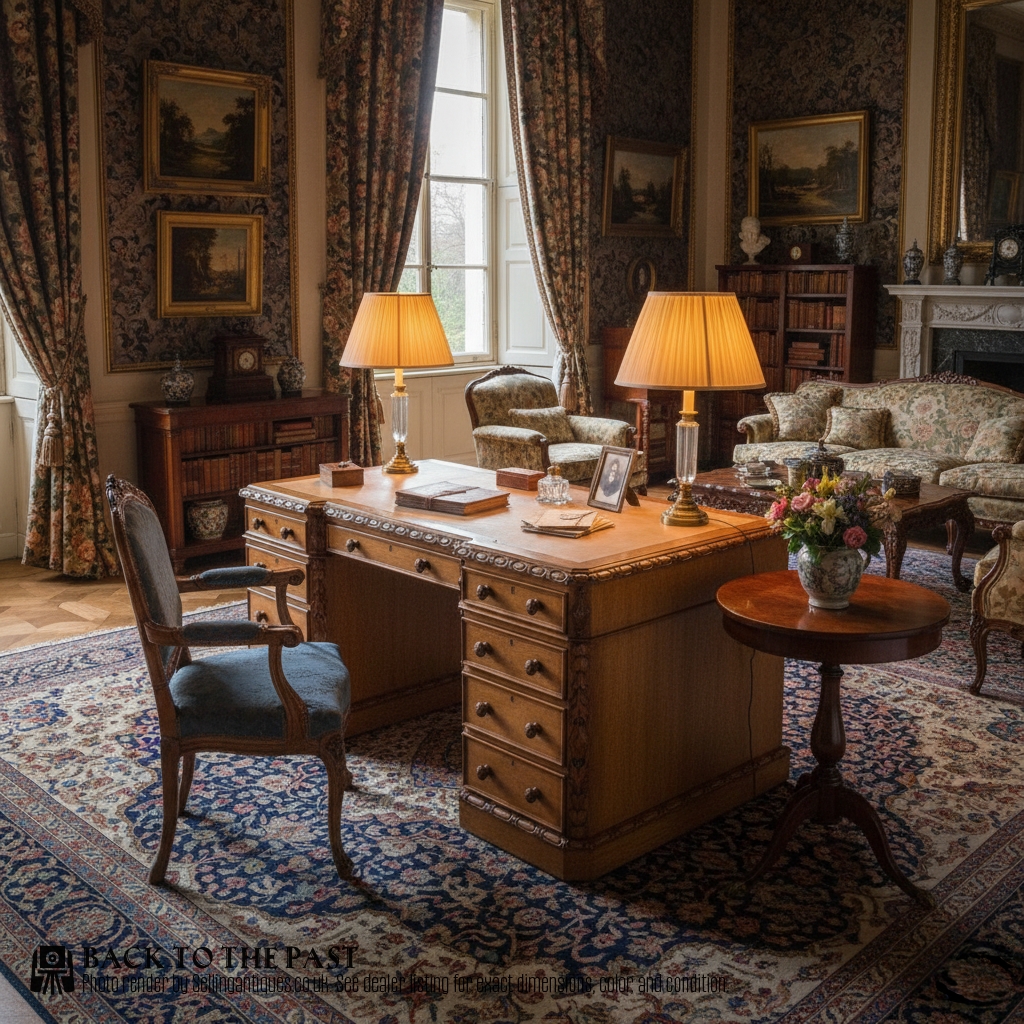
Carved Wood Desk
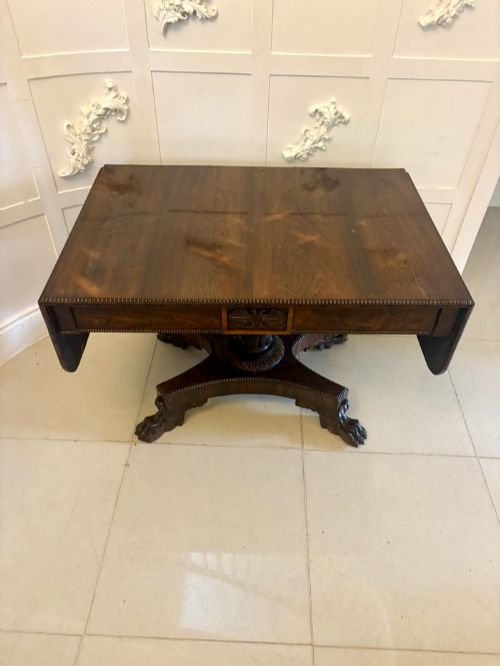
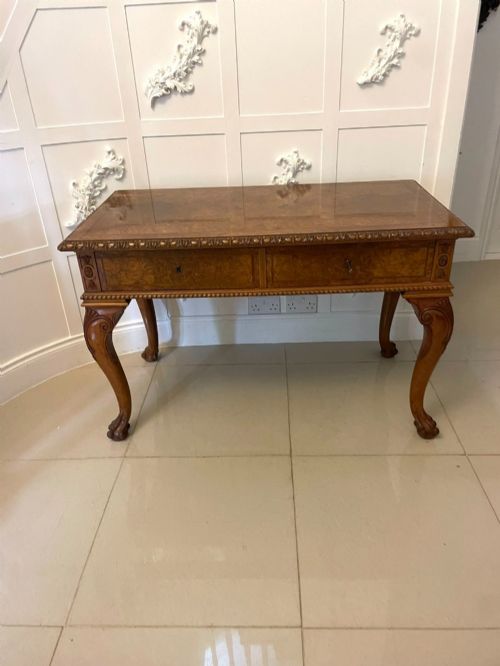
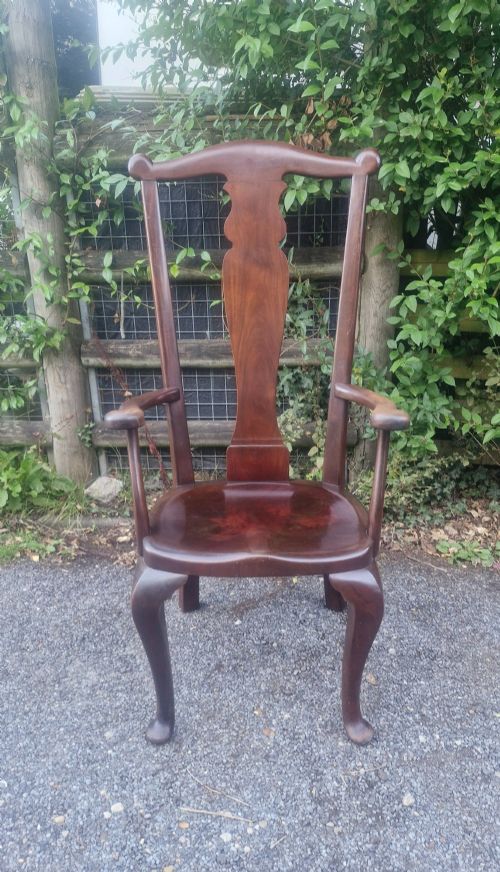
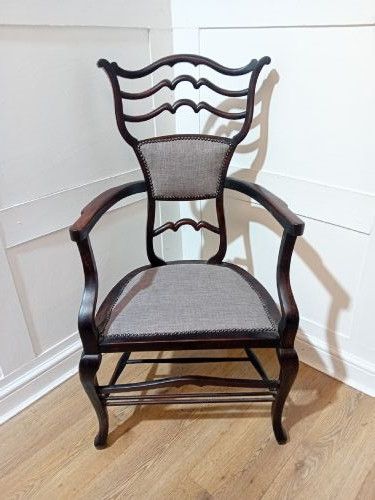
When you search for a carved wood desk, you encounter various forms designed for working and writing, including pedestal desks, Davenport tables, and bureaus. The pieces recorded in these listings span the eighteenth century through to the Edwardian period and the early twentieth century.
Mahogany and oak dominate the timber choices, often accompanied by rosewood, walnut, and burr walnut. Alongside full-sized desks, you find smaller writing surfaces and bureau formats displaying carved detailing.
How they were made
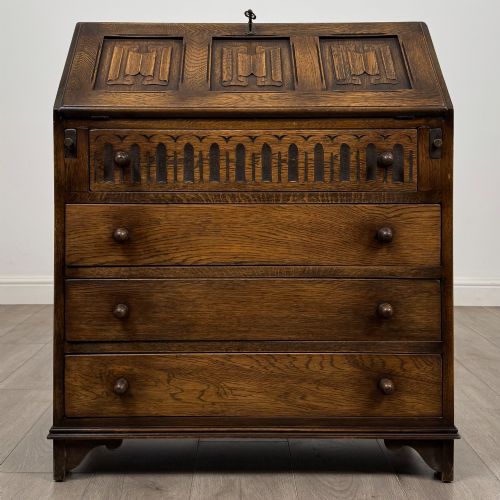
Joinery relies on solid hardwoods such as mahogany, oak, walnut, and rosewood, shaped by hand to create structural frames and writing surfaces. Carved ornamentation is applied directly to the timber, incorporating linear motifs, linenfold panels, or figurative elements.
Drawer construction often employs traditional dovetail joints, while secondary woods support internal compartments. Brass hardware and leather inserts frequently accompany the wooden frames.
Carved Wood Desk Retail Price Guide 2026
Typical asking prices for carved wood desk among the pieces listed under this phrase on Sellingantiques today, from the lower quarter to the upper quarter. They describe what is for sale here now, not the wider market.
Listings feature woods such as mahogany, oak, walnut, rosewood, and burr walnut across the Victorian and Edwardian periods.
What varies in quality
The distinction between tiers rests upon the crispness of the hand-carving and the selection of figured timber veneers. Superior examples display deep, well-defined relief work rather than shallow machine profiling.
Structural integrity, the quality of internal drawer construction, and the retention of original hardware distinguish finer pieces from standard utilitarian examples.
Gillows·C. Bechstein·H.A.C.
The Carved Wood Desk Glossary
- Bureau
- A sloping desk with a hinged writing flap that covers pigeonholes and small drawers. It often stands on bracket feet or a dedicated frame.
- Davenport
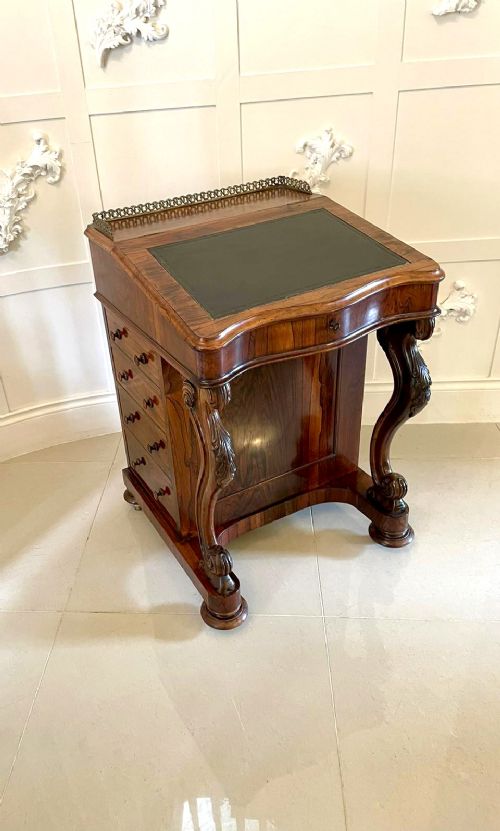
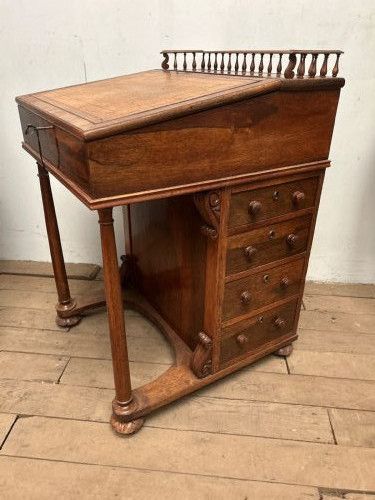
- A compact pedestal desk featuring a sloping writing surface and drawers opening to the side. It was developed during the early nineteenth century.
- Pedestal desk
- A heavy writing table supported by two vertical pedestals containing banks of drawers. The top frequently incorporates a leather writing insert.
- Linenfold
- A style of carved wooden panelling that resembles folded fabric. It appears frequently on Tudor revival and Edwardian furniture.
- Padauk
- A dense tropical timber valued for its strength and deep red-brown colouration. It appears on Anglo-Indian and oriental furniture.
Carved Wood Desk: Frequently Asked Questions
What periods do these desks cover?
The pieces span from the eighteenth century through the Victorian era and into the Edwardian period.
Most examples originate from the nineteenth and early twentieth centuries, reflecting changing domestic fashions.
Which woods were commonly used?
Makers utilised dense hardwoods such as mahogany, oak, rosewood, and walnut for durability and rich grain patterns.
Burr walnut and padauk also appear, offering distinctive figure and colouration.
What is a Davenport desk?
A Davenport is a compact writing desk featuring an inclined desktop above a bank of side drawers.
Originating in the nineteenth century, it provides a space-saving option for smaller rooms.