


19th Century Office Desk
A 19th century office desk provides solid historical utility, combining generous workspace and compartmentalised storage for domestic or professional studies.
19th Century Office Desk
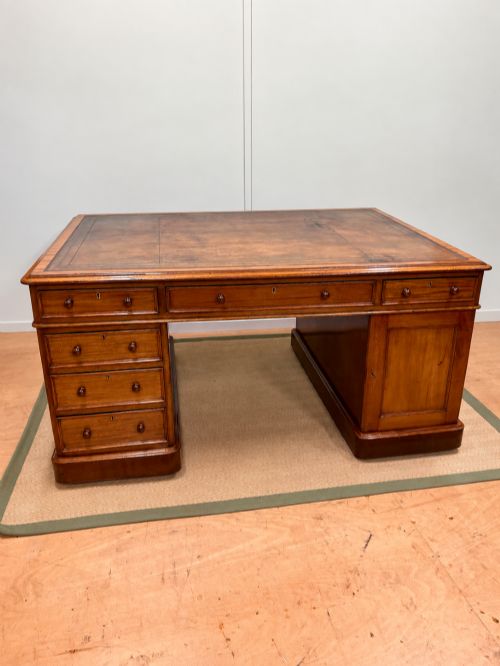
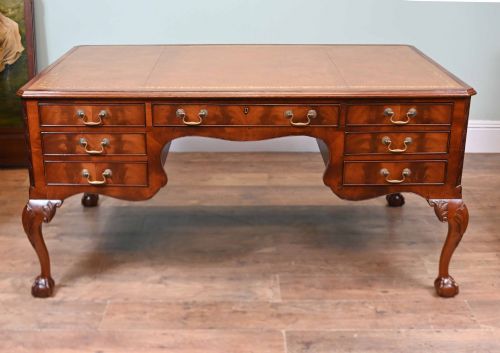
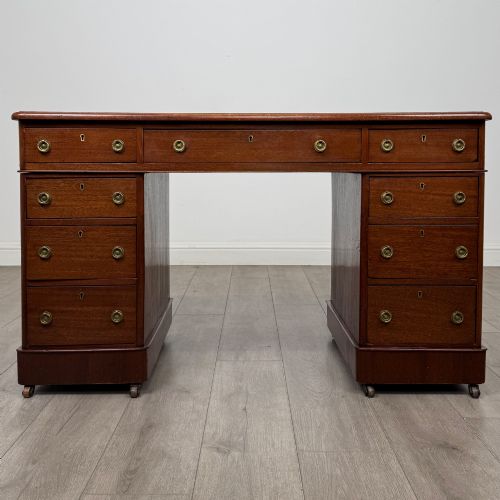
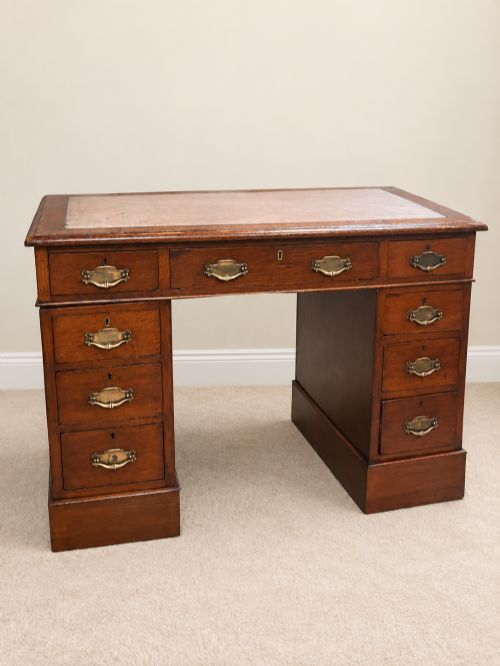
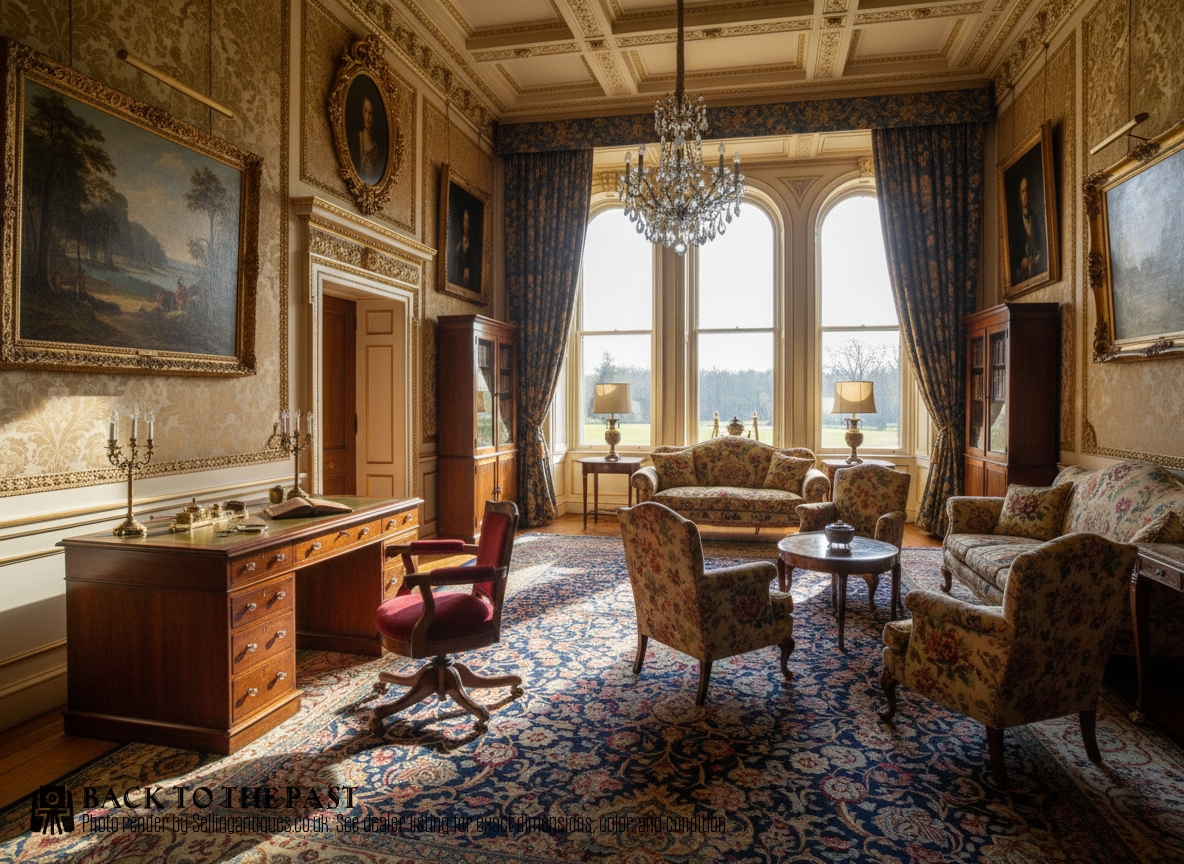
A 19th century office desk typically manifests as a twin pedestal format, kneehole desk, partners desk, or slope-front Davenport, frequently accompanied by revolving desk chairs and smokers bows. These pieces originate predominantly from the Victorian era, alongside Georgian and Regency periods, reflecting the heavy administrative demands of the British Empire and burgeoning industrial commerce.
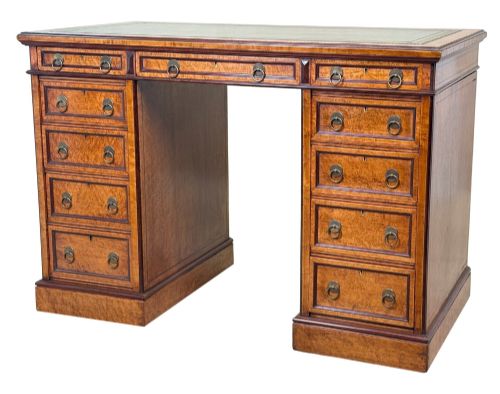
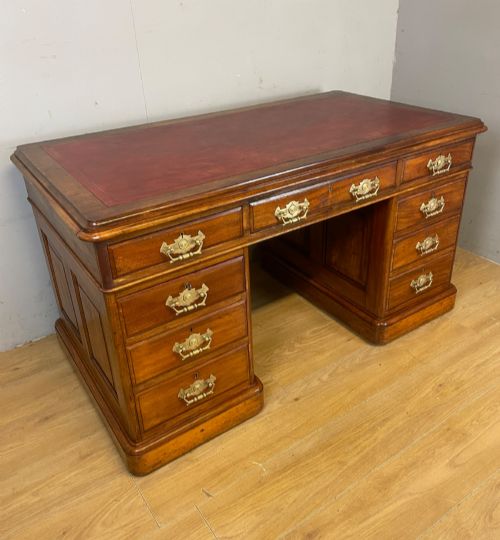
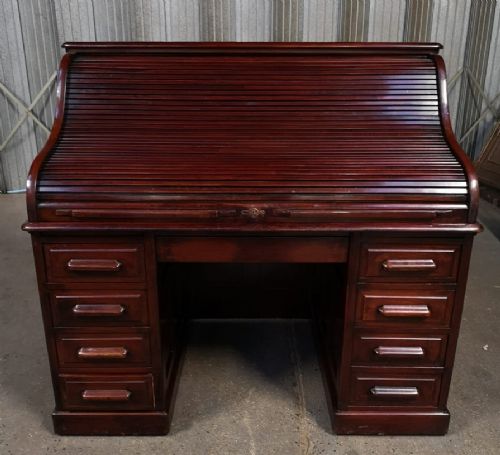
Pedestal versions dominate the selection, offering banks of drawers flanking a central recess, whilst cylinder desks and roll tops provide enclosed tambour shutters to conceal correspondence. Walnut, mahogany, and oak form the structural backbone of these working surfaces, often incorporating inset leather writing surfaces and brass handles.
Materials and Technique
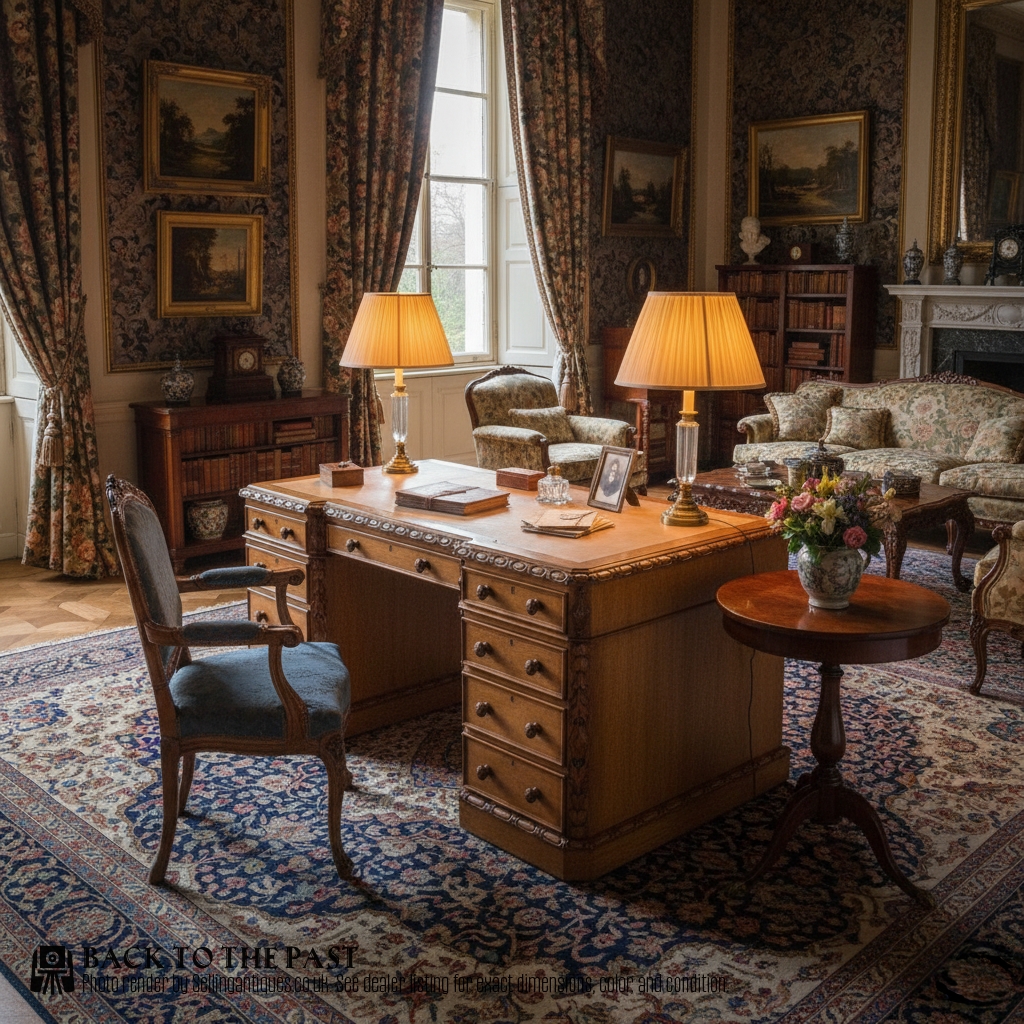
Cabinetmakers utilised dense hardwoods such as mahogany, oak, walnut, and rosewood, frequently incorporating secondary timbers like beech, elm, and ash within internal drawer linings and chair frames. Surfaces received polished finishes that highlighted timber grain, complemented by hand-tooled leather writing inserts secured with brass tacks.
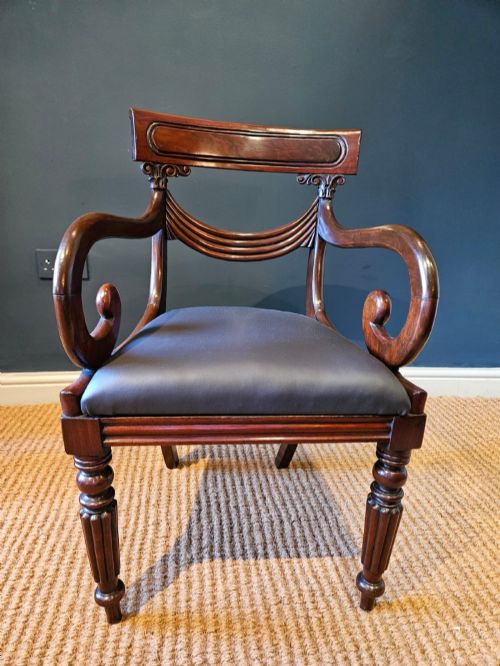
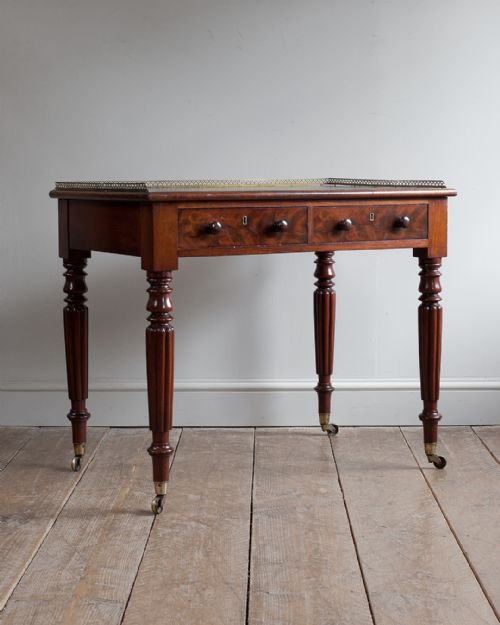
Construction methods relied on robust dovetail joints for drawer construction and sturdy mortise and tenon joinery for framing, ensuring the pieces could withstand daily clerical use. Turning and carving defined the decorative elements, seen in the reeded legs of Regency examples and the heavy panelling of Gothic Revival pieces.
Listings feature pedestal desks, Davenport desks, and swivel armchairs constructed from mahogany, oak, walnut, elm, and ash across the Victorian and Regency periods.
Evaluating Craftsmanship
Quality rests upon the selection of timber and the precision of the underlying joinery, where figured veneers and solid mahogany carcases signify superior workshop output. Maker attribution through stamped drawer linings or paper labels elevates certain pieces, distinguishing standard commercial production from bespoke commissions.
The integrity of mechanical components, such as smoothly operating cylinder mechanisms, revolving swivel chair pivots, and original brass hardware, separates utilitarian survivals from exceptional examples. Secondary wood selection also matters, as uniform hardwood construction throughout indicates higher grade manufacturing than mixed utility timbers.
Trollope & sons·Charles Andrea Nosotti·Edwards & Roberts·Holland & Sons
The 19th Century Office Desk Glossary
- Pedestal desk
- A heavy writing table comprising two separate pedestals of drawers supporting a single top, designed to stand flat against a wall or free in a room.
- Partners desk
- A large double-sided pedestal desk built with drawers and cupboards on both long faces, allowing two people to work opposite one another.
- Davenport desk
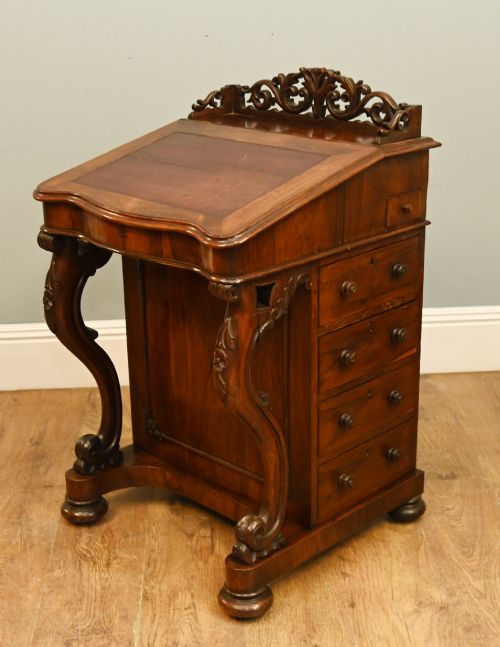
- A compact Victorian writing desk featuring a sloping, hinged writing surface above a set of drawers accessed from the side.
- Smokers bow
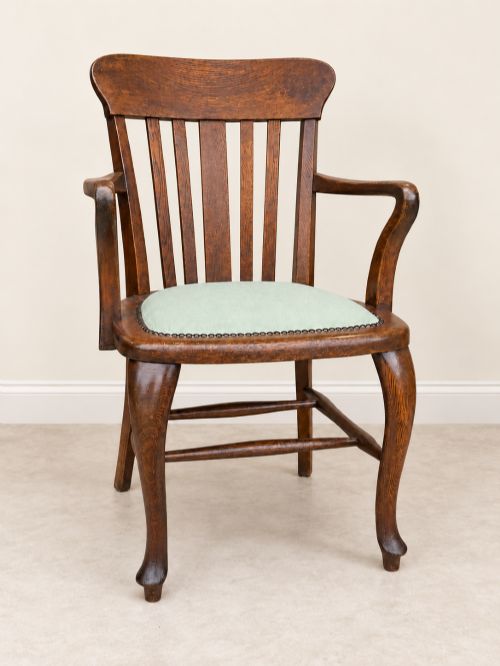
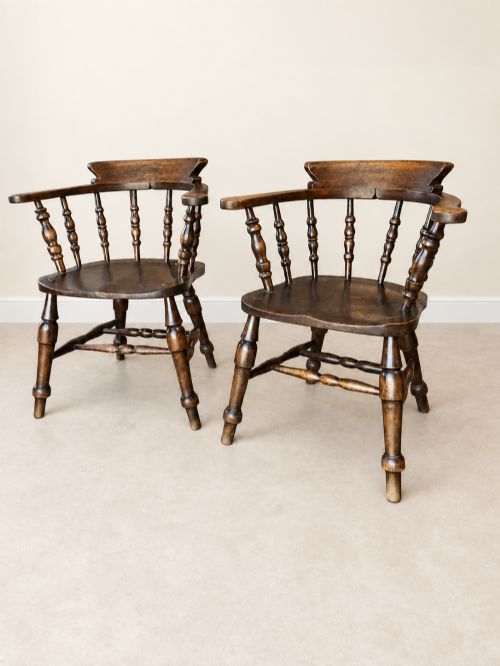
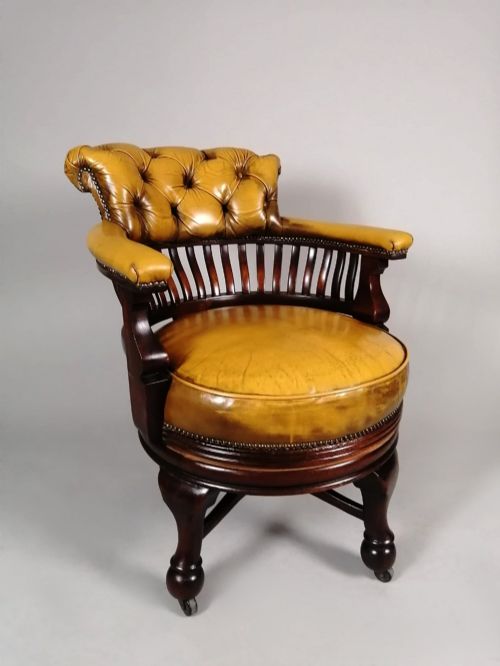
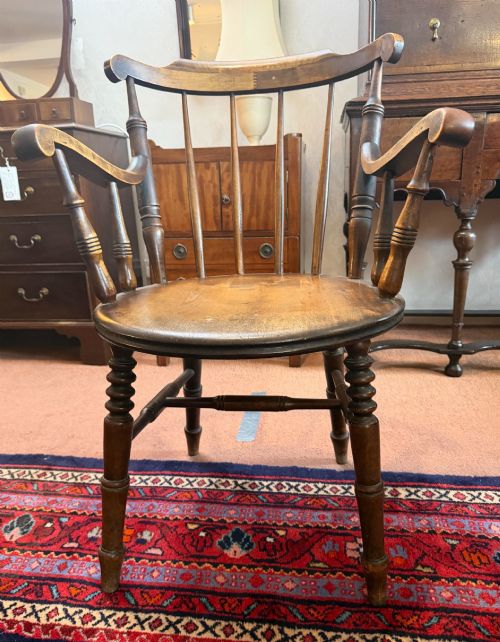
- A sturdy vernacular wooden armchair with a rounded back rail and turned spindles, commonly utilised as a desk chair.
- Bureau plat
- A freestanding French writing table fitted with drawers across the frieze, standing on slender cabriole or tapered legs.
19th Century Office Desk: Frequently Asked Questions
How do I identify a Davenport?
A Davenport is a compact writing desk characterised by a sloping, leather-lined top that lifts to reveal a small interior compartment for stationery. The main body typically incorporates a bank of drawers opening to one side, often matched with dummy drawers on the reverse.
Developed in the early 19th century, this form provides a space-saving writing station suited to smaller studies or drawing rooms. Their diminutive proportions distinguish them immediately from heavy pedestal desks.
Are revolving desk chairs original?
Revolving desk chairs from this era often feature a wooden spider base supported on a central iron spindle mechanism, allowing both swivel and tilt functions. Many retain their original upholstery, brass-capped castors, and turned beech or elm frameworks.
Matching a chair to a desk requires careful attention to timber colour and wear patterns, as chairs endured heavy physical movement compared to stationary tables. Mechanisms should turn smoothly without excessive lateral play.
What timber was used most?
Mahogany served as the primary timber for high-end office furniture throughout the century, prized for its stability and rich deep colour when polished. Oak appeared frequently in functional commercial pieces, whilst walnut gained popularity during the mid-Victorian revival styles.
Secondary timbers like elm, ash, and beech were routinely utilised for drawer interiors, structural framing, and vernacular seating. Burr walnut veneer was reserved for luxury pieces to create striking figured patterns across flat surfaces.