
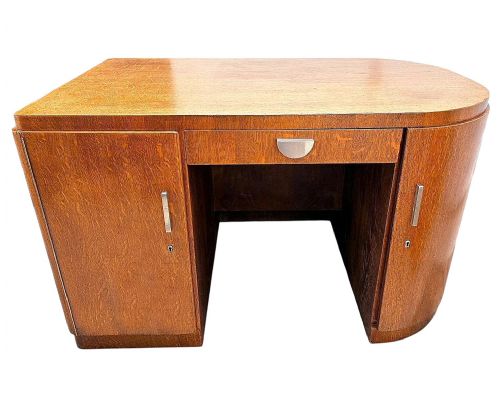
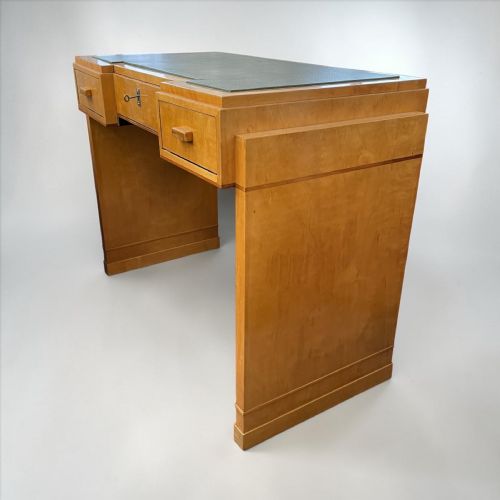
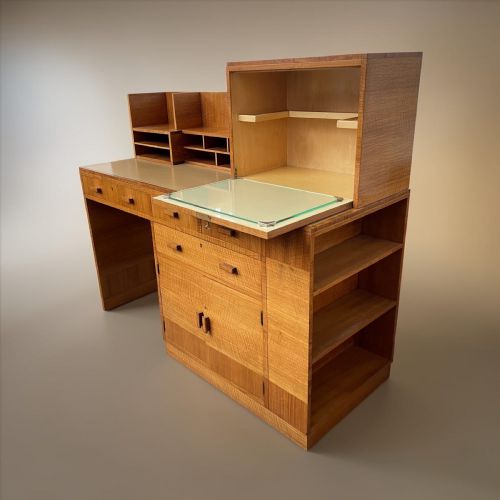


Light Oak Pedestal Desk
A light oak pedestal desk gives any room a bright, grounded workspace built from enduring timber.
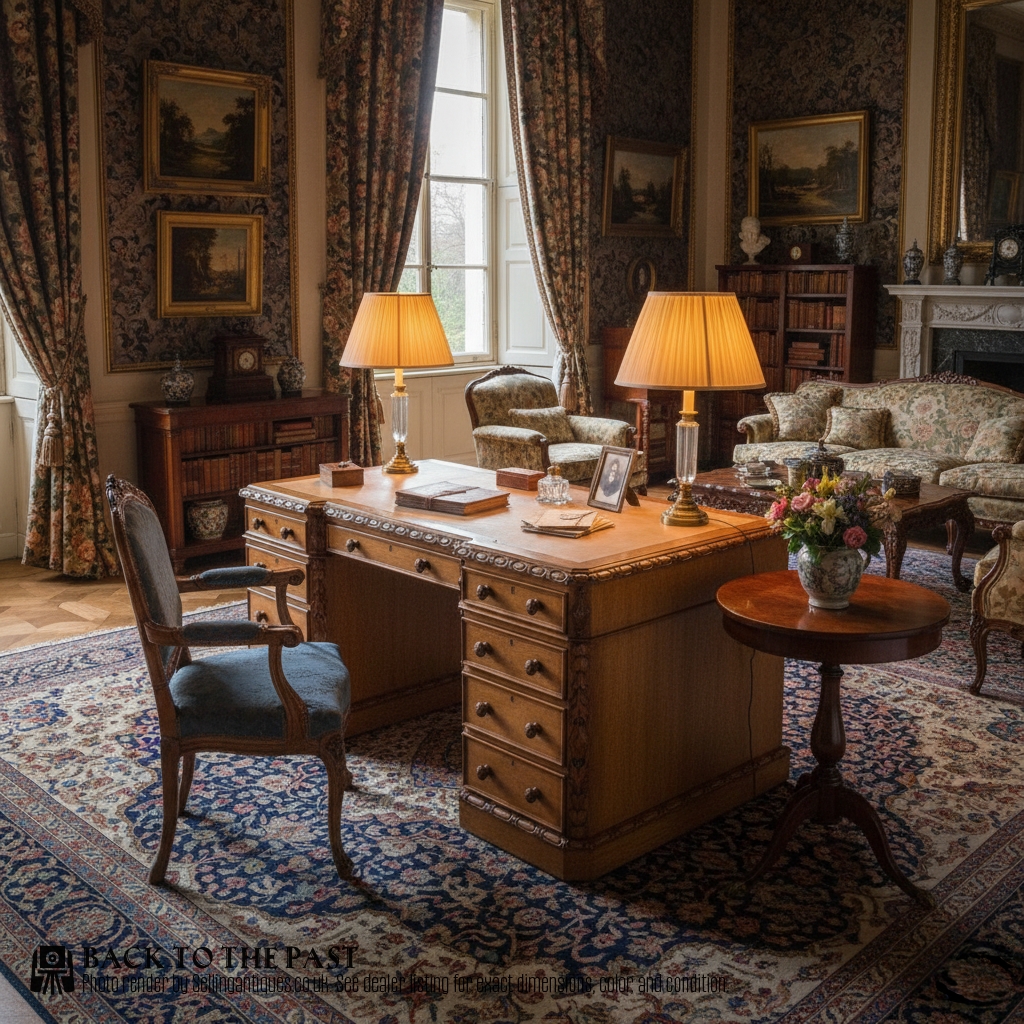
Light Oak Pedestal Desk
A light oak pedestal desk combines a spacious writing surface with twin or single banks of drawers underneath. When searching this phrase, buyers encounter substantial pieces originating primarily from the Victorian period through to the Arts and Crafts and Art Deco eras.
The timber ranges from pale English oak to figured grain variations, often retaining a natural, luminous finish rather than a dark stain. Common configurations include kneehole writing tables, cylinder fronts, and partners desks designed for use from both sides.
Makers and workshops of the nineteenth and early twentieth centuries utilised this sturdy configuration to provide ample storage while maintaining a lighter aesthetic than traditional dark mahogany furniture.
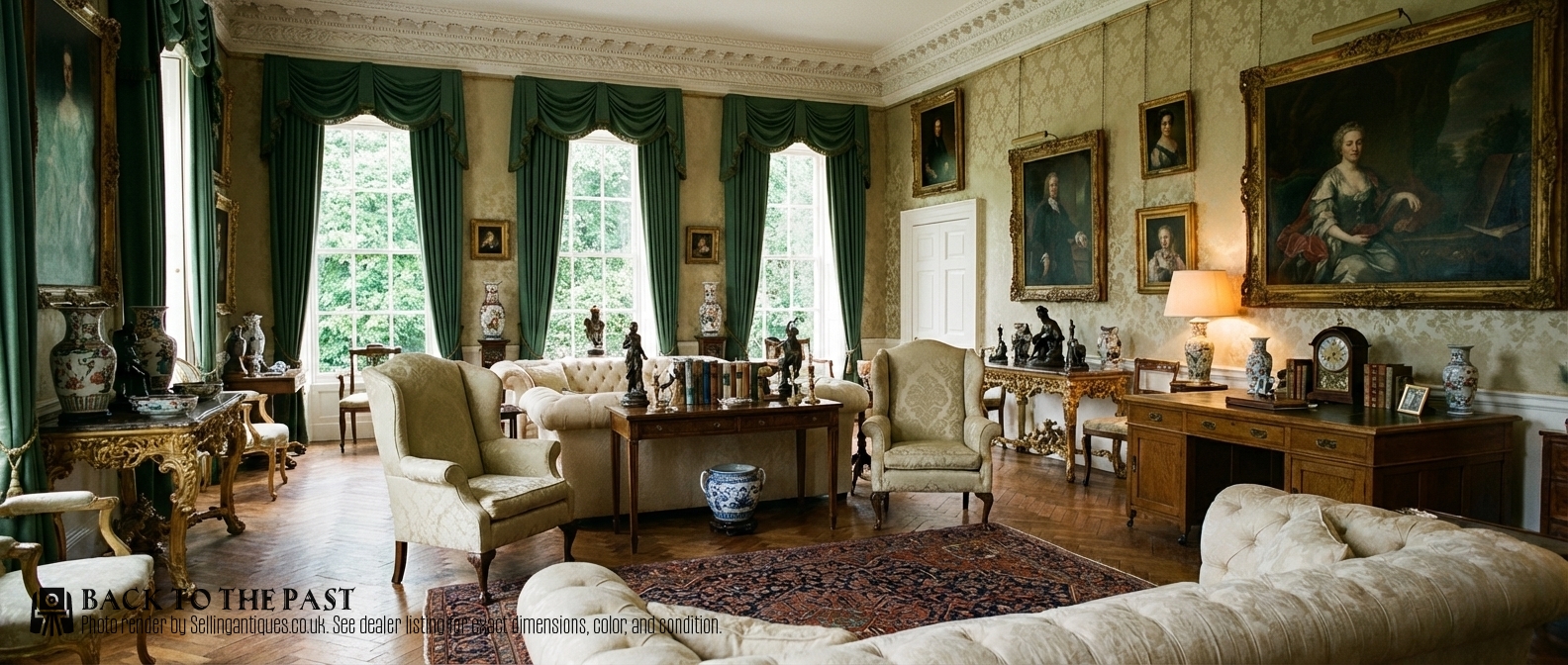
Determinants of quality
Quality rests in the selection of the timber, particularly the grain figure visible across the top and drawer fronts, alongside the depth of hand-carved detailing. Superior examples exhibit tightly fitted drawer joints and original, unblemished leather inserts.
Proportion and utility set finer pieces apart, such as partners desks finished on all sides or desks bearing legible maker stamps. The retention of original hardware and matching keys indicates a higher grade of preservation.
Materials recorded across these desks include solid oak, figured oak, tooled leather, brass, chrome, and walnut.
Heal's·Deighton and Dunthorne
The Light Oak Pedestal Desk Glossary
- Pedestal desk
- A freestanding desk comprising a central writing surface supported by two independent pedestals containing drawers. These units typically separate into multiple sections for easier transport.
- Partners desk
- A large double-sided pedestal desk designed for two people to work opposite one another, featuring matching drawers or cupboards on both faces.
- Kneehole
- The central recessed space beneath a desk where the user sits. Some variations include a small recessed cupboard set back beneath the writing surface.
- Cylinder desk
- A desk featuring a quarter-cylinder rolling wooden shutter that conceals an interior arrangement of small drawers and pigeonholes when closed.
- Cotswold School
- An early twentieth-century design movement emphasising simplicity, unpretentious construction, and respect for natural wood grain. Pieces from this tradition often display hand-carved details and exposed joinery.
Light Oak Pedestal Desk: Frequently Asked Questions
How do I care for a leather desk insert?
Clean the leather surface gently using a soft, dry cloth to remove dust. Avoid harsh chemical cleaners that can strip the natural tone or damage the gold tooling.
Condition the leather periodically with a specialised leather balm to keep the material supple and prevent cracking over decades of daily use.
Can these desks be dismantled for moving?
Many traditional pedestal desks separate into three main sections for transport. The top lifts off the two independent drawer pedestals beneath.
Check for internal fixing screws inside the kneehole area before attempting to lift the components apart.
How do I distinguish an Edwardian oak desk from a Victorian one?
Victorian desks frequently display heavier proportions, darker traditional finishes, and more elaborate carved ornamentation such as linenfold or green man motifs. Edwardian pieces often embrace a lighter aesthetic, simpler lines, and influences from the Arts and Crafts movement.
The integration of lighter oak tones and inlaid details becomes more prevalent in the early twentieth century.