

Victorian Leather Writing Table
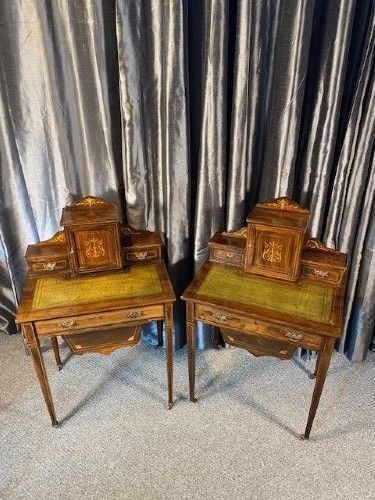
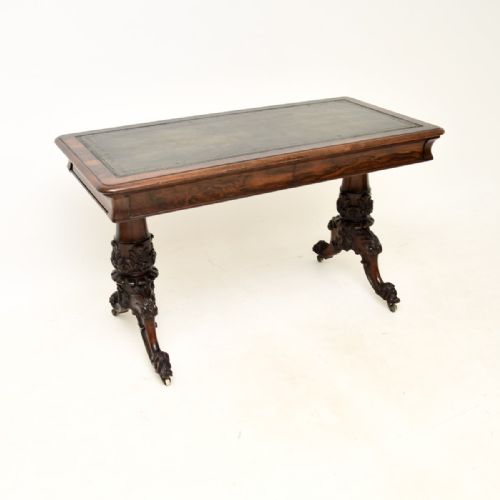
A victorian leather writing table brings nineteenth-century craftsmanship into a modern study, offering a dedicated surface inset with supple hide.
Victorian Leather Writing Table
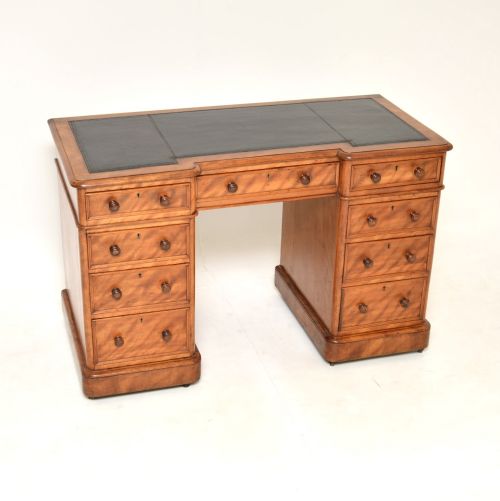
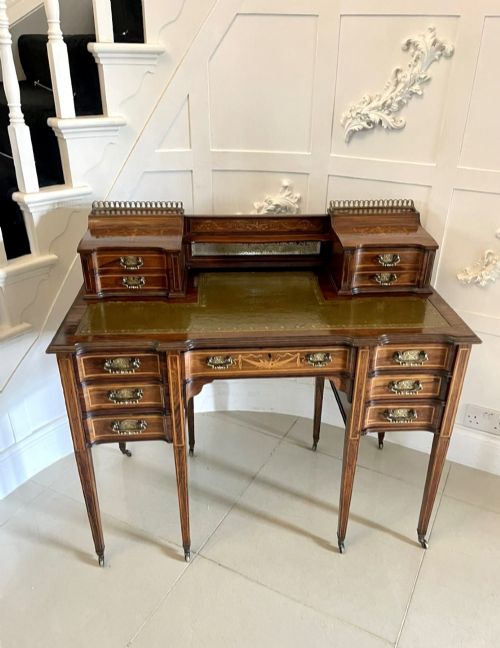
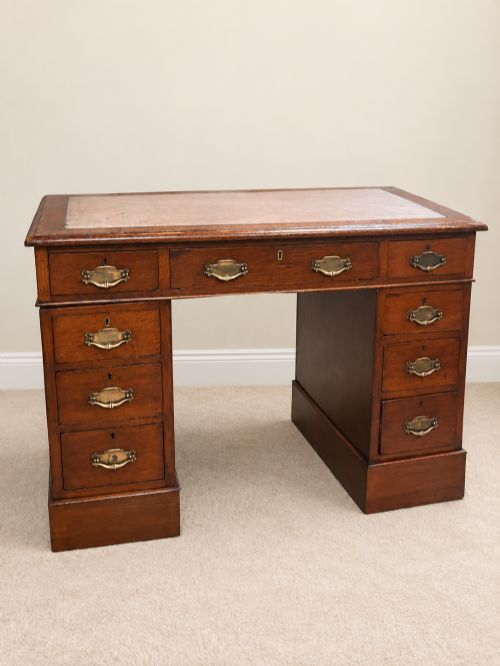
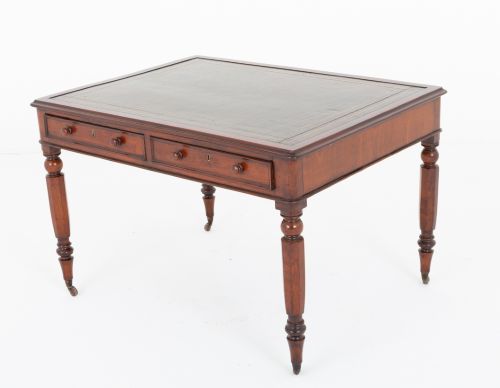
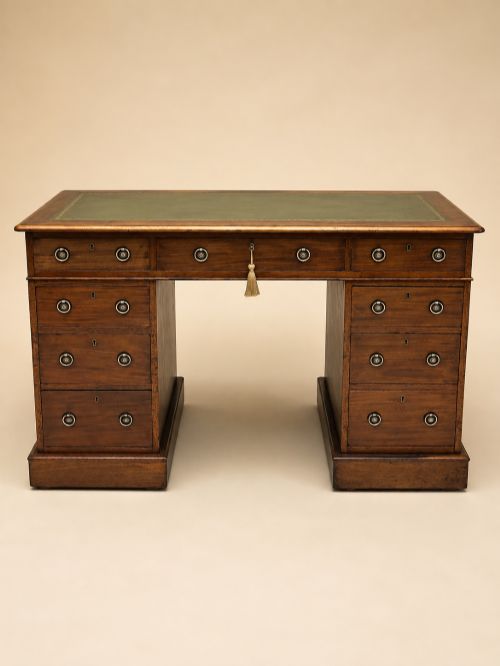
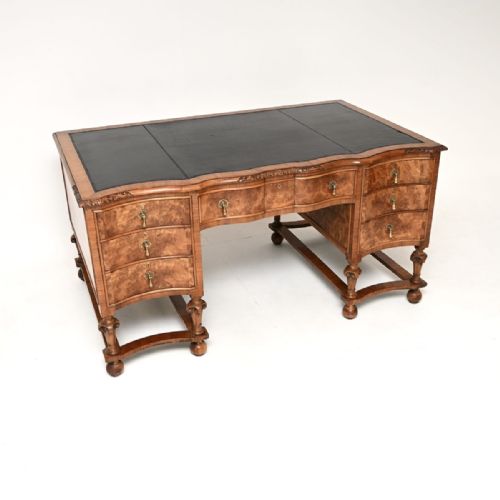
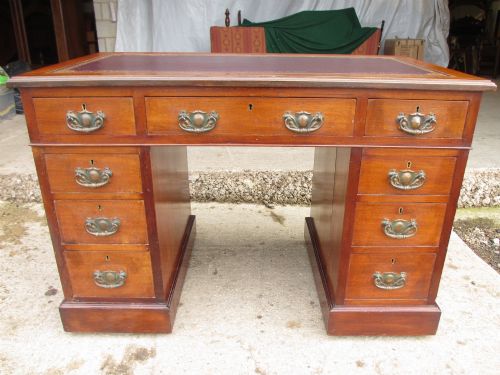
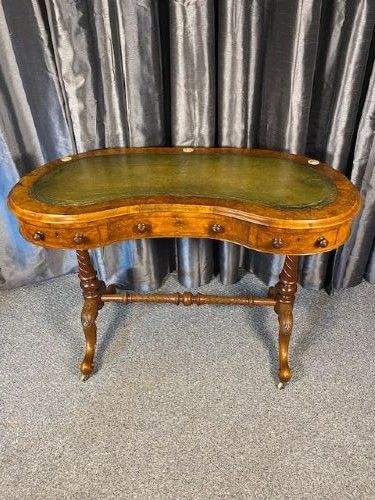
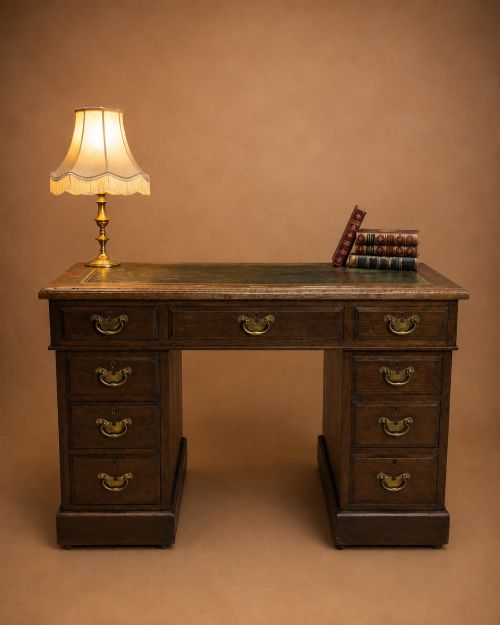
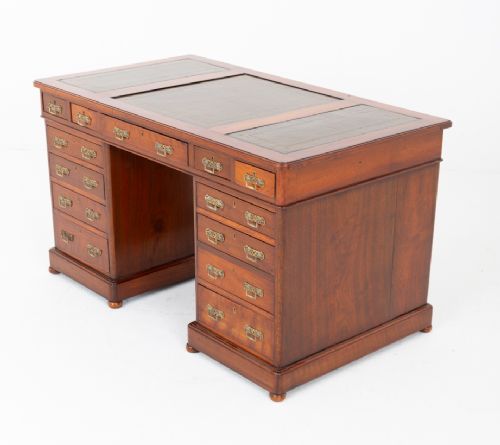
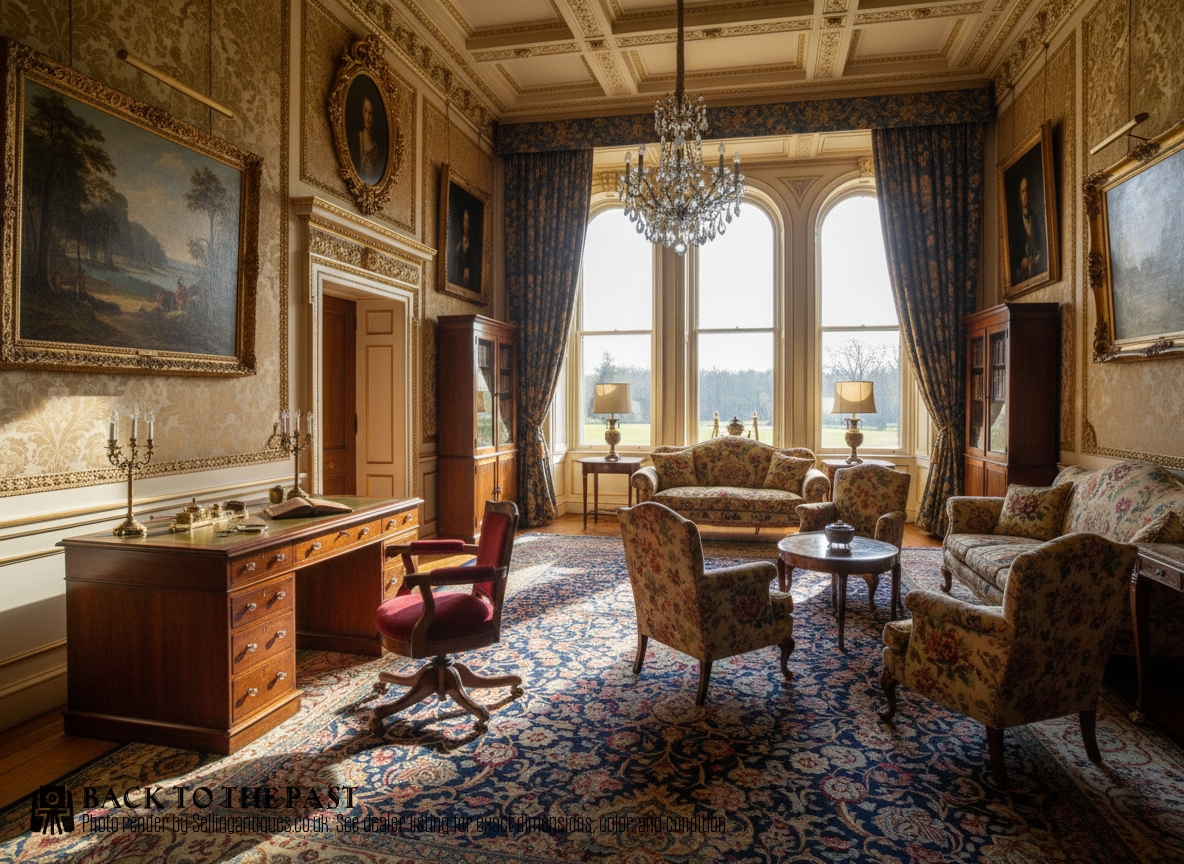
A victorian leather writing table serves as a functional workspace, combining timber frames with writing surfaces of inset hide. These pieces include freestanding writing tables, library tables, and twin-pedestal desks designed for clerical or scholarly use.
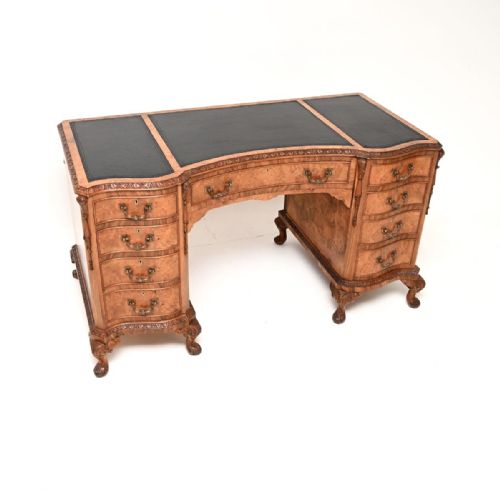
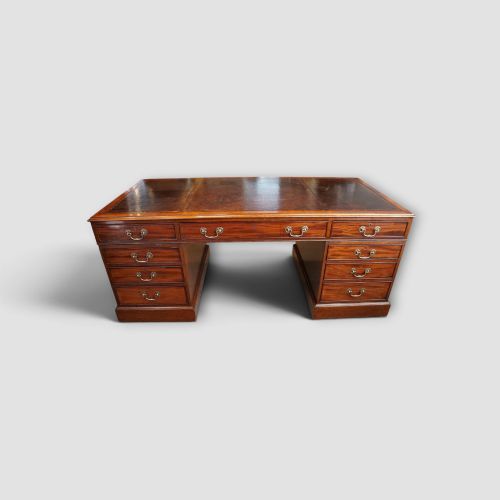
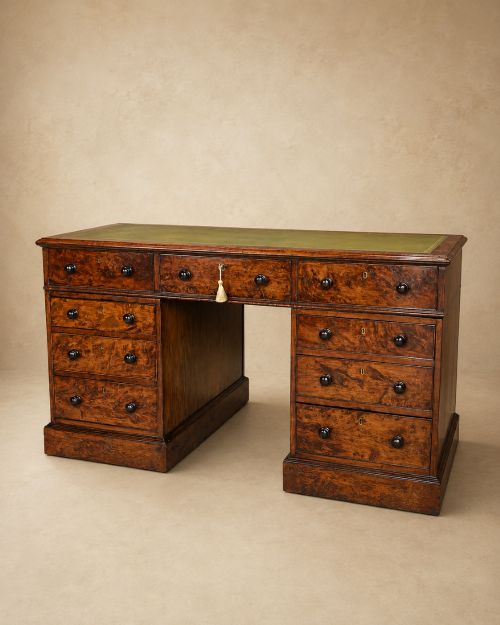
The versions most commonly met on this page are mahogany and walnut examples featuring inset leather writing surfaces in shades of green, tan, or burgundy. Many incorporate frieze drawers, while larger partners desks allow two people to work opposite one another.
Originating primarily from nineteenth-century workshops, these tables reflect the period's demand for solid, utilitarian domestic and institutional furniture. They survive in various timber grains, ranging from figured burr walnut to dense oak and rosewood.
How They Were Made
Cabinetmakers constructed the carcases using dense hardwoods such as mahogany, oak, walnut, and rosewood, frequently incorporating secondary timbers for drawer linings. Selected pieces display decorative veneers like burr walnut or maple, alongside inlaid details in brass or ivory.
Writing surfaces were inset with leather, typically tooled with gilt borders around the perimeter. Drawers utilised traditional hand-cut dovetail joints, fitted with brass handles or turned wooden knobs.
Structural framing allowed certain models to remain finished on all sides for freestanding placement in the centre of a room, while pedestal variants utilised twin stacks of drawers supporting the top surface.
Victorian Leather Writing Table Retail Price Guide 2026
Typical asking prices for victorian leather writing table among the pieces listed under this phrase on Sellingantiques today, from the lower quarter to the upper quarter. They describe what is for sale here now, not the wider market.
Some nineteenth-century writers penned correspondence atop royal commemorative leather while seated at a desk embedded with Wedgwood plaques and ivory inlay.
What Varies in Quality
The selection of timber grain defines the visual appeal, with figured burr walnut, pollard oak, and fiddleback mahogany commanding greater attention than plain stock. Superior examples demonstrate careful book-matching of veneers across large expanses like the desk top or drawer fronts.
Execution of decorative detailing distinguishes standard production from high-end workshop output. Finely carved mouldings, precise brass inlay, and crisp gilt-tooling on the leather indicate skilled hand labour rather than mechanical repetition.
Construction methods also set pieces apart, particularly the presence of finished backs allowing freestanding placement, solid secondary woods in drawer construction, and intact original hardware.
Maple and Co·Trollope and sons·Johnstone and Jeanes·Charles Andrea Nosotti·Jackson and Graham·Edwards and Roberts·Holland and Sons·Gillows
The Victorian Leather Writing Table Glossary
- Partners desk
- A large double-sided desk designed for two people to work facing each other, featuring drawers on both longitudinal sides. These forms often include cupboards or kneeholes configured symmetrically.
- Pedestal desk
- A heavy desk comprising a large top supported by two separate pedestals or stacks of drawers. They typically offer substantial storage capacity and a central kneehole.
- Library table
- A large freestanding table used for reading and writing, finished on all sides so it can sit in the middle of a room. They often feature frieze drawers for stationery storage.
- Dovetail
- A traditional interlocking woodworking joint used to connect drawer sides to drawer fronts. Hand-cut variations display irregularities that indicate age and manual construction.
- Frieze
- The central horizontal band of a table located directly beneath the top surface. This section frequently houses one or more drawers.
Victorian Leather Writing Table: Frequently Asked Questions
What is a partners desk?
A partners desk is a large double-sided configuration built with drawers and cupboards accessible from both faces. This layout allowed two individuals to sit opposite each other in a shared office or library.
Such pieces usually sit on twin pedestals beneath a wide leather-inset top. They represent some of the largest writing furniture produced during the nineteenth century.
How do I care for the leather top?
Leather surfaces benefit from periodic cleaning with a damp cloth followed by a neutral leather cream to maintain flexibility. Avoid harsh chemical cleaners that strip the original gilt-tooled borders.
Keeping the leather away from direct heat sources prevents the hide from drying out and cracking over time. Gentle maintenance preserves both the colour and the tactile quality of the writing surface.
Are these tables suitable for modern computers?
Many nineteenth-century writing tables offer adequate surface depth and kneehole clearance for contemporary laptops and desk accessories. Freestanding library tables provide generous proportions for daily clerical tasks.
Buyers should verify the height of the kneehole space, as older seating heights occasionally differ from modern ergonomic standards. Drawer depths should also be checked if keyboard storage is required.