



Victorian Plinth Desk
These Victorian plinth desk pieces are sturdy pedestals of mahogany or walnut that anchor a study with practical writing space.
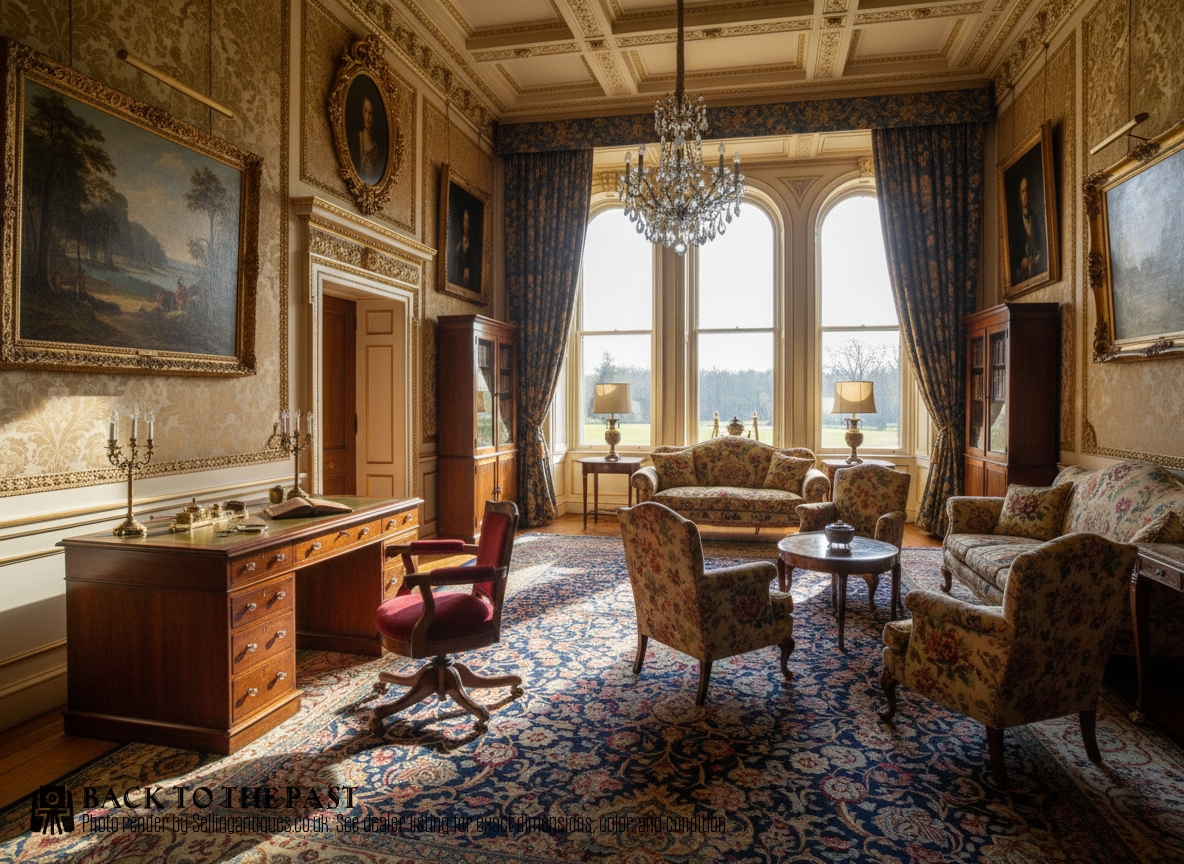
Victorian Plinth Desk
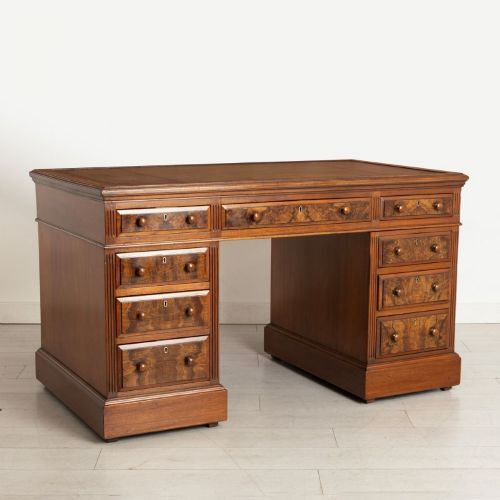
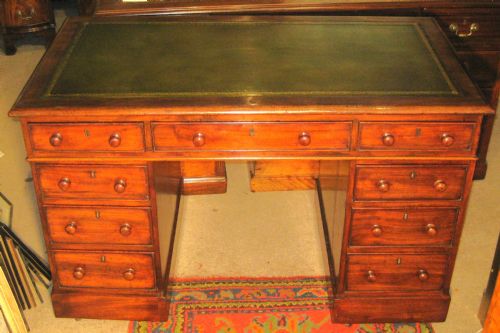
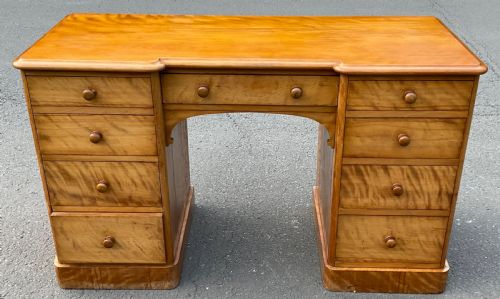
A Victorian plinth desk provides a heavy timber foundation with pedestal cupboards or drawers supporting a central writing surface. These heavy forms dominate the selection alongside related writing furniture.
Most examples appear in rich timbers such as mahogany, walnut, and satin birch, often featuring inset leather writing surfaces on the top.
The construction relies on sturdy pedestals that rest directly on plinth bases rather than traditional legs, giving the furniture a grounded silhouette.
Judging quality in pedestals
The fineness of the timber figure and the precision of the veneer matching across the drawer banks separates standard utility pieces from more ambitious cabinet work. Selection of burr walnut or figured mahogany indicates a higher workshop standard.
The integrity of the structural plinth base and the smoothness of the drawer runners dictate the practical success of the desk. Superior examples maintain tight joints and substantial timber thickness throughout the carcase.
Soapstone dogs of Fo keep silent watch over the writing materials.
Deighton And Dunthorne·Carl Kauba·Payne Of London
The Victorian Plinth Desk Glossary
- Plinth base
- A solid flat-bottomed foundation supporting the pedestals directly above the floor, replacing individual feet. This construction gives the furniture a heavy, grounded stance.
- Pedestal desk
- A form comprising two structural pillars containing drawers or cupboards, spanned by a desktop and a central kneehole. It provides substantial storage alongside a surface for writing.
- Burr walnut
- Timber taken from a tree growth abnormality that produces intricate, swirling grain patterns. Cabinet makers prized this material for decorative drawer fronts.
- Escutcheon
- A protective plate surrounding a keyhole, usually cast in brass. It prevents the timber from wearing around the lock mechanism.
Victorian Plinth Desk: Frequently Asked Questions
What is a Victorian plinth desk?
A Victorian plinth desk is a heavy pedestal writing table constructed from hardwoods like mahogany, walnut, or satin birch during the nineteenth century. These pieces feature banks of drawers supporting a central desktop above a solid base.
They were designed for administrative use in studies and offices, offering substantial storage capacity within the pedestal carcases.
How do I care for the leather top?
The inset leather surface requires gentle cleaning with a slightly damp cloth followed by a neutral leather cream to prevent drying and cracking. Avoid abrasive cleaners or excess moisture on the surrounding timber.
Regular light dusting preserves the finish and keeps the tooled gold leaf details intact over years of daily use.
Are these desks suitable for daily work?
These pieces provide a stable writing surface and deep drawers that accommodate modern stationery and equipment while maintaining period character. Their robust timber construction handles regular daily use without issue.
Consider the kneehole clearance and desk height before installation to ensure comfortable seating space for prolonged periods.
How do I distinguish walnut from mahogany?
Mahogany typically displays a reddish-brown hue with a straight, ribbon-like grain pattern that darkens gracefully over time. Walnut exhibits a richer chocolate tone with more varied, darker figuring.
Burr walnut further distinguishes itself through swirling, organic patterns formed by knot growths in the timber.