


Classic Dark Wood Desk
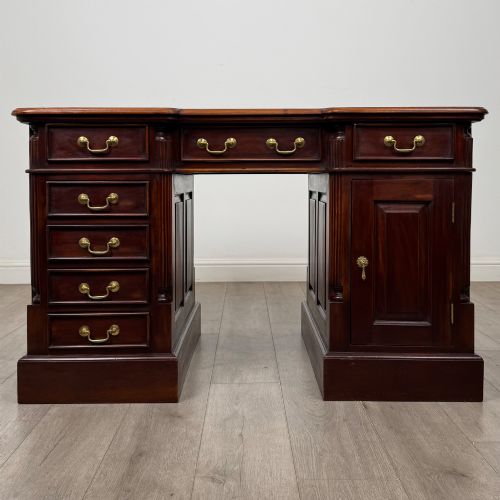
A classic dark wood desk brings enduring warmth and functional workspace to a room, crafted from rich mahogany and fitted for daily use.
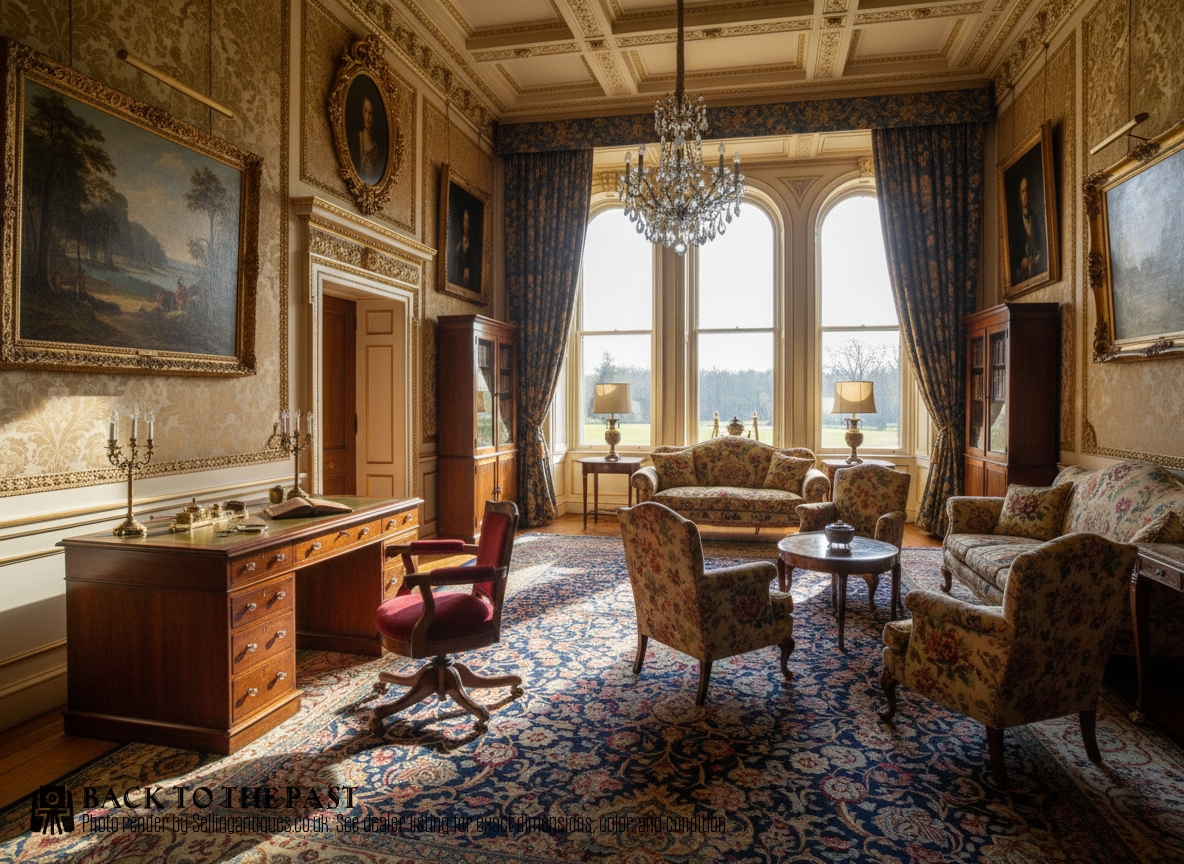
Classic Dark Wood Desk
A classic dark wood desk primarily takes the form of a pedestal desk, tambour top desk, or roll top desk designed for study and administration. These sturdy writing surfaces appear across the Georgian, Victorian, and Edwardian periods, reflecting the shifting domestic needs of past centuries.
Most examples encountered here are built in mahogany, often displaying the deep reddish-brown tones favoured by cabinet makers of the eighteenth and nineteenth centuries. Alongside large pedestal formats, related secretaire cabinets offer compact writing spaces with fitted pigeonholes and drawers behind folding panels.
Makers shaped these desks to serve as the focal point of a study or home office, combining generous work surfaces with banks of smaller drawers. The inventory also includes occasional writing tables and side tables that share the same dark timber aesthetic.
How they were made
Cabinet makers built these desks primarily using solid mahogany and mahogany veneers over secondary timbers, selecting boards for grain continuity and rich natural colour. Traditional joinery such as dovetailing secures the drawer boxes, ensuring structural stability across decades of daily opening and closing.
Metal hardware in brass provides functional pulls, key escutcheons, and occasional mounts that contrast against the dark wood surfaces. Many writing surfaces incorporate tooled leather inserts, offering a durable texture designed specifically for writing with ink and quills.
Some nineteenth-century tambour desks feature hidden spring-loaded compartments that pop open only when you press a secret wooden peg.
What varies in quality
The distinction between standard utility pieces and finer examples rests upon the selection of timber grain, the crispness of edge mouldings, and the subtlety of proportion. Desks with well-figured mahogany veneers and balanced pedestals command greater appreciation from collectors seeking refined craftsmanship.
Interior configuration also marks the division in quality, with superior desks featuring secondary woods of high grade, secret compartments, and finely divided stationery drawers. The retention of original brass hardware and untouched patination further elevates the standing of an antique writing piece.
The Classic Dark Wood Desk Glossary
- Tambour top
- A flexible writing surface formed of narrow slats of wood glued to canvas, sliding along a track to conceal the desk interior. This mechanism allows the top to roll back smoothly.
- Secretaire
- A piece of furniture containing a pull-out or drop-front drawer that conceals a writing surface and small pigeonholes. It combines cabinet storage with a fold-down desk function.
- Dovetail
- A joint formed by interlocking wedge-shaped fingers, widely used in traditional drawer construction. This technique provides exceptional tensile strength without relying on metal fasteners.
- Escutcheon
- A protective plate surrounding a keyhole, usually cast in brass. It prevents the surrounding timber from wearing away through repeated use of the key.
Classic Dark Wood Desk: Frequently Asked Questions
What is a pedestal desk?
A pedestal desk is a large, freestanding writing table supported by two vertical columns of drawers on either side of a central kneehole.
This robust form became common during the Georgian period and remained popular throughout the Victorian era for libraries and studies.
How do I care for mahogany?
Mahogany furniture requires regular dusting with a soft, dry cloth and occasional treatment with quality beeswax to nourish the timber.
Keep these desks away from direct sunlight and heat sources to prevent the wood from drying out and the finish from fading.
What is a tambour top?
A tambour top consists of narrow strips of wood affixed to a flexible fabric backing that slides in a recessed track.
This mechanism allows the desktop to open and close in an arc, concealing the stationery compartments beneath.
How do I date a desk?
Dating relies on examining construction methods, such as hand-cut dovetails, timber choices, hardware styles, and overall design proportions.
Pieces from the Georgian era display different structural characteristics and carving details compared to later Victorian or Edwardian examples.