

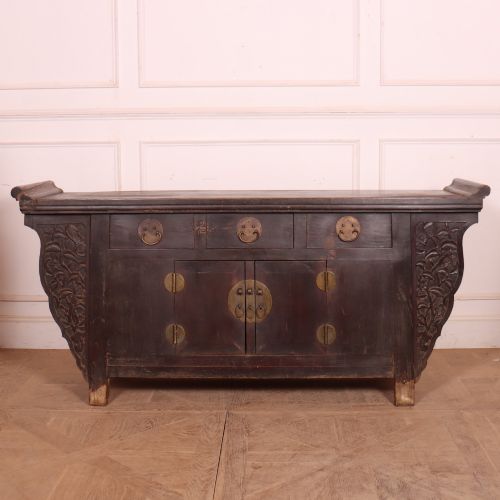
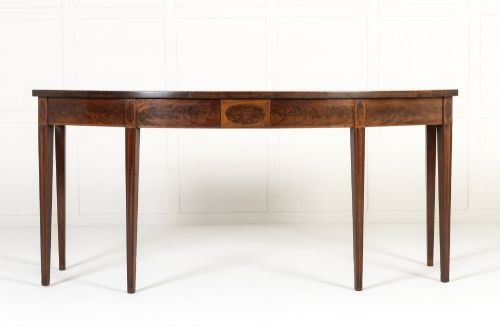


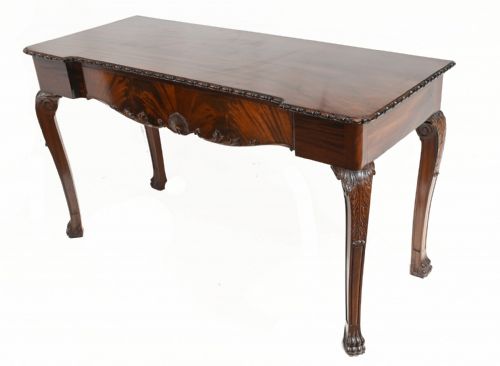
Carved Wood Buffet Table
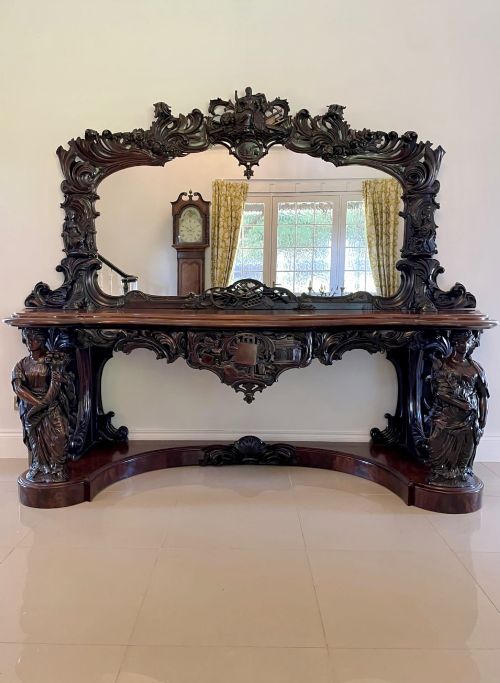
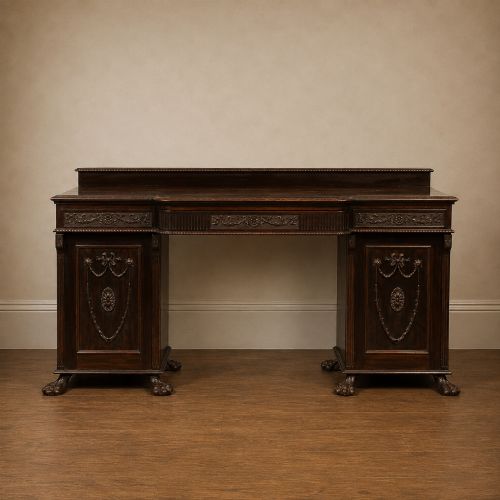
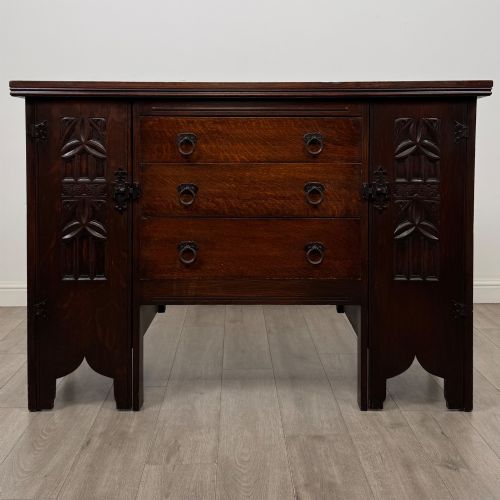
These carved wood buffet table options combine heavy period presence with practical surface space for dining rooms and large halls.
Carved Wood Buffet Table
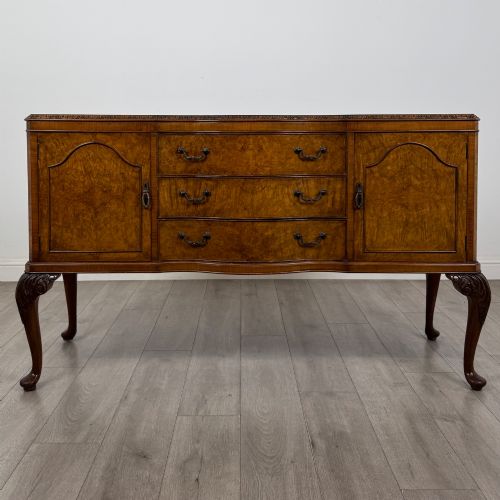
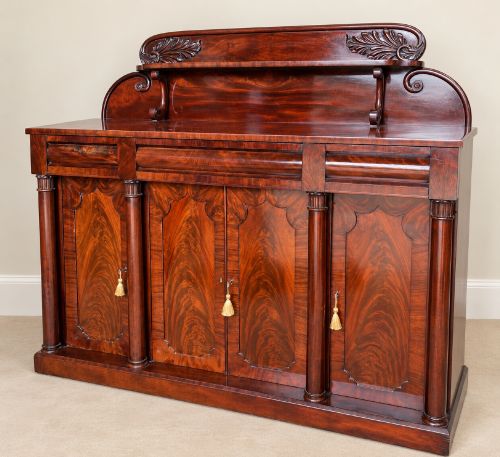
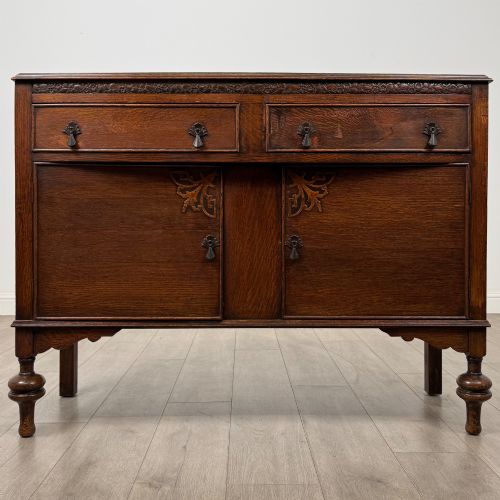
A carved wood buffet table encompasses formal serving tables, sideboards, and dresser bases spanning several centuries of cabinetmaking. You will frequently encounter substantial mahogany and oak pieces dating from the Victorian and Edwardian eras, alongside earlier Georgian and 18th-century forms.
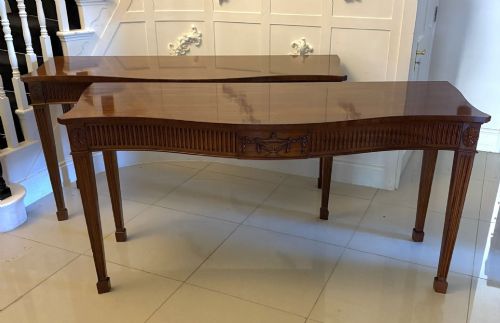
The functional scope of these items stretches from dining room servers fitted with drawers and cupboards to open potboard dressers and multi-tiered dumb waiters. Serving tables and console tables provide long rectangular surfaces designed specifically for food presentation and display.
How they were made
Makers utilised solid timbers including mahogany, oak, and walnut, often applying flame mahogany veneer or burr walnut to create dramatic surface figures. Construction involved traditional joinery such as dovetailing for drawers and tenon joints for heavy framing.
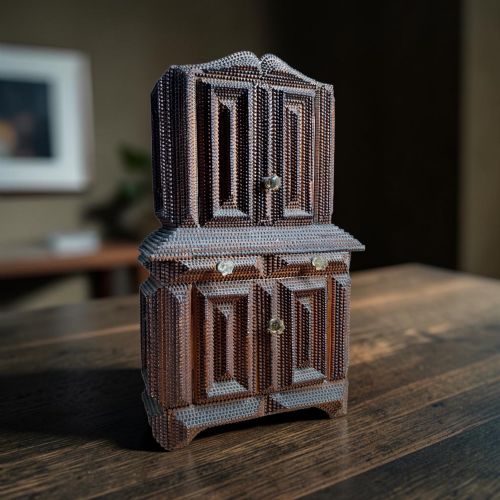
Carving ranges from crisp neoclassical motifs and gadrooning to deep geometric patterns found on earlier oak and tramp art pieces. Brass fittings, glass accents, and iron hardware appear as secondary materials on specific regional or period examples.
Several pieces arrive bearing the delightfully eccentric hallmarks of French tramp art, whittled entirely from humble salvaged cigar boxes.
What varies in quality
The standard of a carved wood buffet table rests on the depth and crispness of its hand-carved ornamentation, where sharp undercutting distinguishes superior workshops from later mechanical production. Timber selection also dictates the tier, with figured veneers and dense primary hardwoods commanding greater visual weight.
Structural integrity relies on the retention of original timber backs, drawer linings, and hardware without extensive timber replacement. Proportions play a role, as smaller scaled pieces or particularly monumental breakfront forms require careful geometric balance.
Gillows
The Carved Wood Buffet Table Glossary
- Potboard dresser
- An open-based sideboard featuring a lower shelf designed originally for storing pots and heavy ceramics. This form appears frequently in traditional oak country furniture.
- Breakfront
- A cabinet or sideboard whose central section projects forward from the flanking outer wings. This architectural arrangement creates varied depth and shadow across the front elevation.
- Dumb waiter
- A tiered serving stand fitted with rotating or fixed circular trays supported on a central pillar or tripod base. These pieces stood beside dining tables to hold dishes without requiring servants.
- Serpentine front
- A furniture facade shaped with a central convex curve flanked by two concave curves. This undulating profile requires skilled timber bending or precise sawing from solid stock.
Carved Wood Buffet Table: Frequently Asked Questions
Where did people use these tables?
These tables stood primarily in formal dining rooms, serving as staging surfaces for dishes, silver, and wine during large meals. They also occupied grand entrance halls and reception rooms to display decorative objects.
In domestic interiors, larger sideboard variants provided enclosed storage for linens and tableware beneath their serving surfaces.
How do I clean carved wood?
Dust surfaces regularly with a soft, dry lint-free cloth to prevent particulate accumulation in deep wood carvings. Avoid synthetic sprays or silicone polishes that build up sticky residues over time.
Feed dry timber occasionally with a quality microcrystalline wax to maintain the moisture and sheen of the original polish.
Are these pieces suitable for modern dining rooms?
These tables adapt easily to contemporary spaces, offering deep surfaces for serving food during gatherings and substantial storage below. Their historic proportions anchor modern dining areas with distinct architectural weight.
Sourcing smaller solid oak sideboard variants allows integration into more compact domestic floor plans.
How do I spot a Victorian piece?
Victorian examples often feature dark mahogany or heavy carved oak, displaying robust proportions and machine-assisted detailing alongside hand carving. Look for distinct revival styles such as Jacobean or Gothic influences within the decorative vocabulary.
Interior construction typically reveals machine-sawn drawer linings and standard brass or wooden knobs characteristic of nineteenth-century industrial production.