



Victorian Mirrored Dresser
A Victorian mirrored dresser brings depth and reflection to a room, combining practical storage with grand architectural presence.
Victorian Mirrored Dresser
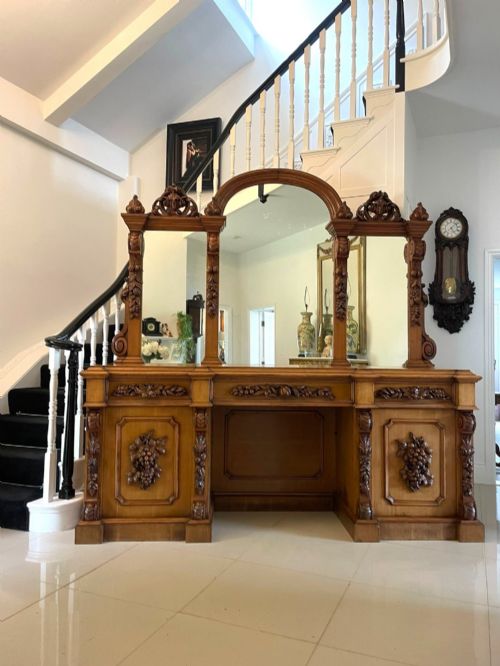
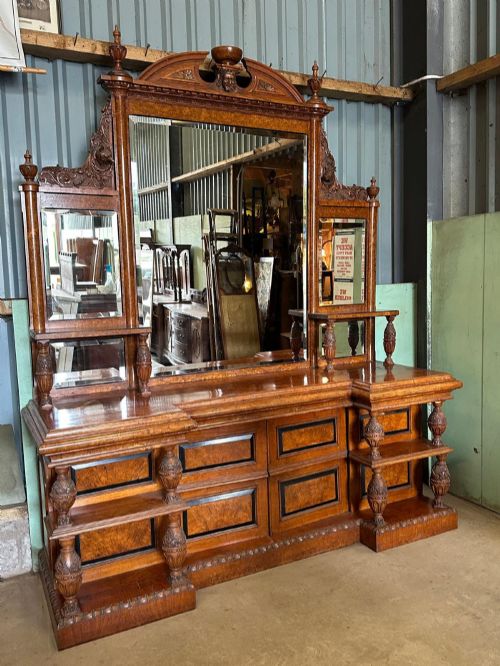
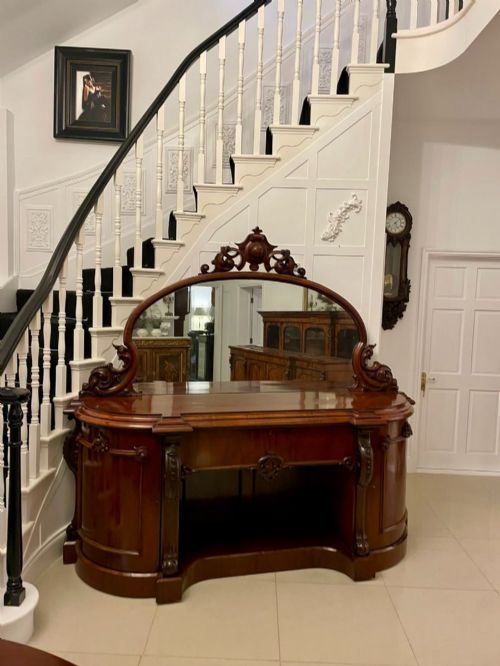
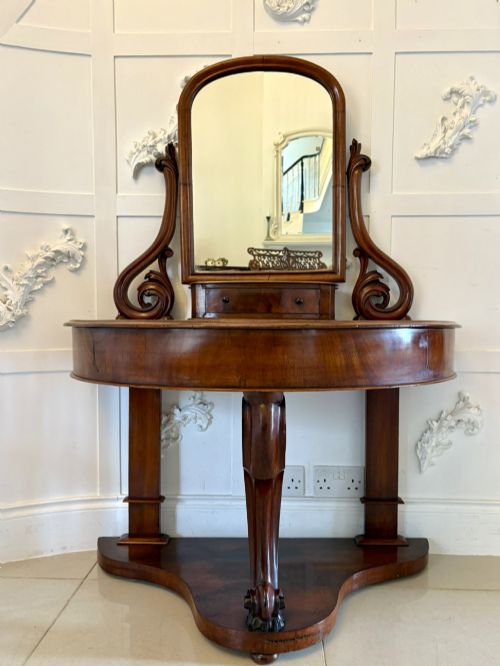
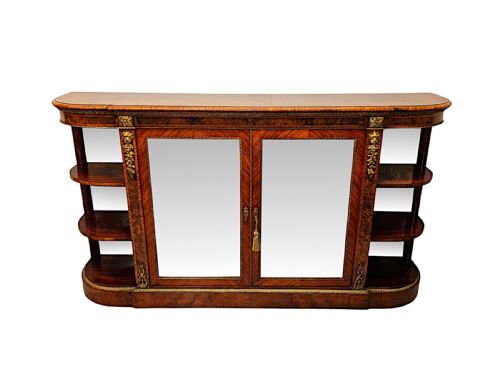
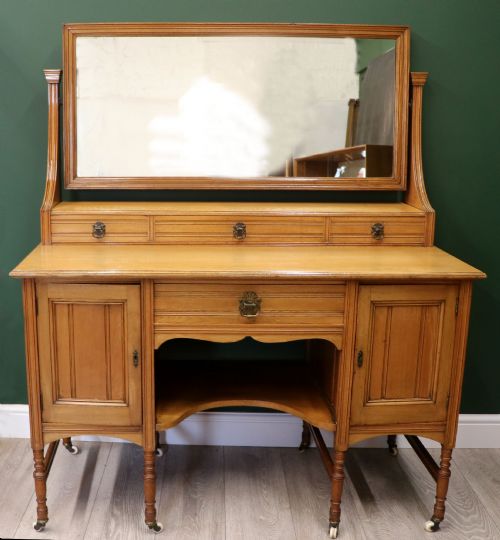
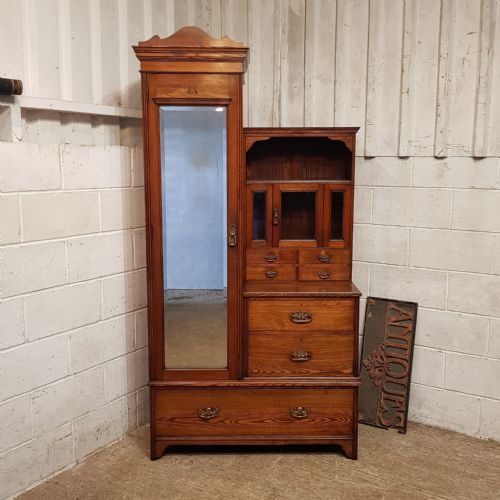
A Victorian mirrored dresser encompasses large mirror-backed sideboards, dressing tables, and display cabinets designed to reflect light and display prized possessions in principal rooms. These pieces emerged across the nineteenth century, ranging from substantial architectural sideboards to intimate bedroom vanities.
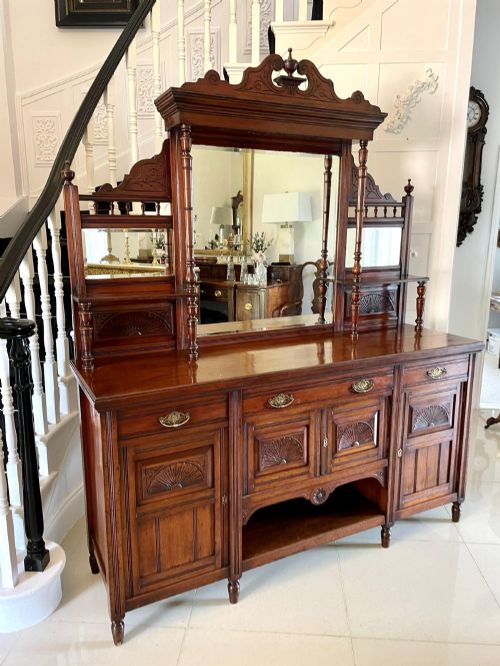
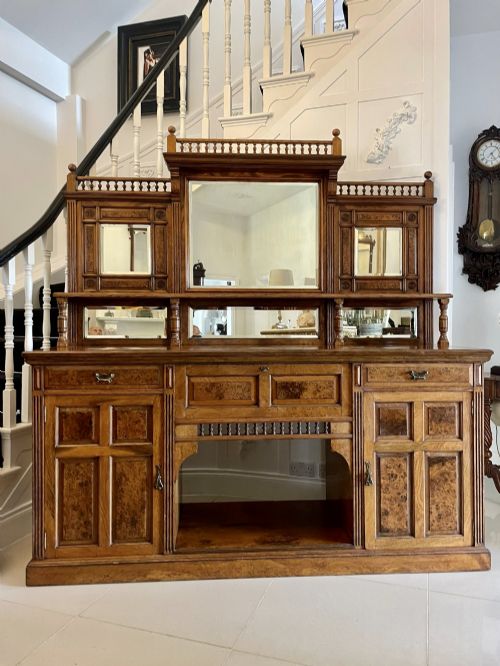
The selections available include imposing walnut and mahogany sideboards featuring carved crests, alongside lighter oak pieces from the Arts and Crafts movement and Edwardian period. Many incorporate bevelled mirror glass within carved wooden frames atop generous pedestals and cupboards.
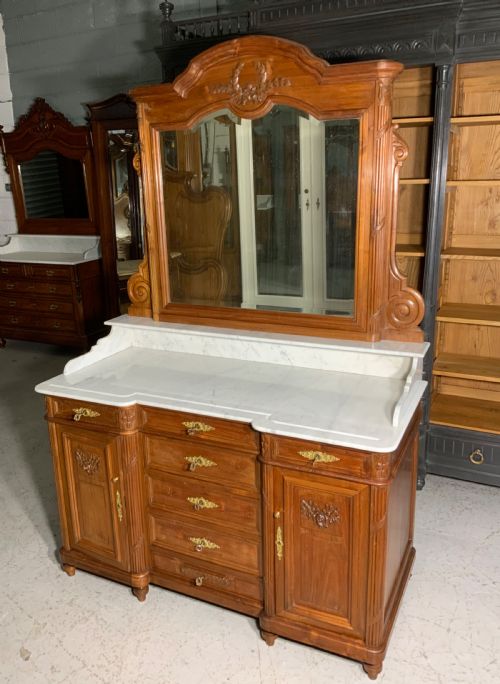
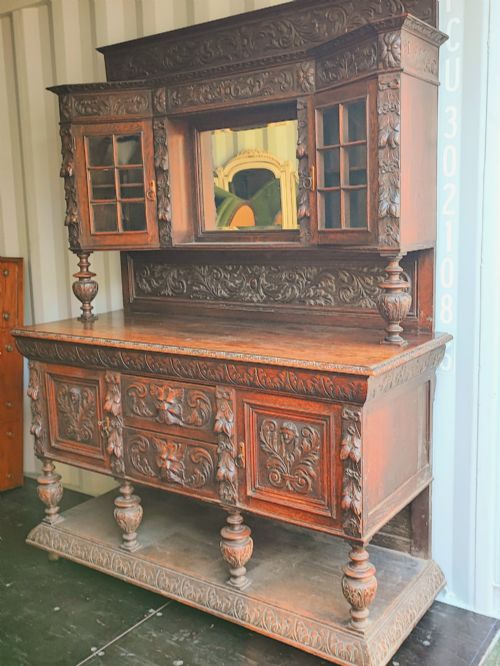
Makers utilised dense timbers and decorative veneers to create substantial furniture that served both domestic utility and social display. The forms vary from straightforward mahogany chests with attached mirrors to elaborate Renaissance Revival and Jacobean Revival buffet cabinets.
Materials and construction methods
Cabinet makers built these pieces using solid timbers including oak, mahogany, walnut, and pollard oak, often enhanced by burr walnut veneers, brass mounts, and inlaid details. The heavy carcases required robust construction techniques, using dovetail joints for drawers and panelled framework for large sideboards and wardrobes.
Mirror glass, frequently bevelled, was fitted into secure wooden frames supported by sturdy brackets or fixed directly to the backboards of sideboards and dressing tables. Ormolu mounts, marble tops, and glazed panels added decorative contrast to the primary wood surfaces.
Some oak sideboards hide ferocious carved Green Man faces amidst their dense foliage and fruit clusters.
Distinctions in quality and execution
The standard of carving and the selection of timber dictate the distinction between standard production furniture and superior workshop output. Pieces attributed to notable makers display crisp, deep relief carving, particularly on mirror frames and sideboard doors, alongside carefully matched wood figure.
The integration of secondary materials such as ormolu mounts, majolica panels, and marble tops separates elaborate reception furniture from simpler utility pieces. High quality construction involves substantial timber thicknesses and precise joinery that maintains structural integrity across large sideboards and wardrobes.
Gillows·T Simpson and Son·Shapland & Petter
The Victorian Mirrored Dresser Glossary
- Mirror back
- A wooden superstructure incorporating a mirror plate, designed to sit atop a sideboard, cabinet, or dressing table to reflect light and interior spaces.
- Pollard oak
- A decorative timber obtained from the gnarled growth of pollarded oak trees, prized by Victorian cabinet makers for its mottled, highly figured grain.
- Ormolu
- Gilded bronze mounts applied to furniture surfaces for decorative effect, commonly found on high status nineteenth century cabinets.
- Pedestal sideboard
- A heavy sideboard design featuring two distinct pedestals or cupboards flanking a central section, often fitted with drawers and a mirror back.
- Arts and Crafts
- A design movement focusing on traditional craftsmanship and simple forms, evident in oak side cabinets and sideboards from the later nineteenth century.
Victorian Mirrored Dresser: Frequently Asked Questions
What rooms suit a Victorian mirrored dresser?
These large furniture forms suit dining rooms, living spaces, and spacious bedrooms where their scale and reflective glass can function as a focal point.
Sideboard variants provide surface area and cupboard storage for dining ware, while dressing table forms serve domestic utility in bedrooms.
How do I identify the wood type?
Examine the grain patterns and colour beneath the finish, noting the reddish hue of mahogany or the distinct growth rings of oak and walnut.
Figured woods like pollard oak and burr walnut display dense, mottled patterns created from specialised tree growths.
Are mirror plates original to the piece?
Original mirror glass frequently exhibits minor foxing, spotting, or slight distortion due to the historic silvering process.
Replacements often appear remarkably clear and lack the subtle imperfections associated with nineteenth century glass production.
How do I date a mirrored dresser?
Stylistic indicators such as heavy Renaissance Revival carving point towards the mid nineteenth century, while lighter oak and geometric lines suggest later periods.
Construction methods, including hand cut dovetails and specific maker stamps, provide further chronological evidence.