
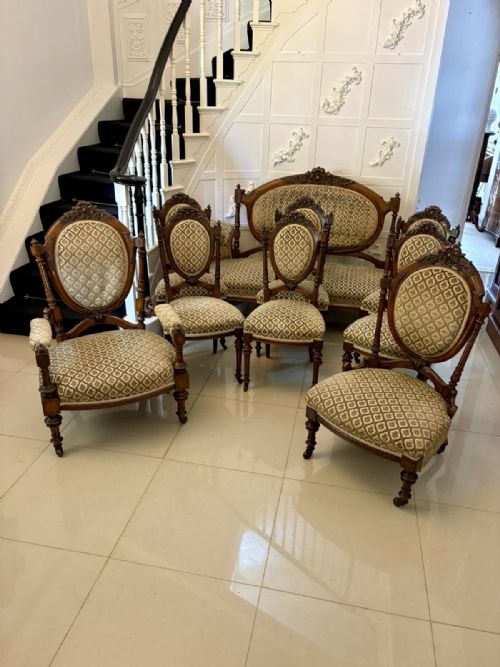
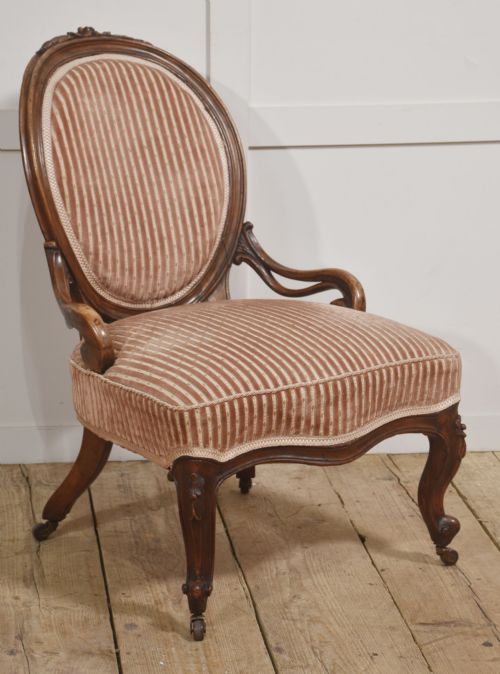


Carved Walnut Nursing Chair
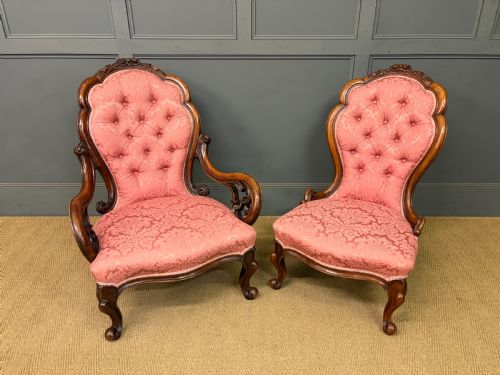
A carved walnut nursing chair combines low-slung comfort with rich timber frames, offering an intimate seat designed for the Victorian and Edwardian parlour or bedroom.
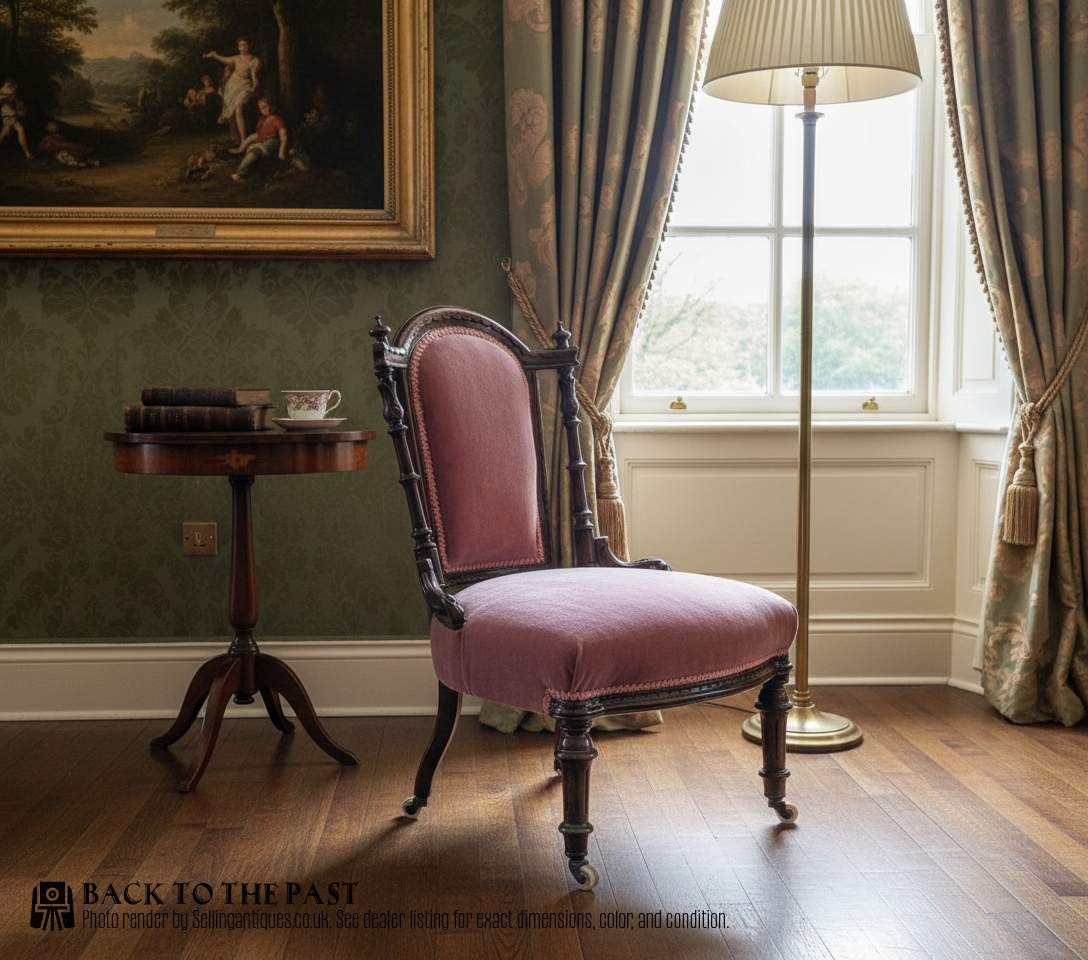
Identifying the carved walnut nursing chair
A carved walnut nursing chair is a low Victorian or Edwardian seat designed originally for comfort and ease near the hearth or nursery. These pieces appear primarily from the nineteenth and early twentieth centuries, spanning the Victorian, late Victorian, and Edwardian eras.
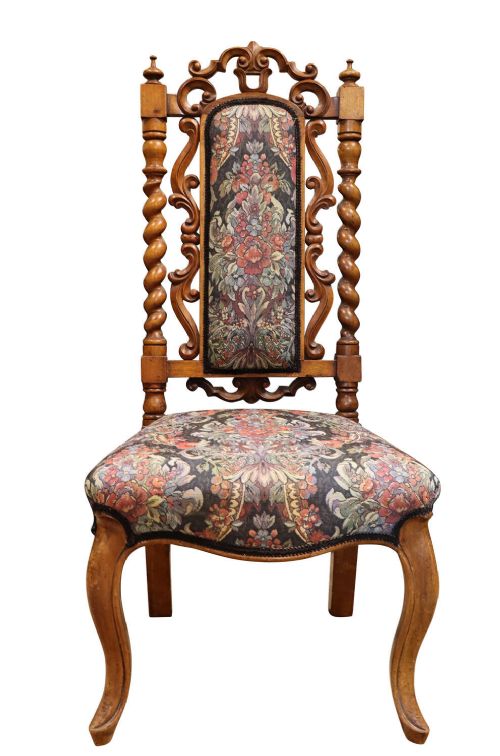
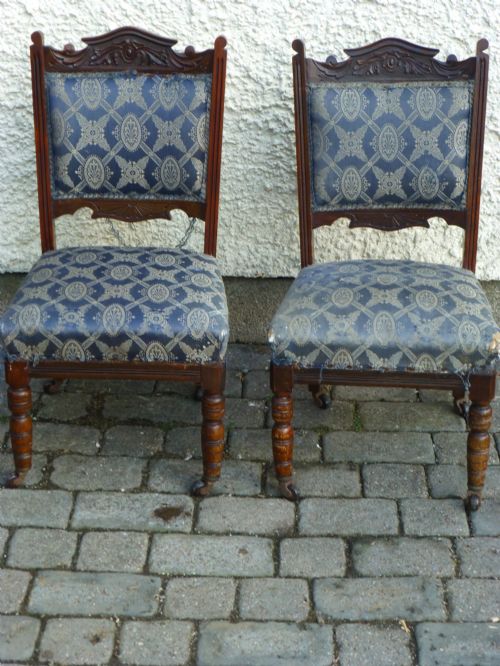
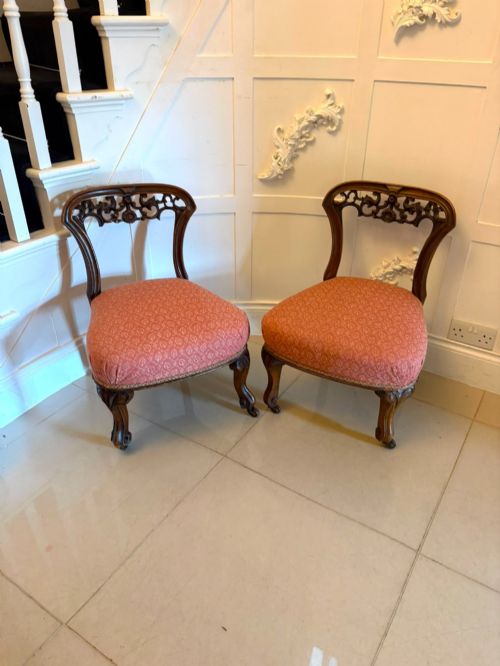
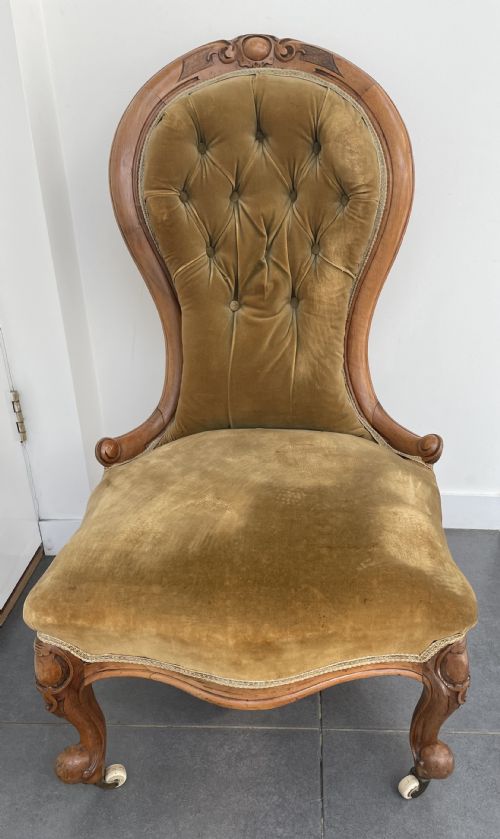
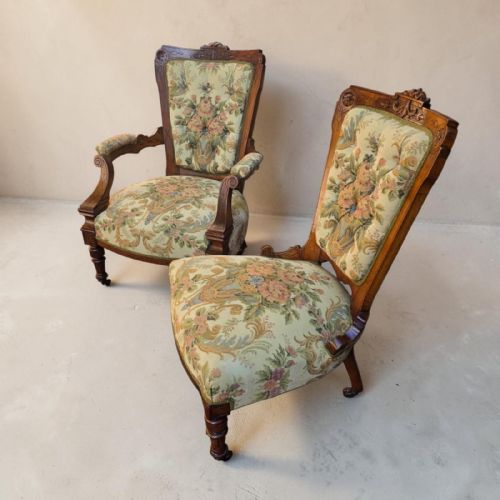
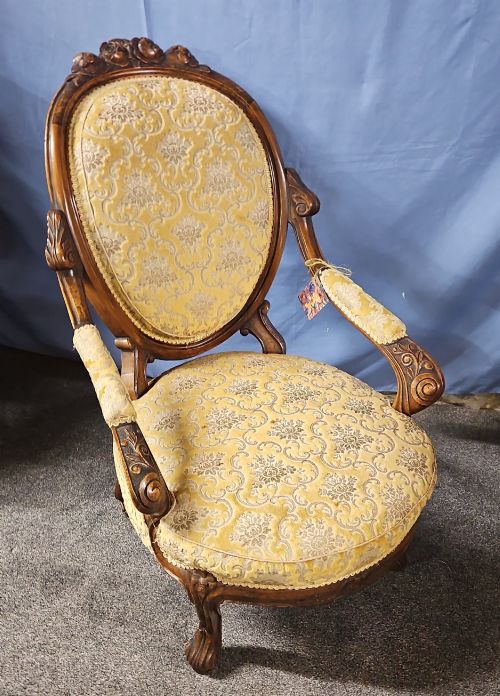
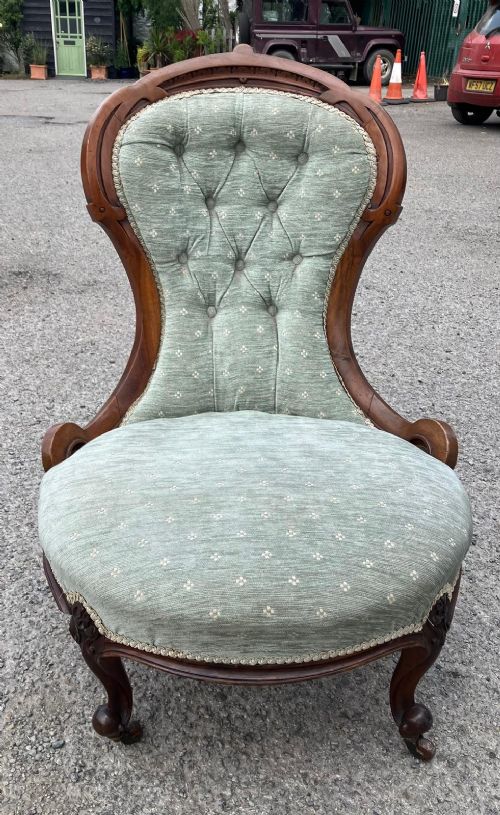
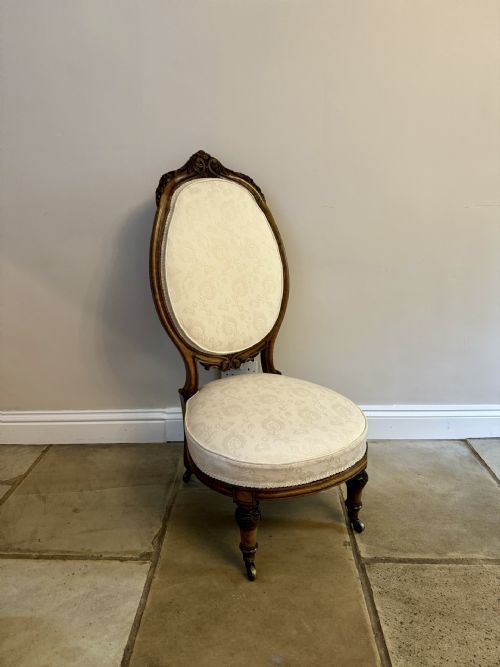
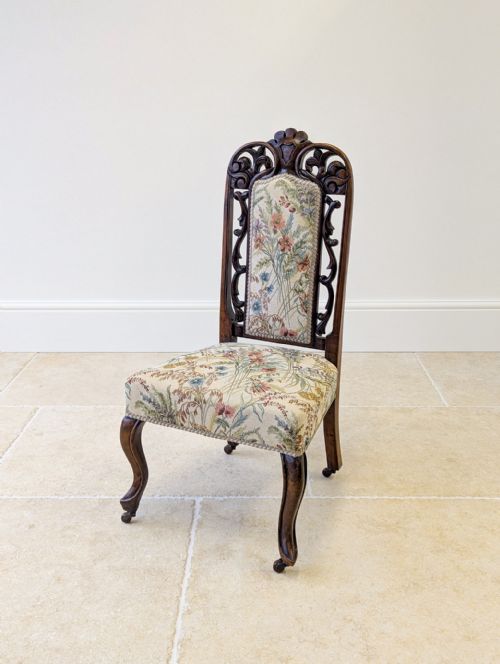
The forms on this page include spoon back designs, high backs, and ladies chair variants. Most examples feature solid timber frames made of walnut, paired with upholstered pads in velvet, textile, woven fabric, or needlepoint tapestry.
Makers fashioned these seats to sit lower than standard parlour chairs, accommodating the voluminous skirts of the period. You will encounter them supported by cabriole legs, occasionally set with brass or ceramic castors.
Materials and construction
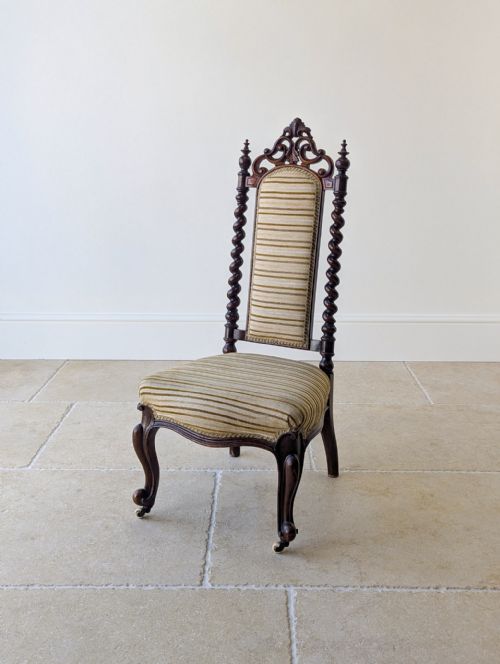
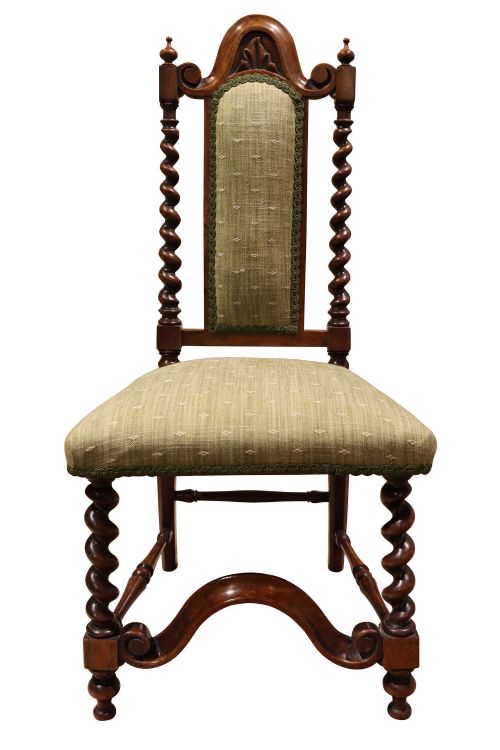
Craftsmen shaped these frames from walnut, a timber chosen for its deep grain and reliable strength when carved into elaborate scrollwork or floral motifs. Frames frequently incorporate decorative elements such as spiral supports and button upholstery.
Upholstery techniques varied from period buttoning to needlework floral textiles and modern fabric replacements. Metal fixings like brass often appeared within the castor assemblies, paired with ceramic wheels to protect floor coverings.
Retail Price Guide 2026
Typical UK retail prices for carved walnut nursing chair, calculated from the Sellingantiques database of over a million retail prices indexed since 2003. This retail price guide relies exclusively on Sellingantiques data; no external sources or auction records are used, so the figures do not describe the wider market.
Many of these chairs survived because they were tucked away upstairs in bedrooms, escaping the heavy wear of the ground-floor parlour.
Judging quality in walnut seating
Quality rests in the depth and sharpness of the walnut carving on the frame, where crisply defined scrolls distinguish superior examples from simpler production. The integrity of the timber joints and the weight of the walnut structure also determine the lasting worth of a piece.
The choice of covering fabric, whether original needlepoint tapestry or later velvet, dictates the tactile appeal of the seat. Proportion matters greatly, with well-balanced spoon backs commanding attention over heavier or clumsily scaled frames.
The Carved Walnut Nursing Chair Glossary
- Spoon back
- An oval upholstered chair back curved in the profile of a spoon to fit the human spine. This shape emerged prominently during the mid-nineteenth century.
- Needlepoint tapestry
- A form of canvas work embroidery using wool yarn to create dense floral or geometric patterns. It frequently covers nineteenth-century seat pads.
- Spiral support
- A turned wooden pillar carved in a twisting rope pattern. Makers used this detail along the uprights or legs of Victorian seating.
- Edwardian
- The period of British history spanning the reign of King Edward VII until the First World War. Furniture from this era often lighter in scale than Victorian styles.
Frequently Asked Questions
What is a nursing chair?
A nursing chair is a low-seated armchair designed in the nineteenth century for comfort in bedrooms or nurseries. The reduced height accommodated the heavy garments worn by women at the time.
Today these pieces function well as accent seating in living rooms or dressing areas, offering a compact footprint combined with decorative woodcarving.
How do I date a walnut nursing chair?
Dating relies on stylistic clues within the walnut frame, such as the curved outline of a spoon back or the presence of spiral turnings. Victorian examples tend to feature heavier carving and button upholstery.
Edwardian pieces often display lighter proportions while retaining the walnut material. Examining the under-framing and fixings helps narrow the decade of production.
Are these chairs comfortable to use daily?
These seats were built for relaxation near the hearth, featuring padded backs and upholstered seats. Their lower height makes them distinct from standard dining or desk chairs.
Modern comfort depends on the internal webbing and padding condition. Many survive with period stuffing or updated textiles suitable for regular sitting.
What wood is used in these frames?
Walnut is the primary timber found across these listings, valued for its rich dark brown tones and ability to hold fine carved detail. It provided nineteenth-century makers with a durable medium for decorative scrollwork.
Some frames incorporate secondary timbers beneath the upholstery, but the visible show-wood is consistently walnut across all recorded examples.