

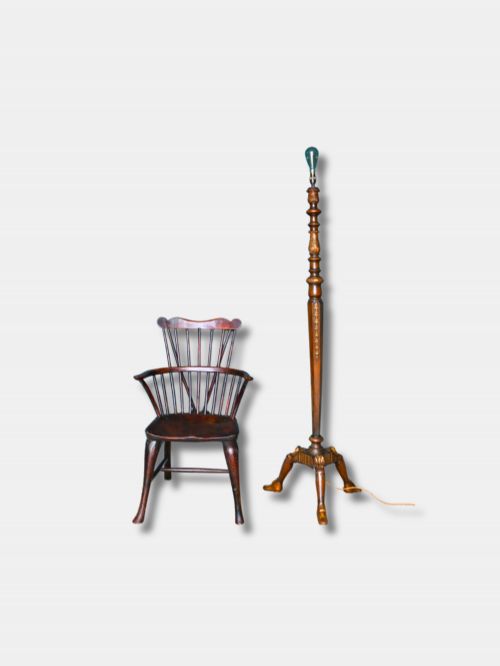


Carved Walnut Lighting
Carved walnut lighting brings rich grain and deep relief to a room, pairing sculptural timber with period illumination.
Carved Walnut Lighting
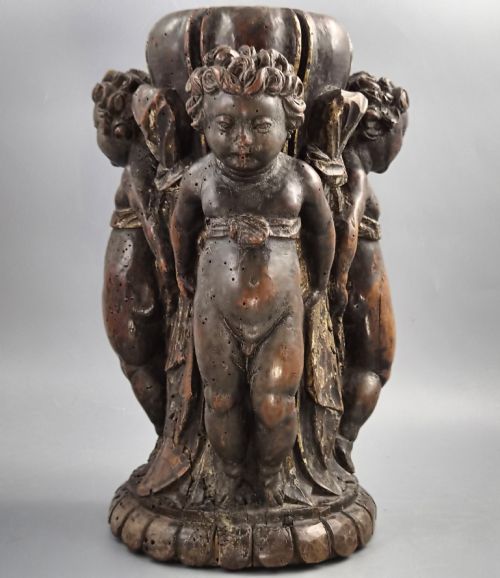
Carved walnut lighting encompasses floor lamps, standard lamps and table lamps shaped from dark timber, often paired with brass, glass or fabric elements. These pieces range from substantial 17th-century Italian torchieres with figural detail to early 20th-century standard lamps on tripod bases.
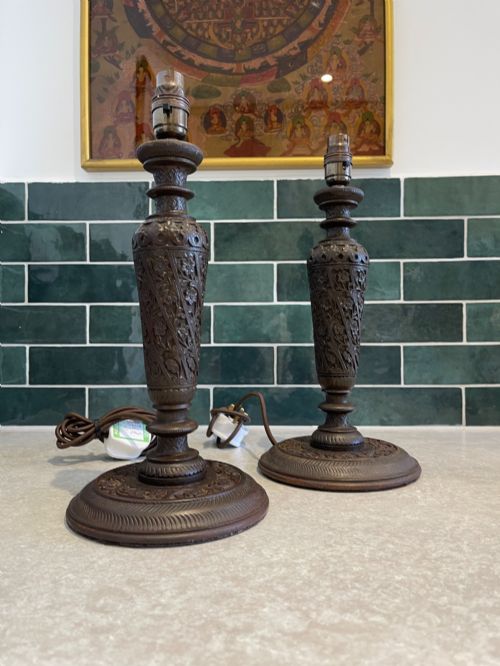
The selection on this page draws from diverse origins, including English workshops, Venetian studios, Kashmiri carvers and Art Deco makers such as Harry and Lou Epstein. Alongside standard and table lamps, the listings include related turned and carved forms like Black Forest bear lamps and angel candlesticks.
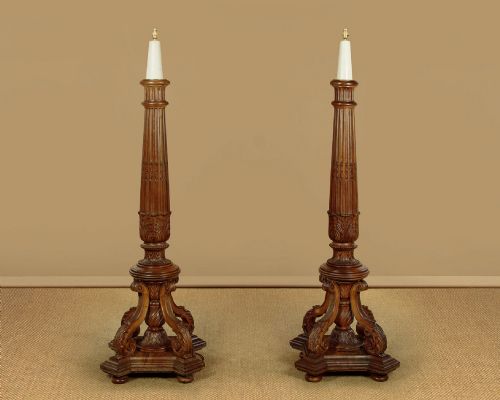
Buyers meet examples spanning several eras, notably the Edwardian period, the 1920s, and earlier historical revivals. Whether taking the form of a towering torchiere base with putti or a slim tripod standard lamp, each piece showcases the deep brown tones characteristic of walnut.
Materials and construction methods
Makers shaped these lamps from solid walnut, utilising the timber's dense grain to carve intricate relief work such as foliage, figures and fluting. The wood is frequently turned on a lathe for standard lamp shafts or hand-carved for figural bases.
Metal components like brass and silver plate provide structural mounts and fittings, while fabric and textile shades diffuse the light. Giltwood accents occasionally highlight the carved details, adding contrast to the dark walnut surface.
Listings feature walnut lighting spanning from the 17th century through the 1930s, combining timber with brass, glass and fabric.
Assessing quality in carved walnut lighting
Quality rests primarily on the depth and crispness of the carving, distinguishing masterwork figural details from simpler turned shafts. Pieces featuring three-dimensional figures like putti or angels demand greater sculptural skill than standard geometric turnings.
The selection of the walnut timber itself dictates visual appeal, with well-figured grain and uniform colour elevating a piece. Integration of secondary materials, such as finely chased brass or gilt highlights, further separates standard production from exceptional examples.
Harry and Lou Epstein
The Carved Walnut Lighting Glossary
- Torchiere
- A tall standing candlestick or lamp base, often highly ornamented. Originating in the 17th century, these towering supports carry light high above floor level.
- Tripod base
- A three-legged support system providing stability for standard lamps. This configuration allows slender wooden shafts to stand securely upright.
- Putti
- Depictions of chubby male infants, frequently winged, used in decorative sculpture. They appear frequently on Baroque Italian woodwork to add theatrical movement.
- Standard lamp
- A freestanding floor lamp designed to illuminate a room from a fixed vertical post. These tall wooden fixtures often incorporate heavy bases to prevent tipping.
Carved Walnut Lighting: Frequently Asked Questions
How do I date a carved walnut lamp?
Dating relies on stylistic clues, tool marks and the specific proportions of the turned shaft or carved elements. Baroque pieces feature high-relief figures and heavy bases, while Edwardian and 1920s versions often adopt cleaner, more slender profiles.
Examining the construction methods underneath the base also helps establish the period. Machine-cut screws point to the 20th century, whereas hand-cut threads and irregular joinery indicate older manufacture.
Where should I place a standard lamp?
Standard lamps work best in corners or beside seating areas where their height can cast ambient light downward. Placing them near complementary walnut furniture helps tie a period room scheme together.
Ensure the cord reaches a wall socket safely without stretching across high-traffic walkways. The heavy wooden base keeps the lamp stable in most living spaces.
What is Kashmiri carving?
Kashmiri woodworking involves dense, intricate floral and foliate relief carving executed on local timbers. These pieces often arrive from northern India during the late 19th and early 20th centuries, displaying exceptional manual dexterity.
The carving style differs from European Baroque or Edwardian work through its dense overall coverage and specific regional plant motifs. This gives the lamp shafts a distinctive texture that sets them apart from standard domestic turnings.